
ᐅ Very Poor Parquet Flooring Installation – Is Rectification Impossible?
Created on: 19 Jan 2023 10:55
P
pim1985
Hello,
unfortunately, we are having problems again with our parquet installer (a small family business in NRW). The work on the transitions and the baseboards was done very poorly.
A brief summary of the situation: After a long wait due to residual moisture in the screed, the parquet was installed (oak, 18.5cm (7.3 inches) wide, fully glued).
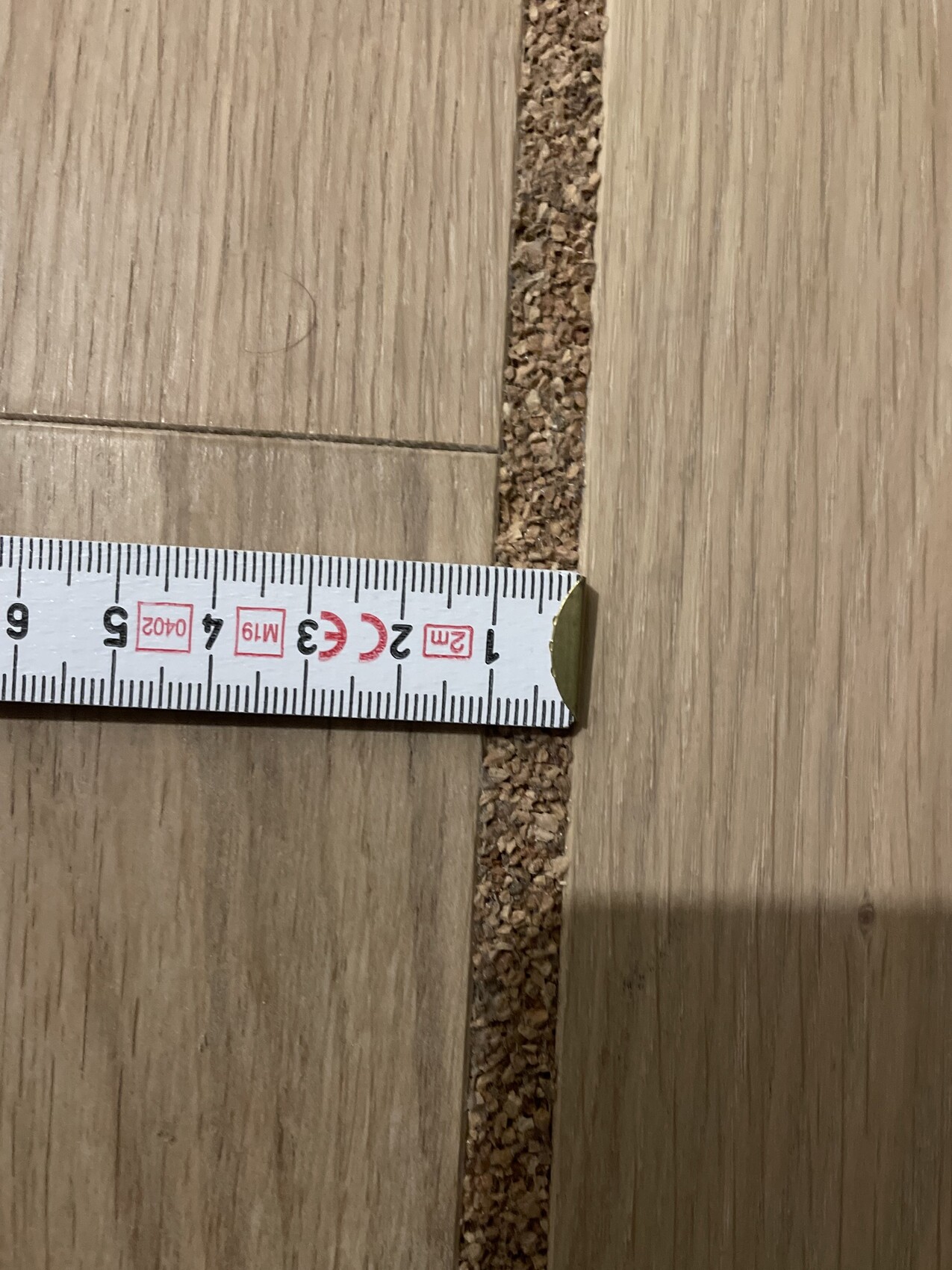
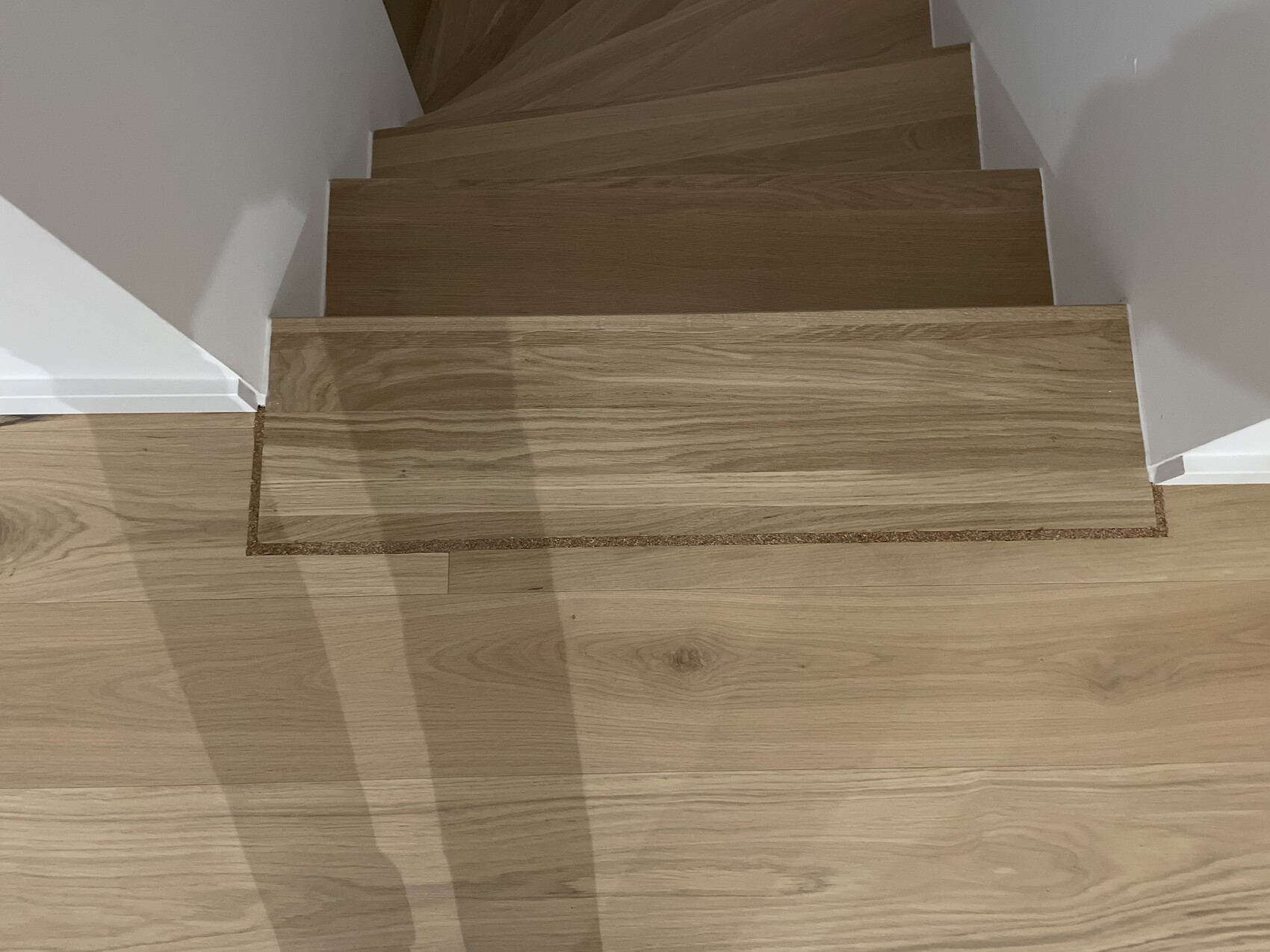
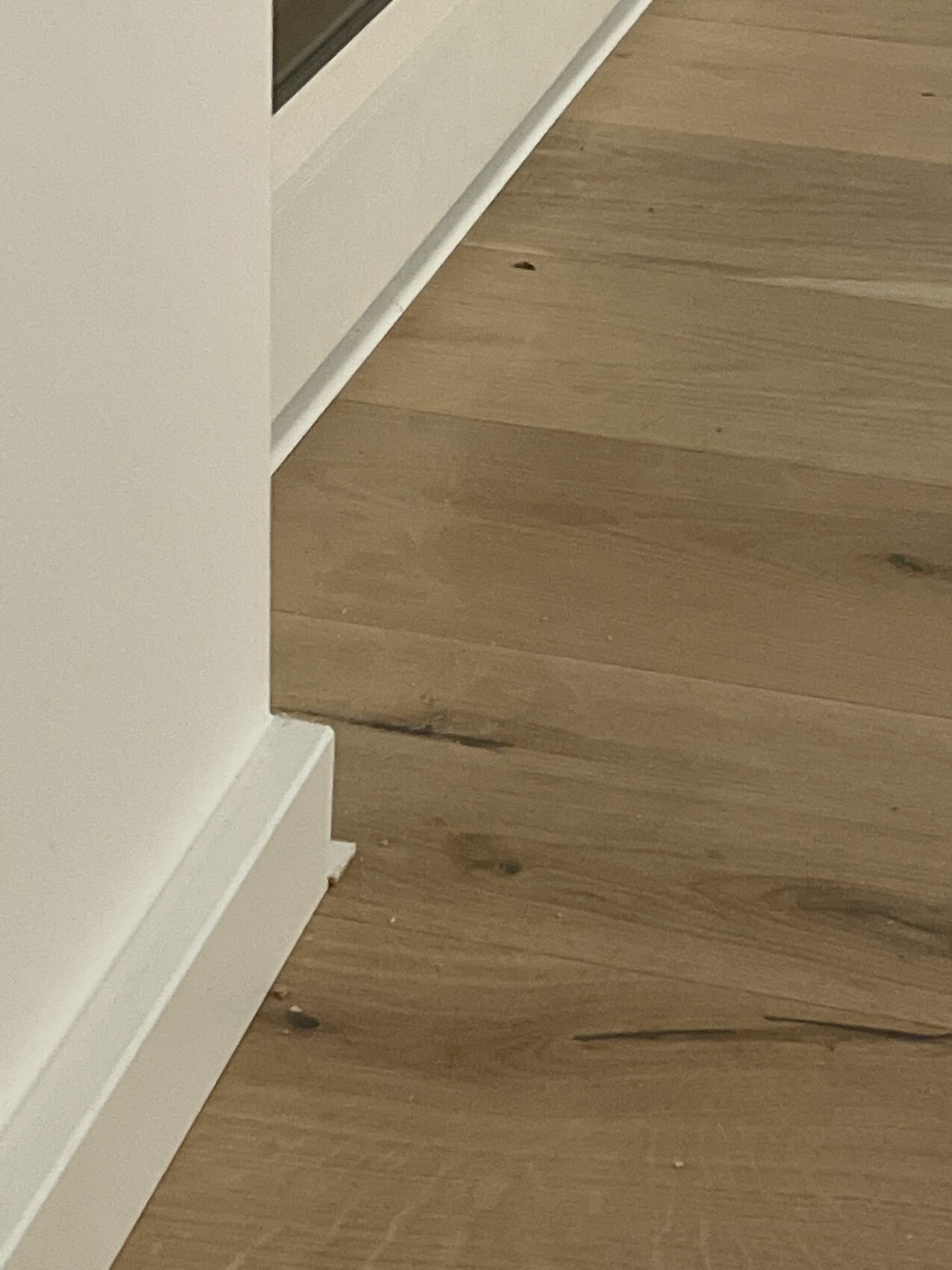
As you can see in the photos, the gaps at the transitions are about 1cm (0.4 inches) wide and filled with a cork material that does not match the color.
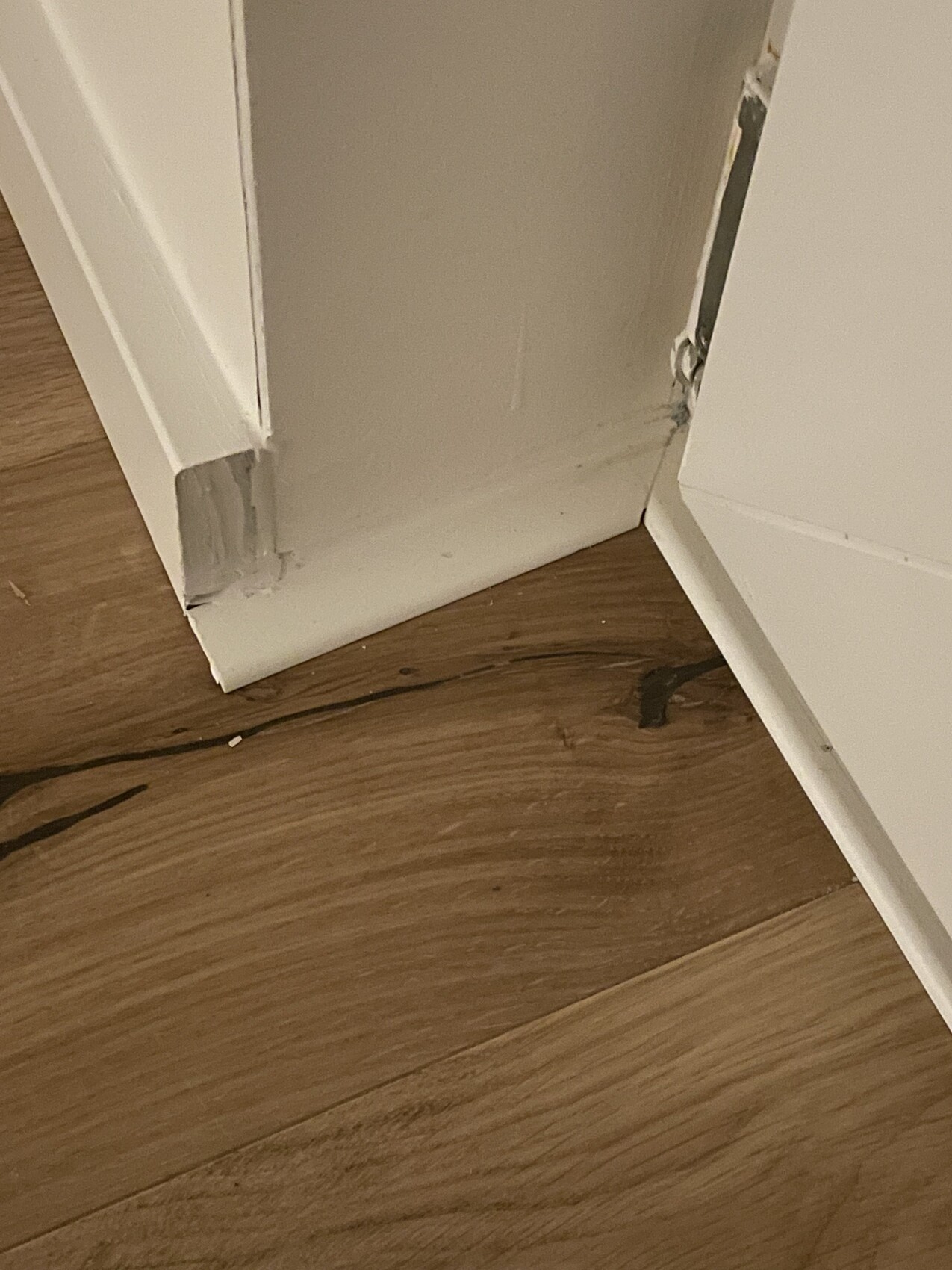
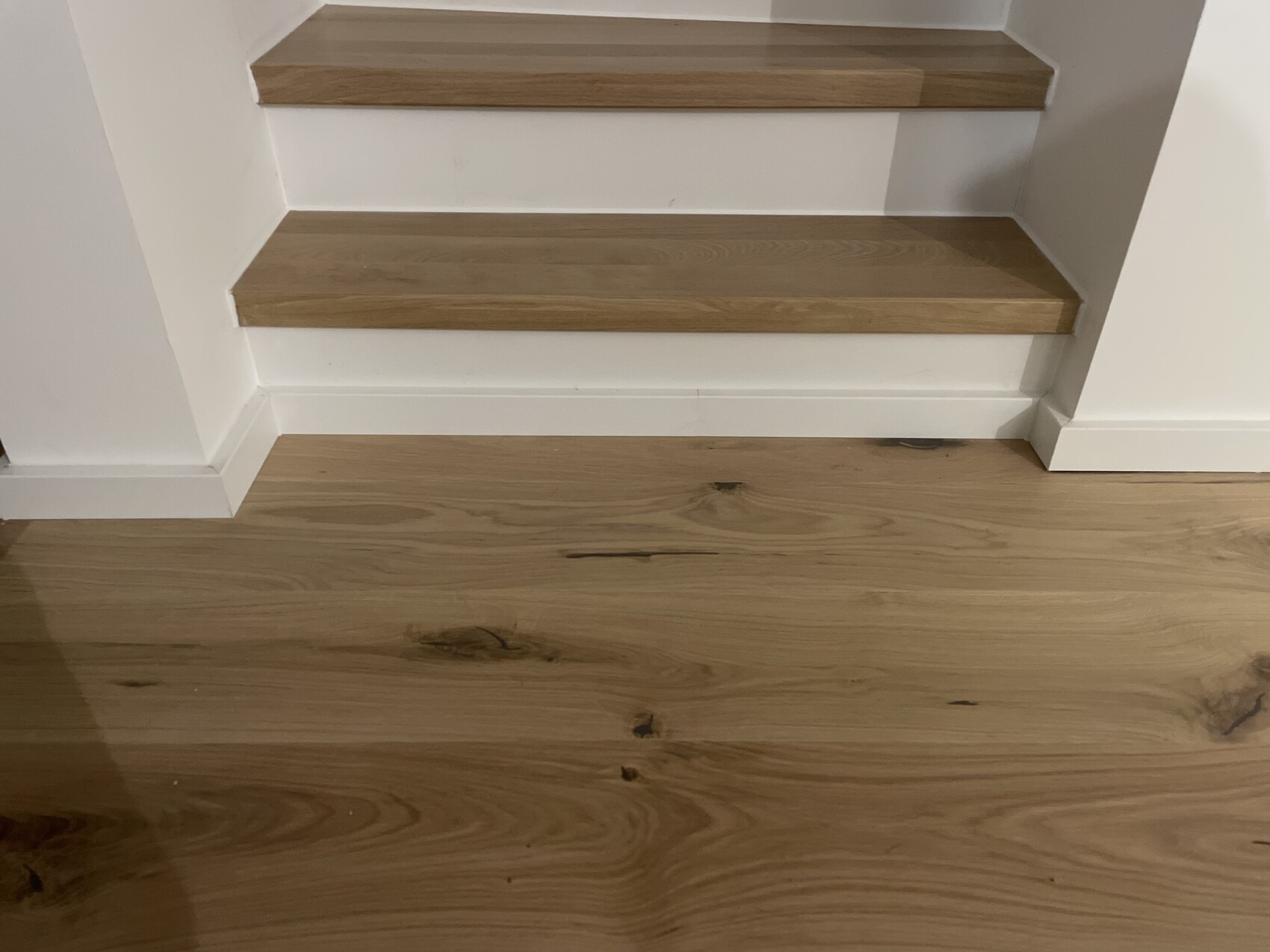
The baseboards (1.8cm (0.7 inches) wide, about 5.8cm (2.3 inches) high) at the floor-to-ceiling windows do not look good, the smaller baseboards/profiles are odd, and the work was very untidy. The reason for the unusual small baseboards/profiles: the window reveals are too narrow (1cm (0.4 inches) wide baseboards would fit; this is the case with our neighbors in an identical semi-detached house). There are nicer solutions for this, but there was no communication that the baseboards would not fit. The parquet installer is unable to accept criticism and is old-fashioned, just doing things as he learned 30 years ago. He refuses to make any corrections.
Regarding the cork filling, we probably have no legal chance for corrections, even though the boards at the transitions were cut unevenly. (I saw examples from other providers, unfortunately too late, and spoke with specialists from a large parquet company (Parkett Dietrich) who said that transitions without joints or with very small joints about 4mm (0.16 inches) are possible. These could be filled with parquet joint filler in a similar color and would look a thousand times better). Baseboards before the step in the staircase area???
The small baseboards in the window area are impossible, though. I am a member of the property owners’ protection association (legal insurance is also available) and I am considering taking legal action with a specialist lawyer and construction consultant, although I would prefer not to. But this job cost a lot of money, and now I will probably have to hire a second company to fix it.
I would appreciate any tips on how to salvage one or the other issue.
unfortunately, we are having problems again with our parquet installer (a small family business in NRW). The work on the transitions and the baseboards was done very poorly.
A brief summary of the situation: After a long wait due to residual moisture in the screed, the parquet was installed (oak, 18.5cm (7.3 inches) wide, fully glued).
As you can see in the photos, the gaps at the transitions are about 1cm (0.4 inches) wide and filled with a cork material that does not match the color.
The baseboards (1.8cm (0.7 inches) wide, about 5.8cm (2.3 inches) high) at the floor-to-ceiling windows do not look good, the smaller baseboards/profiles are odd, and the work was very untidy. The reason for the unusual small baseboards/profiles: the window reveals are too narrow (1cm (0.4 inches) wide baseboards would fit; this is the case with our neighbors in an identical semi-detached house). There are nicer solutions for this, but there was no communication that the baseboards would not fit. The parquet installer is unable to accept criticism and is old-fashioned, just doing things as he learned 30 years ago. He refuses to make any corrections.
Regarding the cork filling, we probably have no legal chance for corrections, even though the boards at the transitions were cut unevenly. (I saw examples from other providers, unfortunately too late, and spoke with specialists from a large parquet company (Parkett Dietrich) who said that transitions without joints or with very small joints about 4mm (0.16 inches) are possible. These could be filled with parquet joint filler in a similar color and would look a thousand times better). Baseboards before the step in the staircase area???
The small baseboards in the window area are impossible, though. I am a member of the property owners’ protection association (legal insurance is also available) and I am considering taking legal action with a specialist lawyer and construction consultant, although I would prefer not to. But this job cost a lot of money, and now I will probably have to hire a second company to fix it.
I would appreciate any tips on how to salvage one or the other issue.

Zaba123 schrieb:
If that’s true, then it’s unlikely to get any compensation for a “not liking it” claim. It just shows how far the implementation of the “state of the art” is from a “nice” finish. Typical of 1950s standards.
As always, communicate clearly what you don’t want and what you do want/how it should look. The mindset of “I thought that…” remains and is always a recipe for trouble. In my experience, this leads to communication problems and laziness in trying to make the result look better as a tradesperson. Yes, I also see the responsibility partly with the tradesperson. If we hadn’t been asked yesterday “how would you like the joints— or prefer no joints at all?” then I wouldn’t have known to bring it up or decide. Our installer also said that installing without joints is a bit more complicated. He added that it’s not recommended if there are large differences in room temperature or humidity because wood naturally moves. However, he also said they have done jointless installations in many homes already, and nothing has gone wrong so far.
If you get a tradesperson who just works according to the current standards, no matter how it looks, that might be legally safe, but certainly not in the customer’s interest. As a customer, I would be unsatisfied, too. And for the tradesperson, it leaves a sour impression that they only do the bare minimum without much care about how their “work” turns out in the end.
W
WilderSueden20 Jul 2023 10:47Are you installing it as a floating floor or glued down? If glued, I would align it with the joints in the screed. Anything else would seem questionable to me.
S
Schorsch_baut20 Jul 2023 11:00You can’t really say this in general terms. It also depends heavily on the type of parquet and the surface treatment. I would never install oiled solid wood parquet over large areas without sufficiently large expansion gaps, because it naturally expands and contracts. However, there is also parquet with an MDF core layer, which is more dimensionally stable. Lacquer also slows down moisture absorption.
(And I would also never have it installed as a floating floor again. Right now, we’re even considering having the parquet completely reinstalled because the springy floor in the dining room and hallway upstairs is so annoying.)
(And I would also never have it installed as a floating floor again. Right now, we’re even considering having the parquet completely reinstalled because the springy floor in the dining room and hallway upstairs is so annoying.)
WilderSueden schrieb:
Are you installing it as a floating floor or fully glued down? If glued, I would align the joints with the screed seams. Anything else would seem questionable to me. We are getting JOKA Country House Plank Country E7113, fully glued down.
I’m relying on the flooring installer’s assessment. Our builder has never let us down, and the flooring installer is handling the entire interior fit-out including floors. So I trust that if he says it can be done this way. =)

guckuck2 schrieb:
You can’t help but smile every time you see those floorboards apparently cut freehand with a jigsaw in "Image3." Don’t they have a miter saw with them? Strange. That’s exactly how it looks. At first, there were pictures where I could have overlooked some issues. The really bad spots only appeared gradually.
What you see in the last two pictures is total botched work and should never happen when using proper tools (miter saw, handheld/table saw).
A
Alessandro26 Jul 2023 11:02What exactly is included in the price of 25,000?
My floor installer laid 150 sqm (1,615 sq ft) of hardwood flooring, including baseboards and stair covering (same hardwood), glued down. Without expansion joints at room transitions and with metal edging strips to the tiles.
He charged 4,900 euros for that 😳
Although that was three years ago, the price of 25,000 does shock me a little...
My floor installer laid 150 sqm (1,615 sq ft) of hardwood flooring, including baseboards and stair covering (same hardwood), glued down. Without expansion joints at room transitions and with metal edging strips to the tiles.
He charged 4,900 euros for that 😳
Although that was three years ago, the price of 25,000 does shock me a little...
Similar topics