
ᐅ Very Poor Parquet Flooring Installation – Is Rectification Impossible?
Created on: 19 Jan 2023 10:55
P
pim1985
Hello,
unfortunately, we are having problems again with our parquet installer (a small family business in NRW). The work on the transitions and the baseboards was done very poorly.
A brief summary of the situation: After a long wait due to residual moisture in the screed, the parquet was installed (oak, 18.5cm (7.3 inches) wide, fully glued).
As you can see in the photos, the gaps at the transitions are about 1cm (0.4 inches) wide and filled with a cork material that does not match the color.
The baseboards (1.8cm (0.7 inches) wide, about 5.8cm (2.3 inches) high) at the floor-to-ceiling windows do not look good, the smaller baseboards/profiles are odd, and the work was very untidy. The reason for the unusual small baseboards/profiles: the window reveals are too narrow (1cm (0.4 inches) wide baseboards would fit; this is the case with our neighbors in an identical semi-detached house). There are nicer solutions for this, but there was no communication that the baseboards would not fit. The parquet installer is unable to accept criticism and is old-fashioned, just doing things as he learned 30 years ago. He refuses to make any corrections.
Regarding the cork filling, we probably have no legal chance for corrections, even though the boards at the transitions were cut unevenly. (I saw examples from other providers, unfortunately too late, and spoke with specialists from a large parquet company (Parkett Dietrich) who said that transitions without joints or with very small joints about 4mm (0.16 inches) are possible. These could be filled with parquet joint filler in a similar color and would look a thousand times better). Baseboards before the step in the staircase area???
The small baseboards in the window area are impossible, though. I am a member of the property owners’ protection association (legal insurance is also available) and I am considering taking legal action with a specialist lawyer and construction consultant, although I would prefer not to. But this job cost a lot of money, and now I will probably have to hire a second company to fix it.
I would appreciate any tips on how to salvage one or the other issue.
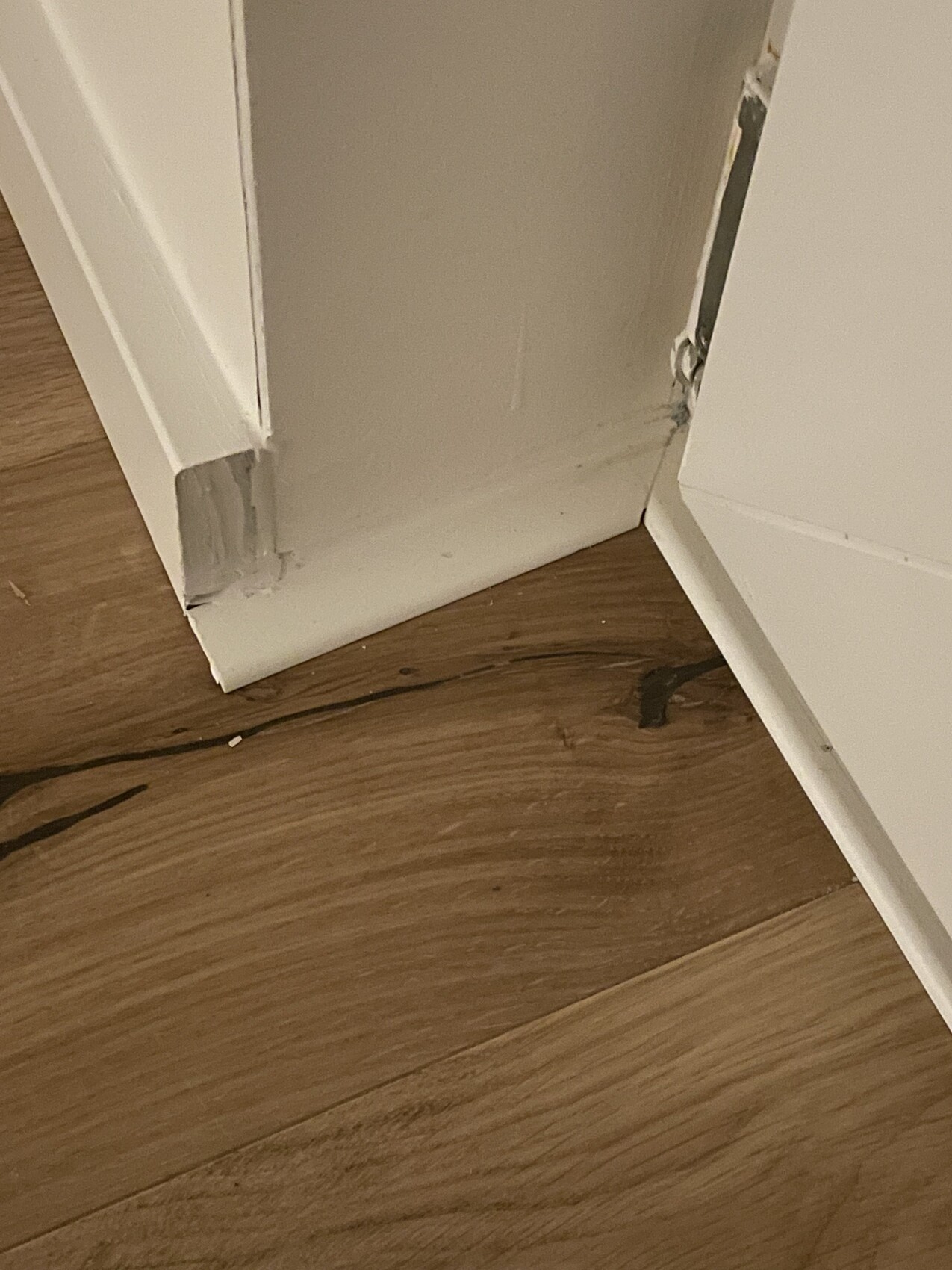
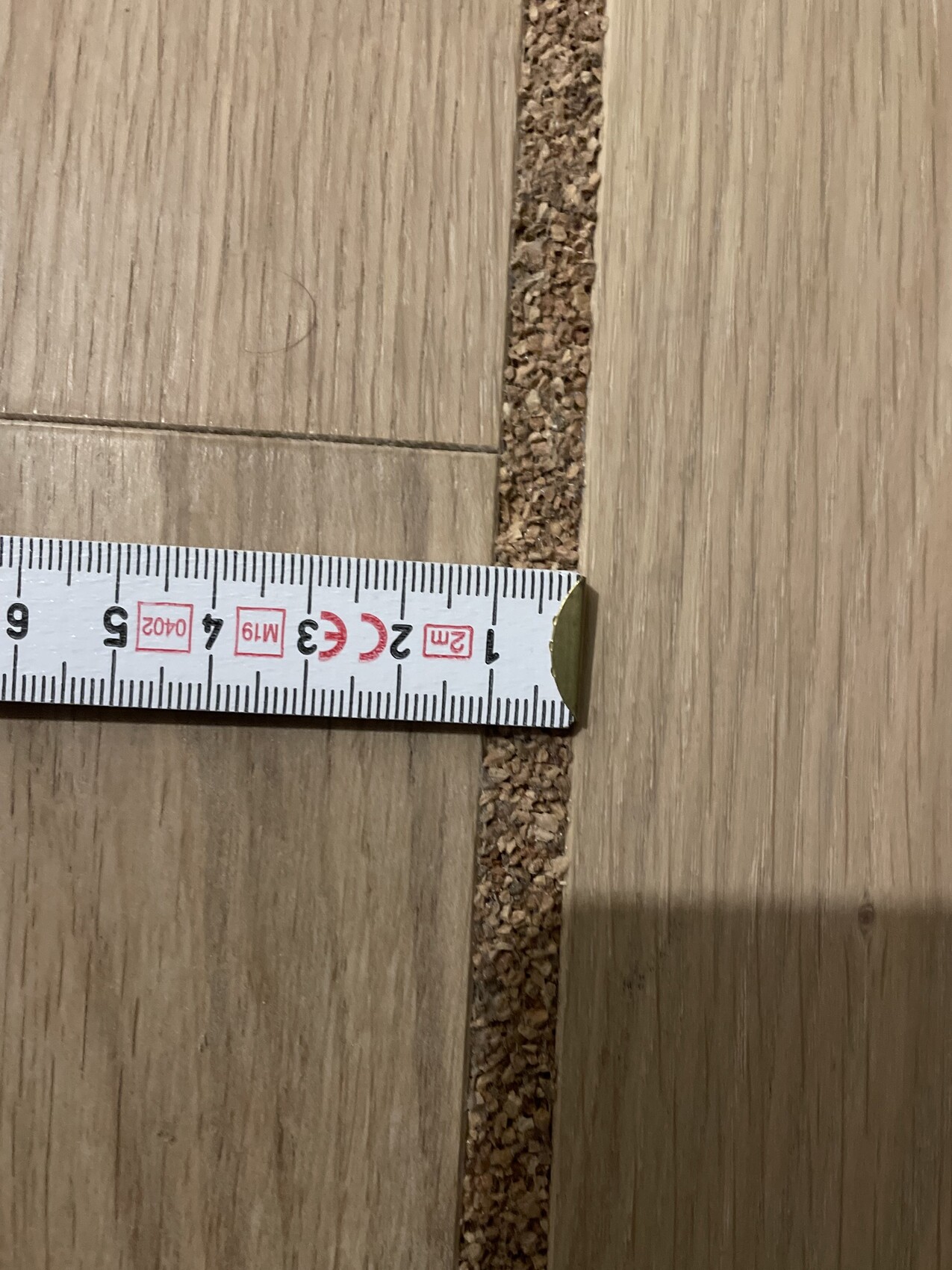
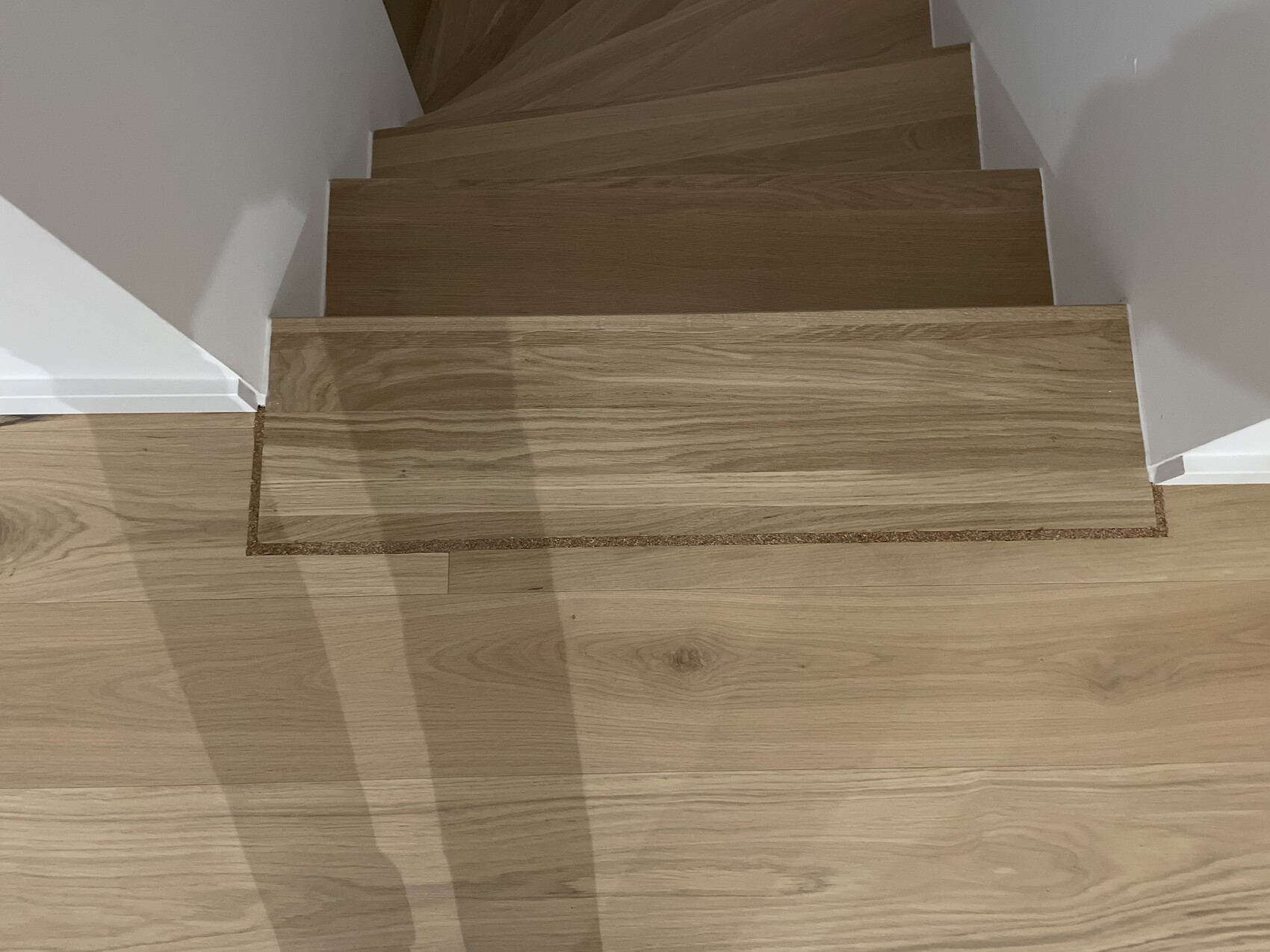
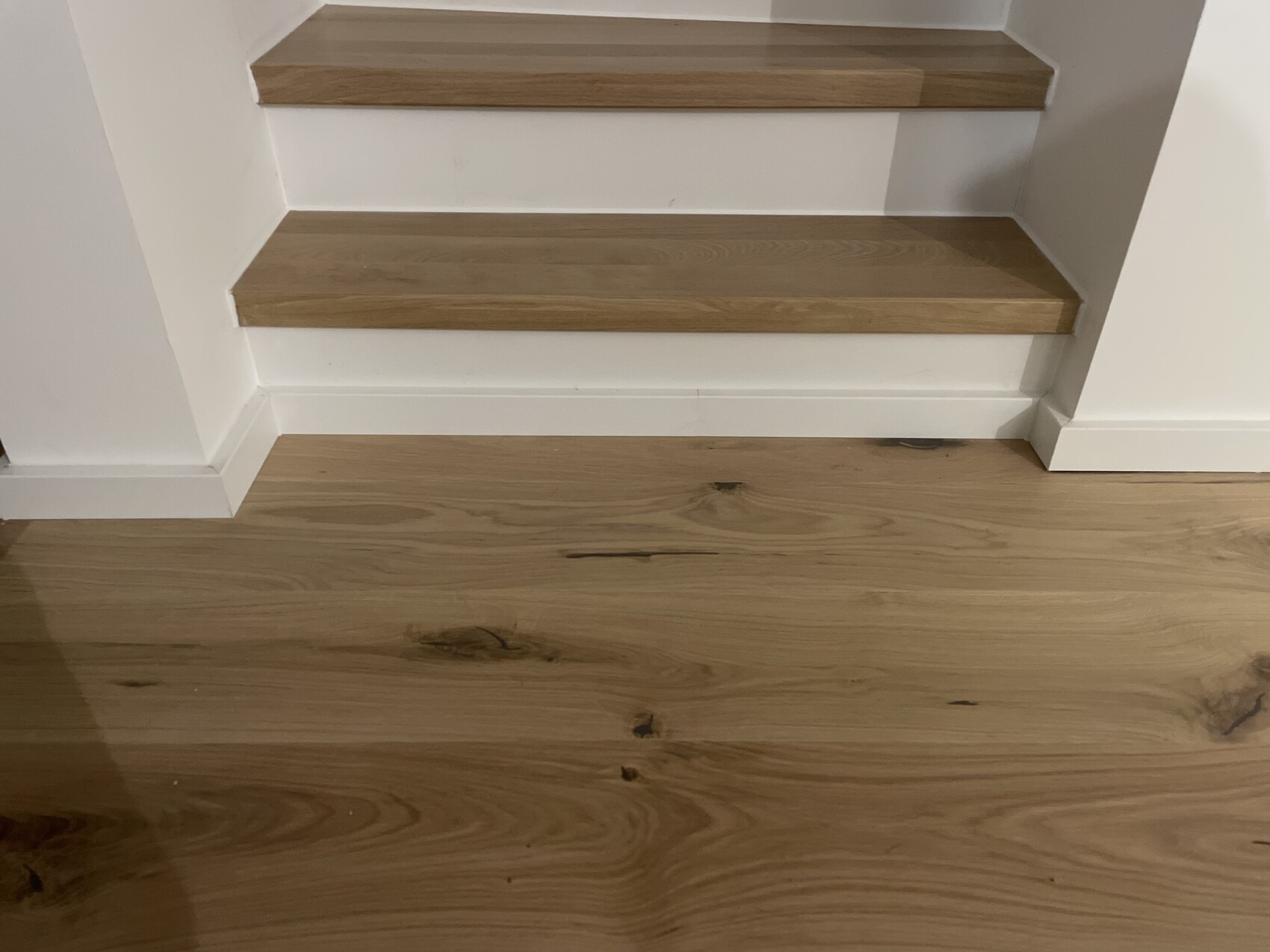
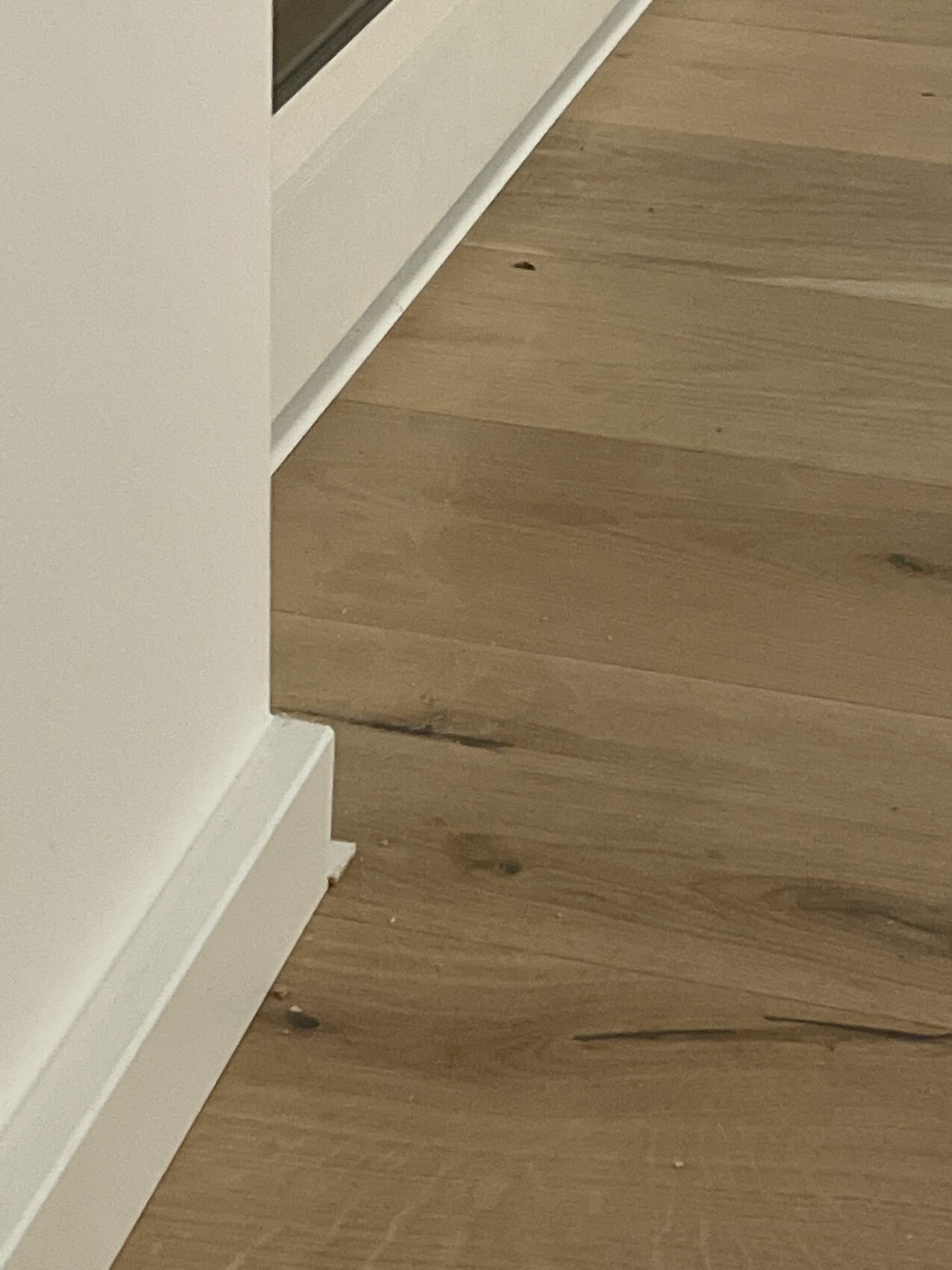
unfortunately, we are having problems again with our parquet installer (a small family business in NRW). The work on the transitions and the baseboards was done very poorly.
A brief summary of the situation: After a long wait due to residual moisture in the screed, the parquet was installed (oak, 18.5cm (7.3 inches) wide, fully glued).
As you can see in the photos, the gaps at the transitions are about 1cm (0.4 inches) wide and filled with a cork material that does not match the color.
The baseboards (1.8cm (0.7 inches) wide, about 5.8cm (2.3 inches) high) at the floor-to-ceiling windows do not look good, the smaller baseboards/profiles are odd, and the work was very untidy. The reason for the unusual small baseboards/profiles: the window reveals are too narrow (1cm (0.4 inches) wide baseboards would fit; this is the case with our neighbors in an identical semi-detached house). There are nicer solutions for this, but there was no communication that the baseboards would not fit. The parquet installer is unable to accept criticism and is old-fashioned, just doing things as he learned 30 years ago. He refuses to make any corrections.
Regarding the cork filling, we probably have no legal chance for corrections, even though the boards at the transitions were cut unevenly. (I saw examples from other providers, unfortunately too late, and spoke with specialists from a large parquet company (Parkett Dietrich) who said that transitions without joints or with very small joints about 4mm (0.16 inches) are possible. These could be filled with parquet joint filler in a similar color and would look a thousand times better). Baseboards before the step in the staircase area???
The small baseboards in the window area are impossible, though. I am a member of the property owners’ protection association (legal insurance is also available) and I am considering taking legal action with a specialist lawyer and construction consultant, although I would prefer not to. But this job cost a lot of money, and now I will probably have to hire a second company to fix it.
I would appreciate any tips on how to salvage one or the other issue.
guckuck2 schrieb:
The floorboards on "Picture3" obviously cut freehand with a jigsaw always make me smile. Don’t they have a miter saw with them? Strange.Just amateurs with big egos who don’t accept criticism Benutzer1236 Jul 2023 12:46
It looks great what you made out of it. Top quality.
Benutzer123 schrieb:
It looks great what you made out of it. Excellent.I agree! It turned out fantastic.H
hanghaus20236 Jul 2023 13:44pim1985 schrieb:
Your comments are not only disrespectful,I can only recommend using the block function here.

Today we had an on-site meeting to discuss the parquet flooring, specifically the installation direction and transitions.
We had the option between subtle transitions (2-3mm (0.08-0.12 inches)) between rooms or installing the flooring continuously without transitions.
When talking about the pros and cons of transitions, this thread came up. I mentioned how I definitely do not want it done a certain way 🤨 and showed him a picture from this thread.
Our parquet installer said that, according to technical standards, it is possible to do it that way—and that it is basically "correct"—but he doesn’t do it like that because the visual result really looks different.
We had the option between subtle transitions (2-3mm (0.08-0.12 inches)) between rooms or installing the flooring continuously without transitions.
When talking about the pros and cons of transitions, this thread came up. I mentioned how I definitely do not want it done a certain way 🤨 and showed him a picture from this thread.
Our parquet installer said that, according to technical standards, it is possible to do it that way—and that it is basically "correct"—but he doesn’t do it like that because the visual result really looks different.
kati1337 schrieb:
Our parquet flooring installer said that according to standard industry practice, this method is actually acceptable—basically "correct"—but he personally doesn’t do it because a nice finish looks completely different. If that’s true, then it’s unlikely anyone will succeed in getting compensation for a "does not look good" issue. This shows again how far the execution based on "industry standards" is from a genuinely "nice" finish. Typical of 1950.
So, as always, clearly communicate what you don’t want and what you do want/how it should look. The mindset of "I thought that..." remains a problem and is always disadvantageous. From my experience, this usually causes communication problems and a lack of effort by tradespeople to make it look better.