
Hello everyone,
I would like to get your expert opinion on an issue I am currently discussing with the shell construction company. It concerns an obvious thermal bridge that became apparent in January (about 9 months after completion).
Problem:
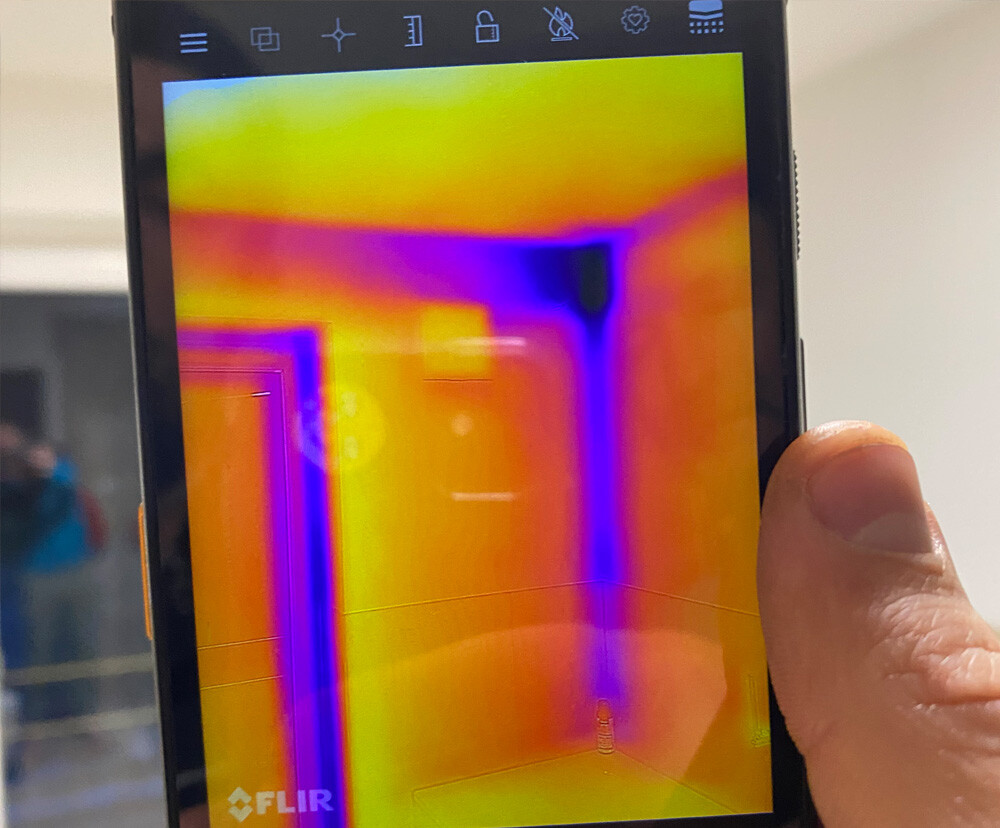
In the corner near the ceiling of the bathroom on the exterior wall, mold has developed. The masonry in that area feels noticeably colder to the touch compared to other places. A thermal imaging camera was used to take a photo, which I have attached below. It clearly shows the presence of a thermal bridge.
This is a room under the roof, above which there is a shallow attic. The intermediate ceiling is insulated, and the roof is fully insulated with external insulation. The other rooms in the attic have exposed rafters, and only in the bathroom was the intermediate ceiling installed to improve ventilation. The attic has no leaks or drafts and its temperature is moderate to cool (since it is not directly heated), but not cold.
The "problem corner" is located directly under the roof on the northwest side of the house. See photos. The masonry consists of 40cm (16 inches) Ytong blocks with a few centimeters of insulating plaster on top.
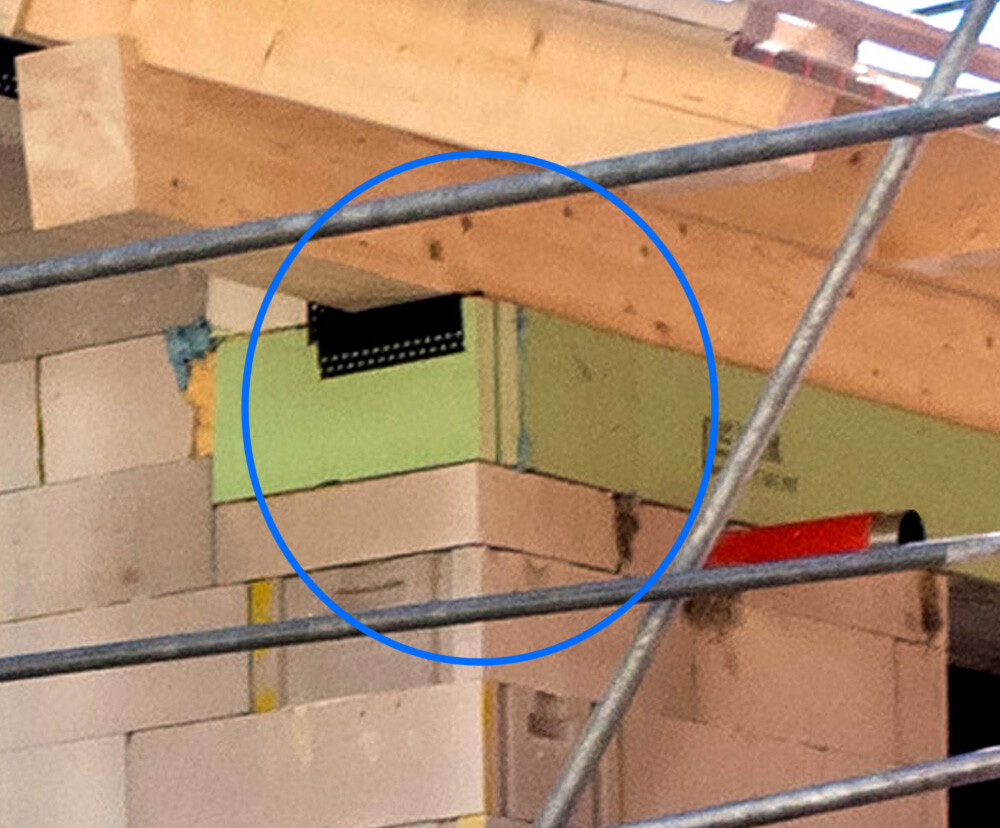
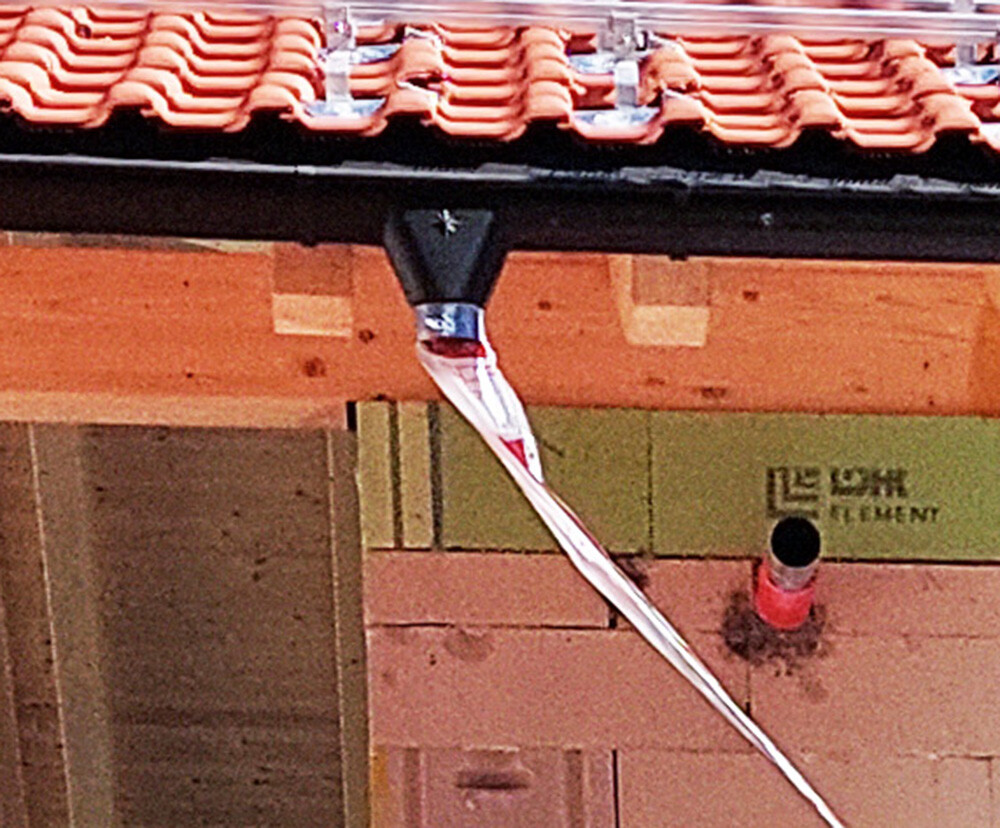
The shell builder acknowledges the issue but suggests it might originate from the roof (understandably trying to shift responsibility). Fortunately, I took photos during the shell construction phase, attached here. My suspicion is that the insulation at the ring beam is not properly installed. The spot is clearly visible in the two photos. The green insulation looks different at other corners of the house, without this gray vertical gap. The builder claims the gap is not continuous but is just the groove of the insulation panels interlocked there, which is normal.
By the way, the bathroom was properly ventilated, morning and evening along with the rest of the house, and after every shower. I have a hygrometer in the room, and the humidity levels stay between 45% and a maximum of 65%.
I don’t have enough knowledge in this area, so my question is: Does anyone have an idea of what else could cause this and what the most likely reason is?
Thank you in advance!!
I would like to get your expert opinion on an issue I am currently discussing with the shell construction company. It concerns an obvious thermal bridge that became apparent in January (about 9 months after completion).
Problem:
In the corner near the ceiling of the bathroom on the exterior wall, mold has developed. The masonry in that area feels noticeably colder to the touch compared to other places. A thermal imaging camera was used to take a photo, which I have attached below. It clearly shows the presence of a thermal bridge.
This is a room under the roof, above which there is a shallow attic. The intermediate ceiling is insulated, and the roof is fully insulated with external insulation. The other rooms in the attic have exposed rafters, and only in the bathroom was the intermediate ceiling installed to improve ventilation. The attic has no leaks or drafts and its temperature is moderate to cool (since it is not directly heated), but not cold.
The "problem corner" is located directly under the roof on the northwest side of the house. See photos. The masonry consists of 40cm (16 inches) Ytong blocks with a few centimeters of insulating plaster on top.
The shell builder acknowledges the issue but suggests it might originate from the roof (understandably trying to shift responsibility). Fortunately, I took photos during the shell construction phase, attached here. My suspicion is that the insulation at the ring beam is not properly installed. The spot is clearly visible in the two photos. The green insulation looks different at other corners of the house, without this gray vertical gap. The builder claims the gap is not continuous but is just the groove of the insulation panels interlocked there, which is normal.
By the way, the bathroom was properly ventilated, morning and evening along with the rest of the house, and after every shower. I have a hygrometer in the room, and the humidity levels stay between 45% and a maximum of 65%.
I don’t have enough knowledge in this area, so my question is: Does anyone have an idea of what else could cause this and what the most likely reason is?
Thank you in advance!!
A
Allthewayup18 Feb 2023 13:40Interesting topic.
During my own construction phase (we are still in the middle of it), I also noticed that these ring beams are built quite openly, meaning they are hardly insulated and create a generous cavity in the corners. I took some photos of this during the construction because I was not sure if this was done correctly. Now you are a bit further along than I am and are reporting a thermal bridge problem in this area. That definitely raises all my alarm bells.
Have you installed additional insulation on the outside of the Ytong blocks? Do you have the construction drawings or the reinforcement plan? The ring beams should actually have enough structural coverage so that a thermal bridge does not develop to the extent that mold can form on the inside of the wall – at least, that’s how it was explained to me. It is technically normal that they reduce the wall cross-section slightly – you can hardly leave them out. The question is how they were ultimately enclosed with the Ytong blocks. The plans should provide insight on that. Did you build with a general contractor or individual trades? Is there a ventilation system in the bathroom or a central ventilation system in the house in general? While this is not primarily related to the cause, it can potentially worsen the symptoms.
During my own construction phase (we are still in the middle of it), I also noticed that these ring beams are built quite openly, meaning they are hardly insulated and create a generous cavity in the corners. I took some photos of this during the construction because I was not sure if this was done correctly. Now you are a bit further along than I am and are reporting a thermal bridge problem in this area. That definitely raises all my alarm bells.
Have you installed additional insulation on the outside of the Ytong blocks? Do you have the construction drawings or the reinforcement plan? The ring beams should actually have enough structural coverage so that a thermal bridge does not develop to the extent that mold can form on the inside of the wall – at least, that’s how it was explained to me. It is technically normal that they reduce the wall cross-section slightly – you can hardly leave them out. The question is how they were ultimately enclosed with the Ytong blocks. The plans should provide insight on that. Did you build with a general contractor or individual trades? Is there a ventilation system in the bathroom or a central ventilation system in the house in general? While this is not primarily related to the cause, it can potentially worsen the symptoms.
A
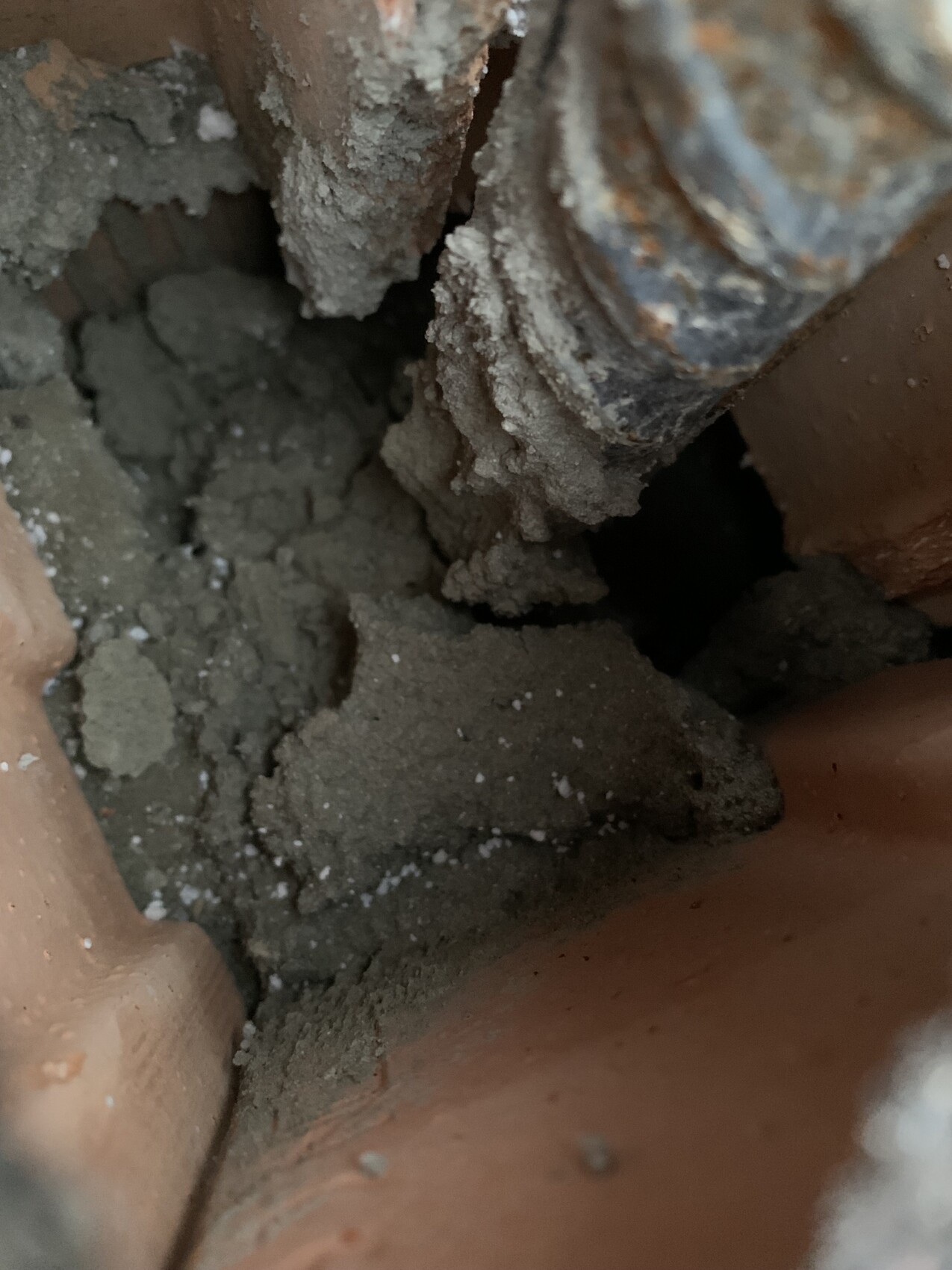
Allthewayup18 Feb 2023 13:48This is how it looks on my side. You can see the described cavity around the anchor. Do you possibly have any photos from the construction phase when the anchors were installed or when the masonry was built onto them?
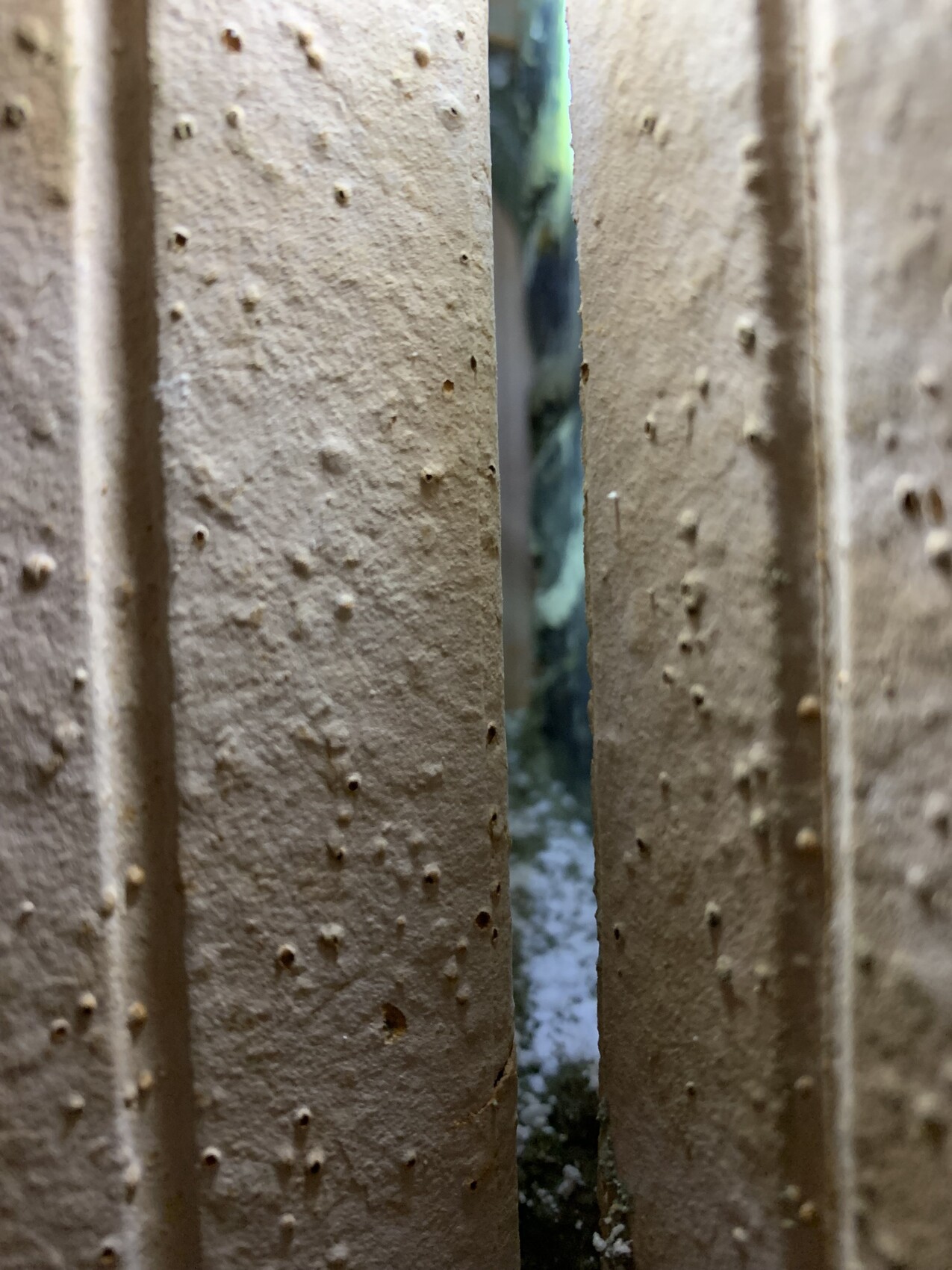
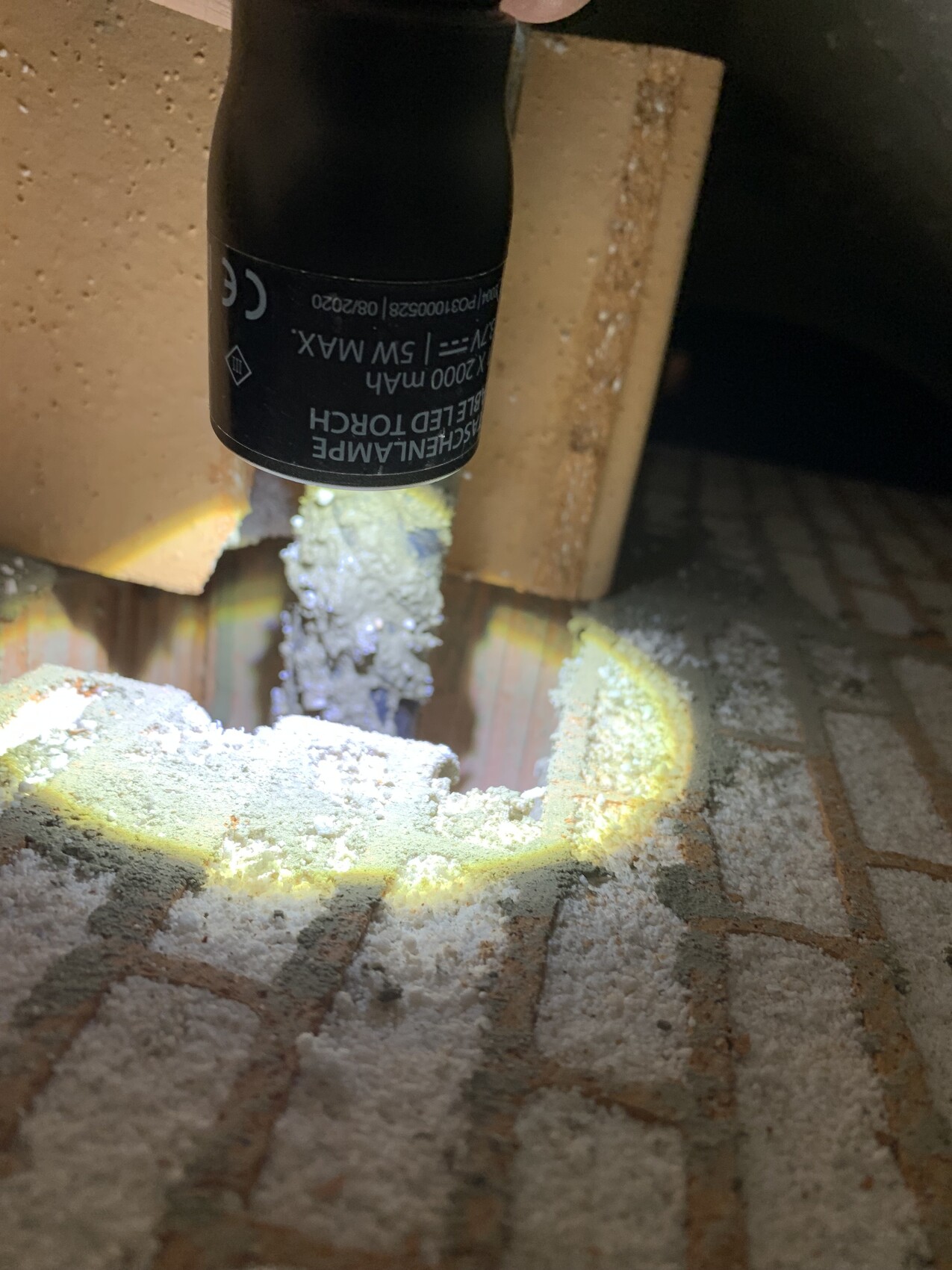

Please also upload the counterparts to the images in this apples-to-oranges comparison (that is, an internal visual image and thermal images from the outside). I would say the problem lies in the fact that the ring beam is positioned too low.
https://www.instagram.com/11antgmxde/
https://www.linkedin.com/company/bauen-jetzt/
https://www.instagram.com/11antgmxde/
https://www.linkedin.com/company/bauen-jetzt/
11ant schrieb:
Please also share the counterparts to the pictures in this apple-to-oranges comparison (meaning the internal photo and the thermal images from the outside). I would say the issue is due to the ring beam being positioned too low.First of all, thanks to everyone for the responses!
The thermal camera showed no irregularities from the outside.
Unfortunately, I didn’t take a photo of the corner from the inside, but I did in another room. The structural design of the ring beam is the same there. However, a thermal bridge exists only in the room described above. My guess was that the problem lies in the insulation installed on the outside of the ring beam.
Similar topics