
ᐅ Very Poor Parquet Flooring Installation – Is Rectification Impossible?
Created on: 19 Jan 2023 10:55
P
pim1985
Hello,
unfortunately, we are having problems again with our parquet installer (a small family business in NRW). The work on the transitions and the baseboards was done very poorly.
A brief summary of the situation: After a long wait due to residual moisture in the screed, the parquet was installed (oak, 18.5cm (7.3 inches) wide, fully glued).
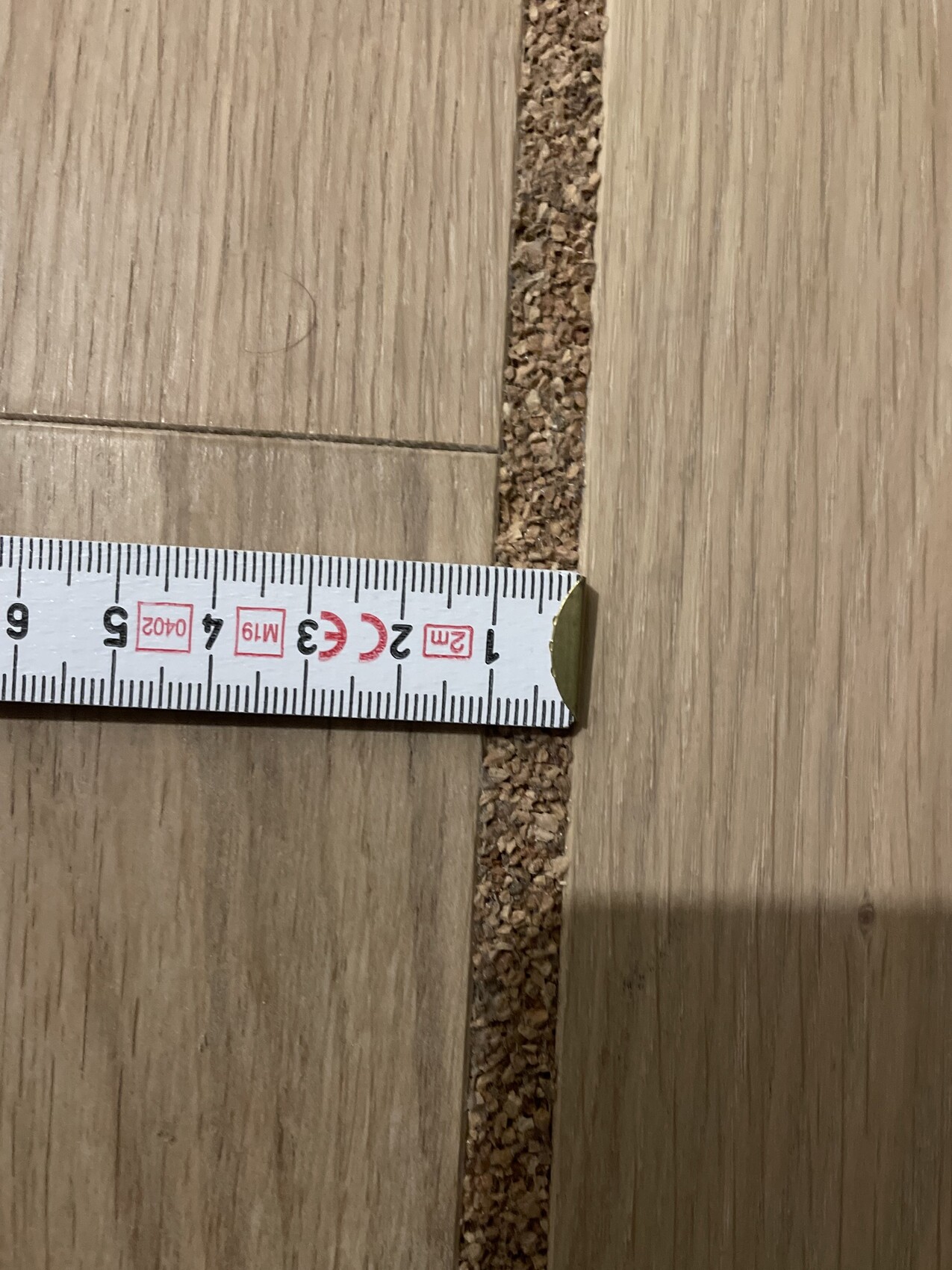
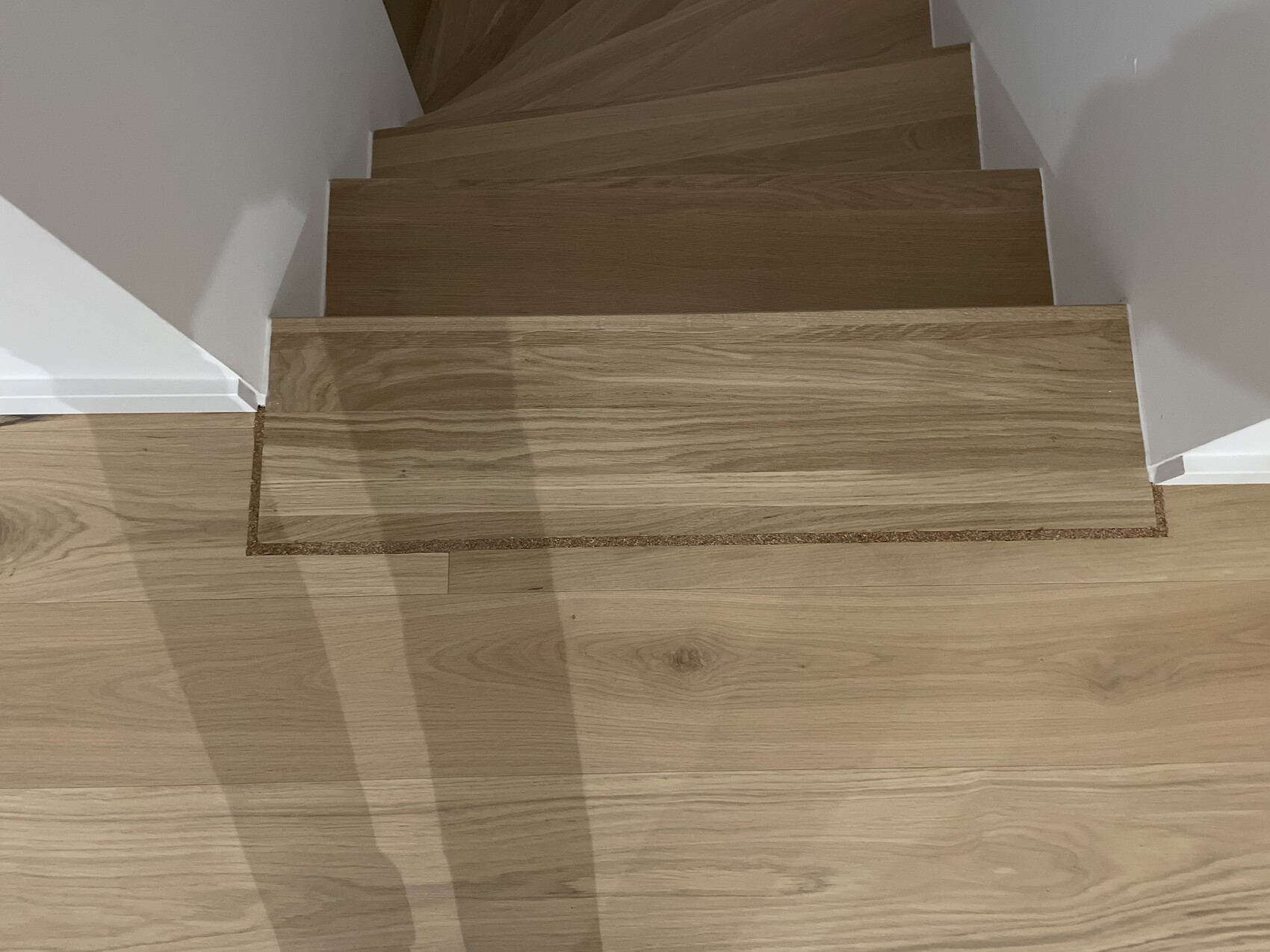
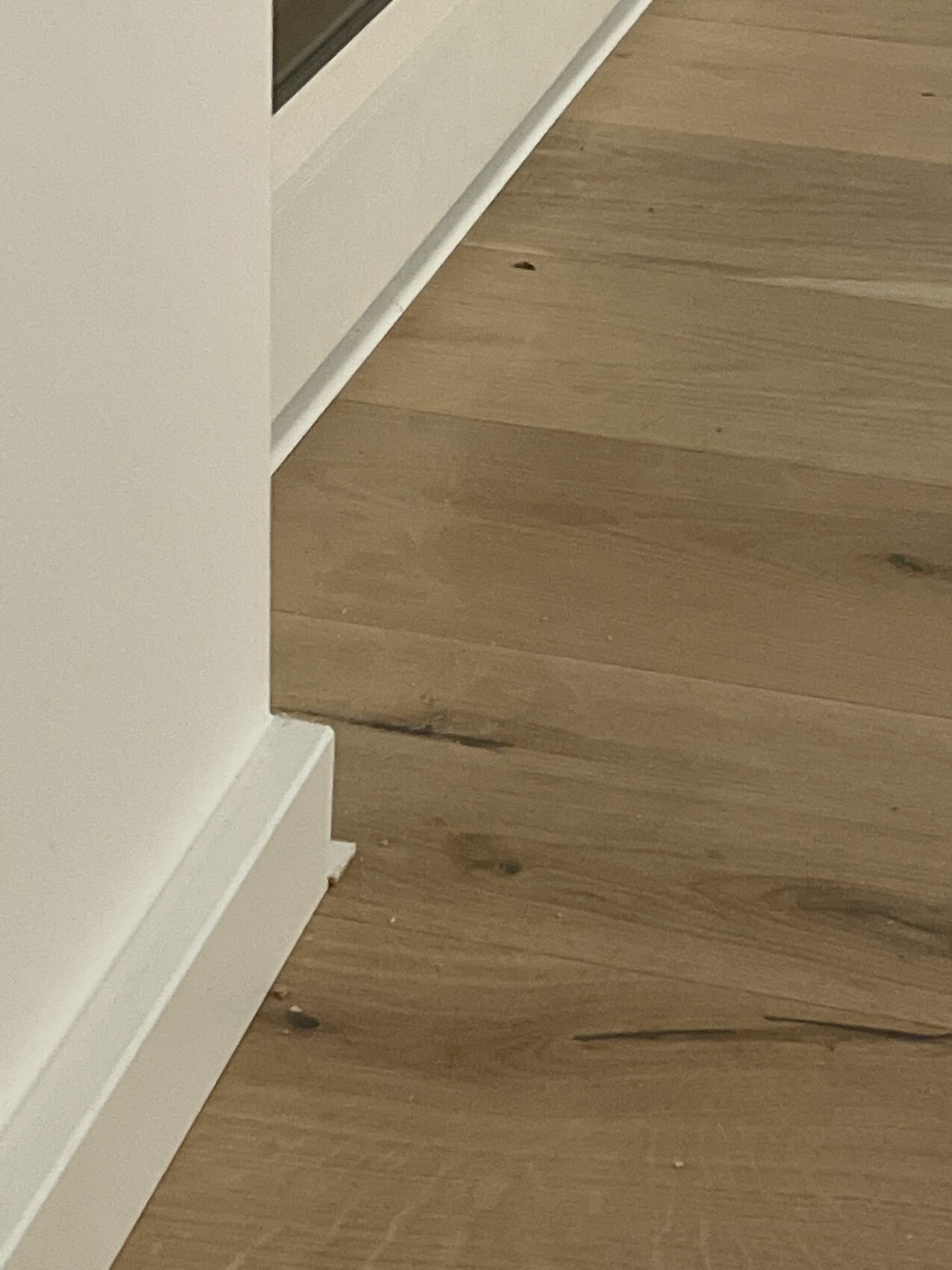
As you can see in the photos, the gaps at the transitions are about 1cm (0.4 inches) wide and filled with a cork material that does not match the color.
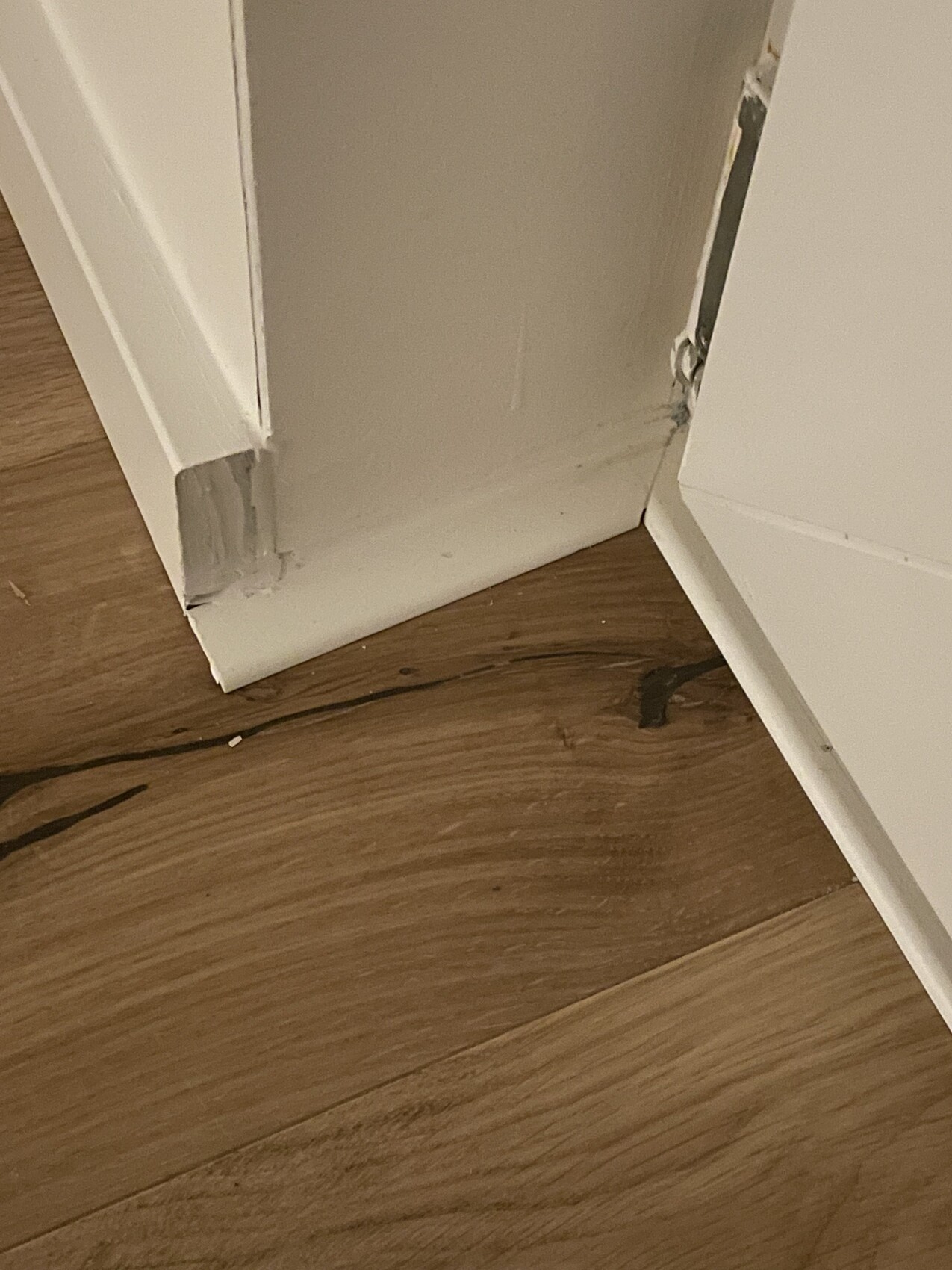
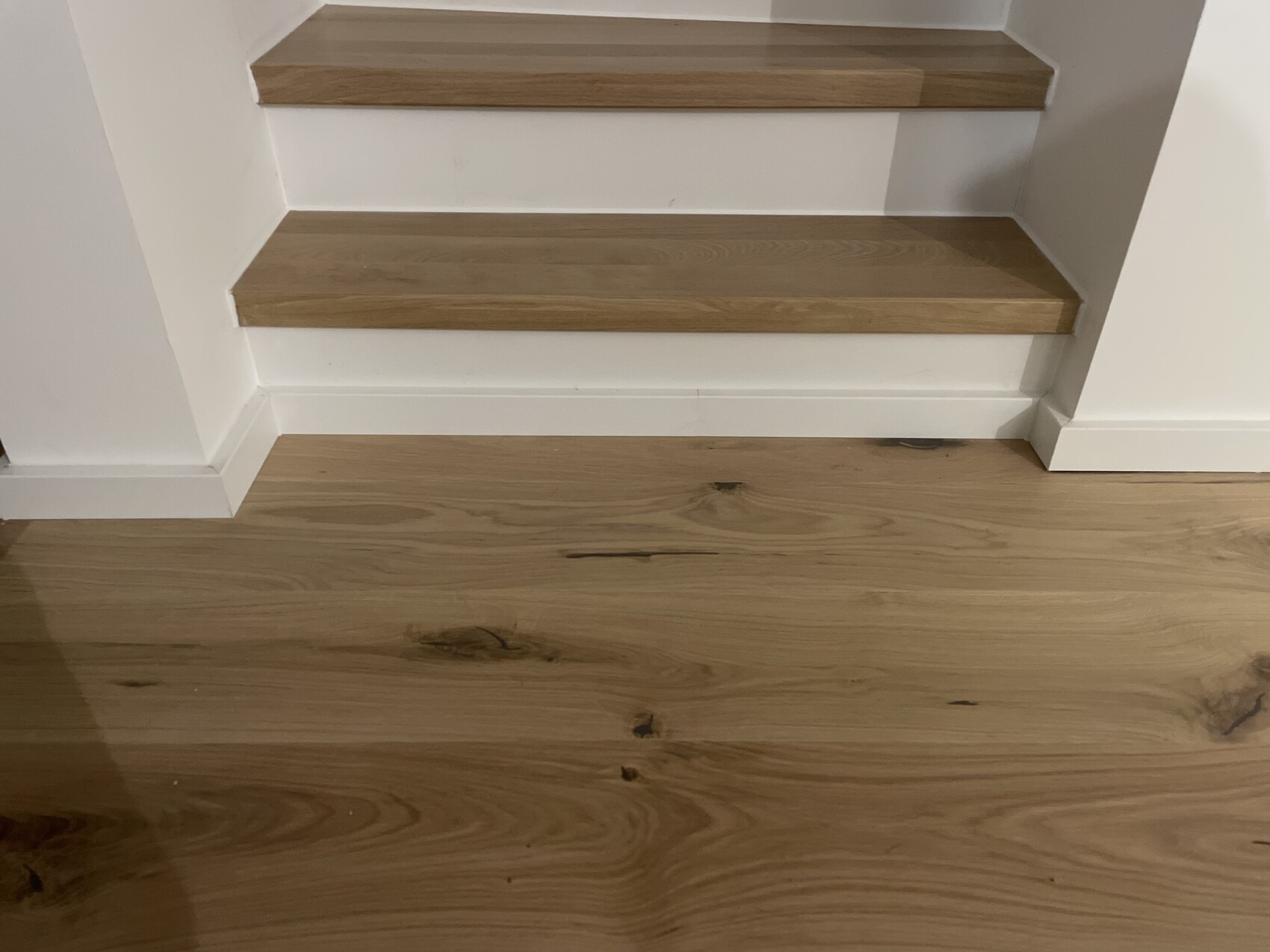
The baseboards (1.8cm (0.7 inches) wide, about 5.8cm (2.3 inches) high) at the floor-to-ceiling windows do not look good, the smaller baseboards/profiles are odd, and the work was very untidy. The reason for the unusual small baseboards/profiles: the window reveals are too narrow (1cm (0.4 inches) wide baseboards would fit; this is the case with our neighbors in an identical semi-detached house). There are nicer solutions for this, but there was no communication that the baseboards would not fit. The parquet installer is unable to accept criticism and is old-fashioned, just doing things as he learned 30 years ago. He refuses to make any corrections.
Regarding the cork filling, we probably have no legal chance for corrections, even though the boards at the transitions were cut unevenly. (I saw examples from other providers, unfortunately too late, and spoke with specialists from a large parquet company (Parkett Dietrich) who said that transitions without joints or with very small joints about 4mm (0.16 inches) are possible. These could be filled with parquet joint filler in a similar color and would look a thousand times better). Baseboards before the step in the staircase area???
The small baseboards in the window area are impossible, though. I am a member of the property owners’ protection association (legal insurance is also available) and I am considering taking legal action with a specialist lawyer and construction consultant, although I would prefer not to. But this job cost a lot of money, and now I will probably have to hire a second company to fix it.
I would appreciate any tips on how to salvage one or the other issue.
unfortunately, we are having problems again with our parquet installer (a small family business in NRW). The work on the transitions and the baseboards was done very poorly.
A brief summary of the situation: After a long wait due to residual moisture in the screed, the parquet was installed (oak, 18.5cm (7.3 inches) wide, fully glued).
As you can see in the photos, the gaps at the transitions are about 1cm (0.4 inches) wide and filled with a cork material that does not match the color.
The baseboards (1.8cm (0.7 inches) wide, about 5.8cm (2.3 inches) high) at the floor-to-ceiling windows do not look good, the smaller baseboards/profiles are odd, and the work was very untidy. The reason for the unusual small baseboards/profiles: the window reveals are too narrow (1cm (0.4 inches) wide baseboards would fit; this is the case with our neighbors in an identical semi-detached house). There are nicer solutions for this, but there was no communication that the baseboards would not fit. The parquet installer is unable to accept criticism and is old-fashioned, just doing things as he learned 30 years ago. He refuses to make any corrections.
Regarding the cork filling, we probably have no legal chance for corrections, even though the boards at the transitions were cut unevenly. (I saw examples from other providers, unfortunately too late, and spoke with specialists from a large parquet company (Parkett Dietrich) who said that transitions without joints or with very small joints about 4mm (0.16 inches) are possible. These could be filled with parquet joint filler in a similar color and would look a thousand times better). Baseboards before the step in the staircase area???
The small baseboards in the window area are impossible, though. I am a member of the property owners’ protection association (legal insurance is also available) and I am considering taking legal action with a specialist lawyer and construction consultant, although I would prefer not to. But this job cost a lot of money, and now I will probably have to hire a second company to fix it.
I would appreciate any tips on how to salvage one or the other issue.
C
chand19862 Feb 2023 15:35pim1985 schrieb:
Yes, more or less. A third-party company still has to come in to repair the uneven joints at the transitions or replace the floorboards and then relayout them continuously.Is it possible to get before-and-after pictures?chand1986 schrieb:
Is it possible to get before-and-after pictures?Yes, I will do that, but it will take some time.pim1985 schrieb:
Yes, it’s possible, but a third-party company still needs to come to fix the uneven joints at the transitions or replace the floorboards, and then reinstall them continuously. Is it really that easy without causing more damage than it fixes?
Maybe I’m overlooking it, but where exactly on the photos is the flooring not installed continuously?
Perhaps it could be an option to just replace the cork with a better color.
Tassimat schrieb:
Is it really that simple to fix without causing more damage than benefit?
Maybe I’m overlooking something, but where exactly on the photos is it not installed continuously?
Perhaps replacing just the cork with a better color could be an option. Cork expansion joints can be seen in all door areas. Although I find these cork joints extremely unattractive, the flooring installer said they are necessary. However, they should not be cut unevenly. For example, a cork joint at the left corner measures 1.7 cm (0.7 inches), while at the right corner it is 0.8 cm (0.3 inches). There is no standard (DIN or otherwise) allowing cork joints to be uneven like this. The flooring installer’s proposal was to straighten all crooked joints, which would mean making them all oversize everywhere. There are a total of seven cork expansion joints, all cut unevenly and crooked. Visitors have already asked, “Is it going to stay like this?” For a contract worth nearly 25,000 EUR, this is unacceptable. Especially the cork joints between the tiles and the wood flooring were impossible to accept. Since I could no longer tolerate seeing them, I repaired these myself (see photos of bathroom and guest WC). From the beginning, I did not want transition strips, but now I believe this is a good solution. The other transitions will be repaired later. A skilled flooring installer nowadays can cut out and replace a single plank from the center of a room. In the other door areas, only one plank needs to be replaced, while in the bathrooms it would be six planks each.
Before
After
A
AllThumbs10 Feb 2023 10:26Looks clearly better and intentional!
It's really crazy how crooked and uneven the adjacent floorboards were cut by the parquet fitter. It seems like they didn’t even use a circular saw, but just freehand with a jigsaw 🤨
It's really crazy how crooked and uneven the adjacent floorboards were cut by the parquet fitter. It seems like they didn’t even use a circular saw, but just freehand with a jigsaw 🤨