
ᐅ Suggestions for Floor Plan Improvements for a Single-Family House on a South-Facing Slope
Created on: 5 Feb 2023 20:02
I
Indahaus
Hello everyone,
after purchasing the plot in February last year, which was fully serviced by the end of last year, we have been gathering inspiration and planning ever since. Despite rising costs and interest rates, we are excited about building our house, including some DIY work.
Development Plan / Restrictions
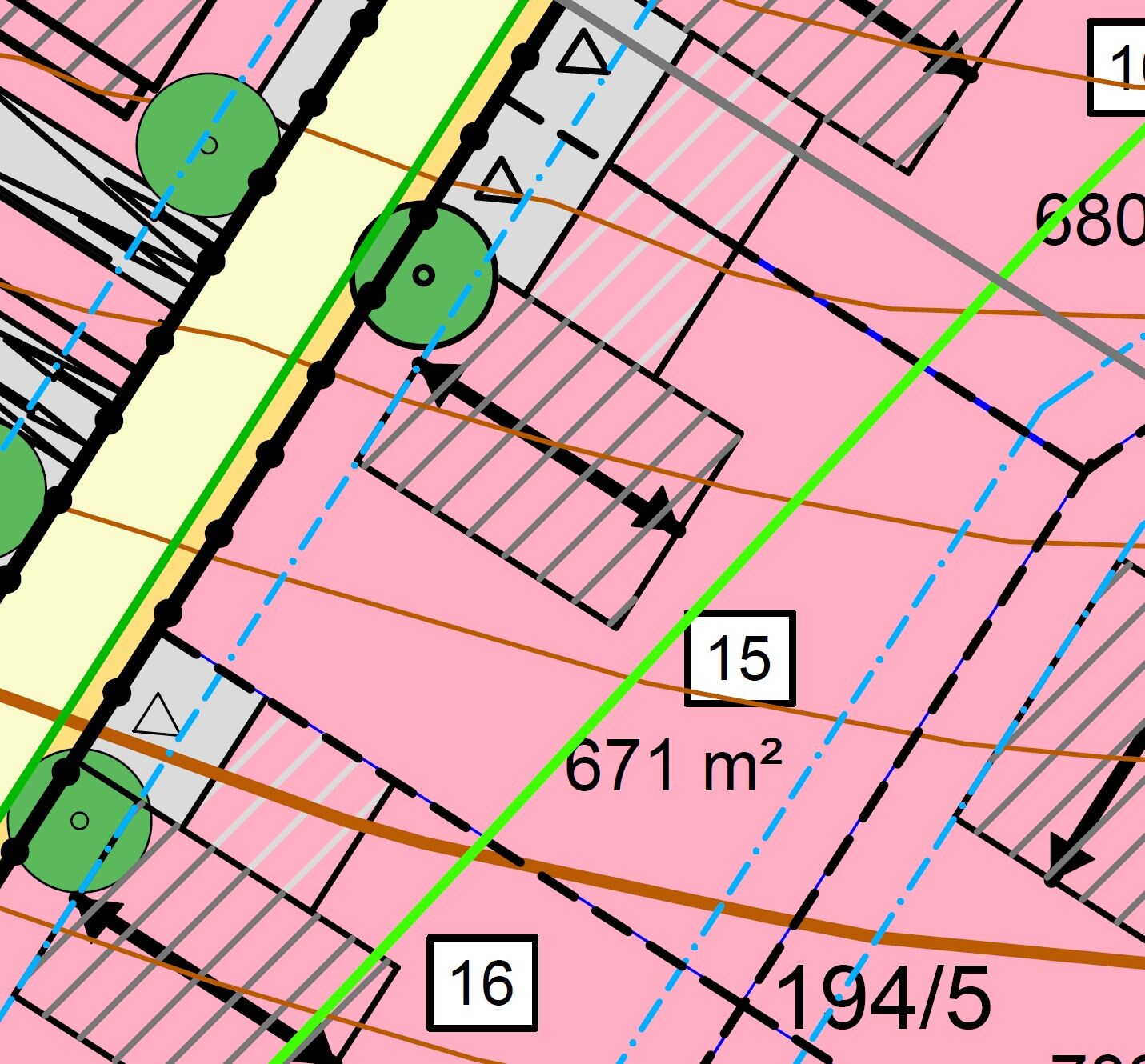
Plot size: 669 m² (7200 sq ft approx.)
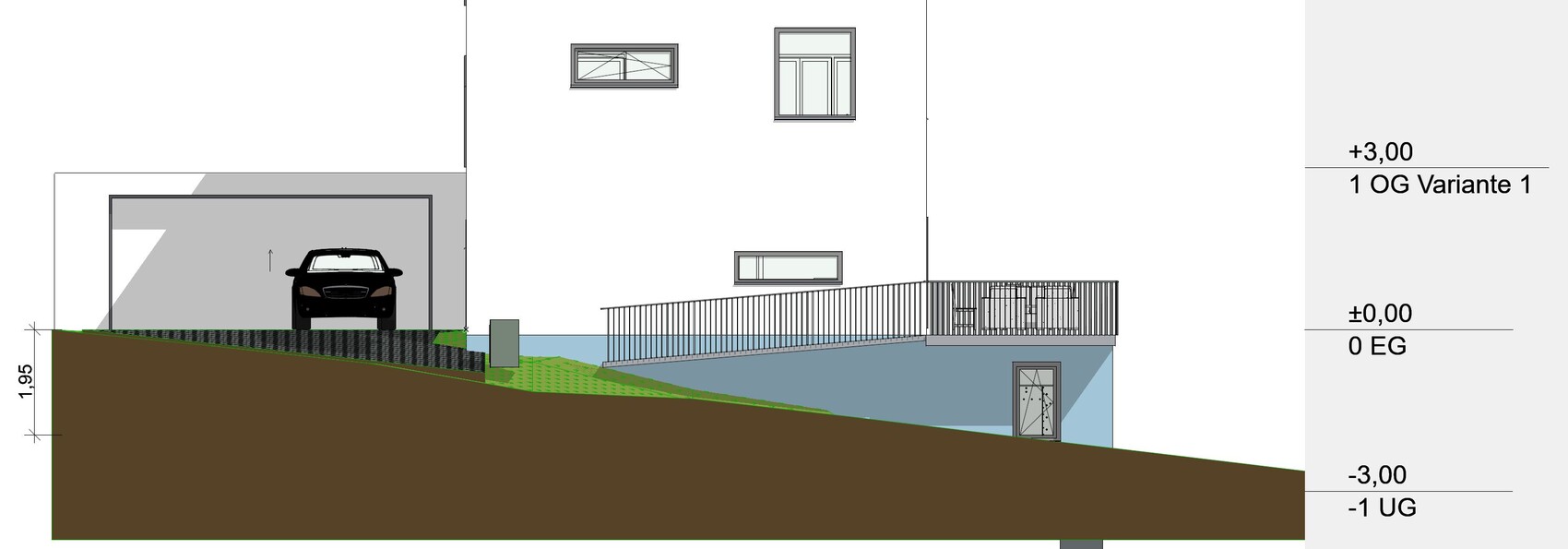
Slope: South-facing slope, 3.90 m (12.8 ft) diagonal (approx. 7.3° incline at the street side)
Site occupancy index: 0.4
Floor area ratio: 0.7
Building window, building line and boundary: 3 meters (10 ft) or setback areas
Edge development: garage
Number of parking spaces: two per dwelling unit in front of garages, minimum 5 meters (16 ft)
Number of stories: 3 full stories (basement, ground floor, upper floor)
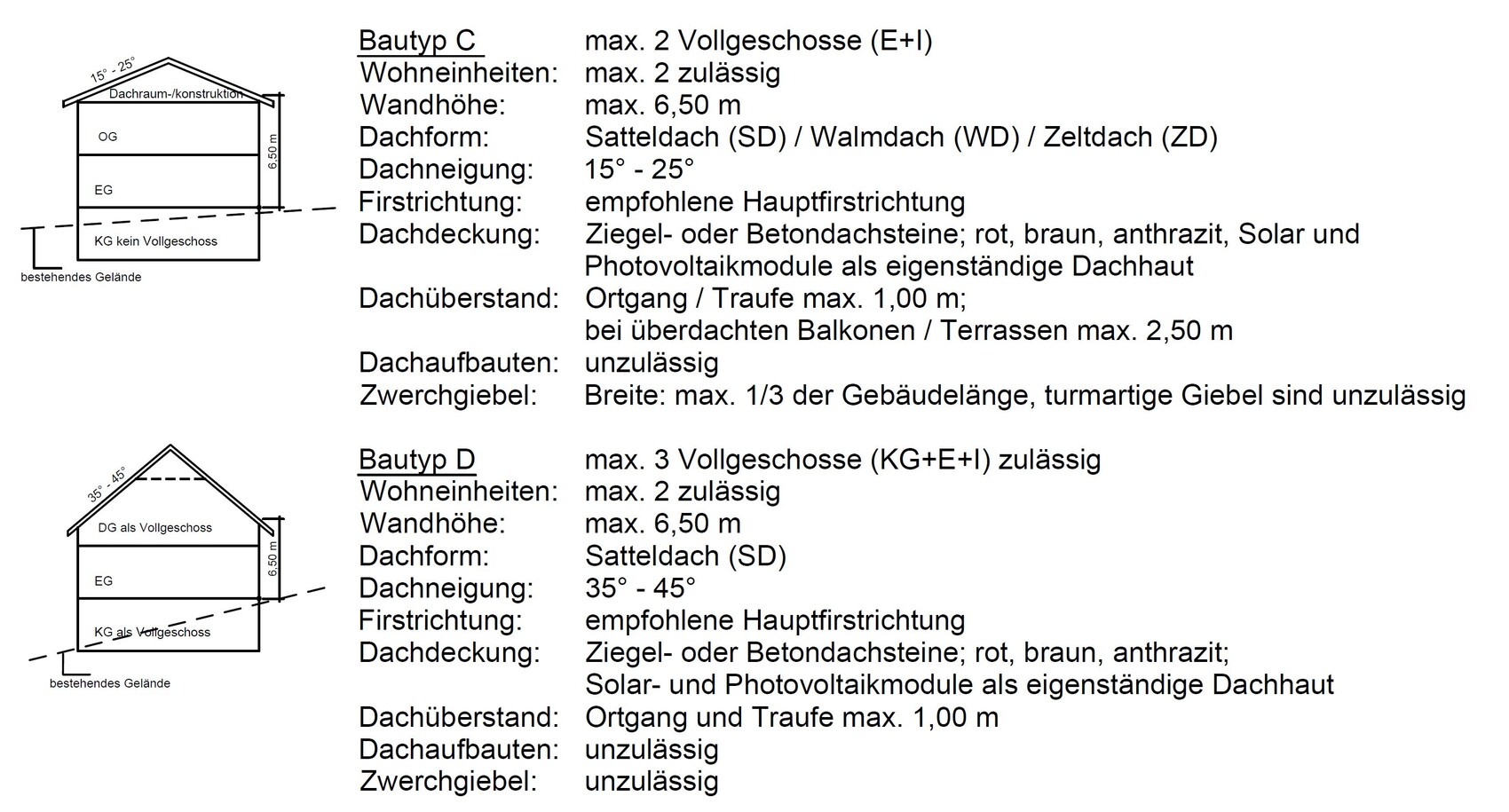
Roof style: gable roof with 35° to 45° pitch (if basement is not a full floor, then 15° to 25°)
Architectural style
Orientation: see draft sketch
Maximum heights / limits: wall height 6.50 m (21.3 ft) measured from finished floor level of the ground floor to the junction of wall and exterior roof surface
Additional requirements: garage roof as flat roof with green roofing, at least 40% photovoltaic panels
Homeowners’ Requirements
Style, roof type, building type: no decision yet on wood or masonry (affordable ecological)
Basement, floors: 2 plus basement suitable as living space
Number of occupants, age: 2 persons, both 26 years old
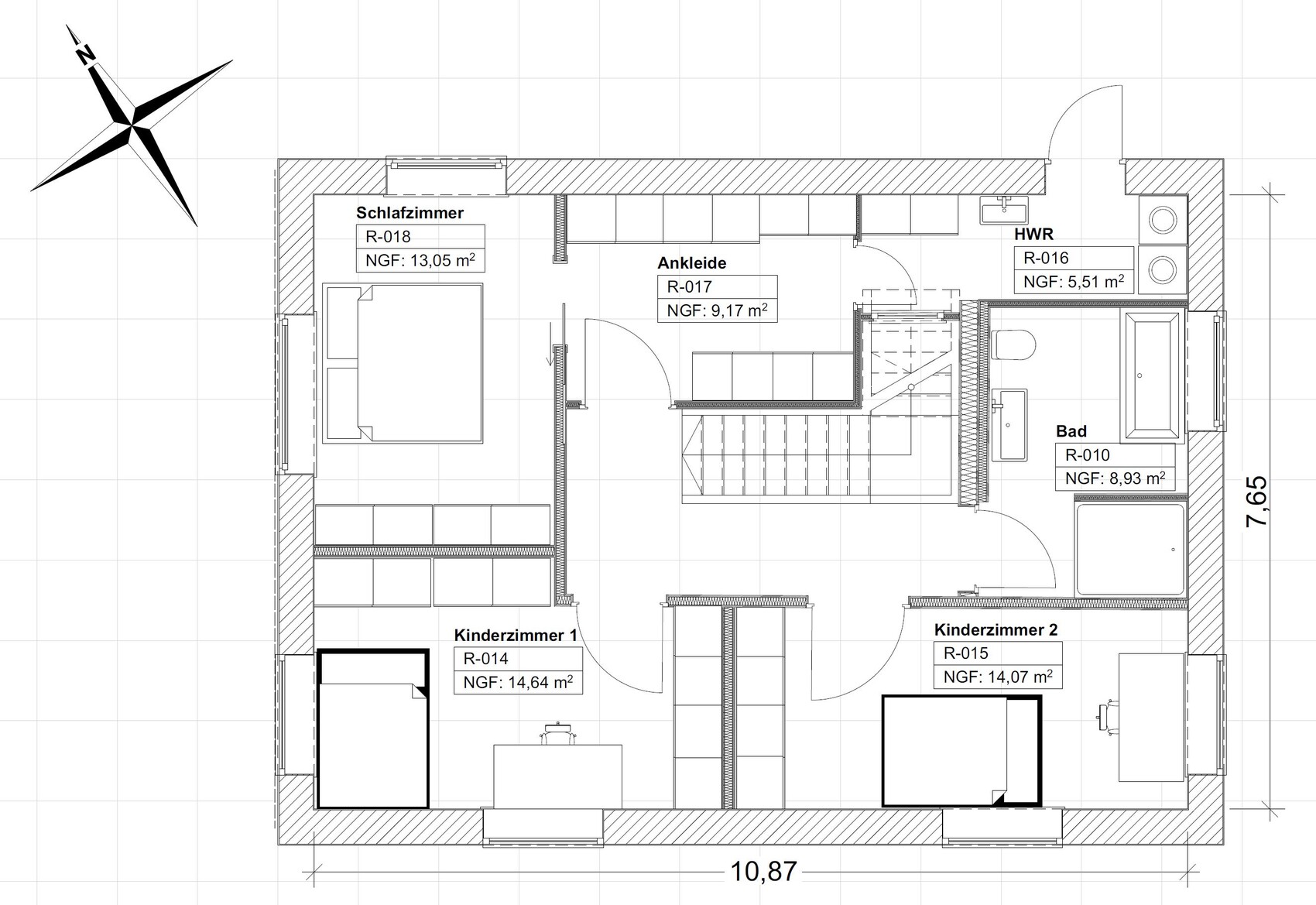
Space requirements on ground and upper floors: see draft sketch
Office: family use or home office? home office
Overnight guests per year: few
Open or closed architecture: rather open
Conservative or modern design: rather modern
Open kitchen, kitchen island: both desired
Number of dining seats: 8, preferably extendable
Fireplace: would be nice but too expensive
Music/Stereo wall: no
Balcony, roof terrace: roof terrace on garage for drying laundry, terrace, balcony-like at living/dining/kitchen area but with garden access
Garage, carport: double garage (possibly added later)
Utility garden, greenhouse: yes (greenhouse not planned at least for now)
Further wishes / special features / daily routine, please also reasons for inclusion or exclusion
House Design
Source of planning: do-it-yourself
What do you particularly like? Why? no bay windows, no spiral stairs, enough space in entrance area, access garage-house in entrance area, access garage roof/laundry room on the upper floor, level access to ground floor on north side and basement on south side, sight lines
What don’t you like? Why? staircase not located near living area, small main bathroom
Cost estimate according to architect/planner: not obtained yet
Personal price limit for house including fittings:
Preferred heating system: heat pump (underfloor heating possibly combined with cooled ceiling)
If you had to give up something, on which details/extensions
-you can give up: efficient sqm (unused areas), basement under garage or terrace
-you cannot give up: basement with large hobby workshop
Why is the design as it is now? For example:
Standard design from planner? No
Which wishes from the architect were implemented? No architect, we tried to implement our wishes ourselves on a compact footprint without feeling cramped
What makes it, in your view, particularly good or bad?
What is the most important/fundamental question about the floor plan in 130 characters?
Do you have any suggestions for improvement? What would bother you? Any tips on doing things similarly but more cost-effectively?
The basement plan is not finalized yet. In addition to utility rooms, storage, possibly a bathroom (for quick cleaning and a potential future granny flat), a space-intensive hobby needs to be accommodated here. We are considering adding a basement under the garage or terrace or both. If you have any preliminary tips or rough cost estimates, please share.
If you need further information, just ask.
Thank you all!
Indahaus

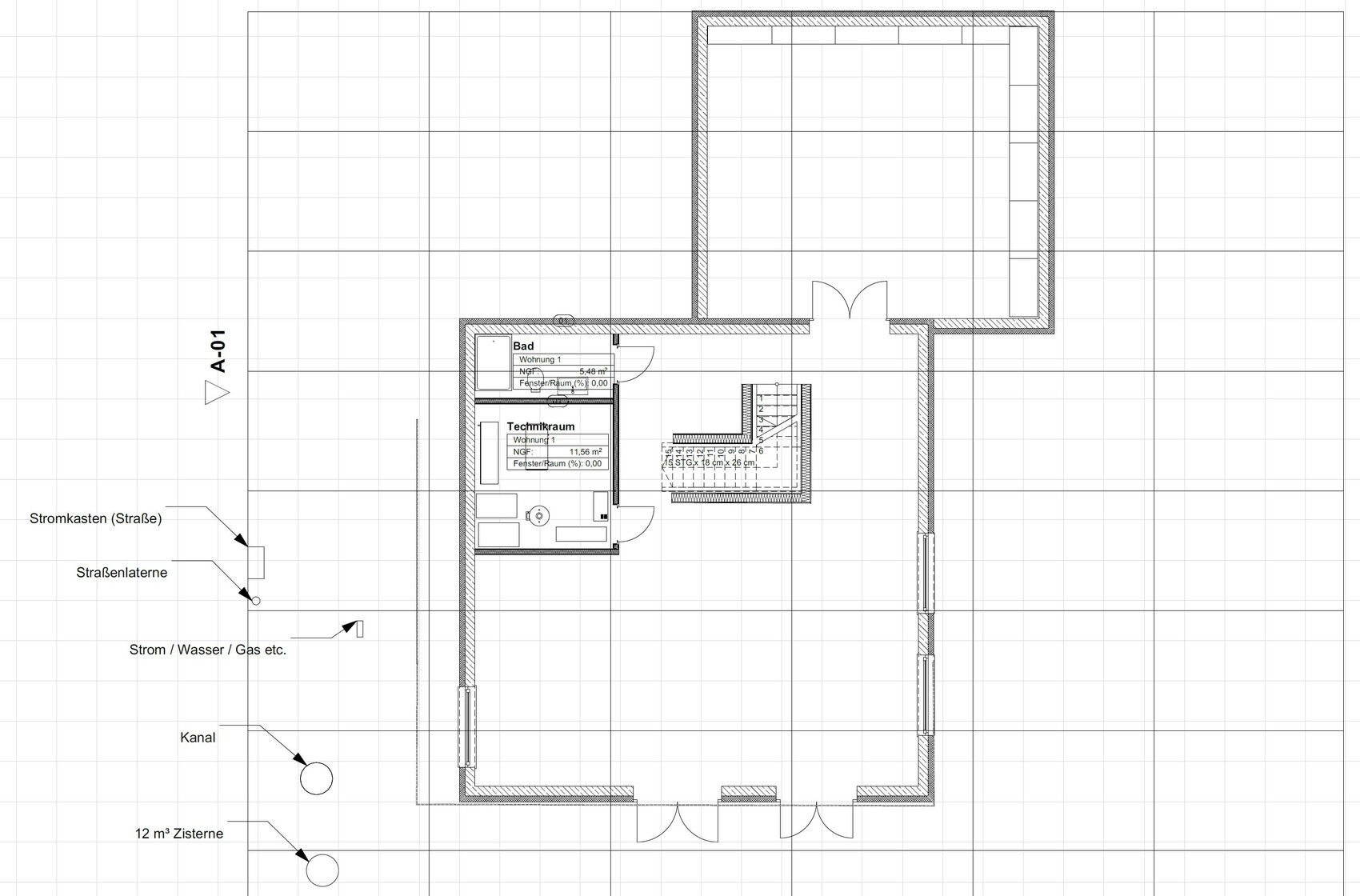
after purchasing the plot in February last year, which was fully serviced by the end of last year, we have been gathering inspiration and planning ever since. Despite rising costs and interest rates, we are excited about building our house, including some DIY work.
Development Plan / Restrictions
Plot size: 669 m² (7200 sq ft approx.)
Slope: South-facing slope, 3.90 m (12.8 ft) diagonal (approx. 7.3° incline at the street side)
Site occupancy index: 0.4
Floor area ratio: 0.7
Building window, building line and boundary: 3 meters (10 ft) or setback areas
Edge development: garage
Number of parking spaces: two per dwelling unit in front of garages, minimum 5 meters (16 ft)
Number of stories: 3 full stories (basement, ground floor, upper floor)
Roof style: gable roof with 35° to 45° pitch (if basement is not a full floor, then 15° to 25°)
Architectural style
Orientation: see draft sketch
Maximum heights / limits: wall height 6.50 m (21.3 ft) measured from finished floor level of the ground floor to the junction of wall and exterior roof surface
Additional requirements: garage roof as flat roof with green roofing, at least 40% photovoltaic panels
Homeowners’ Requirements
Style, roof type, building type: no decision yet on wood or masonry (affordable ecological)
Basement, floors: 2 plus basement suitable as living space
Number of occupants, age: 2 persons, both 26 years old
Space requirements on ground and upper floors: see draft sketch
Office: family use or home office? home office
Overnight guests per year: few
Open or closed architecture: rather open
Conservative or modern design: rather modern
Open kitchen, kitchen island: both desired
Number of dining seats: 8, preferably extendable
Fireplace: would be nice but too expensive
Music/Stereo wall: no
Balcony, roof terrace: roof terrace on garage for drying laundry, terrace, balcony-like at living/dining/kitchen area but with garden access
Garage, carport: double garage (possibly added later)
Utility garden, greenhouse: yes (greenhouse not planned at least for now)
Further wishes / special features / daily routine, please also reasons for inclusion or exclusion
House Design
Source of planning: do-it-yourself
What do you particularly like? Why? no bay windows, no spiral stairs, enough space in entrance area, access garage-house in entrance area, access garage roof/laundry room on the upper floor, level access to ground floor on north side and basement on south side, sight lines
What don’t you like? Why? staircase not located near living area, small main bathroom
Cost estimate according to architect/planner: not obtained yet
Personal price limit for house including fittings:
Preferred heating system: heat pump (underfloor heating possibly combined with cooled ceiling)
If you had to give up something, on which details/extensions
-you can give up: efficient sqm (unused areas), basement under garage or terrace
-you cannot give up: basement with large hobby workshop
Why is the design as it is now? For example:
Standard design from planner? No
Which wishes from the architect were implemented? No architect, we tried to implement our wishes ourselves on a compact footprint without feeling cramped
What makes it, in your view, particularly good or bad?
What is the most important/fundamental question about the floor plan in 130 characters?
Do you have any suggestions for improvement? What would bother you? Any tips on doing things similarly but more cost-effectively?
The basement plan is not finalized yet. In addition to utility rooms, storage, possibly a bathroom (for quick cleaning and a potential future granny flat), a space-intensive hobby needs to be accommodated here. We are considering adding a basement under the garage or terrace or both. If you have any preliminary tips or rough cost estimates, please share.
If you need further information, just ask.
Thank you all!
Indahaus
S
Schorsch_baut6 Feb 2023 21:54I’m not sure. You seem well informed, but the step from a hobby or small side business to a commercial operation comes with a completely different set of requirements and regulations.
If I recall the workplace and occupational safety regulations from my apprenticeship correctly, I don’t see how you could get approval for running a commercial business in a converted residential basement. Just the regulations for extraction systems dealing with wood dust and solvents are quite demanding and require high air exchange rates and appropriate technical equipment. The electrical installations are also a completely different level in terms of complexity and effort. In addition, there are fire protection measures that can’t just be retrofitted easily. There’s a reason why many carpentry shops close down because they can’t economically finance the required operational conditions. Extraction systems also tend to be low frequency, and you definitely don’t want the vibrations from the machines to be transmitted throughout the house. It won’t be an inexpensive basement if you want to use the space as a commercial workspace. We’re talking about ceiling heights of 2.60 m (8.5 feet) and essentially a new workshop build.
I can already see the first €150,000 just going into the basement.
If I recall the workplace and occupational safety regulations from my apprenticeship correctly, I don’t see how you could get approval for running a commercial business in a converted residential basement. Just the regulations for extraction systems dealing with wood dust and solvents are quite demanding and require high air exchange rates and appropriate technical equipment. The electrical installations are also a completely different level in terms of complexity and effort. In addition, there are fire protection measures that can’t just be retrofitted easily. There’s a reason why many carpentry shops close down because they can’t economically finance the required operational conditions. Extraction systems also tend to be low frequency, and you definitely don’t want the vibrations from the machines to be transmitted throughout the house. It won’t be an inexpensive basement if you want to use the space as a commercial workspace. We’re talking about ceiling heights of 2.60 m (8.5 feet) and essentially a new workshop build.
I can already see the first €150,000 just going into the basement.
Indahaus schrieb:
That is simply not correct. It is 74 cm (29 inches). If you are unsure, feel free to ask for a dimensioned version before misleading others with such claims. I measured the house. However, I used a load-bearing wall (24 cm (9.5 inches) along the ridge direction). And since we are anyway in the sketch phase here, plaster and finishing work by the bricklayers will already take away 10 cm (4 inches) during the shell construction.
Indahaus schrieb:
But nothing concrete comes from you. No, it doesn’t have to. I am not involved in drawing financially unrealistic dream houses, especially not for users who don’t recognize the errors in their designs, even if they are pointed out multiple times.
Financially and for three stories, it is hardly feasible — that just bounces off!
There are still open questions for you. This shows that you are not really engaging with constructive criticism. Besides, you provide explanations that are not at all reflected in the drawings. You don’t address this at all except with a lot of justifications. The attachment to your self-drawn house is too strong to make any real effort as an outsider or advisor.

ypg schrieb:
After the load-bearing walls in the basement, the ground floor follows, then the upper floor adapts accordingly.That sounds like a perfect recipe for a problematic upper floor.K a t j a schrieb:
Maybe @11ant still remembers the thread where we had a townhouse on a slope with a garage next to it. All I recall is that the staircase was pretty much straight toward the kitchen, and the space under the garage – wasn’t there a fitness room in there? Upstairs were the children's rooms and the bedroom. Maybe I’m mixing up several designs. In any case, I thought the final result was quite successful, and you could probably draw some inspiration from it.Nothing rings a bell for me right now.https://www.instagram.com/11antgmxde/
https://www.linkedin.com/company/bauen-jetzt/
H
hanghaus20237 Feb 2023 09:43I ask again, where will the construction take place? Are you planning to do the carpentry work yourself? At least the workshop suggests that.
H
hanghaus20237 Feb 2023 09:55I also don’t see the ground-level exit from the workshop in your plan, nor the load-bearing columns.
You do realize that your project requires extensive structural calculations and a corresponding amount of reinforced concrete. The basement will probably cost around 150,000 euros.
Here we are again with the budget.
150 sqm (1,615 sq ft) of living space * 3,000 euros = 450,000 + 50,000 for the garage + 150,000 for the basement + 50,000 for landscaping = 700,000 euros.
Most likely, a separate workshop would be the more cost-effective solution.
You do realize that your project requires extensive structural calculations and a corresponding amount of reinforced concrete. The basement will probably cost around 150,000 euros.
Here we are again with the budget.
150 sqm (1,615 sq ft) of living space * 3,000 euros = 450,000 + 50,000 for the garage + 150,000 for the basement + 50,000 for landscaping = 700,000 euros.
Most likely, a separate workshop would be the more cost-effective solution.
What types of businesses are in the neighborhood? A nail salon is quite different from metalworking or woodworking.
Make sure to check whether you are allowed to run your business there.
How do you plan to transport the materials from the street to the workshop? Are you sure you will never need a crane or similar equipment?
You also lack storage space for materials.
Do you intend to run compressed air lines throughout the entire house? You mentioned that the compressor might be placed in the attic.
Make sure to check whether you are allowed to run your business there.
How do you plan to transport the materials from the street to the workshop? Are you sure you will never need a crane or similar equipment?
You also lack storage space for materials.
Do you intend to run compressed air lines throughout the entire house? You mentioned that the compressor might be placed in the attic.
Similar topics