
ᐅ Suggestions for Floor Plan Improvements for a Single-Family House on a South-Facing Slope
Created on: 5 Feb 2023 20:02
I
Indahaus
Hello everyone,
after purchasing the plot in February last year, which was fully serviced by the end of last year, we have been gathering inspiration and planning ever since. Despite rising costs and interest rates, we are excited about building our house, including some DIY work.
Development Plan / Restrictions
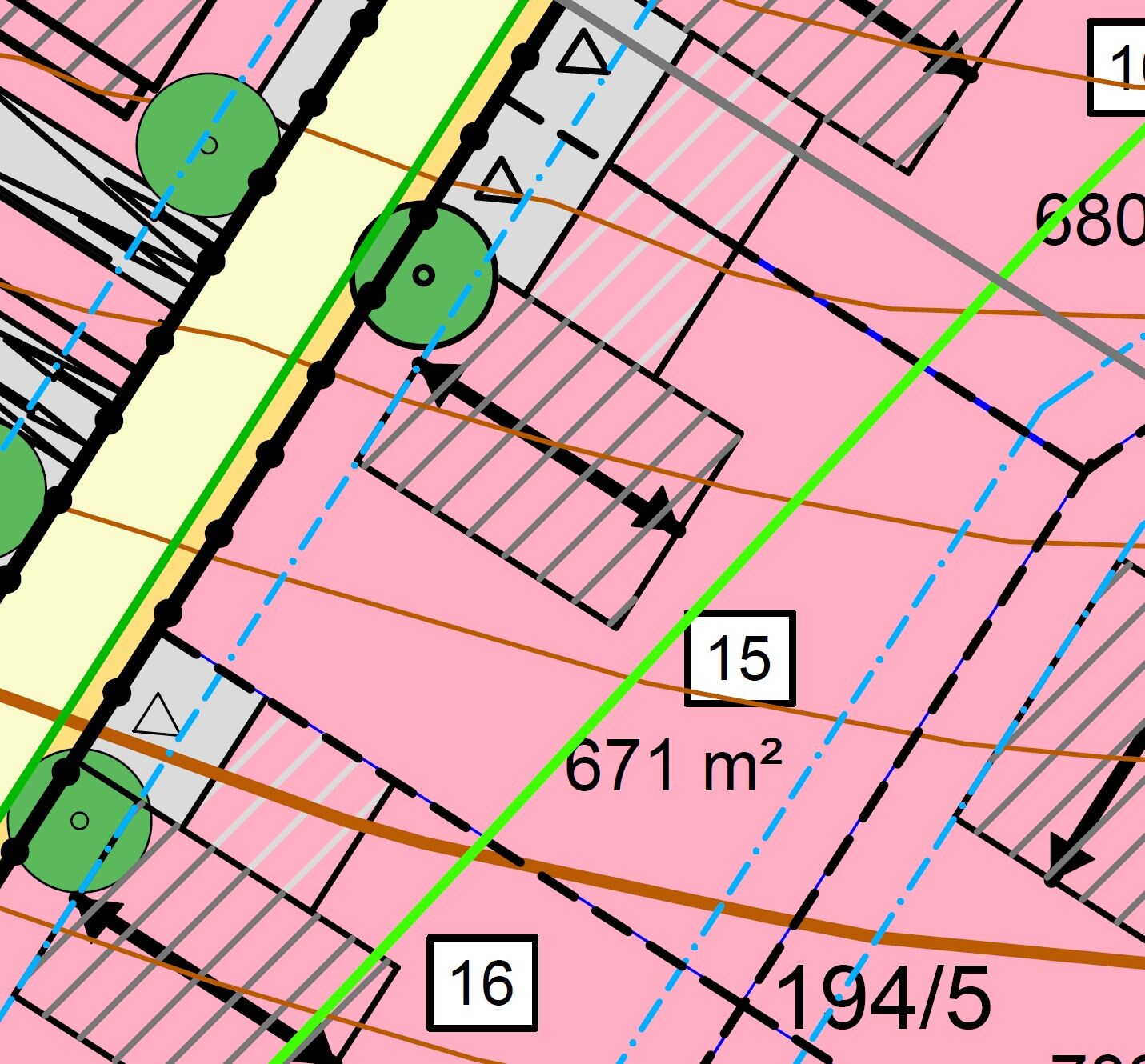
Plot size: 669 m² (7200 sq ft approx.)
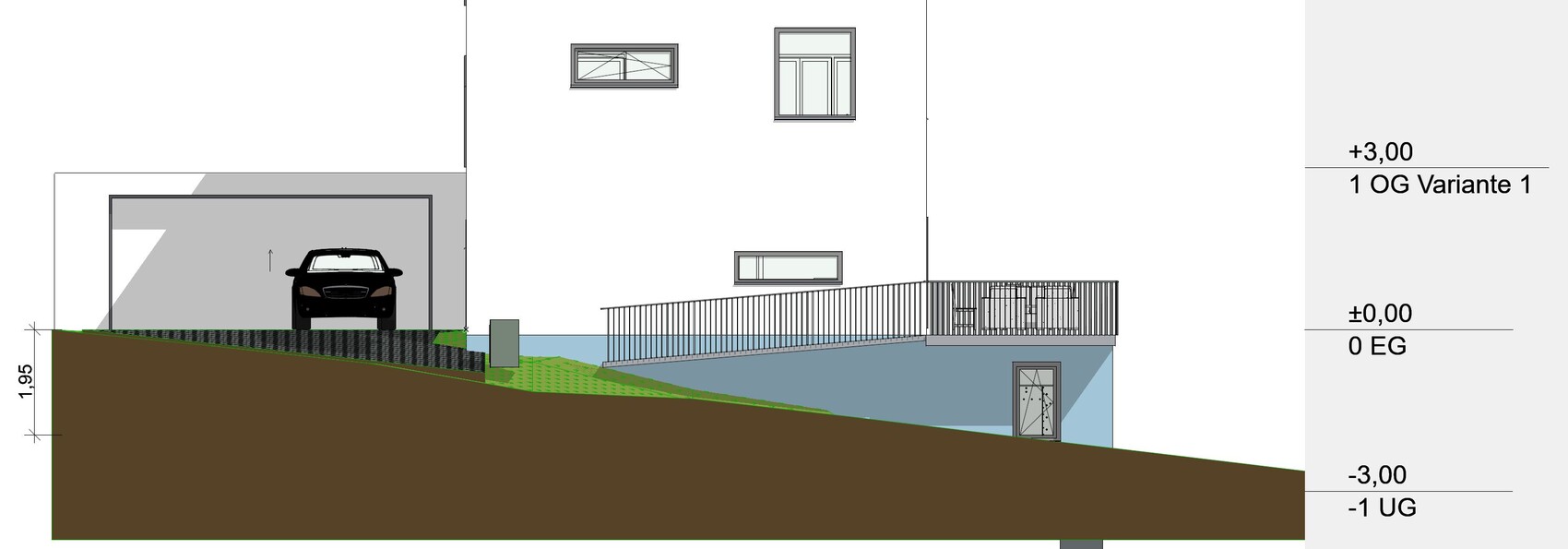
Slope: South-facing slope, 3.90 m (12.8 ft) diagonal (approx. 7.3° incline at the street side)
Site occupancy index: 0.4
Floor area ratio: 0.7
Building window, building line and boundary: 3 meters (10 ft) or setback areas
Edge development: garage
Number of parking spaces: two per dwelling unit in front of garages, minimum 5 meters (16 ft)
Number of stories: 3 full stories (basement, ground floor, upper floor)
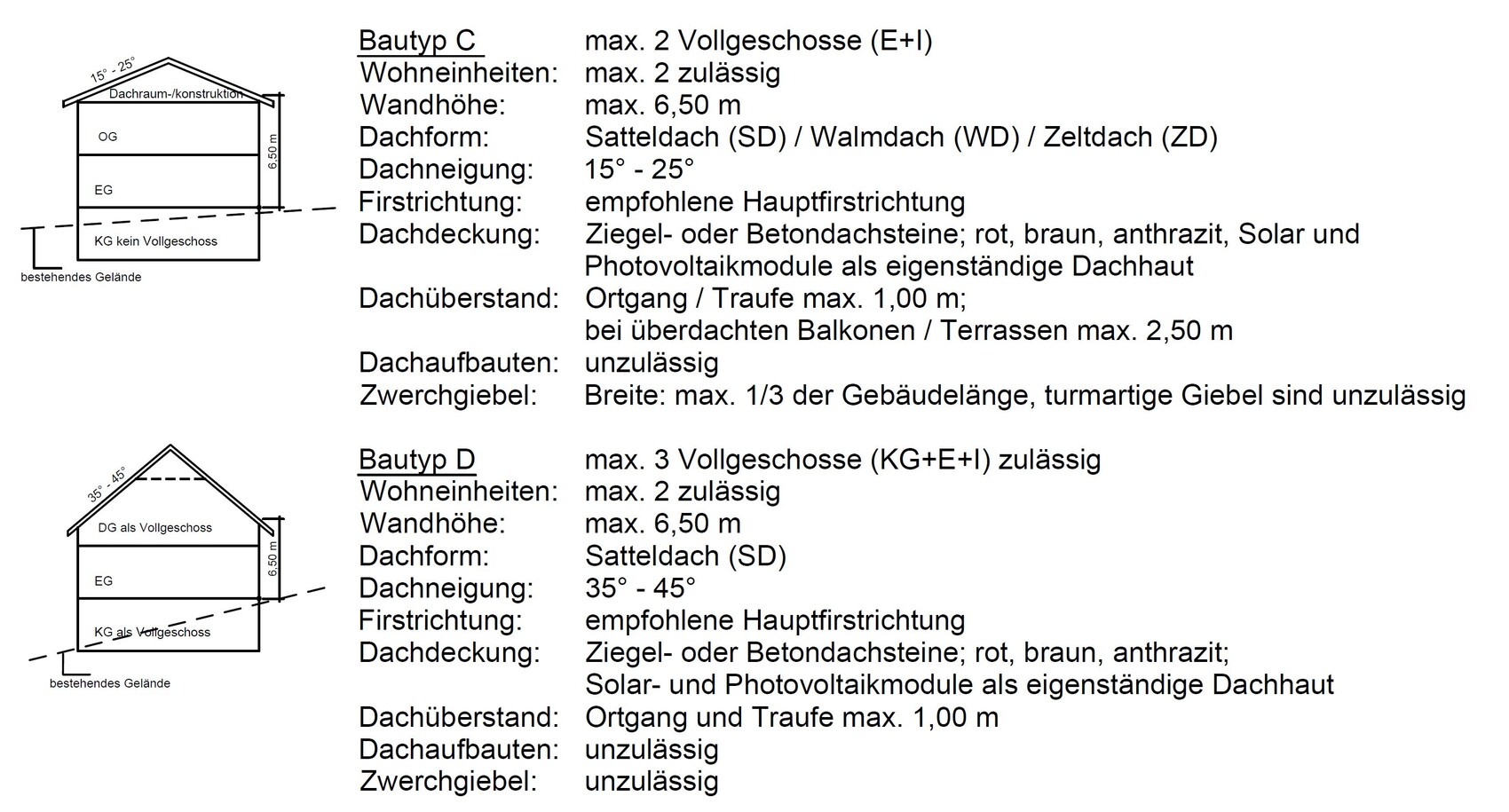
Roof style: gable roof with 35° to 45° pitch (if basement is not a full floor, then 15° to 25°)
Architectural style
Orientation: see draft sketch
Maximum heights / limits: wall height 6.50 m (21.3 ft) measured from finished floor level of the ground floor to the junction of wall and exterior roof surface
Additional requirements: garage roof as flat roof with green roofing, at least 40% photovoltaic panels
Homeowners’ Requirements
Style, roof type, building type: no decision yet on wood or masonry (affordable ecological)
Basement, floors: 2 plus basement suitable as living space
Number of occupants, age: 2 persons, both 26 years old
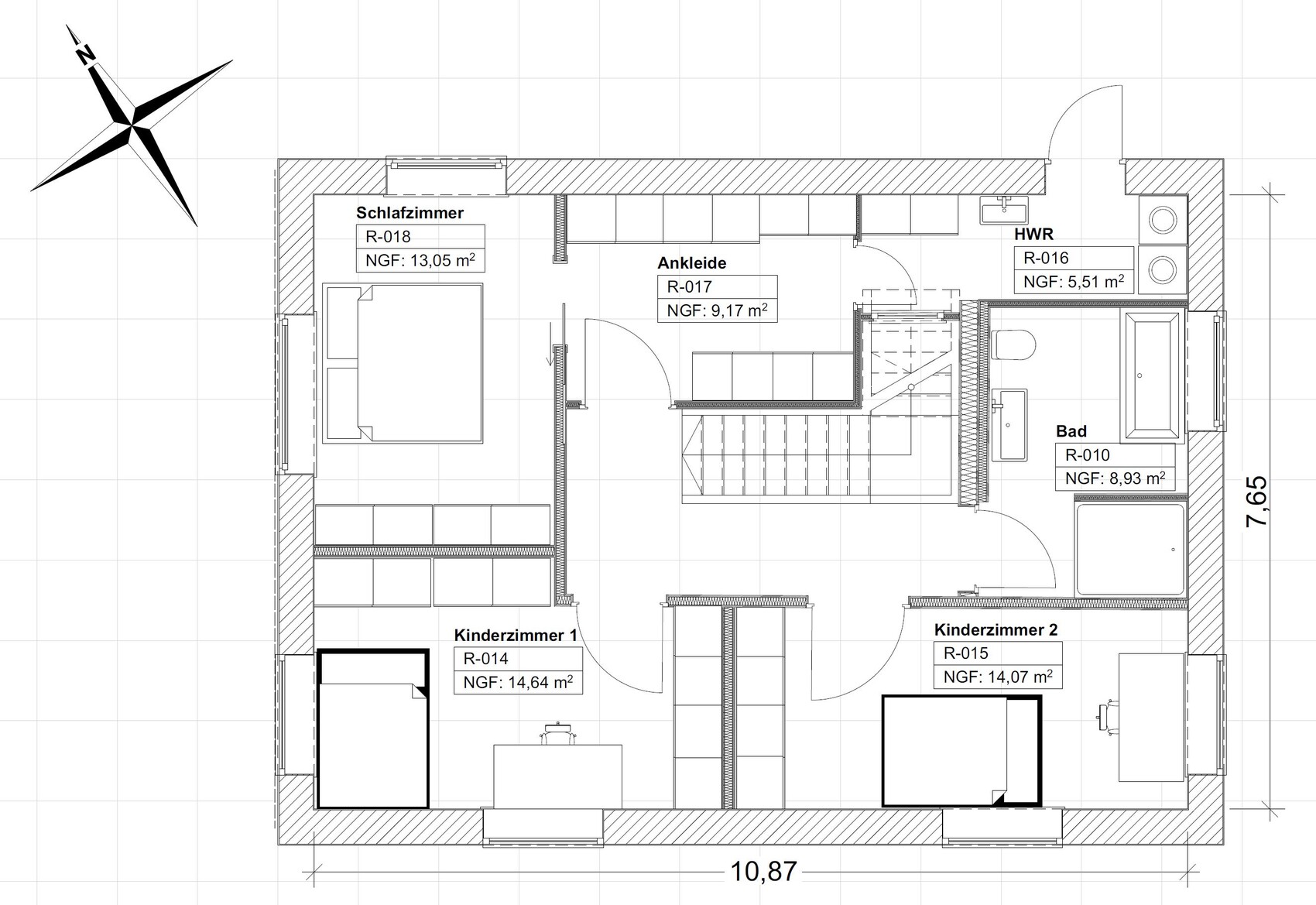
Space requirements on ground and upper floors: see draft sketch
Office: family use or home office? home office
Overnight guests per year: few
Open or closed architecture: rather open
Conservative or modern design: rather modern
Open kitchen, kitchen island: both desired
Number of dining seats: 8, preferably extendable
Fireplace: would be nice but too expensive
Music/Stereo wall: no
Balcony, roof terrace: roof terrace on garage for drying laundry, terrace, balcony-like at living/dining/kitchen area but with garden access
Garage, carport: double garage (possibly added later)
Utility garden, greenhouse: yes (greenhouse not planned at least for now)
Further wishes / special features / daily routine, please also reasons for inclusion or exclusion
House Design
Source of planning: do-it-yourself
What do you particularly like? Why? no bay windows, no spiral stairs, enough space in entrance area, access garage-house in entrance area, access garage roof/laundry room on the upper floor, level access to ground floor on north side and basement on south side, sight lines
What don’t you like? Why? staircase not located near living area, small main bathroom
Cost estimate according to architect/planner: not obtained yet
Personal price limit for house including fittings:
Preferred heating system: heat pump (underfloor heating possibly combined with cooled ceiling)
If you had to give up something, on which details/extensions
-you can give up: efficient sqm (unused areas), basement under garage or terrace
-you cannot give up: basement with large hobby workshop
Why is the design as it is now? For example:
Standard design from planner? No
Which wishes from the architect were implemented? No architect, we tried to implement our wishes ourselves on a compact footprint without feeling cramped
What makes it, in your view, particularly good or bad?
What is the most important/fundamental question about the floor plan in 130 characters?
Do you have any suggestions for improvement? What would bother you? Any tips on doing things similarly but more cost-effectively?
The basement plan is not finalized yet. In addition to utility rooms, storage, possibly a bathroom (for quick cleaning and a potential future granny flat), a space-intensive hobby needs to be accommodated here. We are considering adding a basement under the garage or terrace or both. If you have any preliminary tips or rough cost estimates, please share.
If you need further information, just ask.
Thank you all!
Indahaus

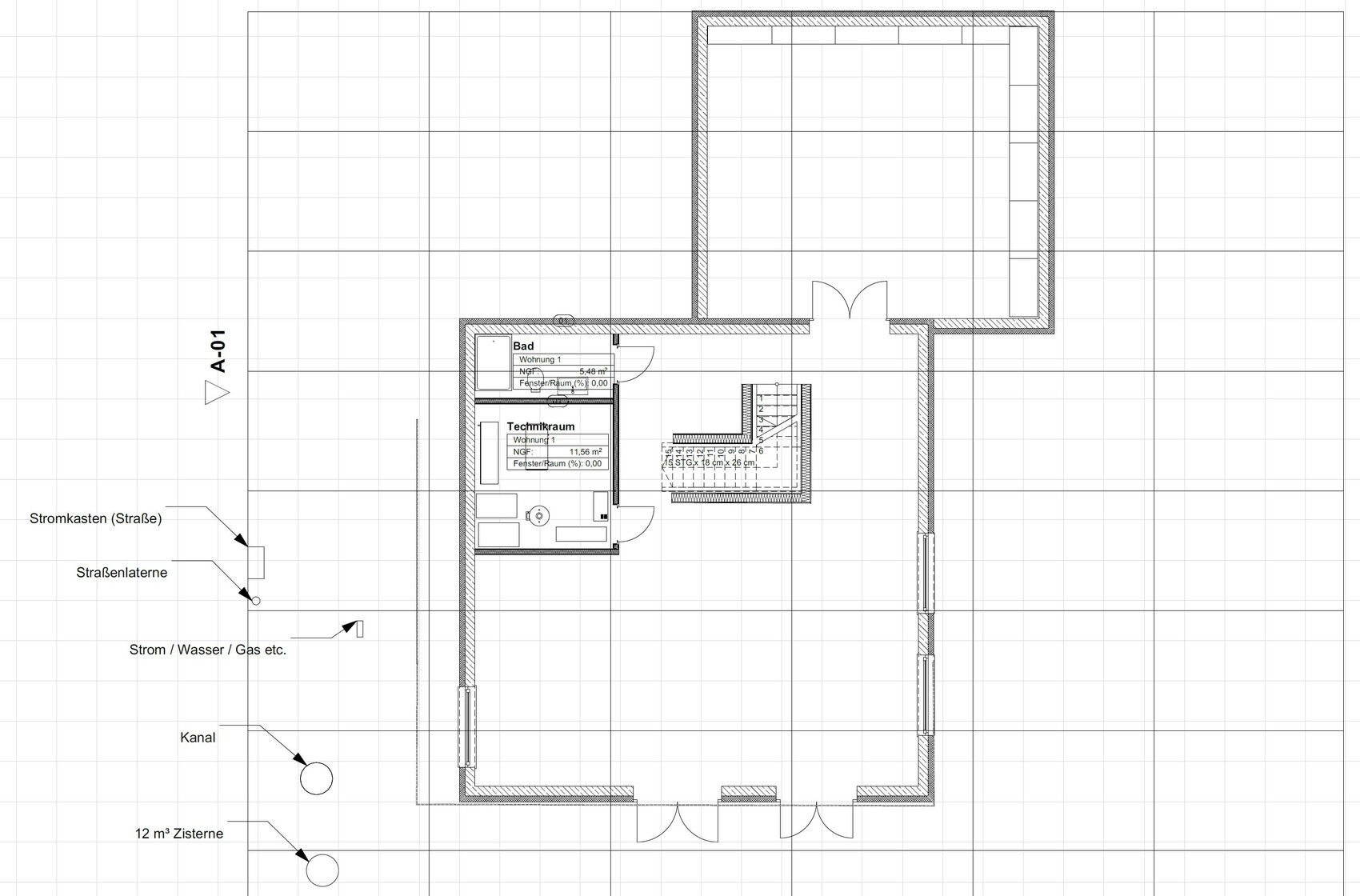
after purchasing the plot in February last year, which was fully serviced by the end of last year, we have been gathering inspiration and planning ever since. Despite rising costs and interest rates, we are excited about building our house, including some DIY work.
Development Plan / Restrictions
Plot size: 669 m² (7200 sq ft approx.)
Slope: South-facing slope, 3.90 m (12.8 ft) diagonal (approx. 7.3° incline at the street side)
Site occupancy index: 0.4
Floor area ratio: 0.7
Building window, building line and boundary: 3 meters (10 ft) or setback areas
Edge development: garage
Number of parking spaces: two per dwelling unit in front of garages, minimum 5 meters (16 ft)
Number of stories: 3 full stories (basement, ground floor, upper floor)
Roof style: gable roof with 35° to 45° pitch (if basement is not a full floor, then 15° to 25°)
Architectural style
Orientation: see draft sketch
Maximum heights / limits: wall height 6.50 m (21.3 ft) measured from finished floor level of the ground floor to the junction of wall and exterior roof surface
Additional requirements: garage roof as flat roof with green roofing, at least 40% photovoltaic panels
Homeowners’ Requirements
Style, roof type, building type: no decision yet on wood or masonry (affordable ecological)
Basement, floors: 2 plus basement suitable as living space
Number of occupants, age: 2 persons, both 26 years old
Space requirements on ground and upper floors: see draft sketch
Office: family use or home office? home office
Overnight guests per year: few
Open or closed architecture: rather open
Conservative or modern design: rather modern
Open kitchen, kitchen island: both desired
Number of dining seats: 8, preferably extendable
Fireplace: would be nice but too expensive
Music/Stereo wall: no
Balcony, roof terrace: roof terrace on garage for drying laundry, terrace, balcony-like at living/dining/kitchen area but with garden access
Garage, carport: double garage (possibly added later)
Utility garden, greenhouse: yes (greenhouse not planned at least for now)
Further wishes / special features / daily routine, please also reasons for inclusion or exclusion
House Design
Source of planning: do-it-yourself
What do you particularly like? Why? no bay windows, no spiral stairs, enough space in entrance area, access garage-house in entrance area, access garage roof/laundry room on the upper floor, level access to ground floor on north side and basement on south side, sight lines
What don’t you like? Why? staircase not located near living area, small main bathroom
Cost estimate according to architect/planner: not obtained yet
Personal price limit for house including fittings:
Preferred heating system: heat pump (underfloor heating possibly combined with cooled ceiling)
If you had to give up something, on which details/extensions
-you can give up: efficient sqm (unused areas), basement under garage or terrace
-you cannot give up: basement with large hobby workshop
Why is the design as it is now? For example:
Standard design from planner? No
Which wishes from the architect were implemented? No architect, we tried to implement our wishes ourselves on a compact footprint without feeling cramped
What makes it, in your view, particularly good or bad?
What is the most important/fundamental question about the floor plan in 130 characters?
Do you have any suggestions for improvement? What would bother you? Any tips on doing things similarly but more cost-effectively?
The basement plan is not finalized yet. In addition to utility rooms, storage, possibly a bathroom (for quick cleaning and a potential future granny flat), a space-intensive hobby needs to be accommodated here. We are considering adding a basement under the garage or terrace or both. If you have any preliminary tips or rough cost estimates, please share.
If you need further information, just ask.
Thank you all!
Indahaus
A
Allthewayup6 Feb 2023 19:18[A staircase with uneven steps feels very uncomfortable to us, which is why we deliberately chose a staircase with straight steps. Both of our parents have difficulties with climbing stairs. In terms of space usage, we see some advantages with the L-shaped staircase compared to, for example, a straight staircase (very long, requires a lot of hallway space) or a U-shaped staircase with landing (1m² (11ft²) less). Additionally, the shape means the entrance area is not as cramped as in some houses where the spiral staircase starts directly next to the door.]
I understand that the aesthetics of such staircases can be debated; we would have preferred a straight staircase as well, but with a 300m² (3,229ft²) lot size, you optimize everything in and around the house—everything. Once you have trouble climbing stairs, it logically shouldn't matter which shape the staircase has. Returning to my original point about how the floor plan could be made efficient, here is an example. In my opinion, these are comfortably sized and well-shaped rooms. By the way, our floor plan looks almost the same; the only difference is that instead of a walk-in closet, we placed a 9m² (97ft²) office there, and the staircase is somewhat wider but shorter.
It’s clear that this might not be everyone’s “dream home,” but as I said, we had to make lifestyle compromises just to fit an 11.5 x 9m (38 x 30ft) building footprint on the plot. I also claim that partly due to the simple layout, our construction costs stayed absolutely reasonable compared to projects by friends (who built more according to their desires), allowing us to invest more money in quality instead of quantity.
I agree with many others here and assert that your initial design, along with your workshop and additional construction costs for the sloped site, will not come in under 750k. I would rather skip a floor and expand horizontally instead. This wasn’t possible for us either, as we already have only about 3m (10ft) distance to the property boundaries all around. Kids grow up fast, want to explore the world, study elsewhere, move out, and then all the area previously used by the children becomes (almost) only extra work. 🙂
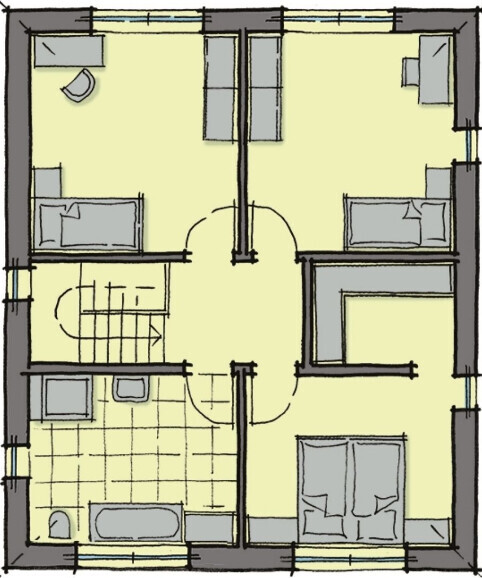
I understand that the aesthetics of such staircases can be debated; we would have preferred a straight staircase as well, but with a 300m² (3,229ft²) lot size, you optimize everything in and around the house—everything. Once you have trouble climbing stairs, it logically shouldn't matter which shape the staircase has. Returning to my original point about how the floor plan could be made efficient, here is an example. In my opinion, these are comfortably sized and well-shaped rooms. By the way, our floor plan looks almost the same; the only difference is that instead of a walk-in closet, we placed a 9m² (97ft²) office there, and the staircase is somewhat wider but shorter.
It’s clear that this might not be everyone’s “dream home,” but as I said, we had to make lifestyle compromises just to fit an 11.5 x 9m (38 x 30ft) building footprint on the plot. I also claim that partly due to the simple layout, our construction costs stayed absolutely reasonable compared to projects by friends (who built more according to their desires), allowing us to invest more money in quality instead of quantity.
I agree with many others here and assert that your initial design, along with your workshop and additional construction costs for the sloped site, will not come in under 750k. I would rather skip a floor and expand horizontally instead. This wasn’t possible for us either, as we already have only about 3m (10ft) distance to the property boundaries all around. Kids grow up fast, want to explore the world, study elsewhere, move out, and then all the area previously used by the children becomes (almost) only extra work. 🙂
Indahaus schrieb:
Where would be a better location for one of the mentioned staircase options with the current layout of basement, ground floor, and attic? I don’t see a good location in this design...
Indahaus schrieb:
I think such situations are also common in supposedly accessible buildings, as the likelihood of occurrence is considered low. No, how do you come to that conclusion? There is only one reason: that you try to justify your thoughtless and naive/amateurish implementation. We have already seen enough defensive arguments. The objections and any criticism—mostly justified—just bounce off you like a basketball. I don’t think you are doing yourself any favors with this.
Indahaus schrieb:
Doors can only be changed with much more effort compared to furniture. Therefore, adapting to changed circumstances can be much easier by changing the furniture. At least that is our view. Exactly: doors are fixed, furniture can be changed. But in this design, the doors are far from ideal because they are in walls that make everything feel cramped (no matter how flexible sliding doors are)... and I don’t see many areas suitable for furnishing or rearranging. The shelf in the dining area is already too much, and in the pantry there are only 50cm (20 inches) left... you can’t even carry in a baking sheet without bruising your elbows... in the main bathroom, even without furniture, you get in your own way... the path there crosses the damp area left after showering, and so on...
Indahaus schrieb:
Compromises can generally still be planned there, but a house completely without a basement is definitely not our goal, as mentioned before. No matter how often you say that: it does not fit the budget, even without a roof terrace, a shifted basement under the house, a living/workshop floor with double insulation, and so on... For your workshop, I suggest reading the regulation on equipment and noise control (BlmSchV, §7) and your development plan.
Regarding the house, I advise you to engage in self-reflection and respect the expertise of the trained architects.

Basically, it should be checked whether such a hobby or business is even allowed. If my new neighbor was sawing all day right on or just behind my property line, they would quickly face a big problem. Accordingly, I would also expect soundproofing.
Assuming all of that is resolved, my plan would be:
A spacious garage with the hobby room below. Next to it, the house with
basement: living / dining / kitchen / technical room / guest restroom / pantry,
ground floor: bedroom, children’s rooms, bathroom, laundry, walk-in closet or office.
Assuming all of that is resolved, my plan would be:
A spacious garage with the hobby room below. Next to it, the house with
basement: living / dining / kitchen / technical room / guest restroom / pantry,
ground floor: bedroom, children’s rooms, bathroom, laundry, walk-in closet or office.
hanghaus2023 schrieb:
Here is my suggestion Thank you very much! We will take a closer look at it again over the weekend.
Schorsch_baut schrieb:
Then invest in very, very good sound insulation. Technically, in that frequency range (mostly high-frequency >1000 Hz), that’s not a problem. Soundproofing to the outside is already sufficient due to the concrete basement plus triple glazing. A perforated metal ceiling can not only significantly reduce the reverberation time (sound absorption) but also further improve sound insulation if needed.
hanghaus2023 schrieb:
Your basement workshop doesn’t work structurally. Of course, it is not finalized yet. However, getting it structurally sound should not pose a major challenge.
Schorsch_baut schrieb:
Here are my comments on the floor plan. Thank you! There are some good points in there. We will try to take them into consideration.
ypg schrieb:
What does the development plan say about this? The development plan does not restrict it. General residential area → non-disruptive commercial use is permitted.
This is not meant to start a fundamental discussion; there are different legal interpretations of what counts as disruptive commercial use.
Allthewayup schrieb:
[...]Floor plan could look efficient, here is an example[...] That actually looks quite good. I would be interested in the ground floor for that. Do you happen to have the ground floor plan of that design? For the upper floor, it would make sense to position the two children’s rooms facing south.
ypg schrieb:
There is only one purpose: to highlight your poorly thought-out and naive/amateurish [...] I don’t think I need to elaborate on that. We have tried to emphasize and, to a certain extent, defend the points we find important.
ypg schrieb:
Regulation on Equipment and Noise Protection (BlmSchV, §7) and your development plan I am well acquainted with the regulation, but thank you for mentioning it again here in this context.
ypg schrieb:
Regarding the house, I advise you to reflect and respect the expertise of trained architects. I assume you are a trained architect?...
K a t j a schrieb:
Assuming all that is clarified, here is my plan:
Generous garage. Hobby room underneath. Next to it, the house with
Basement: living / dining / kitchen / technical room / guest WC / pantry,
Ground floor: bedroom, children’s rooms, bathroom, laundry, dressing room or office. Thank you for your constructive suggestions!
From where would you make the hobby room accessible? The equipment weighs several hundred kilograms (up to about 800 kg) and must be brought in and possibly taken out again.
Does your suggestion include access from the garage into the house?
Harakiri schrieb:
Regardless of the floor plan / basement, you are introducing a high fire load with your hobby workshop. Have you considered how to solve the fire protection aspects? I have dealt with the subject intensively. The strategy is to divide the workshop into different zones. For example, storing paints, solvents, etc. in a designated area (e.g., in a hazardous materials cabinet or a room with F90 fire resistance). Metalworking, due to sparks, is separated from easily flammable wood dust. Another point is reducing potential fire causes. One statistically relevant cause is dust extraction systems, often due to malfunctioning spark arrestors, etc. Therefore, extraction systems are equipped with self-activating fire extinguishers. The professional association has documentation with helpful information on this.
ypg schrieb:
The shelf in the dining area is just too muchThat depends on the actual depth of the table. There is quite a bit of additional storage space integrated into the window seat.ypg schrieb:
There are only 50cm left in the pantry... you can’t even carry in a baking tray without hitting your elbowsThat is simply not correct. There are 74 cm (29 inches). If you are unsure, feel free to ask for a version with measurements before making such claims that might mislead others.ypg schrieb:
In this design, I don’t really see a good layout…I welcome constructive criticism, but comments with objectively incorrect statements do not help us. Other users have already pointed out specific improvements, but nothing concrete has come from you.11ant schrieb:
then you should also show the design,I’ll take a look when I get the chance and will gladly share it here for discussion.We also have a second variant for the upper floor, but since many have questioned the entire plan, I won’t upload it anymore.
Indahaus schrieb:
Where would you provide access to the hobby room? Some of the equipment weighs several hundred kilograms (up to about 800 kg) and needs to be brought in and possibly taken out.
Does your suggestion include an access from the garage into the house?
These are just initial thoughts. For rough layout sketches, you would need the precisely measured plot including all building boundaries, setbacks, or any other zoning plan details. I saw the contour lines somewhere already.
Basically, the basement floor is constructed as a single unit connected to the garage basement, for example, via some kind of airlock or vestibule. This way, you have a connection but at the same time a separation. Of course, this also depends on the available space.
Maybe our @11ant still remembers the thread where we had a city villa on a slope with the garage next to it. I only recall that the stairs led pretty straight to the kitchen, and the room under the garage – wasn’t there a fitness room in there? Upstairs were the children’s rooms and the master bedroom. Although maybe I’m mixing several designs together… 😉 In any case, I thought the final result was quite successful and you could probably pick up a few ideas from it.
Similar topics