
ᐅ Corner windows and sliding doors installed correctly – thermal bridges?
Created on: 24 Jan 2023 19:27
J
jolt
Hello everyone,
We have been living in our new build since spring. We have a bay window with a corner window. One part is fixed glazing, the other part is a tilt-and-turn window. At the corner, it feels noticeably colder with these cool outdoor temperatures. So I got a thermal imaging camera, which confirmed my impression.
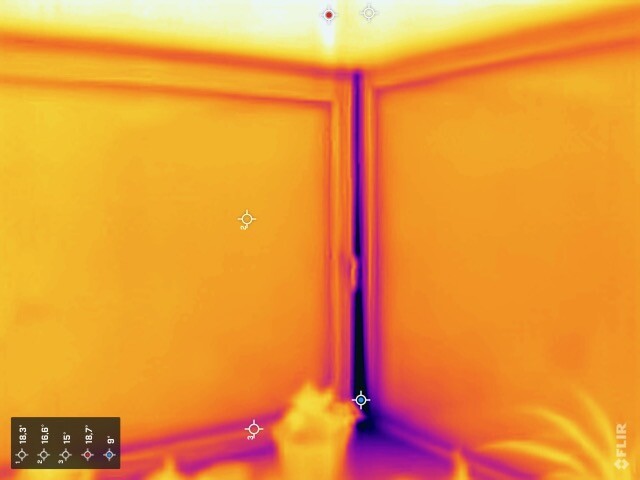
Ground floor
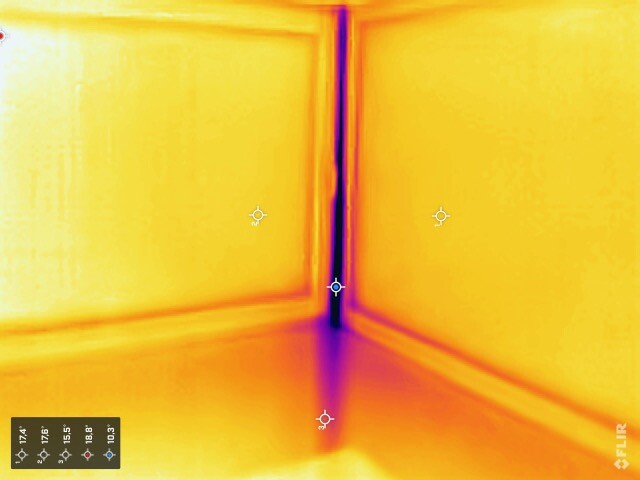
Upper floor
Is this normal, or was the connection between the two elements not done properly, or was something missed?
Furthermore, on the upper floor we have sliding patio doors in two rooms, and here the floor in front of the sashes—the movable part of the window—is noticeably colder. In this case, the window installer adjusted the sashes slightly upwards afterward to allow enough space for the flooring, as the heights otherwise wouldn’t have fit. Could this be the reason?

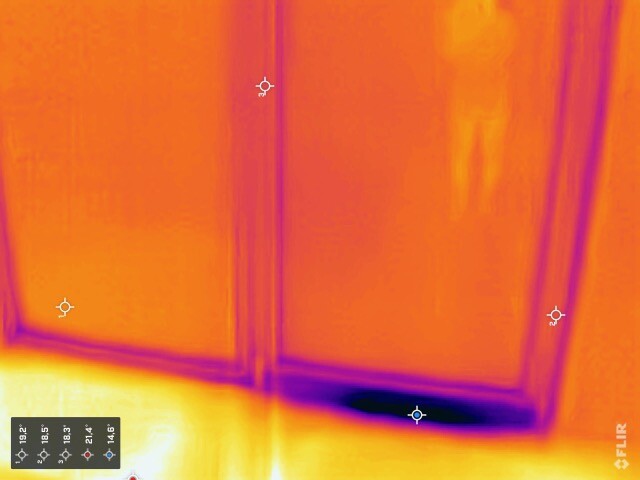
I would be very grateful for any assessments.
Thank you very much and best regards
We have been living in our new build since spring. We have a bay window with a corner window. One part is fixed glazing, the other part is a tilt-and-turn window. At the corner, it feels noticeably colder with these cool outdoor temperatures. So I got a thermal imaging camera, which confirmed my impression.
Ground floor
Upper floor
Is this normal, or was the connection between the two elements not done properly, or was something missed?
Furthermore, on the upper floor we have sliding patio doors in two rooms, and here the floor in front of the sashes—the movable part of the window—is noticeably colder. In this case, the window installer adjusted the sashes slightly upwards afterward to allow enough space for the flooring, as the heights otherwise wouldn’t have fit. Could this be the reason?
I would be very grateful for any assessments.
Thank you very much and best regards
W
WilderSueden25 Jan 2023 16:18Do you have an infrared thermometer? I would measure the corners directly with it. I was also surprised at how cold the corners appeared on the thermal imaging camera, even though with monolithic Ytong you can't really go wrong. According to the expert, however, it was within the normal range.
Tolentino schrieb:
Sorry, the pictures really don’t show much. So, I didn’t get exact temperature readings.The corner in the picture was measured at 9°C (48°F), the warmest spot in the image at 18.7°C (65.7°F), and the actual room temperature is around 20°C (68°F).
WilderSueden schrieb:
Do you have an infrared thermometer? Yes, I have one on hand as well. Good point to use it and compare the readings. At least it’s clearly noticeable that cold air is coming from the corner, and the closer you move your hand toward it, the colder it feels. So, it is definitely cold there.
I will remeasure with the infrared device, talk to the window installer, and now I’m familiar with the relevant standard.

Was the window manufacturer commissioned directly by you? If so, you can initially try this approach. However, much depends on what exactly was ordered. For example, if you simply ordered windows based on a quote, it might not actually be a defect. In that case, you would have ordered very specific windows with certain guaranteed properties.
If you hired a developer or general contractor, they will not accept responsibility because they are obliged to deliver a building that complies with standards. However, they will be your point of contact.
If you planned with an architect (at least up to design phase 5, preferably phases 6–7), and they did not point out or consider that the elements require appropriate insulation properties, it would be a design error.
Ideally, you should hire an expert who can measure this with calibrated instruments (who can also accurately convert to determine the allowed surface temperature according to other standards) and advise you on how to proceed.
The problem is that if it really only concerns window elements, adding insulation afterwards is not easy. Most likely, both elements will need to be replaced, followed by replastering and similar work.
Neither the builder nor the window manufacturer will be eager to do this. They will likely resist and downplay the issue. Having an expert helps because they can discuss the matter on a more equal footing.
If you hired a developer or general contractor, they will not accept responsibility because they are obliged to deliver a building that complies with standards. However, they will be your point of contact.
If you planned with an architect (at least up to design phase 5, preferably phases 6–7), and they did not point out or consider that the elements require appropriate insulation properties, it would be a design error.
Ideally, you should hire an expert who can measure this with calibrated instruments (who can also accurately convert to determine the allowed surface temperature according to other standards) and advise you on how to proceed.
The problem is that if it really only concerns window elements, adding insulation afterwards is not easy. Most likely, both elements will need to be replaced, followed by replastering and similar work.
Neither the builder nor the window manufacturer will be eager to do this. They will likely resist and downplay the issue. Having an expert helps because they can discuss the matter on a more equal footing.
What were the results of the Blower Door Test back then?
Otherwise, I think having a lot of windows doesn’t necessarily mean having a lot of wall, and it’s understandable that there is a noticeable cooler and also measurable radiation effect in areas without insulation and where metal or concrete is not insulated.
By the way, I categorize this under the intentional modern architectural style, which may not always be ideal in execution. The builder/architect is making the client happy, even though there are some disadvantages. With an insulated corner, it probably wouldn’t be as cold (literally “blue” in German).
Yesterday, the day before, or a few days ago, there was a thread complaining about an expansion joint.
Otherwise, I think having a lot of windows doesn’t necessarily mean having a lot of wall, and it’s understandable that there is a noticeable cooler and also measurable radiation effect in areas without insulation and where metal or concrete is not insulated.
By the way, I categorize this under the intentional modern architectural style, which may not always be ideal in execution. The builder/architect is making the client happy, even though there are some disadvantages. With an insulated corner, it probably wouldn’t be as cold (literally “blue” in German).
Yesterday, the day before, or a few days ago, there was a thread complaining about an expansion joint.
Tolentino schrieb:
Was the window installer hired directly by you?Exactly. We built with a friend who is an architect. However, formally only the initial design phases were contracted.As I said, I will first talk with the window installer. He will probably want to avoid a complete replacement or similar at all costs.
It was clear to us that the window and window corners compared to the masonry would be the weaker points in terms of insulation and thermal protection. That they are so noticeably and measurably deficient, however, is surprising to me.
Similar topics