
ᐅ Very Poor Parquet Flooring Installation – Is Rectification Impossible?
Created on: 19 Jan 2023 10:55
P
pim1985
Hello,
unfortunately, we are having problems again with our parquet installer (a small family business in NRW). The work on the transitions and the baseboards was done very poorly.
A brief summary of the situation: After a long wait due to residual moisture in the screed, the parquet was installed (oak, 18.5cm (7.3 inches) wide, fully glued).
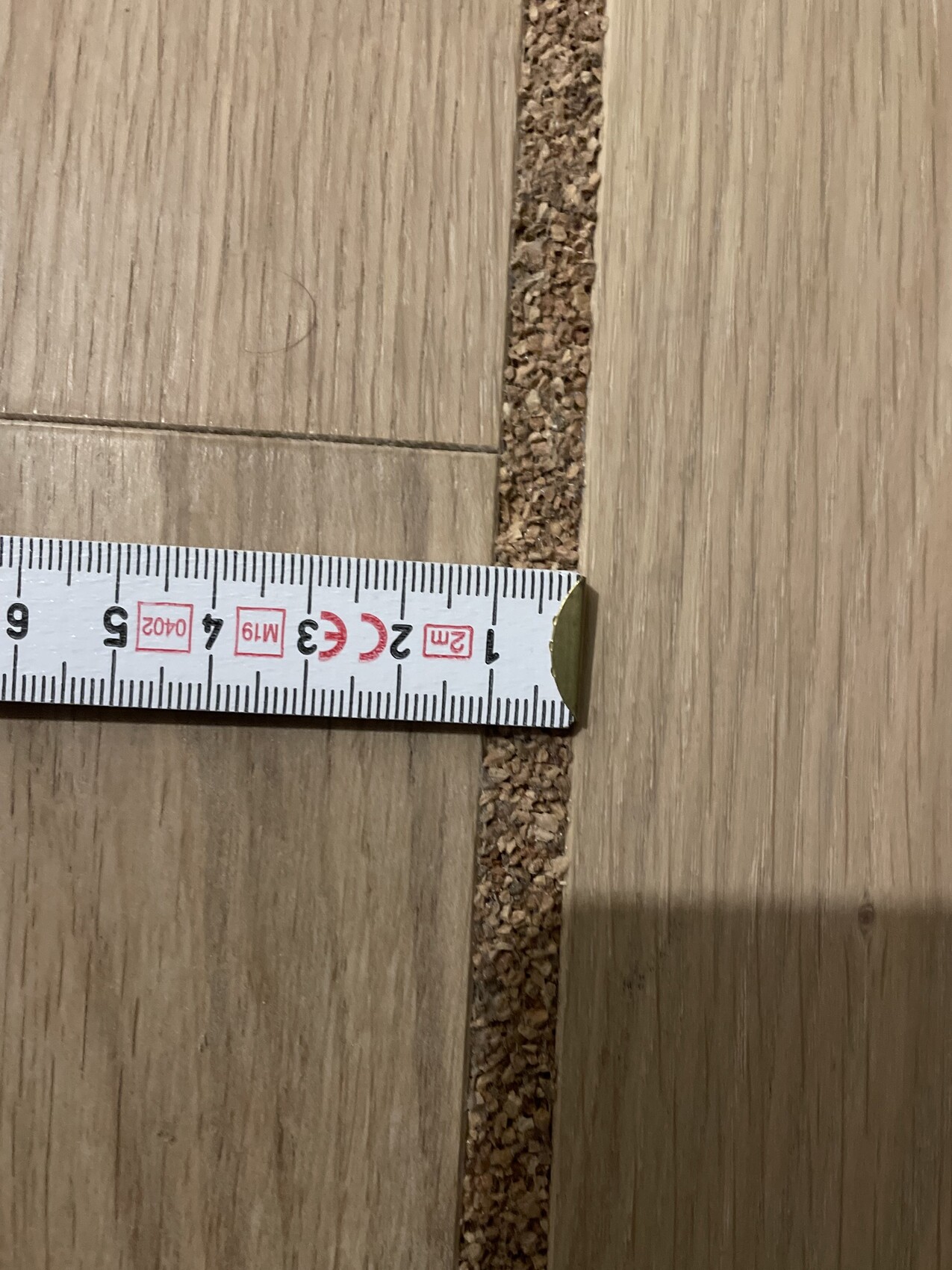
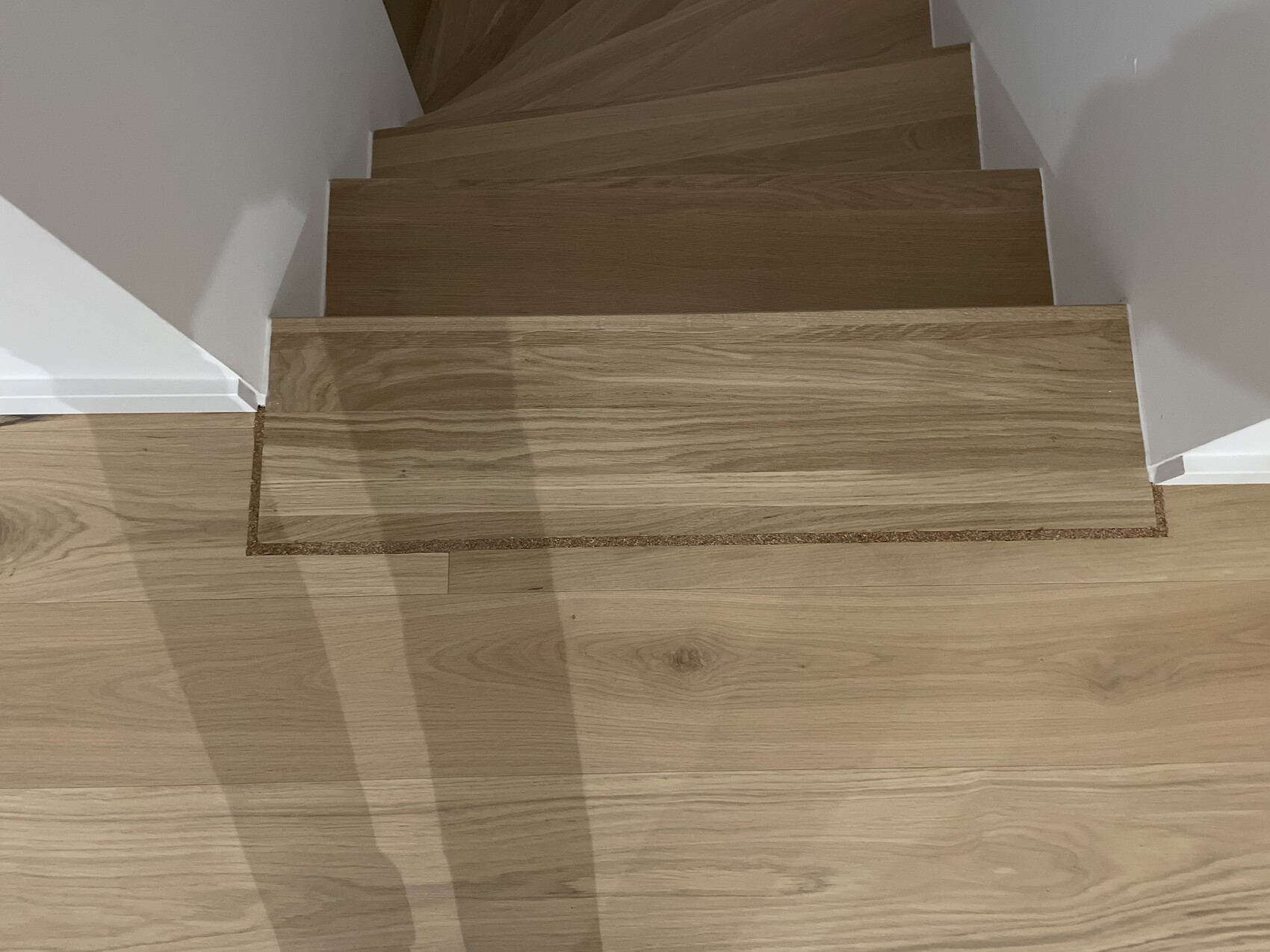
As you can see in the photos, the gaps at the transitions are about 1cm (0.4 inches) wide and filled with a cork material that does not match the color.
The baseboards (1.8cm (0.7 inches) wide, about 5.8cm (2.3 inches) high) at the floor-to-ceiling windows do not look good, the smaller baseboards/profiles are odd, and the work was very untidy. The reason for the unusual small baseboards/profiles: the window reveals are too narrow (1cm (0.4 inches) wide baseboards would fit; this is the case with our neighbors in an identical semi-detached house). There are nicer solutions for this, but there was no communication that the baseboards would not fit. The parquet installer is unable to accept criticism and is old-fashioned, just doing things as he learned 30 years ago. He refuses to make any corrections.
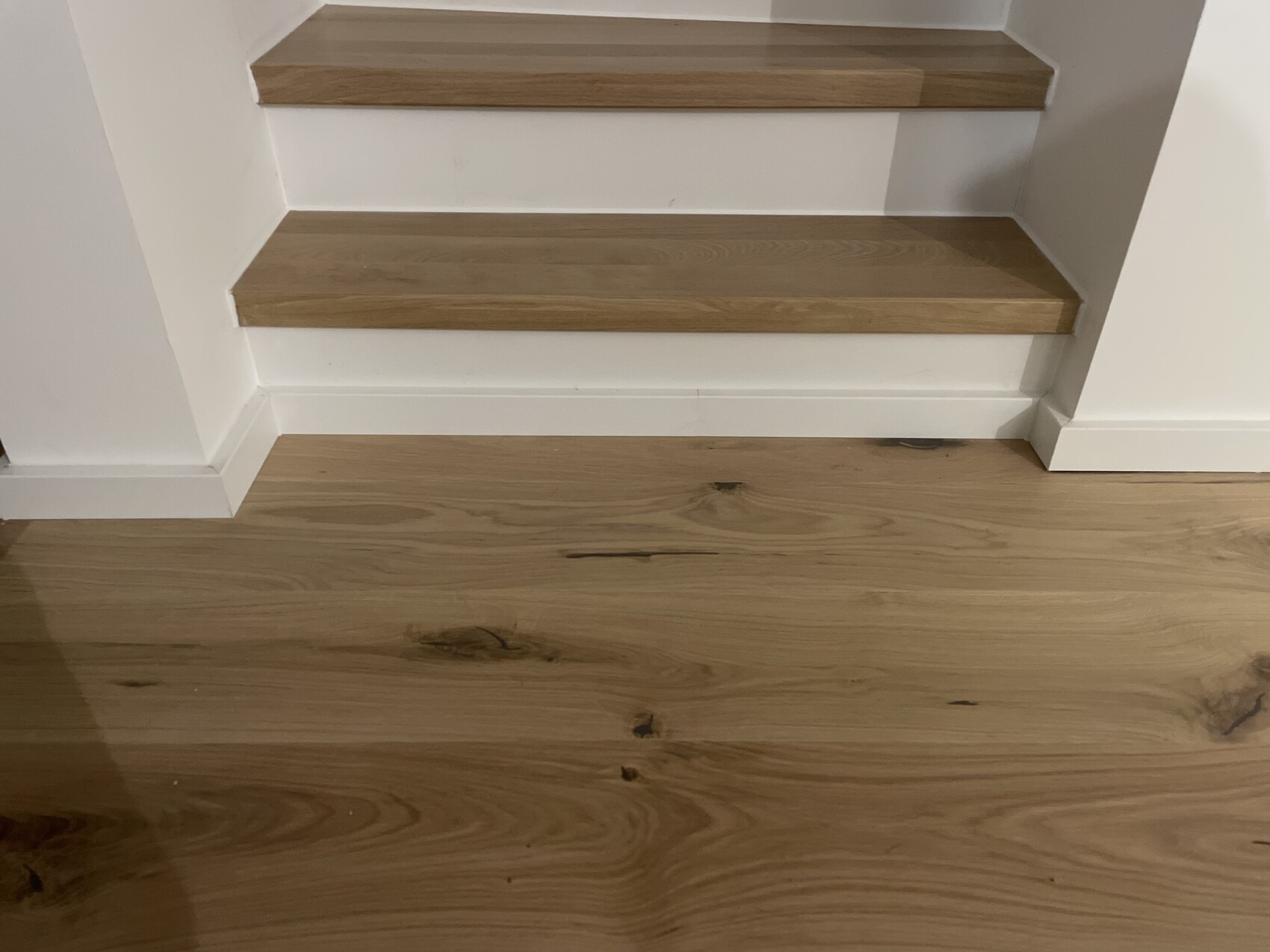
Regarding the cork filling, we probably have no legal chance for corrections, even though the boards at the transitions were cut unevenly. (I saw examples from other providers, unfortunately too late, and spoke with specialists from a large parquet company (Parkett Dietrich) who said that transitions without joints or with very small joints about 4mm (0.16 inches) are possible. These could be filled with parquet joint filler in a similar color and would look a thousand times better). Baseboards before the step in the staircase area???
The small baseboards in the window area are impossible, though. I am a member of the property owners’ protection association (legal insurance is also available) and I am considering taking legal action with a specialist lawyer and construction consultant, although I would prefer not to. But this job cost a lot of money, and now I will probably have to hire a second company to fix it.
I would appreciate any tips on how to salvage one or the other issue.
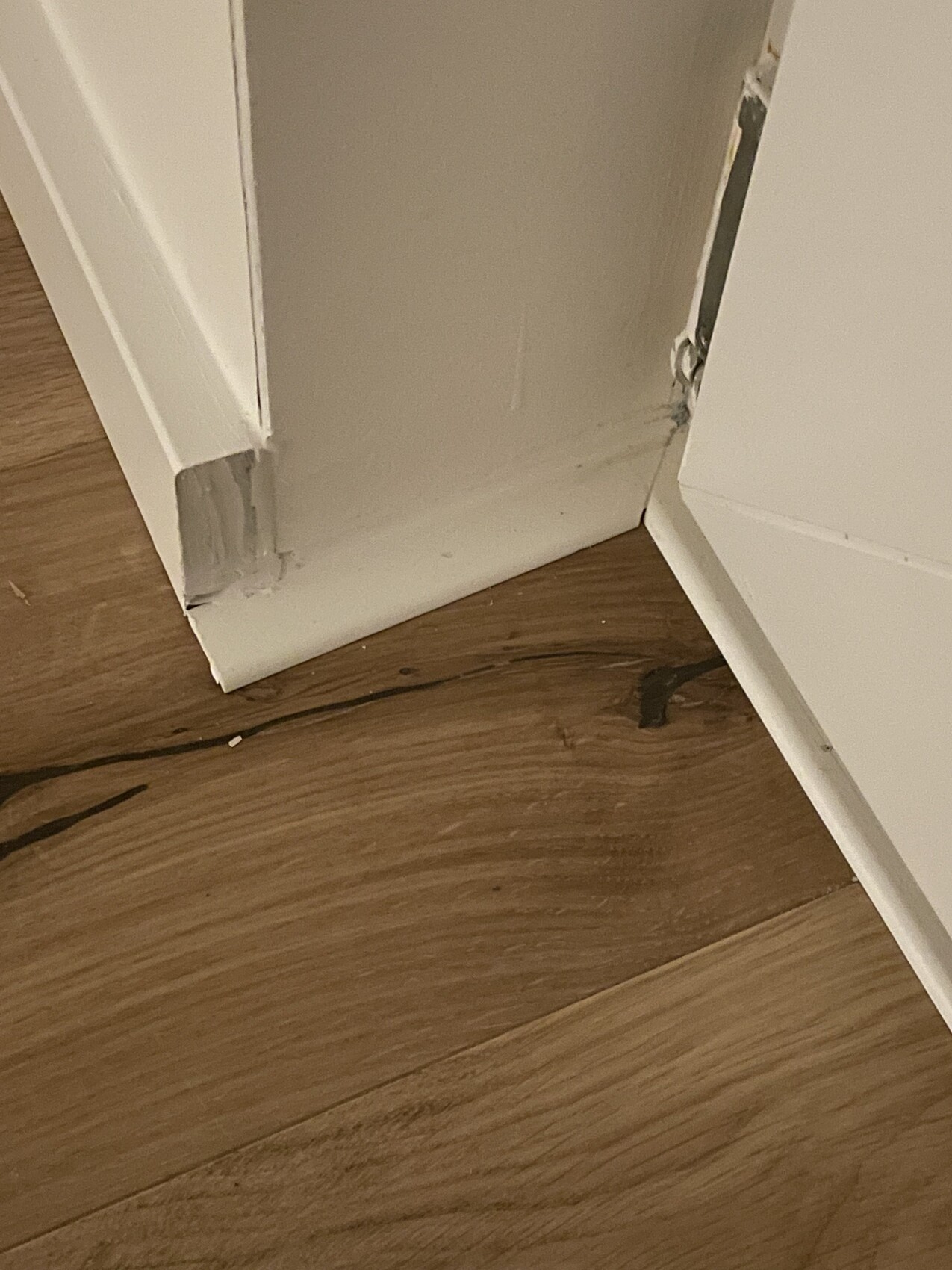
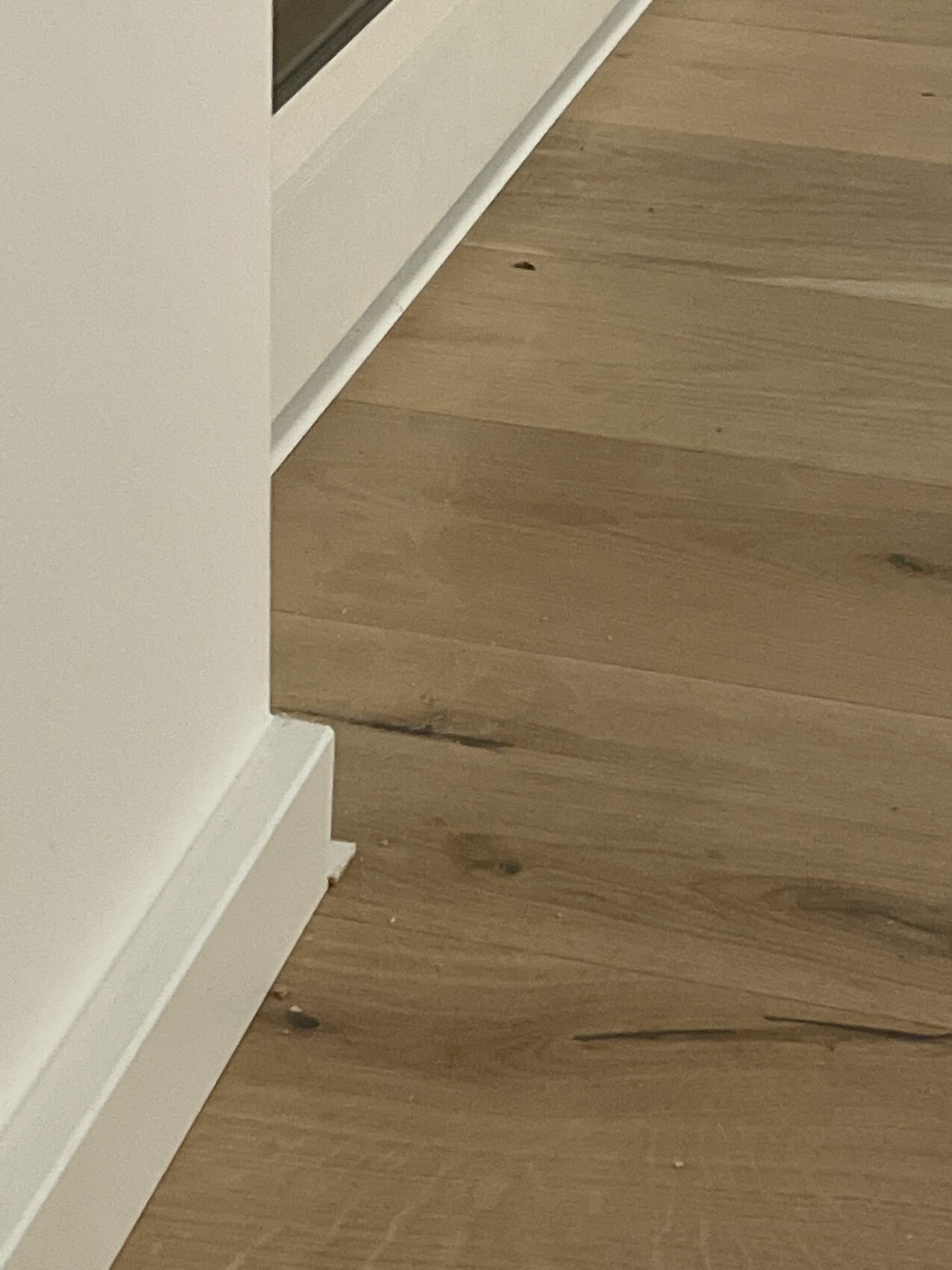
unfortunately, we are having problems again with our parquet installer (a small family business in NRW). The work on the transitions and the baseboards was done very poorly.
A brief summary of the situation: After a long wait due to residual moisture in the screed, the parquet was installed (oak, 18.5cm (7.3 inches) wide, fully glued).
As you can see in the photos, the gaps at the transitions are about 1cm (0.4 inches) wide and filled with a cork material that does not match the color.
The baseboards (1.8cm (0.7 inches) wide, about 5.8cm (2.3 inches) high) at the floor-to-ceiling windows do not look good, the smaller baseboards/profiles are odd, and the work was very untidy. The reason for the unusual small baseboards/profiles: the window reveals are too narrow (1cm (0.4 inches) wide baseboards would fit; this is the case with our neighbors in an identical semi-detached house). There are nicer solutions for this, but there was no communication that the baseboards would not fit. The parquet installer is unable to accept criticism and is old-fashioned, just doing things as he learned 30 years ago. He refuses to make any corrections.
Regarding the cork filling, we probably have no legal chance for corrections, even though the boards at the transitions were cut unevenly. (I saw examples from other providers, unfortunately too late, and spoke with specialists from a large parquet company (Parkett Dietrich) who said that transitions without joints or with very small joints about 4mm (0.16 inches) are possible. These could be filled with parquet joint filler in a similar color and would look a thousand times better). Baseboards before the step in the staircase area???
The small baseboards in the window area are impossible, though. I am a member of the property owners’ protection association (legal insurance is also available) and I am considering taking legal action with a specialist lawyer and construction consultant, although I would prefer not to. But this job cost a lot of money, and now I will probably have to hire a second company to fix it.
I would appreciate any tips on how to salvage one or the other issue.
B
Benutzer 100123 Jan 2023 18:21OWLer schrieb:
The whole way of communicating here is something else. Personally, I feel attacked when I read this thread just because I like cork joints. I don’t want acrylic joints (especially not narrow ones) because the 1cm (0.4 inch) space at the wall edge is technically planned that way, and that makes me feel more secure that the parquet will stay in place.
A more solution-oriented approach would benefit the situation. If the execution is not specified, you get the state of the art. The state of the art is only not met at the overpainted baseboard. If you don’t discuss the details with the tradesperson before commissioning work costing several thousand euros, then I don’t know what else to say. Even Pinterest photos could have helped clarify things.
But well, if this is now the biggest problem on the construction site, then everything is great. Complaining at the highest level.
Definitely a tradesperson issue...Why should the client accept a solution to this botched job? Neither did they cause it nor should they have to accept the current condition.
And I have never seen anything like this. I know many people who have built, and I’ve been around here for a while.
Yes, yes, now comes the old saying: if you don’t know anything, you have to buy expertise. And then you wonder why a normal single-family house now costs 500,000 euros.
 schubert7923 Jan 2023 19:25
We had both acrylic joints and cork joints installed 10 years ago. I would definitely recommend using only cork joints from now on. Acrylic changes color and attracts dust. After 10 years, the cork still looks really clean!
X
xMisterDx24 Jan 2023 19:37Presumably, several quotes were obtained beforehand, and then the "cheapest" one was chosen.
As mentioned before, there are standards for everything, and if the floor installer adhered to them, then no matter what you do, you won’t change that. If nothing else was agreed upon, the craftsman works according to the standard.
There is no such thing as "outdated" standards. Just because a chef does molecular gastronomy and all that fancy stuff, another person can still cook curry sausage with fries or roulades.
A plasterer who is not given any other instructions will apply Q2 finish, not Q4. A tiler may accept a height difference of 1.9 mm (0.07 inches); anything above that is not professional and must be redone.
If you think you are king and treat all your tradespeople like servants... then don’t be surprised if eventually no one wants to work for you anymore. Believe me, tradespeople talk about customers among themselves, not just customers about tradespeople...
As mentioned before, there are standards for everything, and if the floor installer adhered to them, then no matter what you do, you won’t change that. If nothing else was agreed upon, the craftsman works according to the standard.
There is no such thing as "outdated" standards. Just because a chef does molecular gastronomy and all that fancy stuff, another person can still cook curry sausage with fries or roulades.
A plasterer who is not given any other instructions will apply Q2 finish, not Q4. A tiler may accept a height difference of 1.9 mm (0.07 inches); anything above that is not professional and must be redone.
If you think you are king and treat all your tradespeople like servants... then don’t be surprised if eventually no one wants to work for you anymore. Believe me, tradespeople talk about customers among themselves, not just customers about tradespeople...
xMisterDx schrieb:
Presumably, several quotes were obtained beforehand, and then the "cheapest" was chosen. Given the total amount mentioned, it hardly seems like it was actually the "cheapest."
Personally, I also find the transitions with cork shown here unattractive and believe there are cleaner alternative solutions.
Attached are our transitions to the staircase and bathroom, as well as a narrow finishing strip at the windows.
netuser schrieb:
With the total amount mentioned, it hardly seems to me like "the cheapest" option.
Personally, I also don’t find the transitions with cork shown here attractive and think that cleaner alternative solutions would have been possible.
Our transitions to the stairs and bathroom, as well as narrow finishing strips at the windows, are attached. Exactly. Three quotes were compared. This was the second most expensive offer. We chose this provider because they were local and could give a more or less fixed quote.
The claims that cork joints are absolutely necessary or that thick joints are required are completely wrong. I recently spoke with one of the largest and most reputable parquet installers in NRW (Parkett Dietrich). They install flooring continuously without any cork joints, handle more than 6,000 construction sites per year, half of them new builds, and have had no complaints so far. Around windows, they cut sharply and seal with wood-colored acrylic. We were simply poorly advised and not properly informed, and above all, no questions were asked regarding this. After all, building a house is not an everyday event.
It’s good that there are enough craftsmen and service providers who truly understand customer satisfaction and professionalism.