
ᐅ Paving the terrace for a newly built single-family home with a low foundation
Created on: 10 Jan 2023 23:22
J
Jackraptor
Hello Forum,
a brief introduction about myself:
I am currently having a single-family house built by a general contractor. This is my first house, and I am not a professional in the construction industry or anything similar.
Due to the city’s regulations, my single-family house with a pitched roof was only allowed a ridge height of 7.00 meters (23 feet) above street level. Therefore, the architect from the general contractor suggested partly “embedding” the house by 30 cm (12 inches), which was done accordingly.
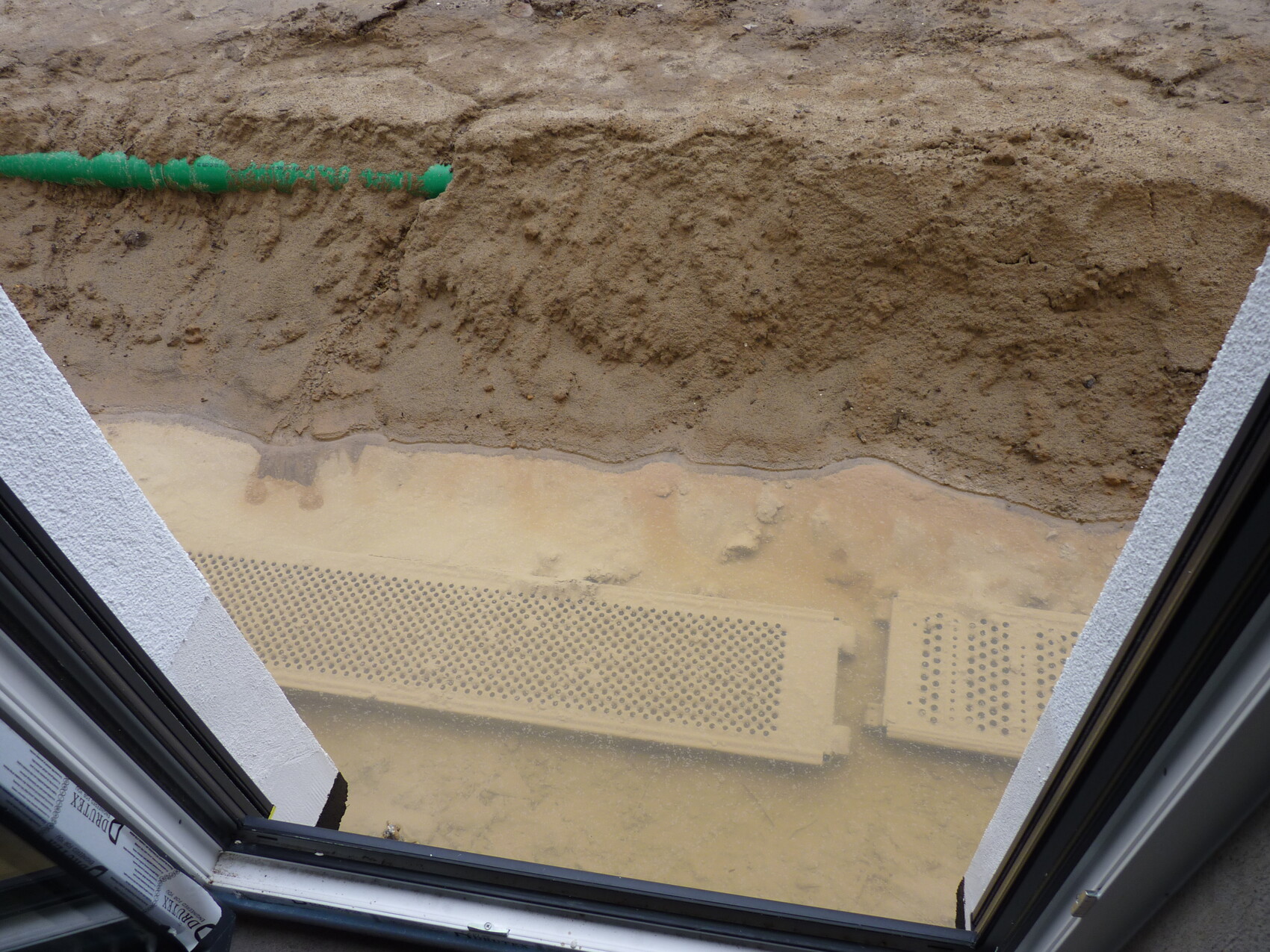
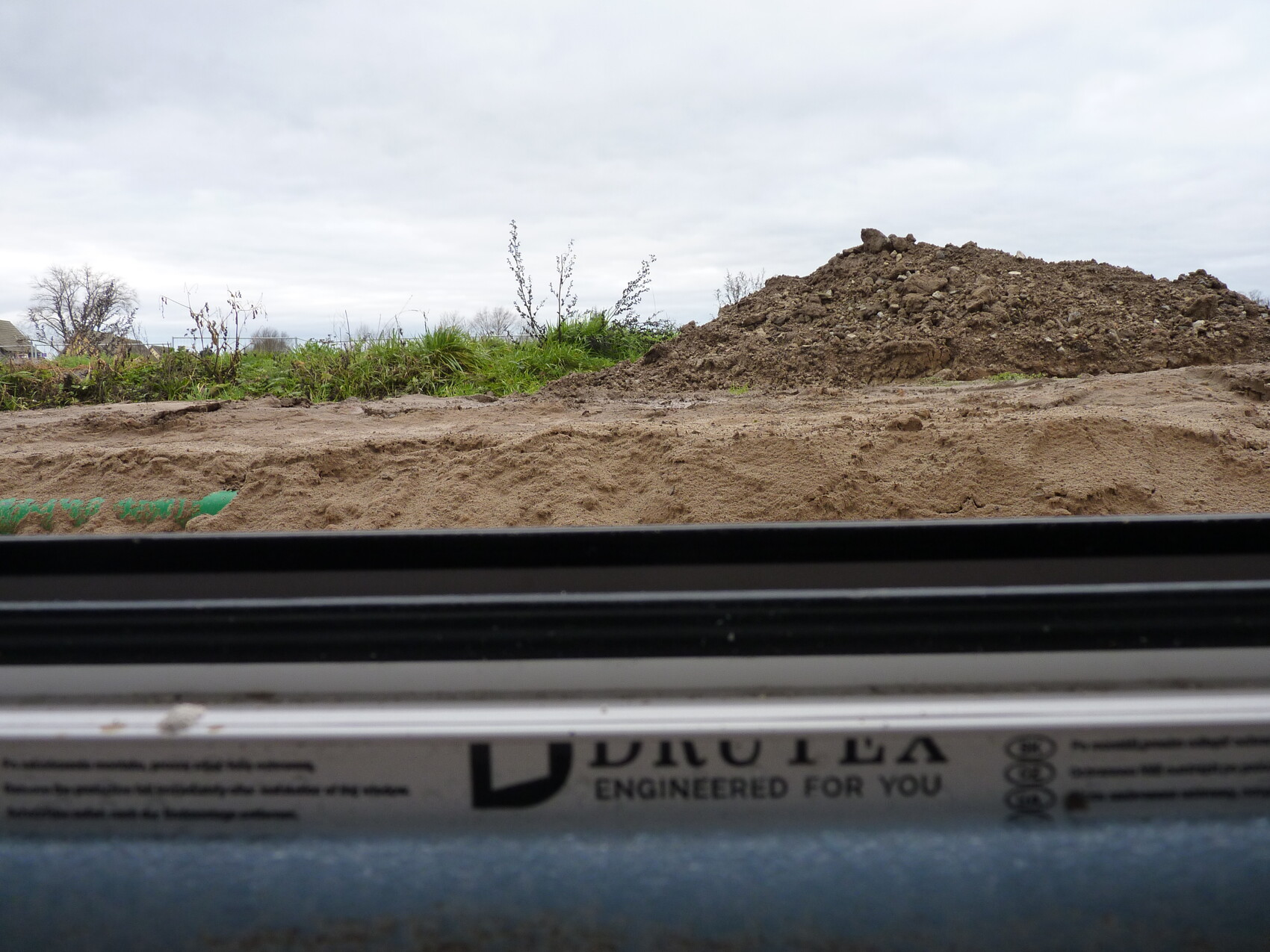
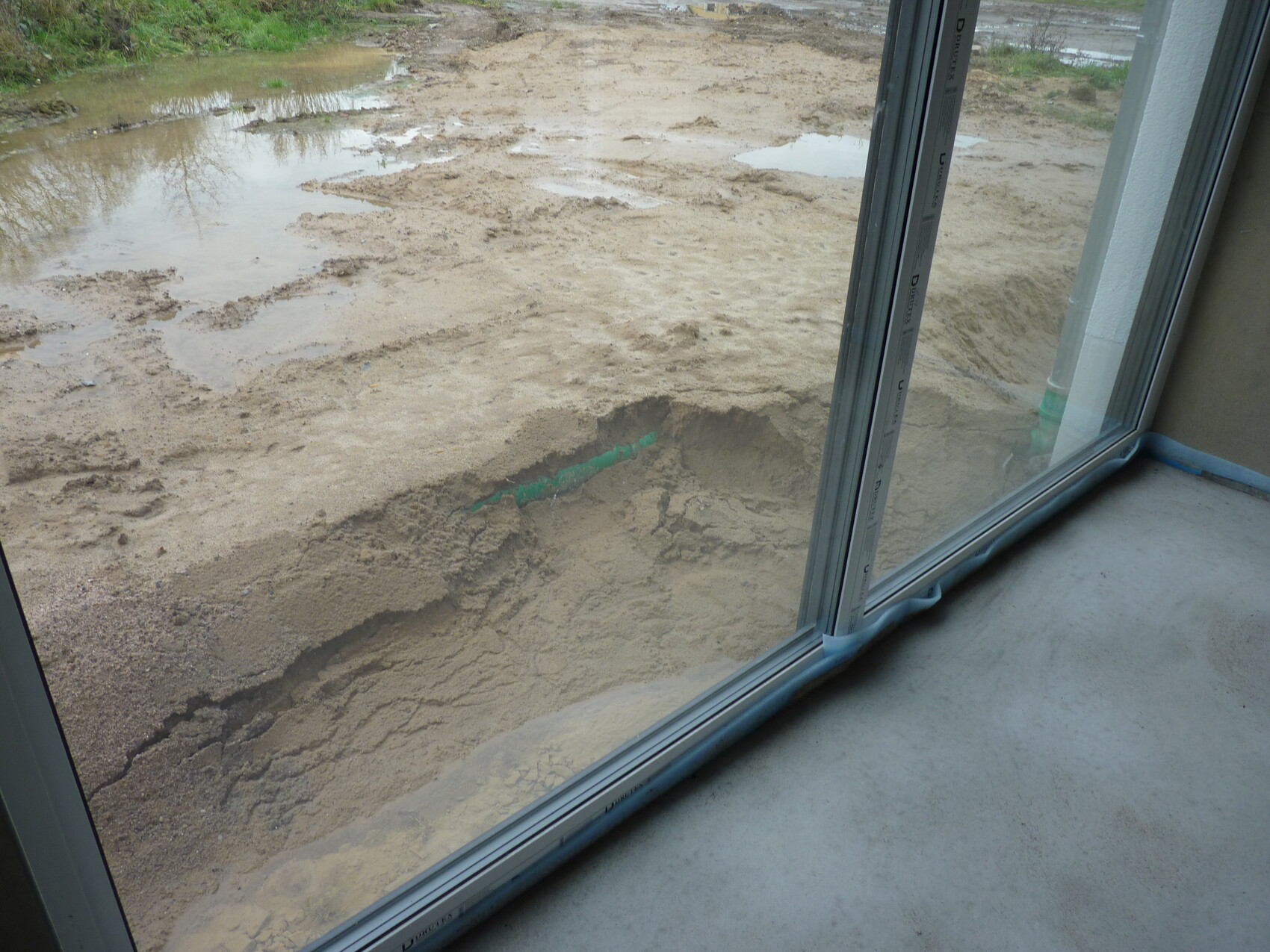
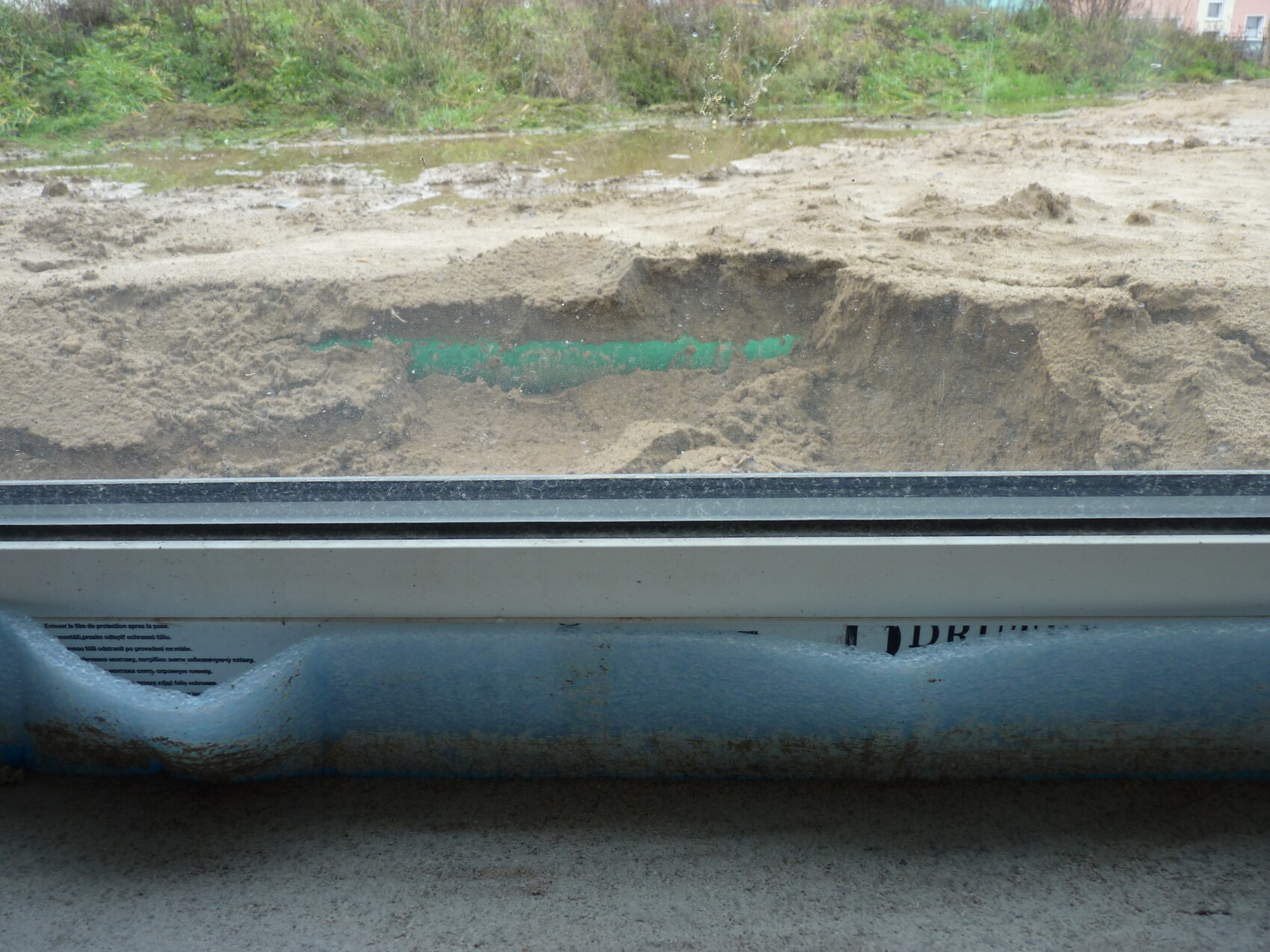
Now, the rainwater pipes have been connected to the gutters. However, the pipes, which should actually be underground, seem to me to be installed quite “high.”
The excavation contractor, who performed this work, told me that he cannot bury the pipes any deeper because the public connection to the rainwater system would then be below the required level, meaning there would be no proper slope leading away from the house.
My questions are therefore: Is it still possible to pave a terrace over this? Has the house been set too low? Is this common practice? And if so, in case of necessity, can I pave around the pipes and cover them in another way? I am worried that due to all the sand, this might not be possible in principle...
(Yes, there is currently a lot of water around the house. A landscaping gardener will soon install drainage, and I also have a sewage pump.)
I would be very grateful for your suggestions!
a brief introduction about myself:
I am currently having a single-family house built by a general contractor. This is my first house, and I am not a professional in the construction industry or anything similar.
Due to the city’s regulations, my single-family house with a pitched roof was only allowed a ridge height of 7.00 meters (23 feet) above street level. Therefore, the architect from the general contractor suggested partly “embedding” the house by 30 cm (12 inches), which was done accordingly.
Now, the rainwater pipes have been connected to the gutters. However, the pipes, which should actually be underground, seem to me to be installed quite “high.”
The excavation contractor, who performed this work, told me that he cannot bury the pipes any deeper because the public connection to the rainwater system would then be below the required level, meaning there would be no proper slope leading away from the house.
My questions are therefore: Is it still possible to pave a terrace over this? Has the house been set too low? Is this common practice? And if so, in case of necessity, can I pave around the pipes and cover them in another way? I am worried that due to all the sand, this might not be possible in principle...
(Yes, there is currently a lot of water around the house. A landscaping gardener will soon install drainage, and I also have a sewage pump.)
I would be very grateful for your suggestions!
Maybe you could drain/collect your rainwater on your property? That way, you can install the rainwater pipes much deeper. Possibly have a large cistern installed for collection. Of course, that costs money… For example, our rainwater doesn’t go into the public system at all. It seeps away through a soakaway (French drain) on our property.
W
WilderSueden11 Jan 2023 10:07i_b_n_a_n schrieb:
Now to the question: Is there no alternative to "paving"?Good point, some people have seating areas on gravel or crushed stone. In case of necessity, a 10cm (4 inches) coverage should also work.
Hello,
*argh* ... why, just why... but the damage is done now.
This is absolutely not acceptable. You have standing water at the house, make sure it disappears—not "soon," but today! I hope you used a waterproof concrete shell (known as a "white tank") here, otherwise you have a serious problem. This is a house, not a boat! And if it’s a timber frame house, then hats off for prayer...
The rainwater pipes are completely inadequate, forget about it. You’ll either need a soakaway system or a deep collection pit with a pump. It costs money, but there’s no other way.
Questions:
Is there a separate sewer system for rainwater and wastewater? If not, why aren’t you directing it straight into the wastewater pipes?
How do you connect to the wastewater sewer? Is it much deeper? Shouldn’t the same problem apply there then?
Where is the drainage plan? There must be one!
Why install expensive KG2000 pipes for rainwater when cheaper ones would have sufficed...
Best regards,
Andreas
Jackraptor schrieb:
so the architect of the general contractor suggested that I "bury" this 30 cm (12 inches). That’s what was done.
*argh* ... why, just why... but the damage is done now.
This is absolutely not acceptable. You have standing water at the house, make sure it disappears—not "soon," but today! I hope you used a waterproof concrete shell (known as a "white tank") here, otherwise you have a serious problem. This is a house, not a boat! And if it’s a timber frame house, then hats off for prayer...
The rainwater pipes are completely inadequate, forget about it. You’ll either need a soakaway system or a deep collection pit with a pump. It costs money, but there’s no other way.
Questions:
Is there a separate sewer system for rainwater and wastewater? If not, why aren’t you directing it straight into the wastewater pipes?
How do you connect to the wastewater sewer? Is it much deeper? Shouldn’t the same problem apply there then?
Where is the drainage plan? There must be one!
Why install expensive KG2000 pipes for rainwater when cheaper ones would have sufficed...
Best regards,
Andreas
J
Jackraptor11 Jan 2023 18:35First of all, thank you very much for your responses!
Here are the general answers 🙂
I guess I’m partly to blame because I signed the building permit / planning permission application, but shouldn’t our general contractor’s architect have noticed something like this? He was in contact with the city.
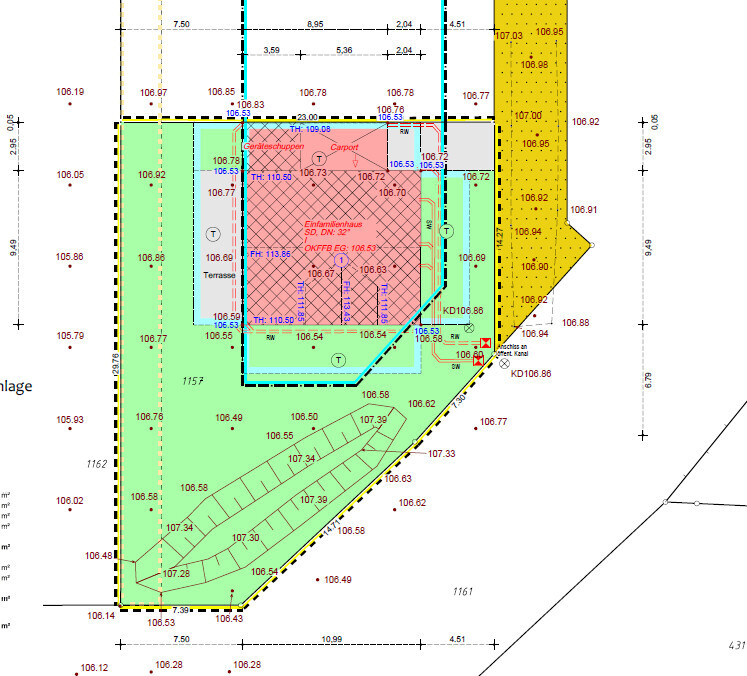
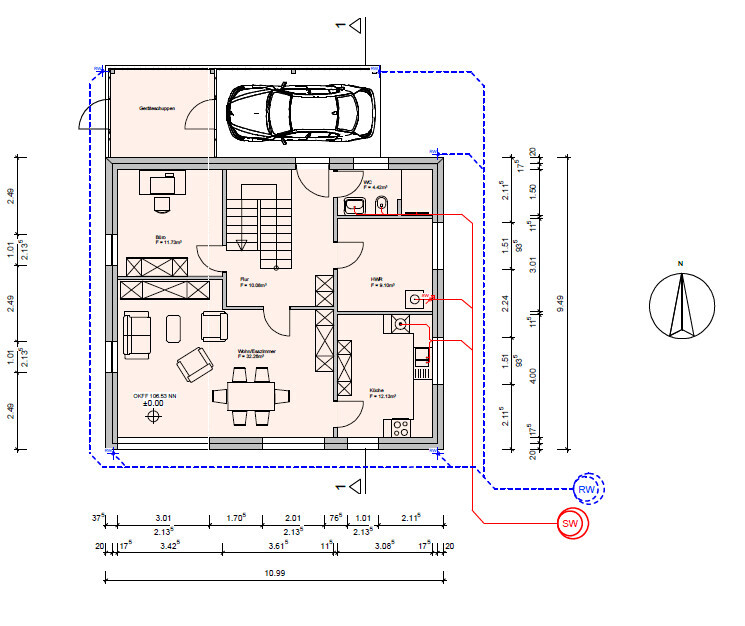
Here are the general answers 🙂
- I will take more pictures over the weekend.
- The house is made of calcium silicate blocks (no wood) and unfortunately has no basement underneath.
- Sewage and rainwater systems are separate.
- The landscaper was commissioned for the drainage work at the end of December, but it will probably take a few more weeks…
- The photos I took were taken from the office and the large living room window.
- A TÜV inspector is included in the contract with about 6 visits or similar.
I guess I’m partly to blame because I signed the building permit / planning permission application, but shouldn’t our general contractor’s architect have noticed something like this? He was in contact with the city.
J
Jackraptor11 Jan 2023 18:55@11ant hm, I would need to check further detailed drawings...
@WilderSueden Oh, that sounds like you would have to step up two levels to reach a paved terrace... but the gravel option could be an alternative 🙂
@OberhäslichYes, exactly, the pipes connected to the downspouts of the gutter are the green pipes.
@Nida35a hm, is that mentioned in the soil report? The following was included in the soil report for the city (from 4 years ago):
The subsoil initially consists of an almost continuous topsoil layer with a locally underlying fill contaminated with construction rubble. The natural soils generally comprise alternating layers of sandy to highly sandy silts and silty sands or gravels. Only locally were layers with higher organic content detected. The existing subsoil is sufficiently load-bearing for the planned single-family house construction from a depth of approximately 0.6 m to 2.2 m (2 ft to 7 ft) below ground level.
Groundwater was found at a depth of about 1.4 m (4.6 ft) below ground level during the conducted geotechnical investigations.
As far as I know, the soil was raised by about one meter (3 ft) with soil that was enriched with lime or something that improves its bearing capacity. This is what my geotechnical report states:
Beneath a 0.9 m (3 ft) thick fill layer composed of stabilized silt, there are glacial deposits extending down to at least 4.0 m (13 ft) depth (final depth of the boreholes). From a petrographic perspective, these appear as stiff, highly sandy silts (glacial clay) down to at least 2.0 m (6.5 ft) depth. Without a distinct layering boundary, non-cohesive glacial sands follow in the form of silty or gravelly sands. These glacial sands are moderately dense.
@i_b_n_a_n It had to be done quickly; we only received approval for this plot a year ago, and construction had to start within two years...
@Steffi33 Yes, you are right, that is an idea our landscape gardener also suggested.
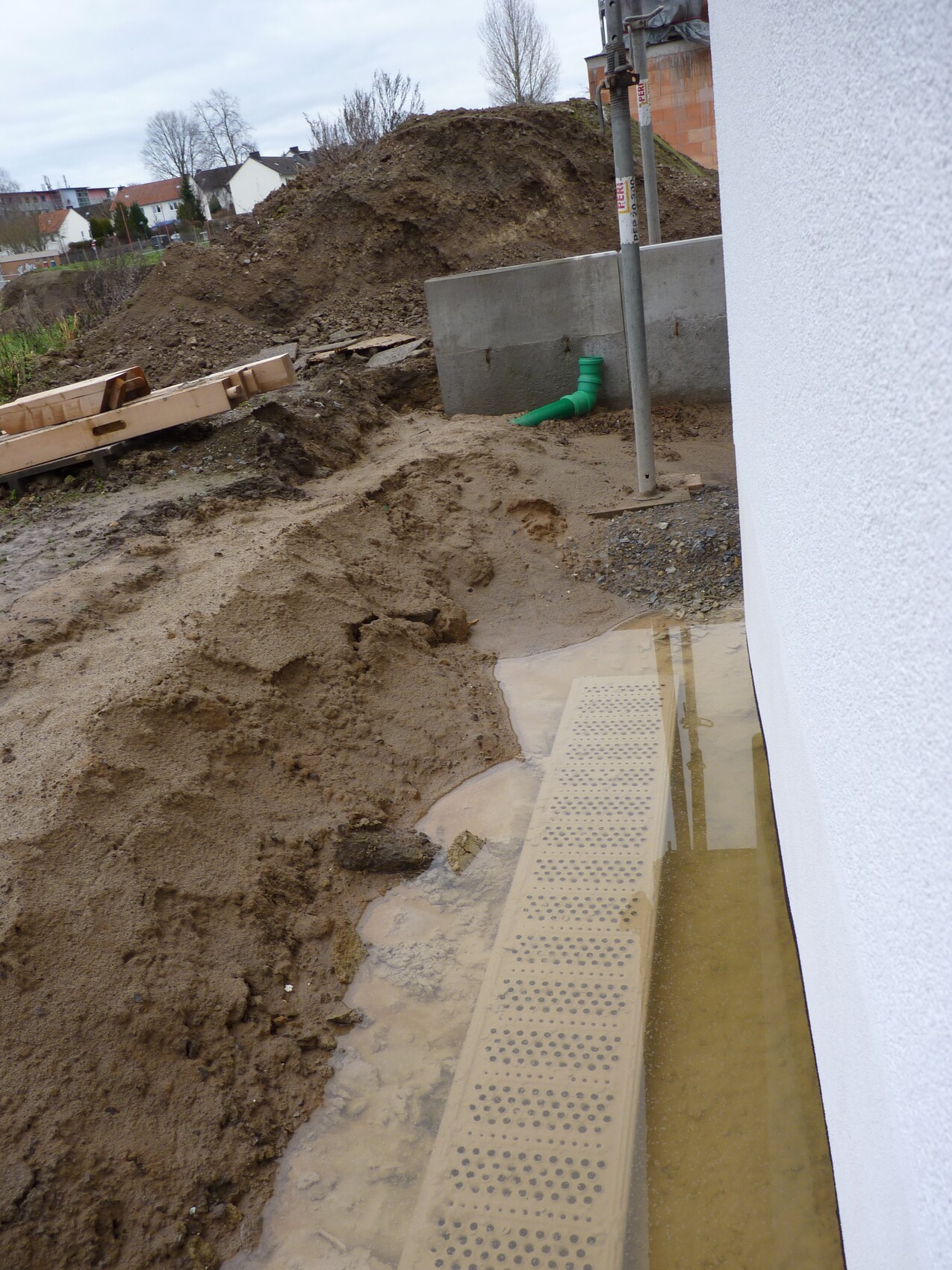
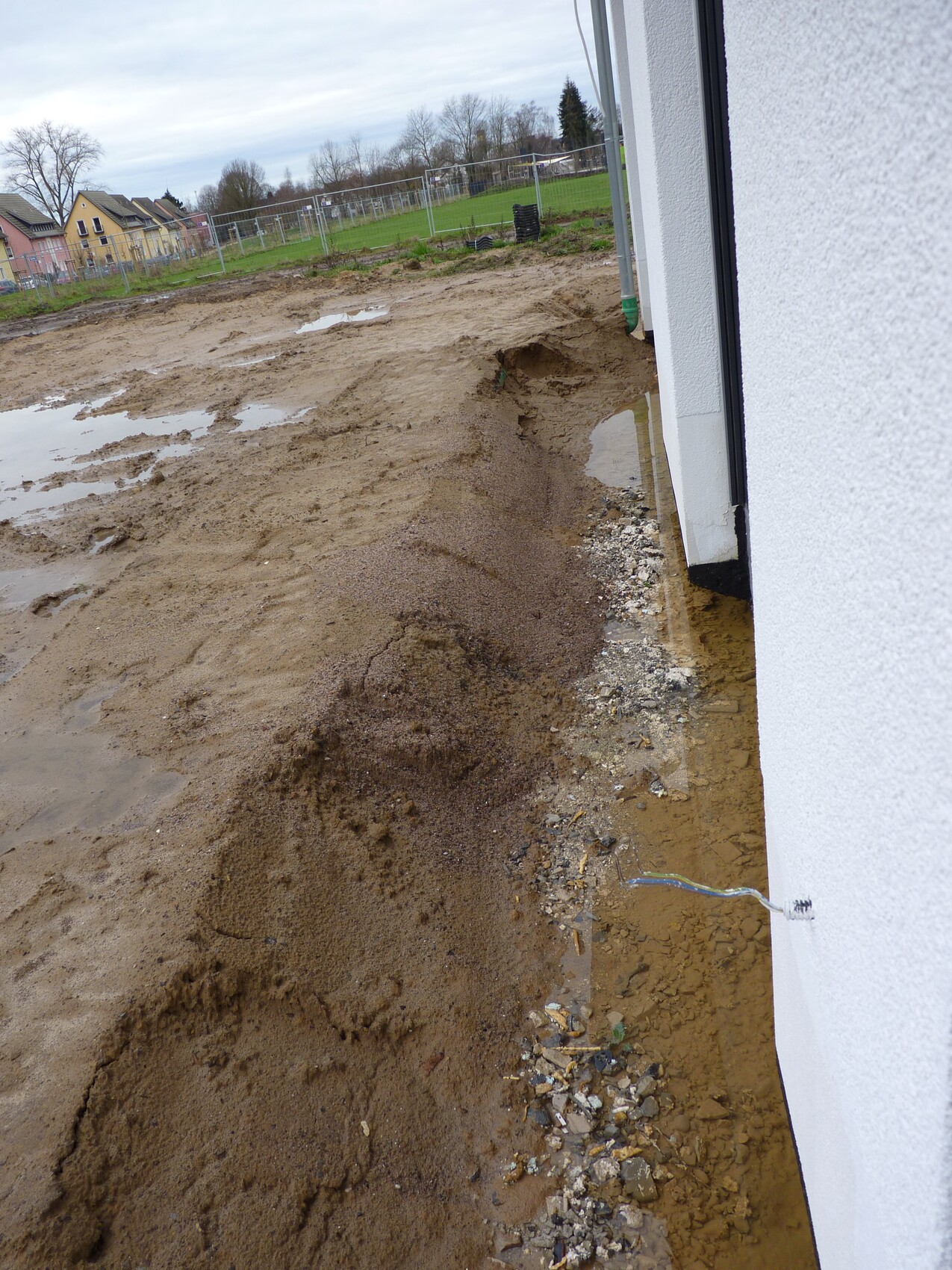
@WilderSueden Oh, that sounds like you would have to step up two levels to reach a paved terrace... but the gravel option could be an alternative 🙂
@OberhäslichYes, exactly, the pipes connected to the downspouts of the gutter are the green pipes.
@Nida35a hm, is that mentioned in the soil report? The following was included in the soil report for the city (from 4 years ago):
The subsoil initially consists of an almost continuous topsoil layer with a locally underlying fill contaminated with construction rubble. The natural soils generally comprise alternating layers of sandy to highly sandy silts and silty sands or gravels. Only locally were layers with higher organic content detected. The existing subsoil is sufficiently load-bearing for the planned single-family house construction from a depth of approximately 0.6 m to 2.2 m (2 ft to 7 ft) below ground level.
Groundwater was found at a depth of about 1.4 m (4.6 ft) below ground level during the conducted geotechnical investigations.
As far as I know, the soil was raised by about one meter (3 ft) with soil that was enriched with lime or something that improves its bearing capacity. This is what my geotechnical report states:
Beneath a 0.9 m (3 ft) thick fill layer composed of stabilized silt, there are glacial deposits extending down to at least 4.0 m (13 ft) depth (final depth of the boreholes). From a petrographic perspective, these appear as stiff, highly sandy silts (glacial clay) down to at least 2.0 m (6.5 ft) depth. Without a distinct layering boundary, non-cohesive glacial sands follow in the form of silty or gravelly sands. These glacial sands are moderately dense.
@i_b_n_a_n It had to be done quickly; we only received approval for this plot a year ago, and construction had to start within two years...
@Steffi33 Yes, you are right, that is an idea our landscape gardener also suggested.

Jackraptor schrieb:
...
It had to be done quickly; we had only received approval for this plot a year ago, and construction had to start within two years... What’s so fast about that? From deciding to build to moving in took us 1.5 years, and a construction period of about 1 year is normal.What kind of external thermal insulation composite system (ETICS) is applied over the sand-lime bricks?
But no matter what it is, it definitely shouldn’t be standing in water. Make sure you get a pump installed and a drainage system put in. I would take that very seriously. What are the elevations of the connections for the rainwater and wastewater? (If necessary, remove the manhole covers and measure...)
Similar topics