
R
Ridder198228 Nov 2022 09:47Hello everyone,
I am currently renovating a houseboat and have a question about the floor construction, especially regarding insulation.
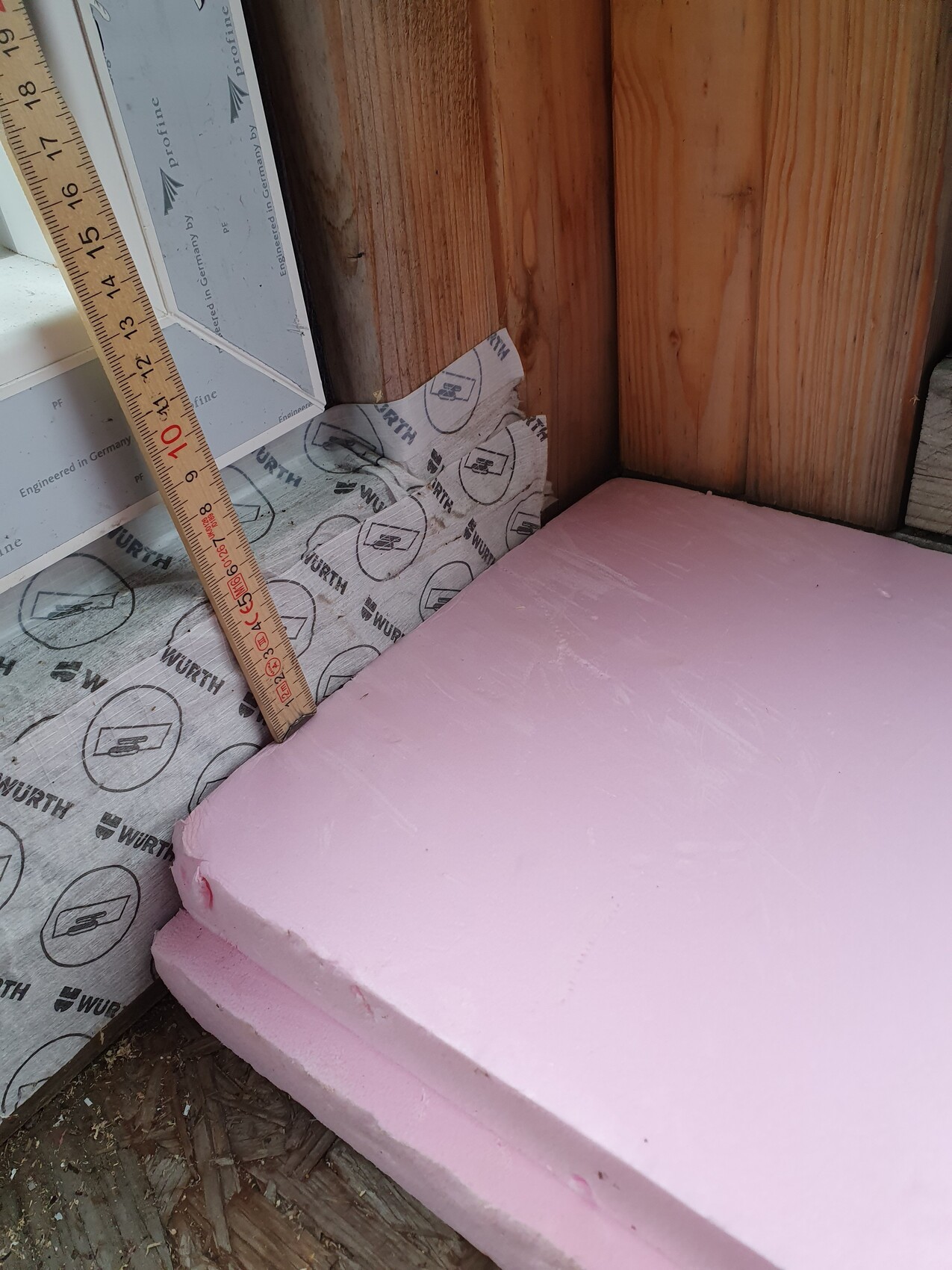
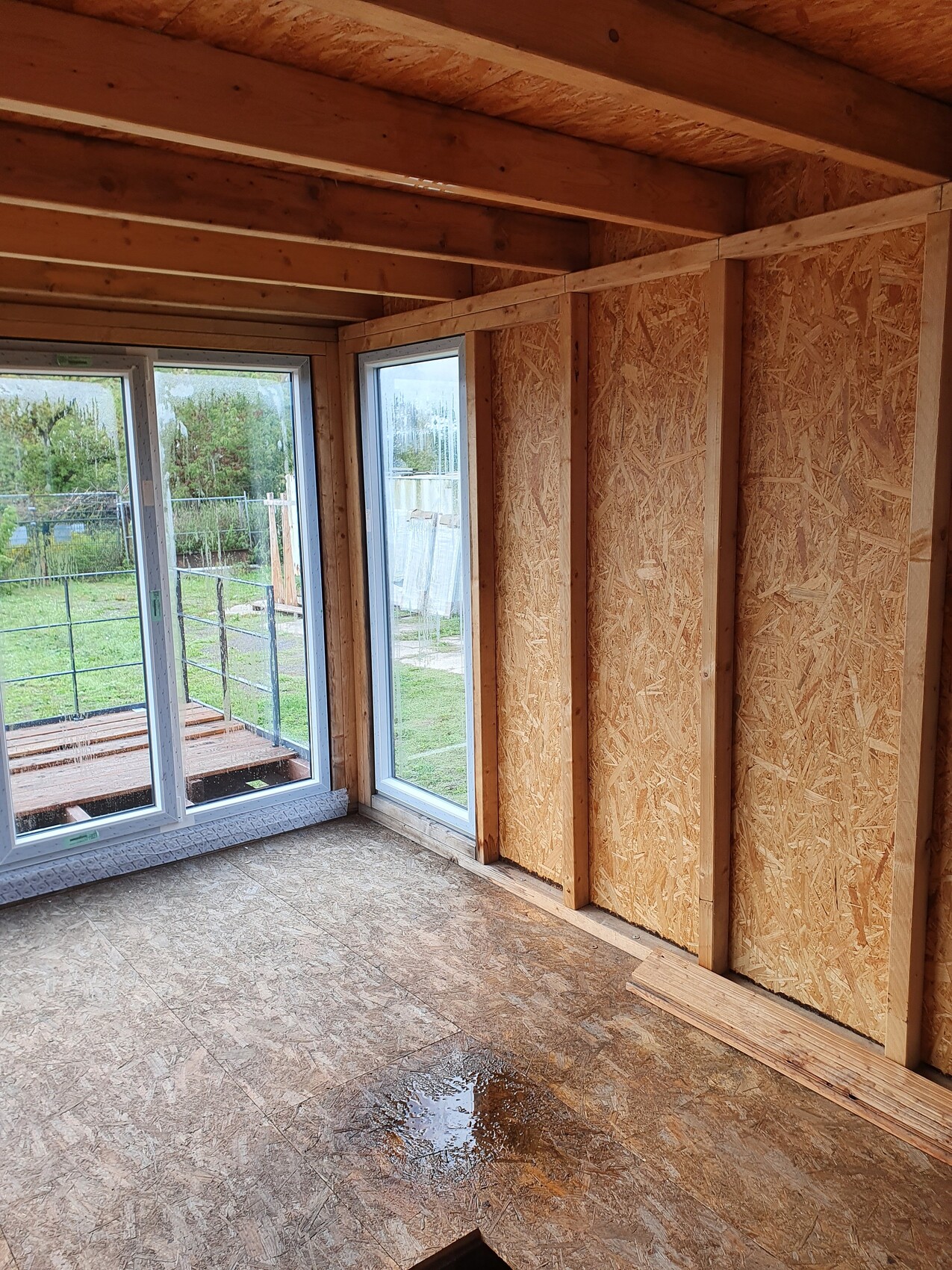
The entire house is built using timber frame construction, and the subfloor currently consists only of OSB boards. I want to install insulation on top of this and finally lay laminate flooring over it. For the insulation, I am considering XPS rigid foam boards (50mm or 60mm (2 or 2.4 inches)). My question is, do I need to install a vapor barrier film in between, and can laminate be laid directly on the insulation? Should I install edge insulation strips around the perimeter? What floor construction would you recommend? Please disregard the water stain in the photo; the roof is now watertight.
I am currently renovating a houseboat and have a question about the floor construction, especially regarding insulation.
The entire house is built using timber frame construction, and the subfloor currently consists only of OSB boards. I want to install insulation on top of this and finally lay laminate flooring over it. For the insulation, I am considering XPS rigid foam boards (50mm or 60mm (2 or 2.4 inches)). My question is, do I need to install a vapor barrier film in between, and can laminate be laid directly on the insulation? Should I install edge insulation strips around the perimeter? What floor construction would you recommend? Please disregard the water stain in the photo; the roof is now watertight.
What is underneath the OSB? Exterior air or a ventilated space? It won’t be directly exposed to water, right?
Regarding XPS: You cannot lay any floor covering directly on it, especially not laminate or vinyl. You need a load distribution layer; otherwise, the first step will leave a hole.
Vapor barrier: On the inside (the warm side), it should always be more vapor-tight than on the outside (outer wall or floor surface). Alternatively, your insulation can be capillary-active and vapor-permeable, allowing moisture to dry back inward.
In your case, you have OSB on the "outside." It has a relatively strong vapor-retardant effect. The options are either OSB or something more vapor-tight on the inside as well, or a fully open system made of wood and wood fiber.
Either: battens with wood fiber insulation boards in between or jute on the battens with parquet flooring on top.
Or: EPS DEO with compressive strength >150 kPa and on top dry screed panels or OSB boards, followed by laminate, vinyl, or parquet flooring. You can also use XPS, but it’s more expensive.
For the wall, I would use wood fiber insulation with a vapor barrier on the inside and OSB sheathing. Even better is to install about 6 cm (2.4 inches) battens with wood fiber insulation before the vapor barrier, and then OSB on the inside. This creates a service cavity and avoids penetrating the vapor barrier. The roof should be done the same way.
Edge insulation strips with EPS and dry screed make sense if the battens are to be installed floating (to prevent warping). That also makes sense.
Regarding XPS: You cannot lay any floor covering directly on it, especially not laminate or vinyl. You need a load distribution layer; otherwise, the first step will leave a hole.
Vapor barrier: On the inside (the warm side), it should always be more vapor-tight than on the outside (outer wall or floor surface). Alternatively, your insulation can be capillary-active and vapor-permeable, allowing moisture to dry back inward.
In your case, you have OSB on the "outside." It has a relatively strong vapor-retardant effect. The options are either OSB or something more vapor-tight on the inside as well, or a fully open system made of wood and wood fiber.
Either: battens with wood fiber insulation boards in between or jute on the battens with parquet flooring on top.
Or: EPS DEO with compressive strength >150 kPa and on top dry screed panels or OSB boards, followed by laminate, vinyl, or parquet flooring. You can also use XPS, but it’s more expensive.
For the wall, I would use wood fiber insulation with a vapor barrier on the inside and OSB sheathing. Even better is to install about 6 cm (2.4 inches) battens with wood fiber insulation before the vapor barrier, and then OSB on the inside. This creates a service cavity and avoids penetrating the vapor barrier. The roof should be done the same way.
Edge insulation strips with EPS and dry screed make sense if the battens are to be installed floating (to prevent warping). That also makes sense.
R
Ridder198229 Nov 2022 10:28dertill schrieb:
What is underneath the OSB? Outside air or a ventilated space? It won’t be directly exposed to water, right?
Regarding XPS: You can’t lay flooring directly on it, especially not laminate or vinyl. You need a load-distributing layer; otherwise, you’ll punch a hole with the first heavy step.
Vapor barrier: Inside (the warm side) it should always be less permeable than outside (the exterior of the wall or floor). Or your insulation needs to be capillary active and vapor-permeable, so moisture can dry back inside.
In your case, you have OSB on the “outside.” It has a relatively high vapor-retarding effect. The options are either to use OSB or something more impermeable on the inside as well, or make everything open and use wood plus wood fiber materials.
Either: joists with wood fiber insulation boards between them or jute, and on the joists you can lay parquet flooring.
Or: EPS DEO with >150 kPa compressive strength and on top dry screed panels or OSB boards, then laminate/vinyl/parquet. You can also use XPS, but it’s more expensive.
For walls, I would use compressed wool insulation (Klemmfilz) with a vapor barrier inside and OSB paneling. Even better is to place about 6cm (2.4 inches) battens with compressed wool in front of the vapor barrier, then OSB on the inside. That creates an installation cavity and keeps the vapor barrier intact. The roof construction should be done the same way.
Edge insulation strips with EPS plus dry screed make sense if the joists will be installed floating (to allow for movement), that also makes sense. Thanks for your detailed answer. Exactly, there is outside air under the OSB. After about 50cm (20 inches) water will be present.
I think I prefer the option with EPS and then OSB on top. I just need to check if the weight is suitable. The boat weighs about 5t (5.5 short tons) without the interior; about 2t (2.2 short tons) is left for the entire fit-out. It will work ;-)
Similar topics