
Hello everyone,
We are now in the fortunate/unfortunate position of inheriting my parents’ house from 1988/89. Most likely, my parents will move into a rental apartment around December, and then we can start renovation and remodeling work. Overall, the house is in good condition, and we will soon receive a brief report needed for the payout among the siblings.
As usual, you start small and then it grows.
The bathrooms are about 5 years old, so nothing will be done there. The gas heating system is from 2013, I believe, and will be sufficient for now.
What is set in stone:
1) Remove the complete flooring on the ground floor and first floor and install underfloor heating. We want to install a wood-burning stove with a heat exchanger in the living room, possibly water-cooled. At a minimum, we will lay the water pipes when breaking up the floor, so it can be retrofitted later if needed.
Manifold 1 will be placed in the hallway behind the front door, and manifold 2 upstairs in the hallway between the children’s rooms.
1.1) Hallway, kitchen, storage room: I can get tiles at a reasonable price through an acquaintance, including tile installation.
1.2) Living room: Parquet flooring, still to be selected.
1.3) Upper floor: Probably cork flooring.
1.4) In the course of this, I also want to install a proper network cabling. Two network outlets in each children’s bedroom plus one for an access point, 2 x 2 ports in the living room, and four ports in the basement. The basement will include the future home office.
2) If structurally feasible, a wall opening will be created between the kitchen and living room. The maximum width will be determined by the structural engineer and will be around 1.5-2 meters (approximately 5-6.5 feet), not 3 meters (about 10 feet) as shown in the plan.
3) All doors and frames will be replaced. Possibly a sliding door will be installed from the entrance hall to the kitchen.
5) Painting.
6) New carpet in the basement.
Where I am still working and uncertain about the scope of work (and will need your advice):
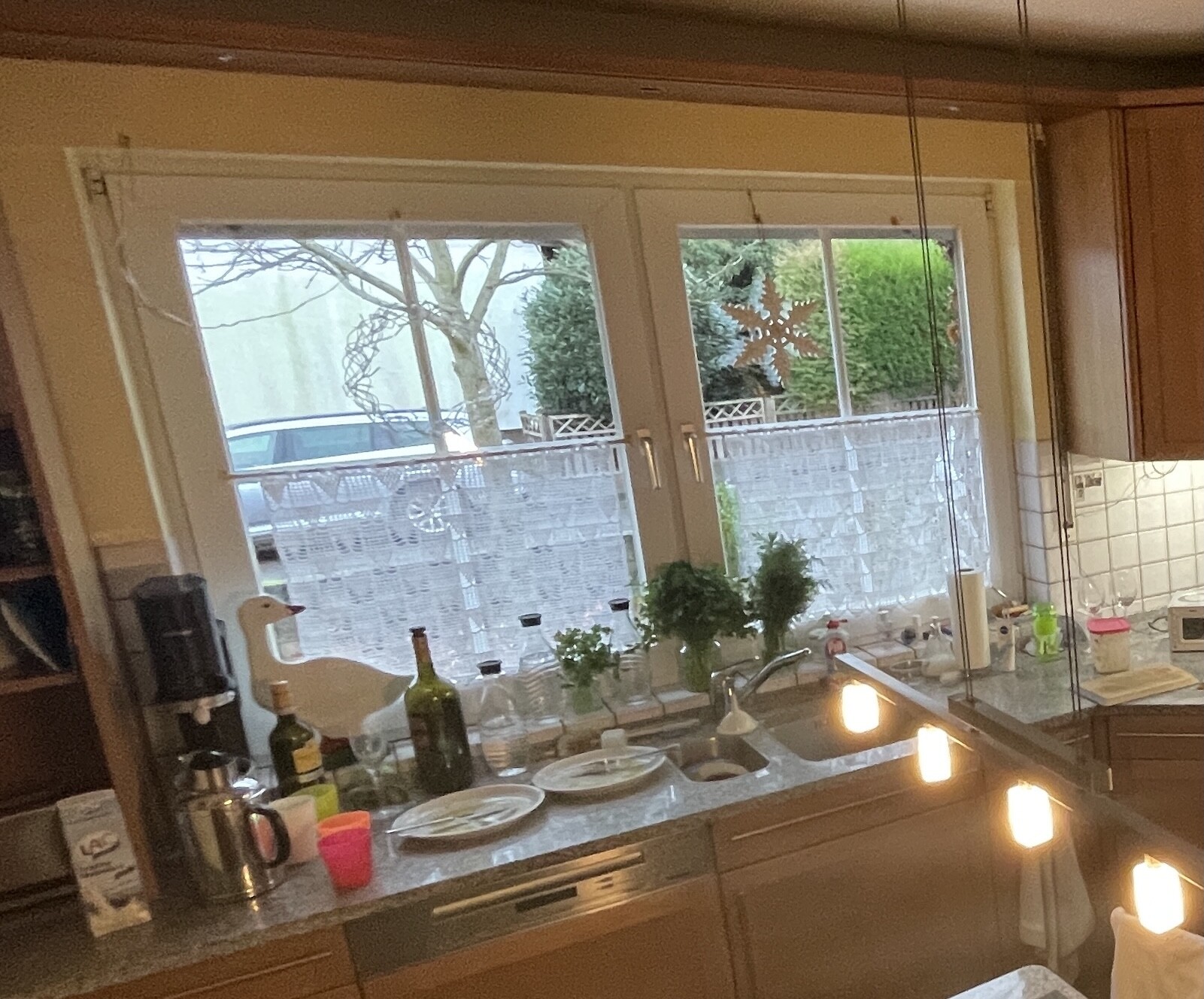
7) All windows will be replaced. They are original from 1988 with double-glazed PVC frames. All have a Helima muntin bar, if I remember correctly. We don’t like them and want new ones. What exactly should I pay attention to in order to keep the effort and disturbance as low as possible? Basically, we don’t want extensive chipping work on the masonry. No additional or new wall insulation is planned. Keyword here: mold prevention.
I don’t have a better picture at hand right now, but I will provide detailed photos later.
8) The front door will also be replaced at the same time. Same considerations as point 7. I cannot estimate the extent of the work.
9) The electrical distribution cabinet probably needs work as well, as it is still from 1988.
Nice to have:
10) New staircase, if the costs are not too high.
11) Drywall partition in the basement/stairwell due to “cold drafts” going up (according to my wife).
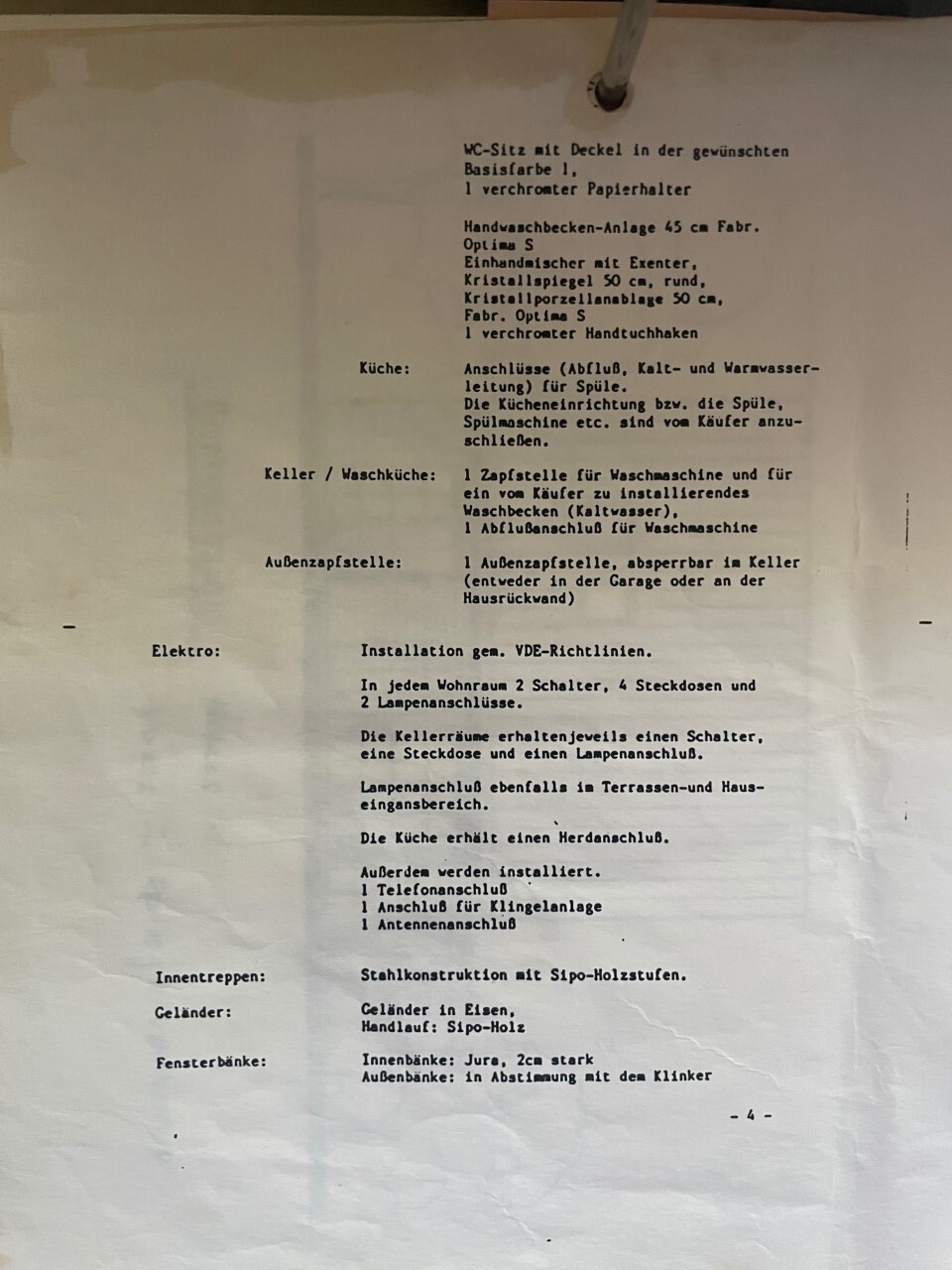
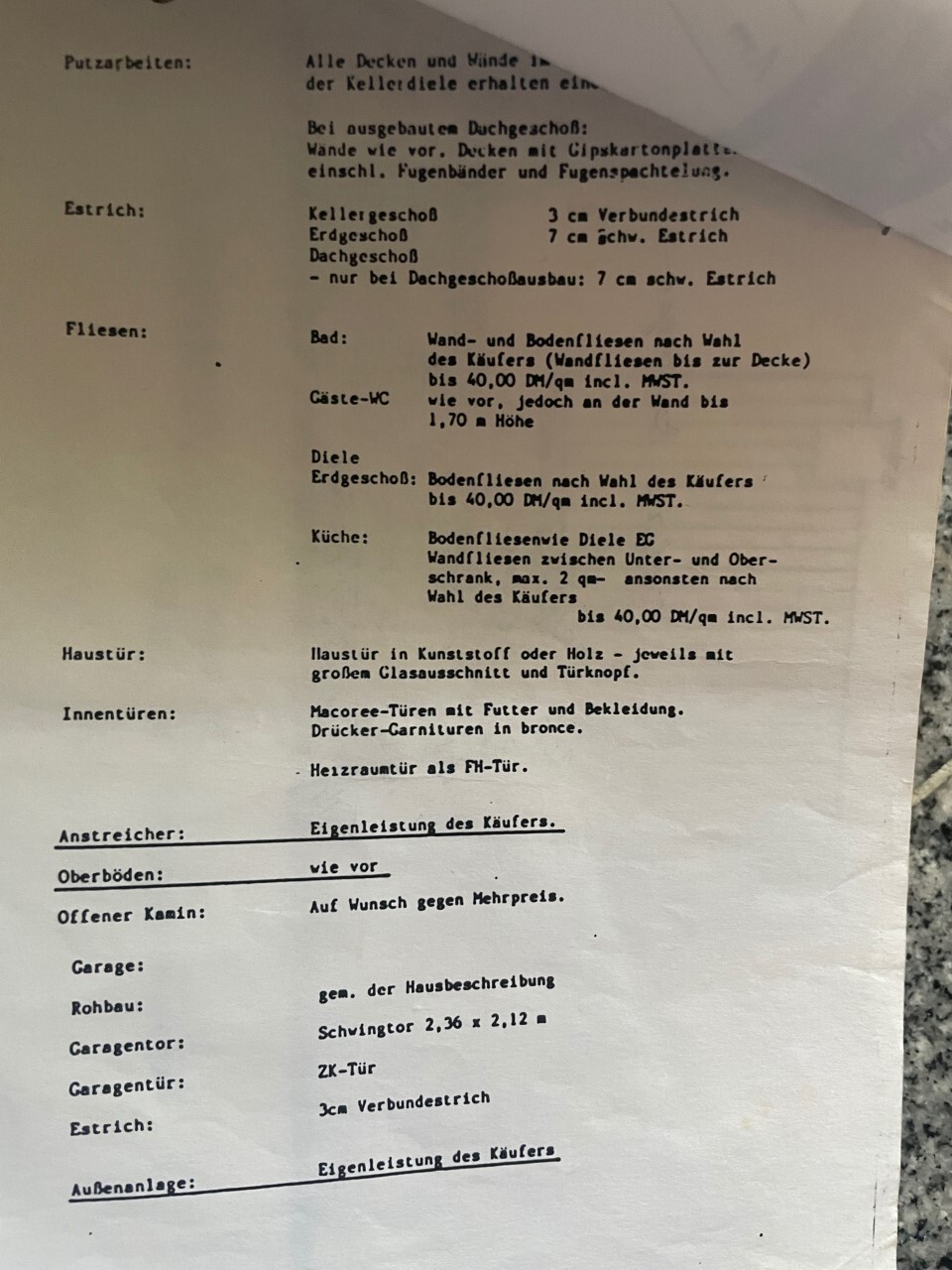
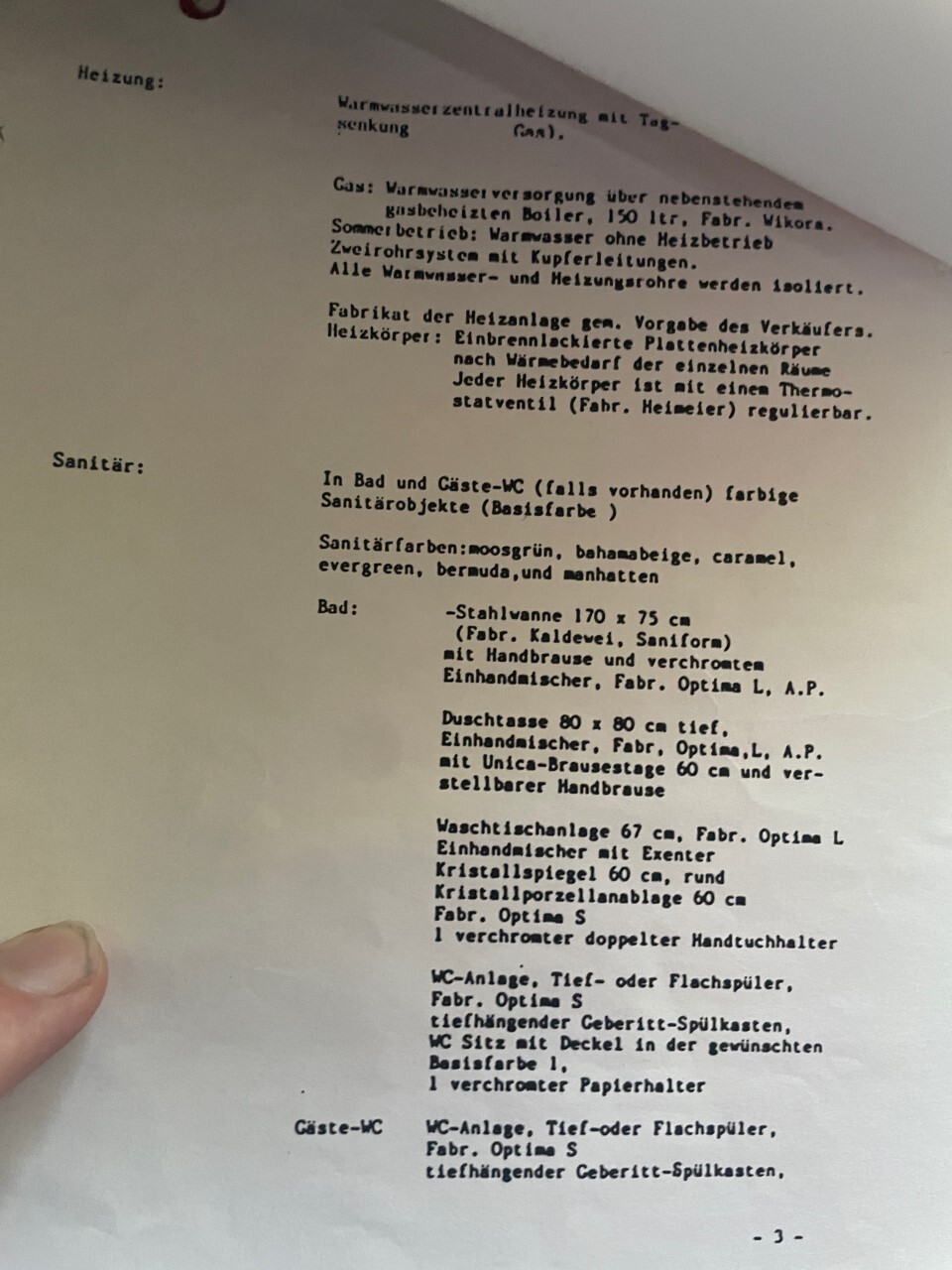
I have attached the plans and the project description.
Thank you very much and have a great day.

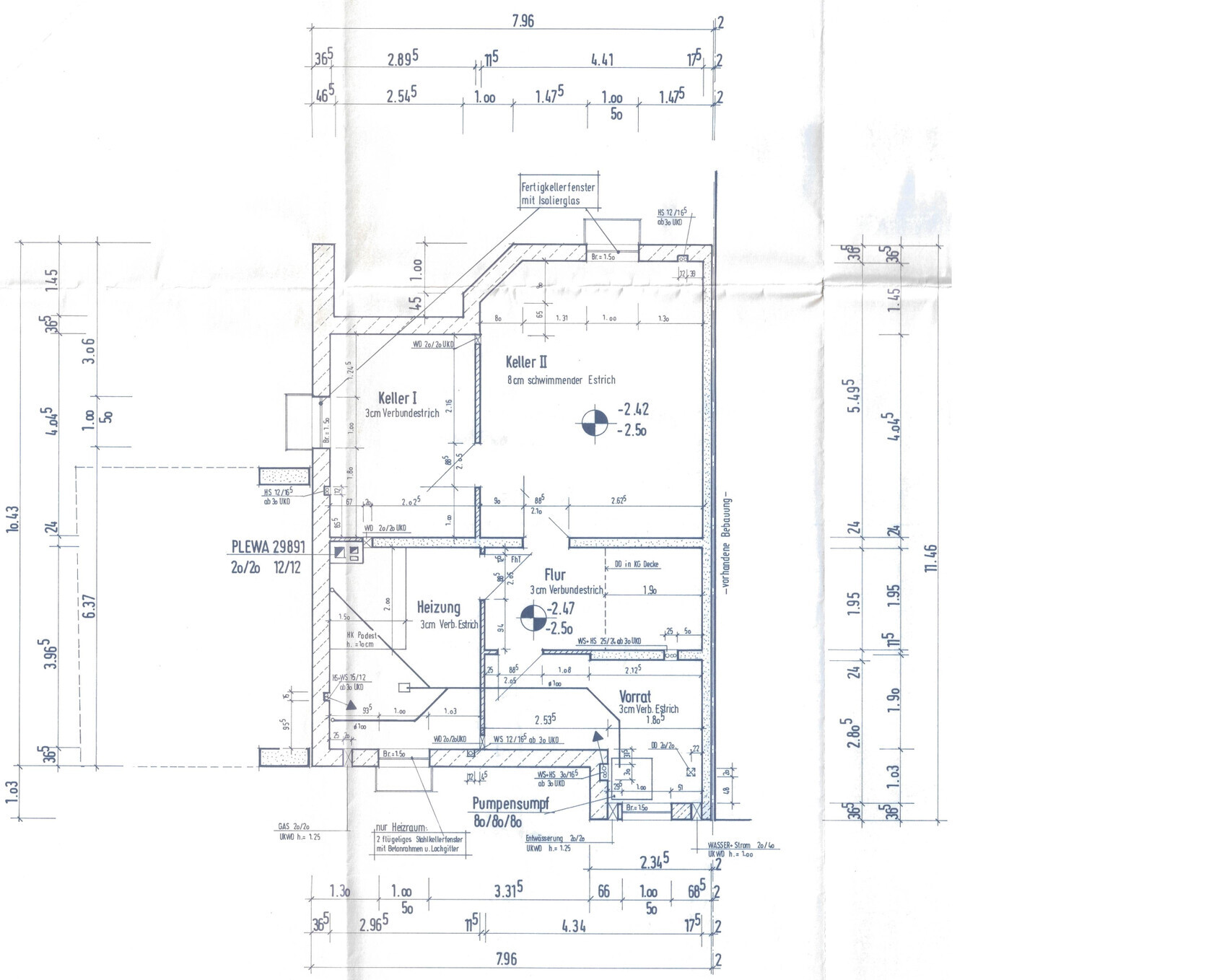
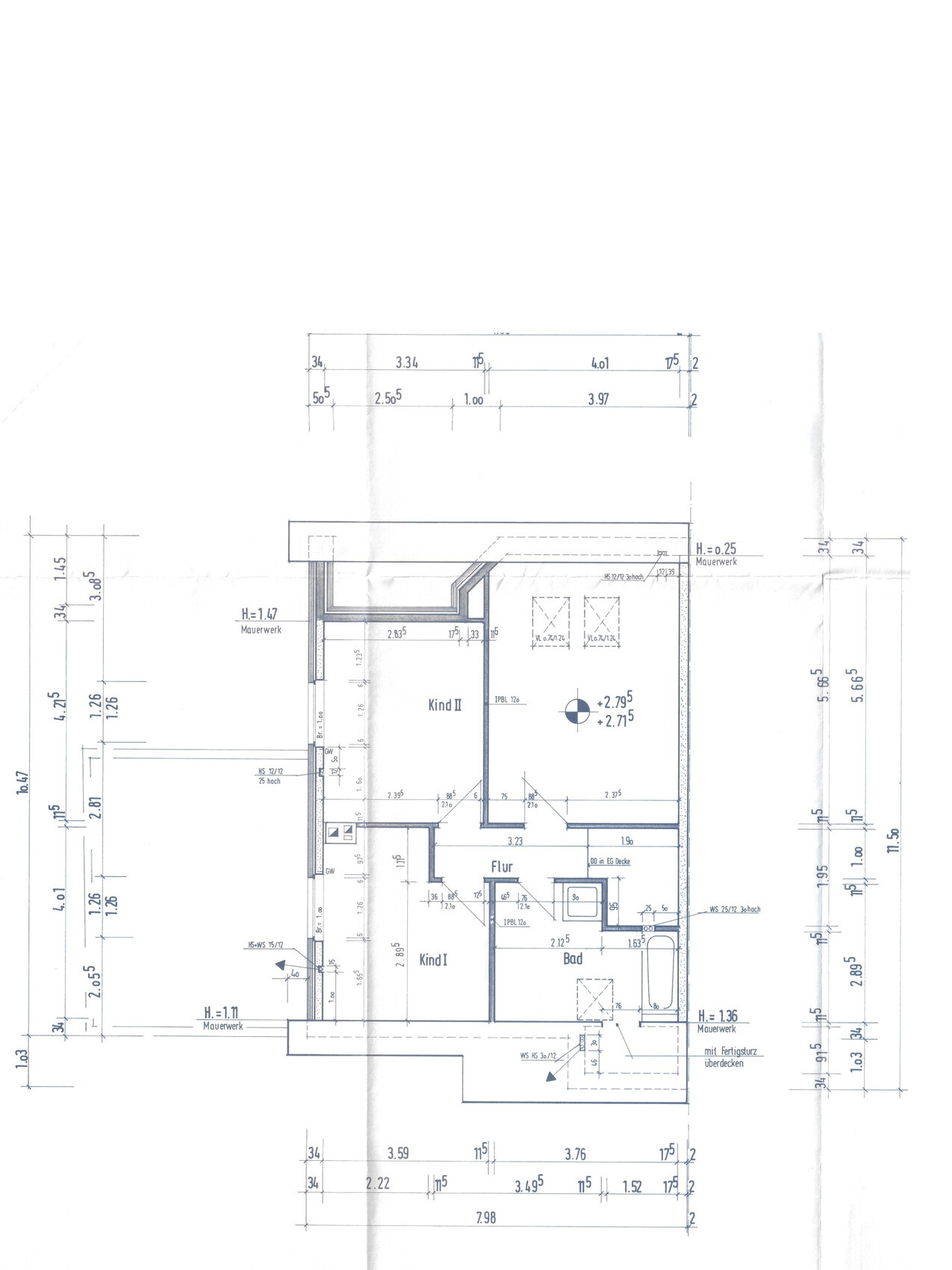
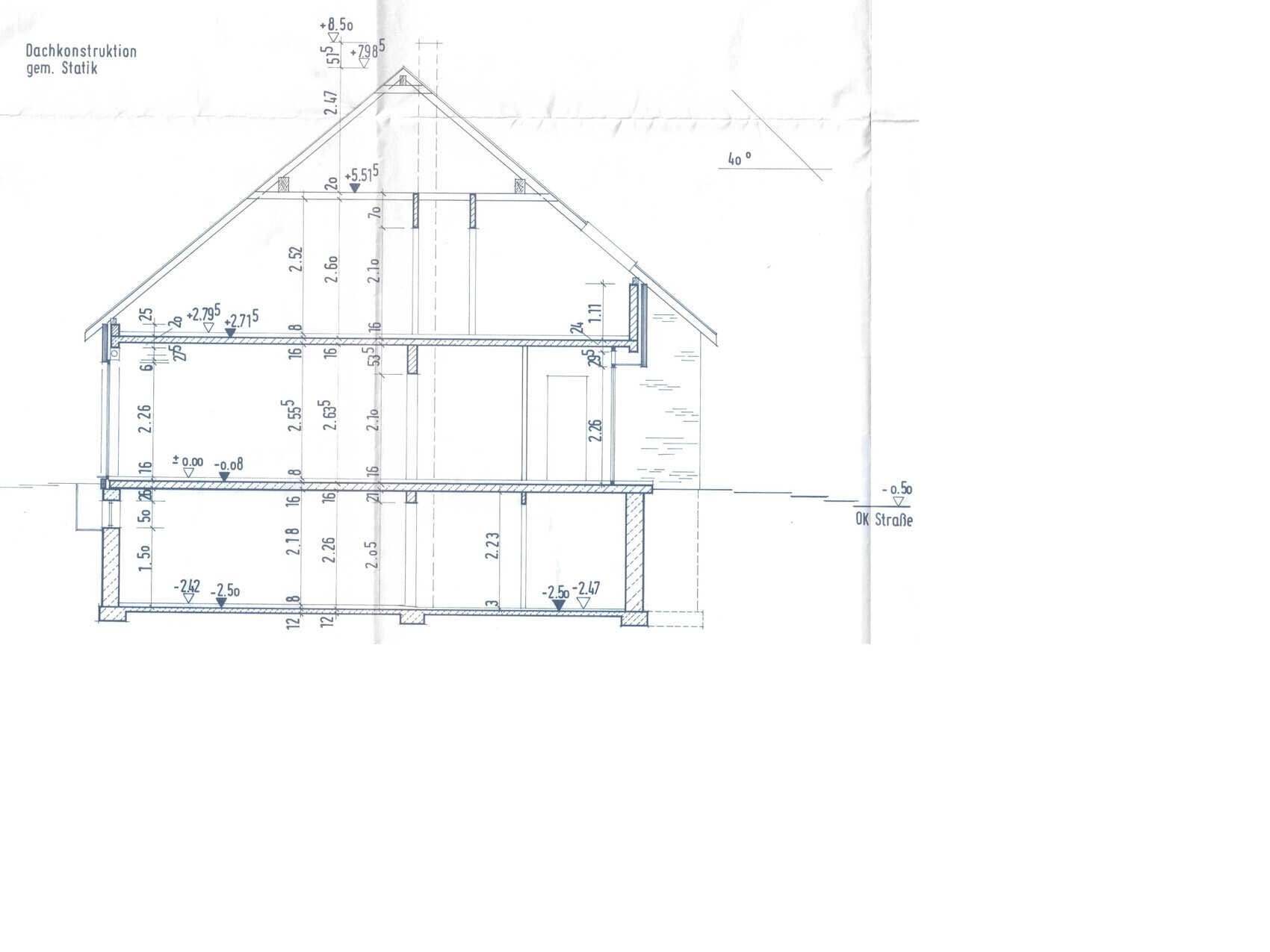
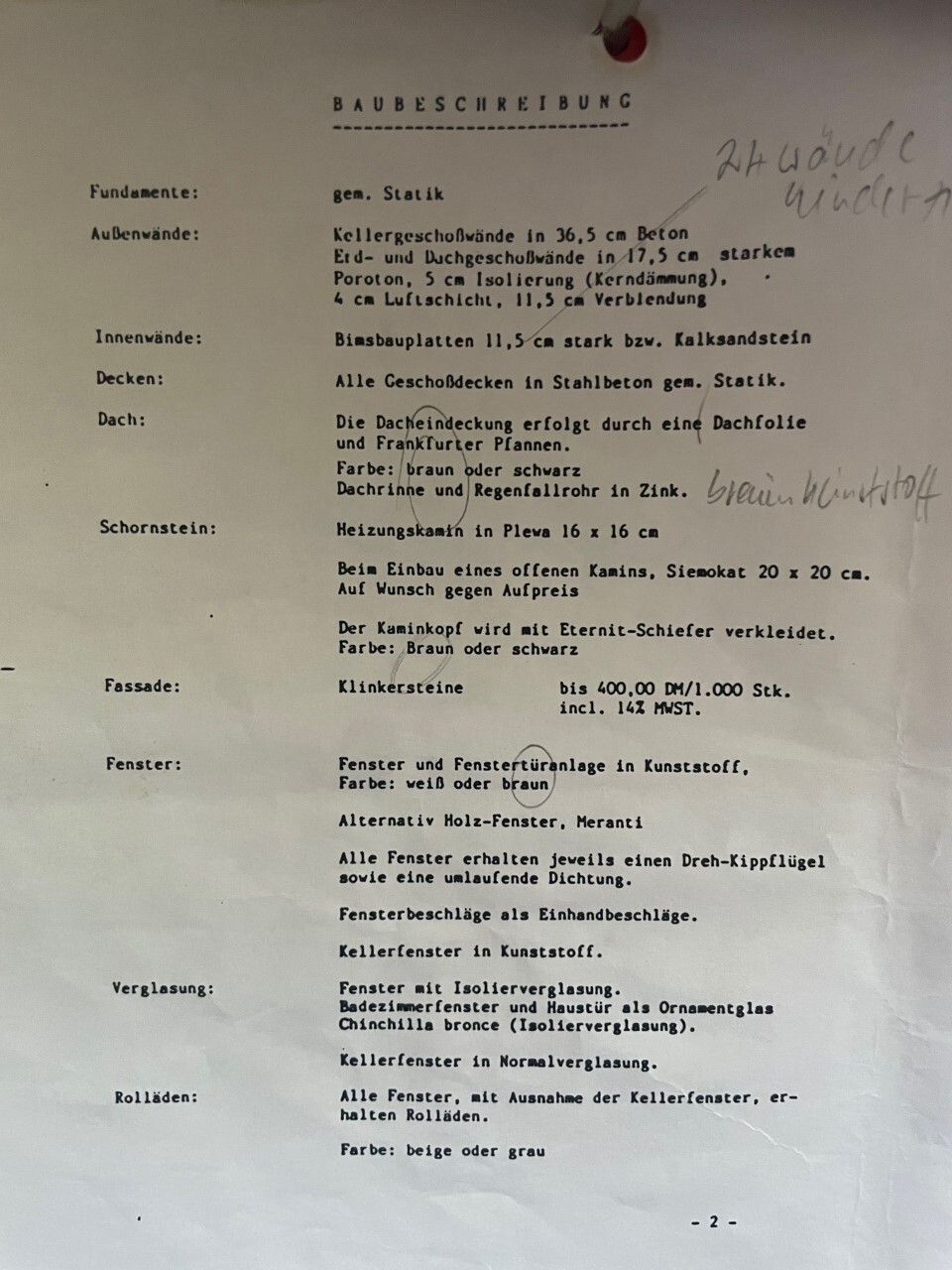
We are now in the fortunate/unfortunate position of inheriting my parents’ house from 1988/89. Most likely, my parents will move into a rental apartment around December, and then we can start renovation and remodeling work. Overall, the house is in good condition, and we will soon receive a brief report needed for the payout among the siblings.
As usual, you start small and then it grows.
The bathrooms are about 5 years old, so nothing will be done there. The gas heating system is from 2013, I believe, and will be sufficient for now.
What is set in stone:
1) Remove the complete flooring on the ground floor and first floor and install underfloor heating. We want to install a wood-burning stove with a heat exchanger in the living room, possibly water-cooled. At a minimum, we will lay the water pipes when breaking up the floor, so it can be retrofitted later if needed.
Manifold 1 will be placed in the hallway behind the front door, and manifold 2 upstairs in the hallway between the children’s rooms.
1.1) Hallway, kitchen, storage room: I can get tiles at a reasonable price through an acquaintance, including tile installation.
1.2) Living room: Parquet flooring, still to be selected.
1.3) Upper floor: Probably cork flooring.
1.4) In the course of this, I also want to install a proper network cabling. Two network outlets in each children’s bedroom plus one for an access point, 2 x 2 ports in the living room, and four ports in the basement. The basement will include the future home office.
2) If structurally feasible, a wall opening will be created between the kitchen and living room. The maximum width will be determined by the structural engineer and will be around 1.5-2 meters (approximately 5-6.5 feet), not 3 meters (about 10 feet) as shown in the plan.
3) All doors and frames will be replaced. Possibly a sliding door will be installed from the entrance hall to the kitchen.
5) Painting.
6) New carpet in the basement.
Where I am still working and uncertain about the scope of work (and will need your advice):
7) All windows will be replaced. They are original from 1988 with double-glazed PVC frames. All have a Helima muntin bar, if I remember correctly. We don’t like them and want new ones. What exactly should I pay attention to in order to keep the effort and disturbance as low as possible? Basically, we don’t want extensive chipping work on the masonry. No additional or new wall insulation is planned. Keyword here: mold prevention.
I don’t have a better picture at hand right now, but I will provide detailed photos later.
8) The front door will also be replaced at the same time. Same considerations as point 7. I cannot estimate the extent of the work.
9) The electrical distribution cabinet probably needs work as well, as it is still from 1988.
Nice to have:
10) New staircase, if the costs are not too high.
11) Drywall partition in the basement/stairwell due to “cold drafts” going up (according to my wife).
I have attached the plans and the project description.
Thank you very much and have a great day.
Here is a suggestion to consider.
Personally, I’m a fan of having the kitchen connected to the terrace (because of summer, children playing in the garden, etc.) and having the kitchen and dining areas combined, while the living room/sofa area can be separate.
Perhaps you could imagine, since you plan to remove the floor anyway and have a basement, turning the current living area into a spacious kitchen/dining room, maybe even adding a small reading corner with an armchair, and using the current kitchen as a retreat area with sofa and TV. You could either keep or remove the wall between these spaces, with 2 meters (6.5 feet) likely being enough. Then close the door to the hallway and create a nice wardrobe or coat storage space there.
Personally, I’m a fan of having the kitchen connected to the terrace (because of summer, children playing in the garden, etc.) and having the kitchen and dining areas combined, while the living room/sofa area can be separate.
Perhaps you could imagine, since you plan to remove the floor anyway and have a basement, turning the current living area into a spacious kitchen/dining room, maybe even adding a small reading corner with an armchair, and using the current kitchen as a retreat area with sofa and TV. You could either keep or remove the wall between these spaces, with 2 meters (6.5 feet) likely being enough. Then close the door to the hallway and create a nice wardrobe or coat storage space there.

ElEnrico schrieb:
7) Replace all windows. They are still plastic double glazing from 1988. All have Helima muntins, if I remember correctly. We don’t like them and actually want new ones. What exactly do I need to pay attention to in order to keep the effort as low as possible? In principle, we don’t want extensive chiseling work on the masonry. No additional or new wall insulation is planned. The keyword here is mold growth.
I don’t have a better picture on hand at the moment; I will provide detailed images later. Then please provide pictures later. Interior muntins are simply not replaced if you don’t like them (which I would leave as is on the street-facing side because of the ensemble appearance with the neighboring terraced houses). If only the glass units are replaced, the messy chiseling work can be completely avoided.
https://www.instagram.com/11antgmxde/
https://www.linkedin.com/company/bauen-jetzt/
11ant schrieb:
Then please provide photos.Photos below.@kbt09: unfortunately not a realistic option. That would only increase the cost.
ElEnrico schrieb:
7) Replace all the windows. They are still from 1988, plastic double glazing. All have a Helima muntin bar, if I remember correctly. We don’t like them and actually want new ones. What exactly should I pay attention to in order to keep the effort as low as possible? Basically, we don’t want extensive chiseling work on the masonry. Additional/new wall insulation is not planned. Key point here is mold prevention.The house was built in 1988, so after the second Thermal Insulation Ordinance (WschVO) of 1984. Therefore, the wall U-value is roughly 0.5 W/m²K. Even triple-glazed panes with warm edge spacers have a higher U-value. So, from a moisture perspective, there is no problem.
Additional wall insulation is not economically viable anyway, as only savings corresponding to a U-value reduction of about 0.3 can be achieved, which equals around 20 kWh/m² per year, at estimated costs of about €200/m².
For the windows, I would recommend triple glazing with warm edge spacers, and when it comes to patio doors, don’t skimp on the frame. Generally, choose 85 mm (3.3 inches) profiles or even aluminum patio doors. Avoid anthracite colors—stick to white or light gray. Everyone has anthracite nowadays.
Looking at the pictures in your second post, you can probably keep the frames if they are stable and not flimsy. Then you can just replace the glazing without any chiseling work. You can omit the muntins in that case. I also don’t like internal muntins, but no muntins at all looks bland. I prefer either real divided panes or multi-sash versions—which, however, require a full replacement.
Generally, fixed glazing panels are much cheaper (not fixed sashes, but simply fixed without sashes). This can also create great effects in the window layout, for example, making a relatively large sash in the middle for wider windows, and narrow fixed glass panels on the sides. This is cost-effective, visually stretches the height, and also provides window sill space that doesn’t have to be cleared for ventilation.
Replacing just the glass should cost around €200/m², full window replacement more like three to four times that, naturally with higher energy savings and longer service life.
dertill schrieb:
For the windows, I would recommend triple glazing with a warm edge spacer, From the pictures, the clearance for the glazing beads is not very clear; it might still only allow double-glazed units, but even those have seen significant improvements recently. The warm edge spacer already provides some of those benefits. I suggest looking up (including the quotation marks) "Are three window panes better than two?" and "What exactly is a ‘warm edge’ spacer?"
https://www.instagram.com/11antgmxde/
https://www.linkedin.com/company/bauen-jetzt/
Similar topics