
ᐅ House Floor Plan with a Separate Apartment – Suggestions for Improvement?
Created on: 31 Aug 2022 12:31
M
MarlenP
Hello everyone,
we plan to build a house with two residential units on a 472m2 (5,079 sq ft) plot of land (Unit 1: 143.39m2 (1,543 sq ft) / Unit 2: 69.57m2 (749 sq ft)).
The second unit is intended for my parents, while the main unit is for my family, which includes my spouse and three children (ages 7, 13, and 17).
Since our plot is relatively small, we want to build a compact house to maximize the garden space.
We are currently in the final planning stage and would appreciate your feedback on our project.
We have a feeling that we might have overlooked some important aspects or not paid enough attention to certain details because our planning focus was mainly on the compactness of the house.
Development Plan / Restrictions
Plot size: 472m2 (5,079 sq ft)
Slope: no
Site coverage ratio: 0.4
Floor area ratio: 0.6
Building envelope, building line, and boundary
Perimeter development: south and east
Number of parking spaces: 2
Number of floors: 2
Roof type: hipped roof
Architectural style:
Orientation: south/west
Maximum heights / limits: 10m (33 ft)
Additional requirements
Client Requirements
Architectural style, roof type, building type: urban villa
Basement, number of storeys: no basement
Number of occupants and ages: Unit 1 – 5 people (ages 43, 38, 17, 13, 7); Unit 2 – 2 people, both over 60
Space needs on ground floor / upper floor:
Office: family use or home office? -
Number of guest stays per year: 2-3 times per year
Open or closed layout: open
Traditional or modern build style: modern
Open kitchen, with or without island: open kitchen, no island
Number of dining seats: 5
Fireplace: no
Music / stereo wall: no
Balcony or roof terrace: no
Garage or carport: garage
Utility garden, greenhouse: no
Other wishes / special features / daily routines, also reasons why certain features are included or excluded
The house should be compact but still feel spacious.
House Design
Planning by:
- planner from a construction company
- architect: by the architect
- do-it-yourself
What do you particularly like? Why? It is a relatively small house with two residential units.
What do you dislike? Why? Maybe some rooms (children’s rooms and the rooms in the secondary unit) are too small?
Price estimate according to architect/planner: approx. 600,000€
Personal budget limit for house including fittings: 650,000€
Preferred heating system: district heating
If you had to give up something, which details or expansions
- could you do without: basically nothing – we have already minimized everything.
- could you not do without: the planned number of rooms
Why did the design end up like it is? For example:
Standard design from the planner?
Which wishes were implemented by the architect? Yes
A mix of many examples from various magazines…
What makes it particularly good or bad in your opinion?
What is the most important/basic question about the floor plan in 130 characters?
We wanted the house to be as compact as possible. Maybe we focused too much on compactness and neglected other important aspects.
What do you like about the house, what do you not like so much, and what would be unacceptable?
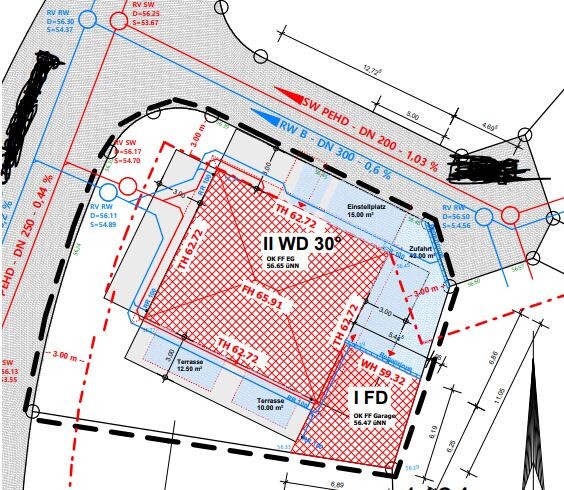
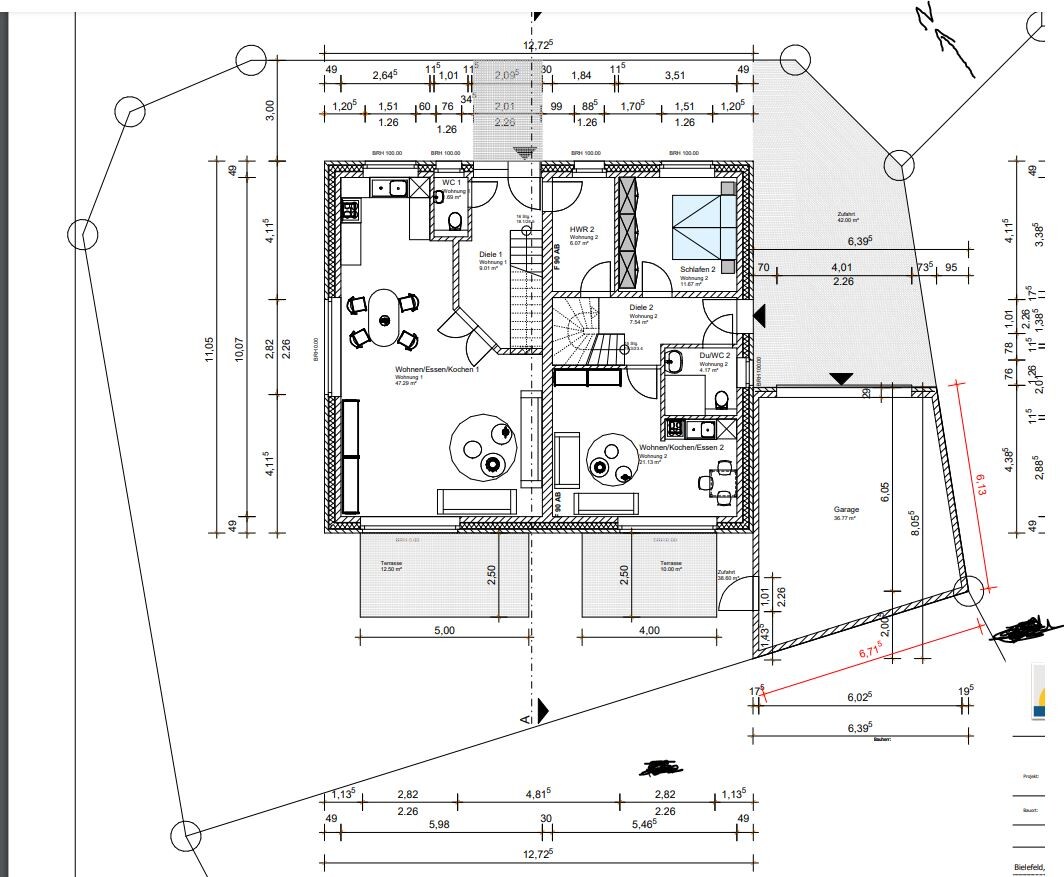
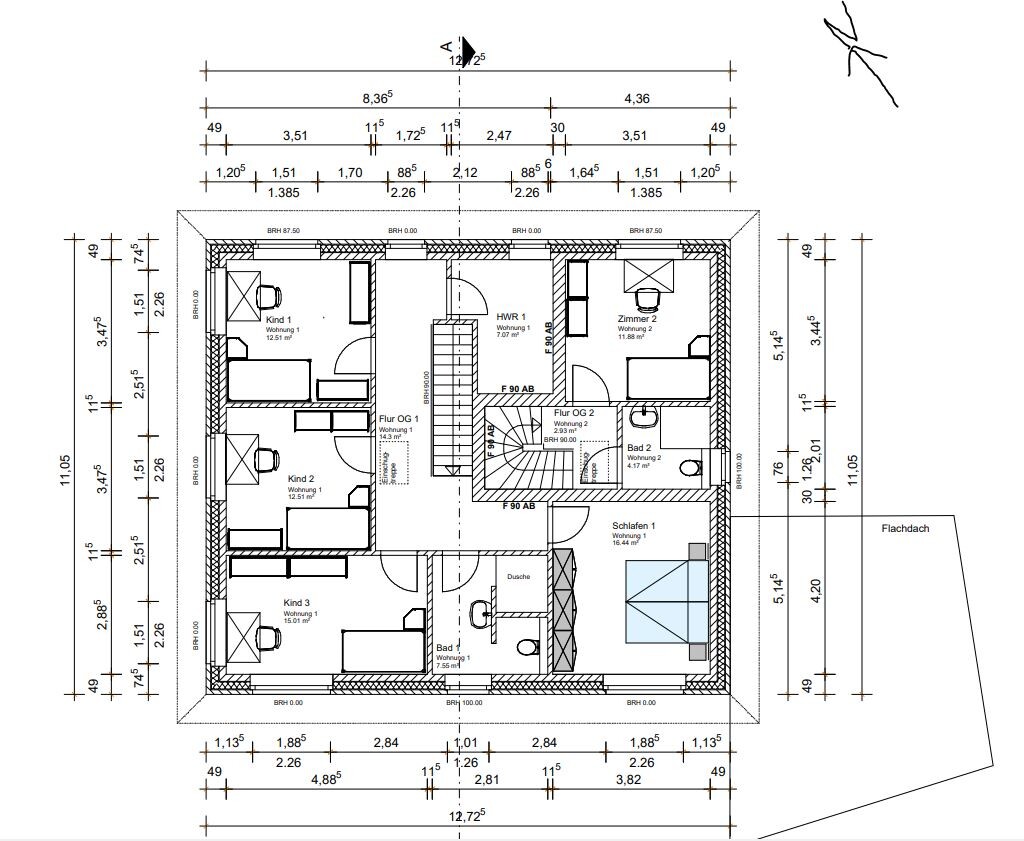
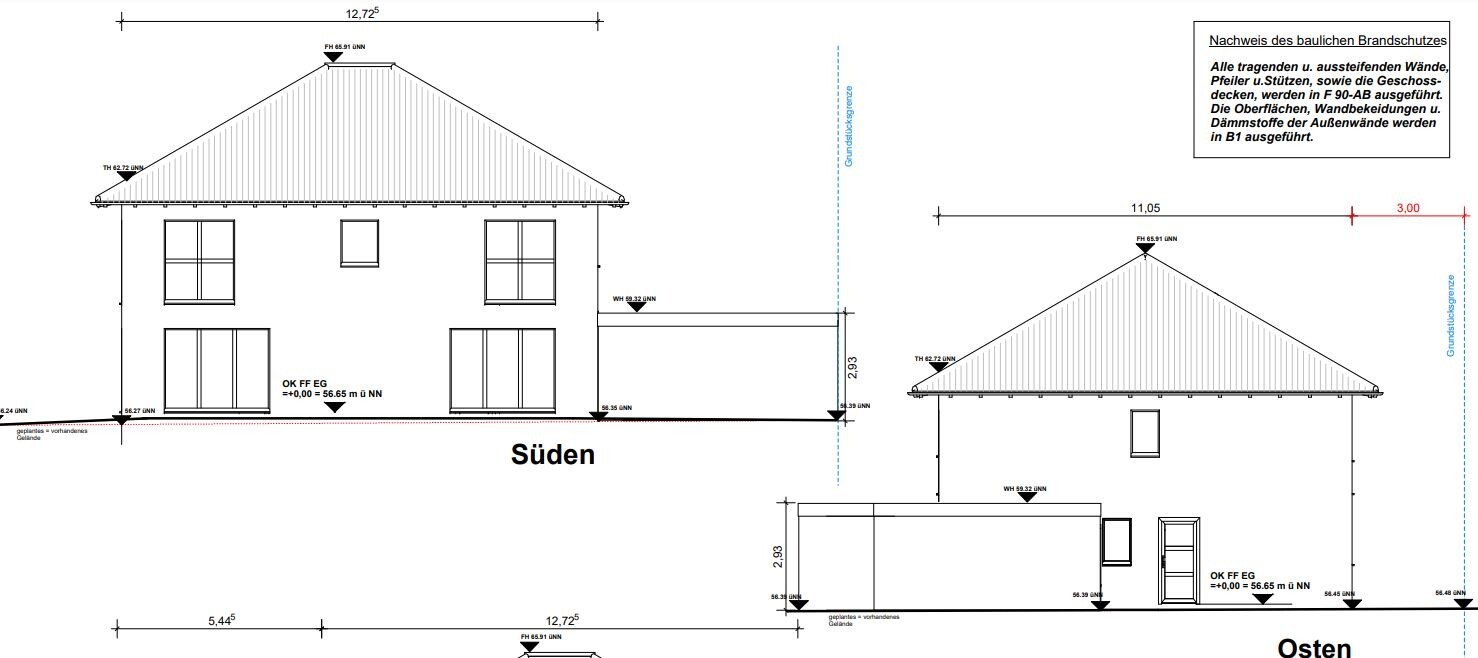
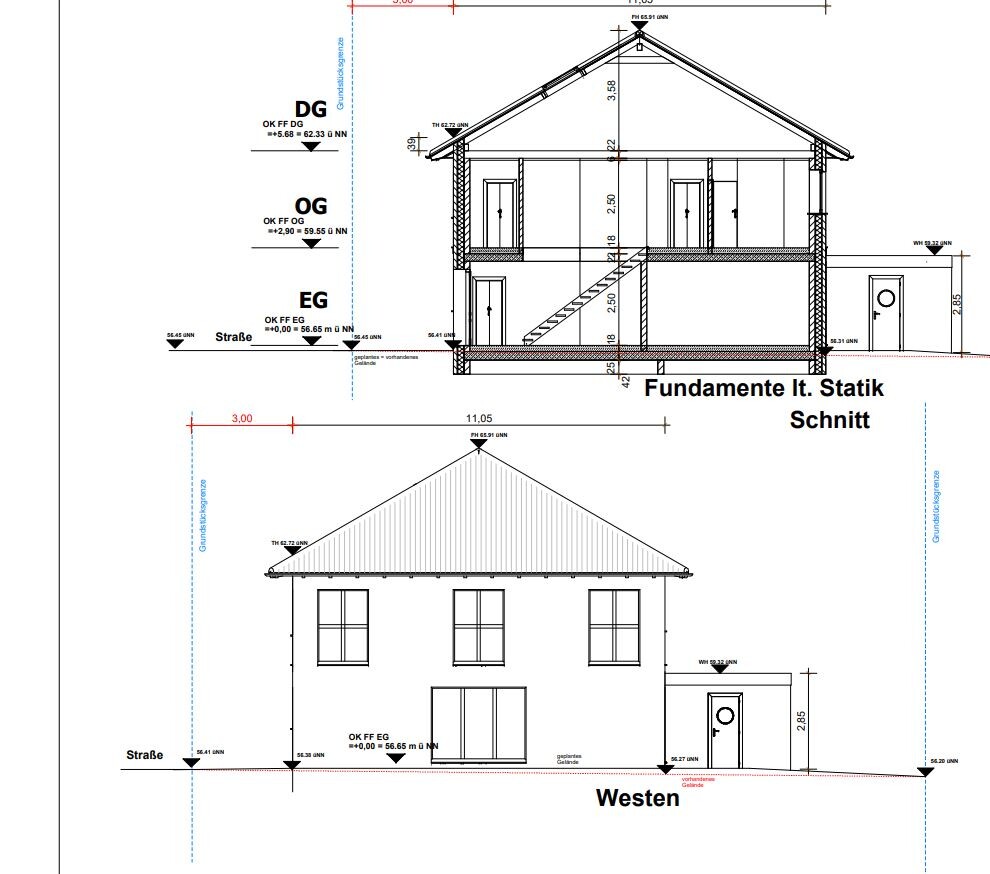
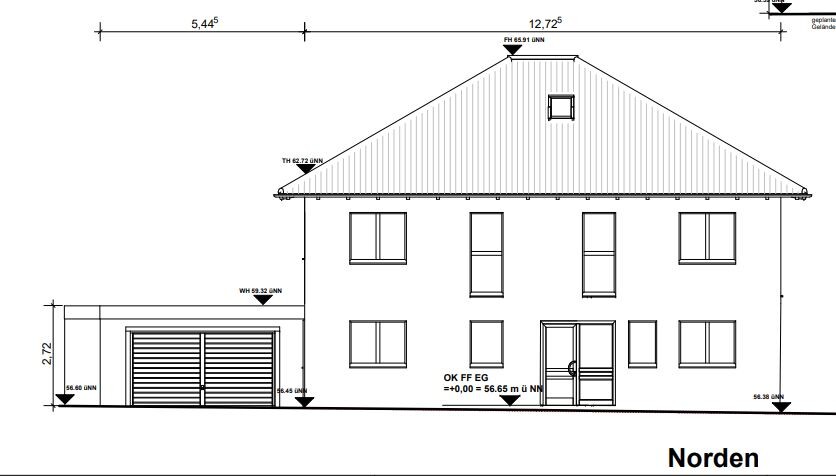
we plan to build a house with two residential units on a 472m2 (5,079 sq ft) plot of land (Unit 1: 143.39m2 (1,543 sq ft) / Unit 2: 69.57m2 (749 sq ft)).
The second unit is intended for my parents, while the main unit is for my family, which includes my spouse and three children (ages 7, 13, and 17).
Since our plot is relatively small, we want to build a compact house to maximize the garden space.
We are currently in the final planning stage and would appreciate your feedback on our project.
We have a feeling that we might have overlooked some important aspects or not paid enough attention to certain details because our planning focus was mainly on the compactness of the house.
Development Plan / Restrictions
Plot size: 472m2 (5,079 sq ft)
Slope: no
Site coverage ratio: 0.4
Floor area ratio: 0.6
Building envelope, building line, and boundary
Perimeter development: south and east
Number of parking spaces: 2
Number of floors: 2
Roof type: hipped roof
Architectural style:
Orientation: south/west
Maximum heights / limits: 10m (33 ft)
Additional requirements
Client Requirements
Architectural style, roof type, building type: urban villa
Basement, number of storeys: no basement
Number of occupants and ages: Unit 1 – 5 people (ages 43, 38, 17, 13, 7); Unit 2 – 2 people, both over 60
Space needs on ground floor / upper floor:
Office: family use or home office? -
Number of guest stays per year: 2-3 times per year
Open or closed layout: open
Traditional or modern build style: modern
Open kitchen, with or without island: open kitchen, no island
Number of dining seats: 5
Fireplace: no
Music / stereo wall: no
Balcony or roof terrace: no
Garage or carport: garage
Utility garden, greenhouse: no
Other wishes / special features / daily routines, also reasons why certain features are included or excluded
The house should be compact but still feel spacious.
House Design
Planning by:
- planner from a construction company
- architect: by the architect
- do-it-yourself
What do you particularly like? Why? It is a relatively small house with two residential units.
What do you dislike? Why? Maybe some rooms (children’s rooms and the rooms in the secondary unit) are too small?
Price estimate according to architect/planner: approx. 600,000€
Personal budget limit for house including fittings: 650,000€
Preferred heating system: district heating
If you had to give up something, which details or expansions
- could you do without: basically nothing – we have already minimized everything.
- could you not do without: the planned number of rooms
Why did the design end up like it is? For example:
Standard design from the planner?
Which wishes were implemented by the architect? Yes
A mix of many examples from various magazines…
What makes it particularly good or bad in your opinion?
What is the most important/basic question about the floor plan in 130 characters?
We wanted the house to be as compact as possible. Maybe we focused too much on compactness and neglected other important aspects.
What do you like about the house, what do you not like so much, and what would be unacceptable?

This requirement for the connections on the ground floor—I would suggest looking into it more closely and giving it some thought. If it’s just about basic infrastructure, in my opinion, a small utility room—about the size of a closet—should be sufficient at first. You can also distribute the connections throughout the house—for example, electrical wiring in the office closet (if you have one), water next to the guest bathroom, or something similar. The real space-consuming element in the utility room is the self-installed equipment—heating, ventilation, internet, and so on. That can happily be located in the attic since that’s not the city’s concern.
This approach could save you from having a utility room on the ground floor or at least reduce it to a very small size. However, it needs to be well thought out.
This approach could save you from having a utility room on the ground floor or at least reduce it to a very small size. However, it needs to be well thought out.

K a t j a schrieb:
This requirement for the connections on the ground floor – I would definitely ask for clarification on that.Consider it done: which source (quote/reference) are you referring to?https://www.instagram.com/11antgmxde/
https://www.linkedin.com/company/bauen-jetzt/
11ant schrieb:
Consider it done: which (quote / source) are you referring to? Elefant – you’re slacking off here. 😉
MarlenP schrieb:
1. The utility room must be located on the ground floor and be accessible from the street. This is a requirement from the local utility company here due to the cold district heating network. I have to admit that I’m not exactly sure whether the district heating connection requires specific equipment and how large that equipment might be. Also, there is the question of whether an additional private heating system will be installed. My aunt just had her district heating contract terminated. She looks quite worried about it.
MarlenP schrieb:
The utility room must be located on the ground floor and accessible from the street. This is a requirement from the local utility company here due to the cold district heating network. Ah, it would be helpful if the provider could explain this in layman’s terms.
Usually, the requirements are as follows:
1. The service entries should be as little obstructed as possible (exterior walls are of course unavoidable, but up to their surface, the pipes should be easily excavatable);
2. The meters/transfer points from the network under the provider’s responsibility to the customer’s responsibility should directly follow the service entry.
So far so good—basically, the service entry, shut-off valve, and meter should be located compactly and in sequence as close as possible to the street-facing building line. Regarding cold external heating networks—if I understood the technical descriptions I found correctly (I’m certainly no heating engineer)—the equipment needed inside the house must also directly follow the meter, because the *LOL* “cold heat” (!) is essentially not heat, but a kind of half-heat that still needs to be boosted. However, the exact implications of this (psst, don’t tell anyone, maybe only partly) ingenious concept for the end users should perhaps be explained more clearly by the provider.
Practically, having essentially a full utility room (instead of just the transfer station usually) necessarily on the ground floor is not a disaster, but it is a significant constraint for floor plan design. Should we assume, in this regard, that this energy generation method is not an optional “offer” but a mandatory connection tied to the property?
https://www.instagram.com/11antgmxde/
https://www.linkedin.com/company/bauen-jetzt/
K a t j a schrieb:
Regarding the connection requirements on the ground floor – I would suggest asking specific questions and giving it some serious thought. If it’s just about providing access, a small utility space – something the size of a closet – should be sufficient in my opinion. These can also be distributed throughout the house – for example, electrical connections in the office closet (if you have one), water supply near the guest bathroom, or similar. The real space consumer in the utility room is the equipment installed by yourself – such as heating, ventilation, internet, and so on. That can happily be installed in the attic since that doesn’t concern the city authorities.
This way, you can avoid or at least minimize the size of the utility room on the ground floor. But it has to be well planned. The space requirements for technical equipment in the utility room are significant. I have heard from several homeowners that they had to redesign their utility rooms at short notice because they were originally planned too small. I have attached here the requirements from the local utility company regarding the necessary space.
MarlenP schrieb:
I have attached the local utilities’ requirements regarding space allocation. A legend or explanations would be helpful.
https://www.instagram.com/11antgmxde/
https://www.linkedin.com/company/bauen-jetzt/
Similar topics