
Hello everyone,
We have a detached double garage that is still in the shell construction phase.
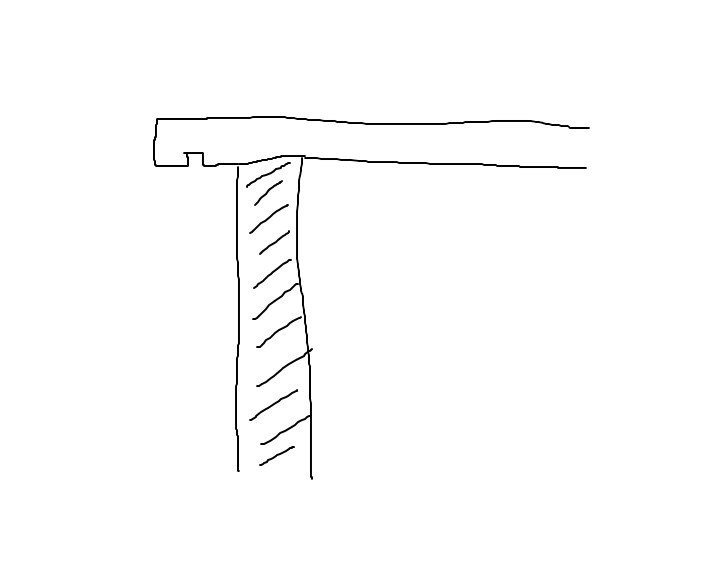
The flat roof (solid concrete) extends about 30cm (12 inches) on two sides: once along the length of 8m (26 feet) and once along the width of 6m (20 feet) at the front. During the shell construction, I planned a groove here (approximately 2.5cm (1 inch) wide and 1.5cm (0.6 inches) deep) to lay a cable or an LED light strip, see sketch. Additionally, there are empty conduits with junction boxes at two corners as supply lines from the sub-distribution board.
What kind of exterior lighting would you recommend here? Would an LED light strip even make sense, or would it hardly be noticeable since the facade hardly receives any light? The entire facade and the roof overhang are not plastered yet, so I’m still considering the lighting options.
The entire electrical setup has not been planned yet because my electrician is still on vacation. However, I would like to get some preliminary ideas. The double garage is approximately 26m (85 feet) away from the main house (main distribution board). The garage should have its own sub-distribution board, possibly a wall box for electric vehicle charging, maybe two decentralized ventilation units (whether with heat recovery or not still needs to be decided), an electric garage door, about 4-5 power outlets, and lighting. Therefore, the cross-section of the supply cable will be important, and it might even be better to choose a somewhat larger cross-section. The electrician will need to advise or calculate this. But in general, which direction would the cable cross-section tend to go? 10mm², 16mm², or larger?
We have a detached double garage that is still in the shell construction phase.
The flat roof (solid concrete) extends about 30cm (12 inches) on two sides: once along the length of 8m (26 feet) and once along the width of 6m (20 feet) at the front. During the shell construction, I planned a groove here (approximately 2.5cm (1 inch) wide and 1.5cm (0.6 inches) deep) to lay a cable or an LED light strip, see sketch. Additionally, there are empty conduits with junction boxes at two corners as supply lines from the sub-distribution board.
What kind of exterior lighting would you recommend here? Would an LED light strip even make sense, or would it hardly be noticeable since the facade hardly receives any light? The entire facade and the roof overhang are not plastered yet, so I’m still considering the lighting options.
The entire electrical setup has not been planned yet because my electrician is still on vacation. However, I would like to get some preliminary ideas. The double garage is approximately 26m (85 feet) away from the main house (main distribution board). The garage should have its own sub-distribution board, possibly a wall box for electric vehicle charging, maybe two decentralized ventilation units (whether with heat recovery or not still needs to be decided), an electric garage door, about 4-5 power outlets, and lighting. Therefore, the cross-section of the supply cable will be important, and it might even be better to choose a somewhat larger cross-section. The electrician will need to advise or calculate this. But in general, which direction would the cable cross-section tend to go? 10mm², 16mm², or larger?

netzplan schrieb:
I wasn’t referring to the LED strip, but rather the supply line to the sub-distribution board (garage), starting from the main distribution board or meter cabinet (main house). Oh, I see. In that context, the LED strip doesn’t matter at all.
I wouldn’t go below 32 A in the garage. A 16 A circuit is just enough for an 11 kW wallbox if needed, and then you might also want to connect a larger electrical appliance. For us, that’s sometimes a log splitter or something similar.
According to online calculators, with a maximum loss of 3% and a length of 26 meters (85 feet), a 4mm² cable should be sufficient. This means that using 6mm² or 10mm² would be a safer choice for an 11kW wallbox. The rest, such as the garage door motor, indoor lighting, outdoor lighting, and 3 to 4 sockets, should then be covered.
Would there be any disadvantages to using 16mm² cable (other than the higher cost for the copper cable)?
You never know if the charging capacity of the wallbox might increase in the future or if the garage is equipped with photovoltaic panels.
Would there be any disadvantages to using 16mm² cable (other than the higher cost for the copper cable)?
You never know if the charging capacity of the wallbox might increase in the future or if the garage is equipped with photovoltaic panels.
More is always better and has no inherent disadvantages! It just needs to be properly protected, and the potential capacity should be available in the house. You wouldn’t want anyone to come up with bad ideas later on. Depending on the installation method, you could even push 63 A through the 16 mm² (0.026 in²) cable.
I had a similar “problem” as you. The garage projects 36cm (14 inches) to the side, and the canopy between the house and garage extends 1.50m (5 feet) out. I had halogen fixture boxes installed in the canopy area right from the concrete work, where the spotlights will go.
Is your garage going to be insulated?
In our case, the insulation was installed all around the overhang (garage) to avoid a thermal bridge and the resulting risk of mold in the corner where the inside ceiling of the garage meets the wall. —> If I had known this earlier, I wouldn’t have let it overhang like that. That’s the backstory. Due to the insulation, spotlights were removed from that area (they wouldn’t have been effective anyway with only 40cm (16 inches) clearance) and instead, we ran cables in the wall for upside-down lamps or similar.
Is your garage going to be insulated?
In our case, the insulation was installed all around the overhang (garage) to avoid a thermal bridge and the resulting risk of mold in the corner where the inside ceiling of the garage meets the wall. —> If I had known this earlier, I wouldn’t have let it overhang like that. That’s the backstory. Due to the insulation, spotlights were removed from that area (they wouldn’t have been effective anyway with only 40cm (16 inches) clearance) and instead, we ran cables in the wall for upside-down lamps or similar.
Similar topics