
ᐅ Relocating the kitchen to a new room: What is the effort involved in moving the utility connections?
Created on: 22 Aug 2022 20:11
B
BlaustiftB
Blaustift22 Aug 2022 20:11Hello,
We are planning to relocate our kitchen to a new room. Currently, this room is used as an open office with a sofa and a piano.
Where the black/silver cabinet is now, water, drainage, and electrical connections are already installed. However, we plan to place the dining table exactly there.
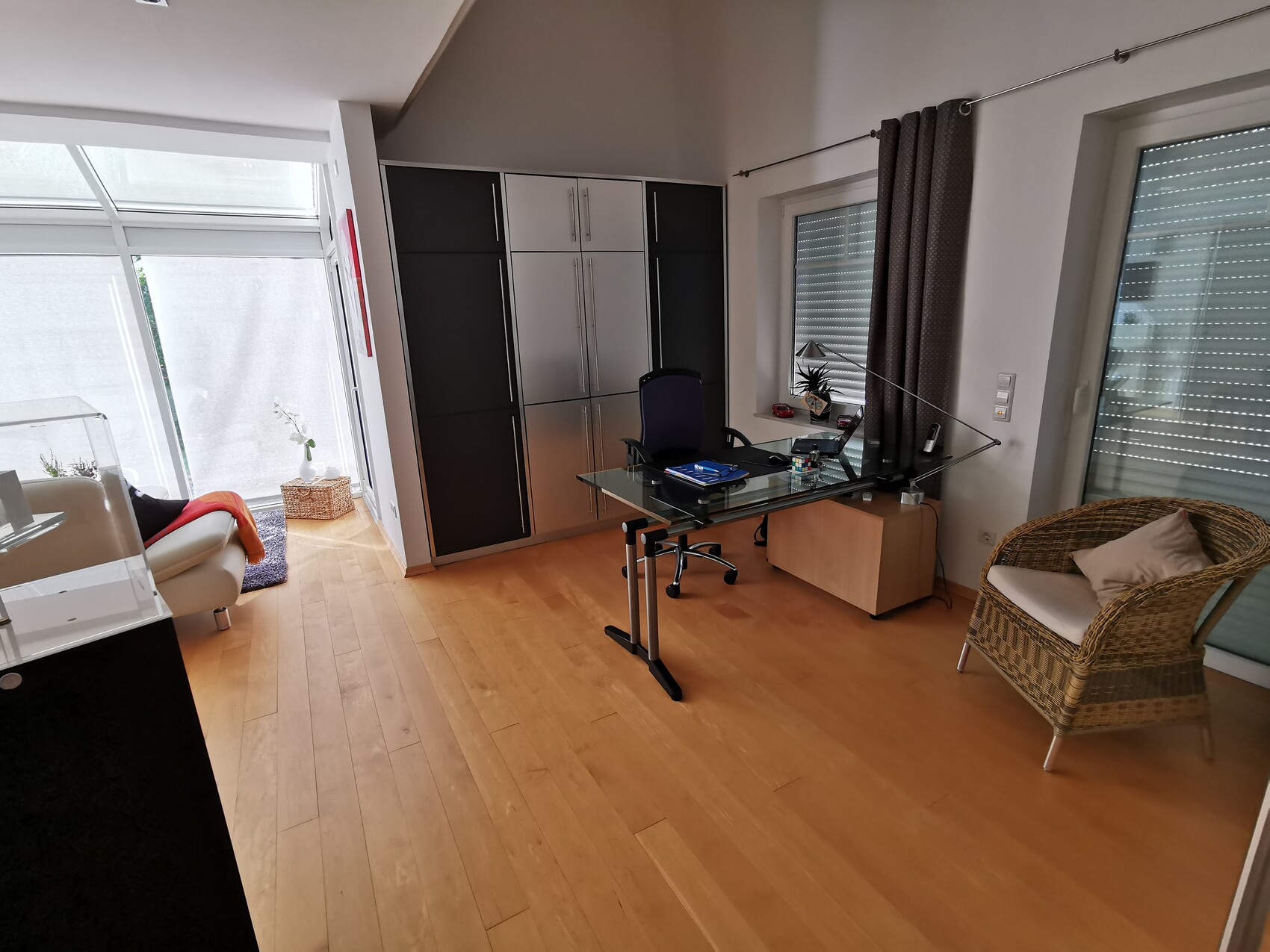
The kitchen will consist of a built-in kitchen cabinet wall and a cooking island, which will be placed in front of the window.
The kitchen cabinet wall, including oven, refrigerator, and freezer, will be positioned along the wall where the piano currently is.
The cooking island, featuring an induction cooktop, recirculating extractor hood, dishwasher, and sink, will be where the white sofa is now:
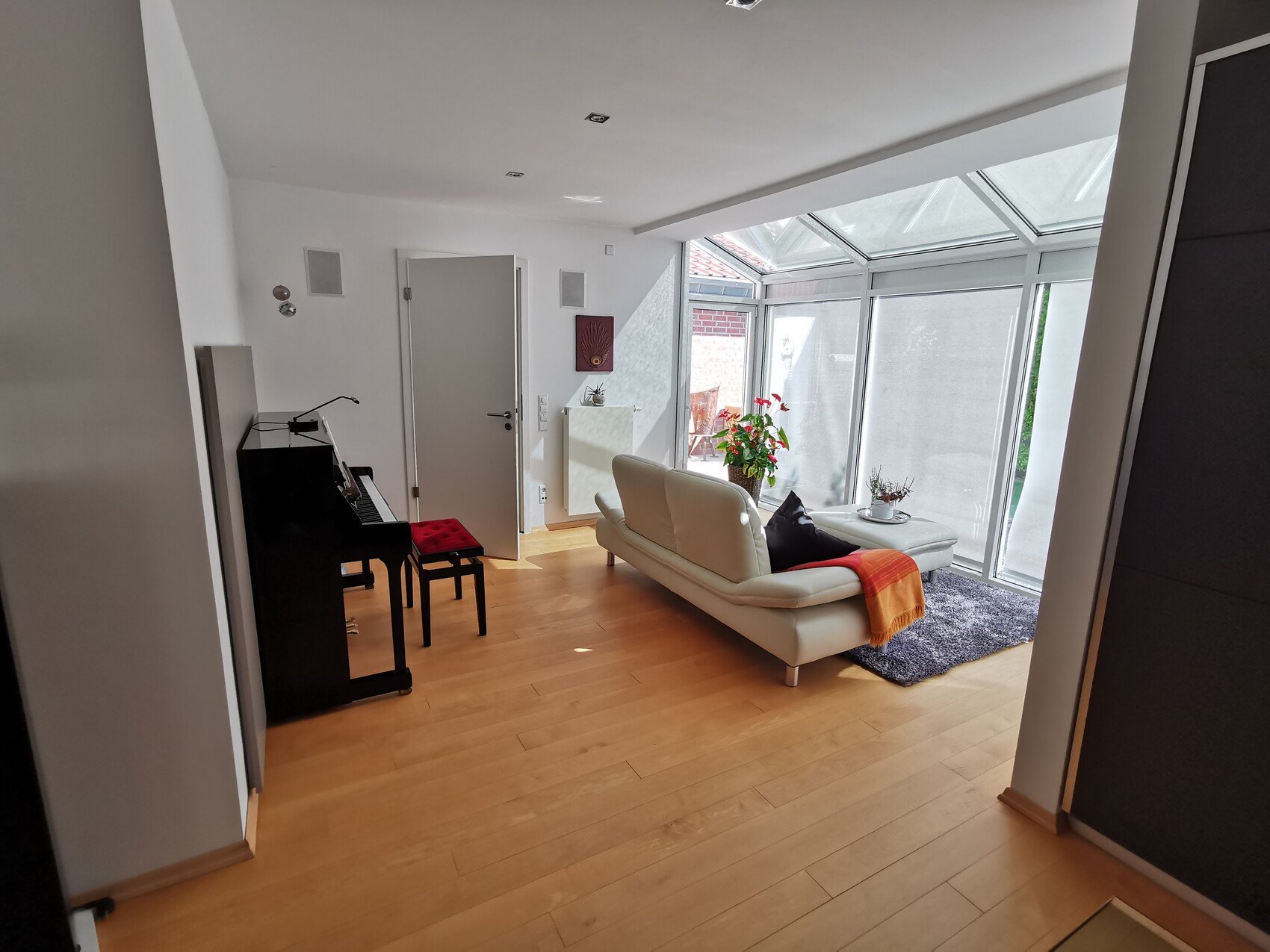
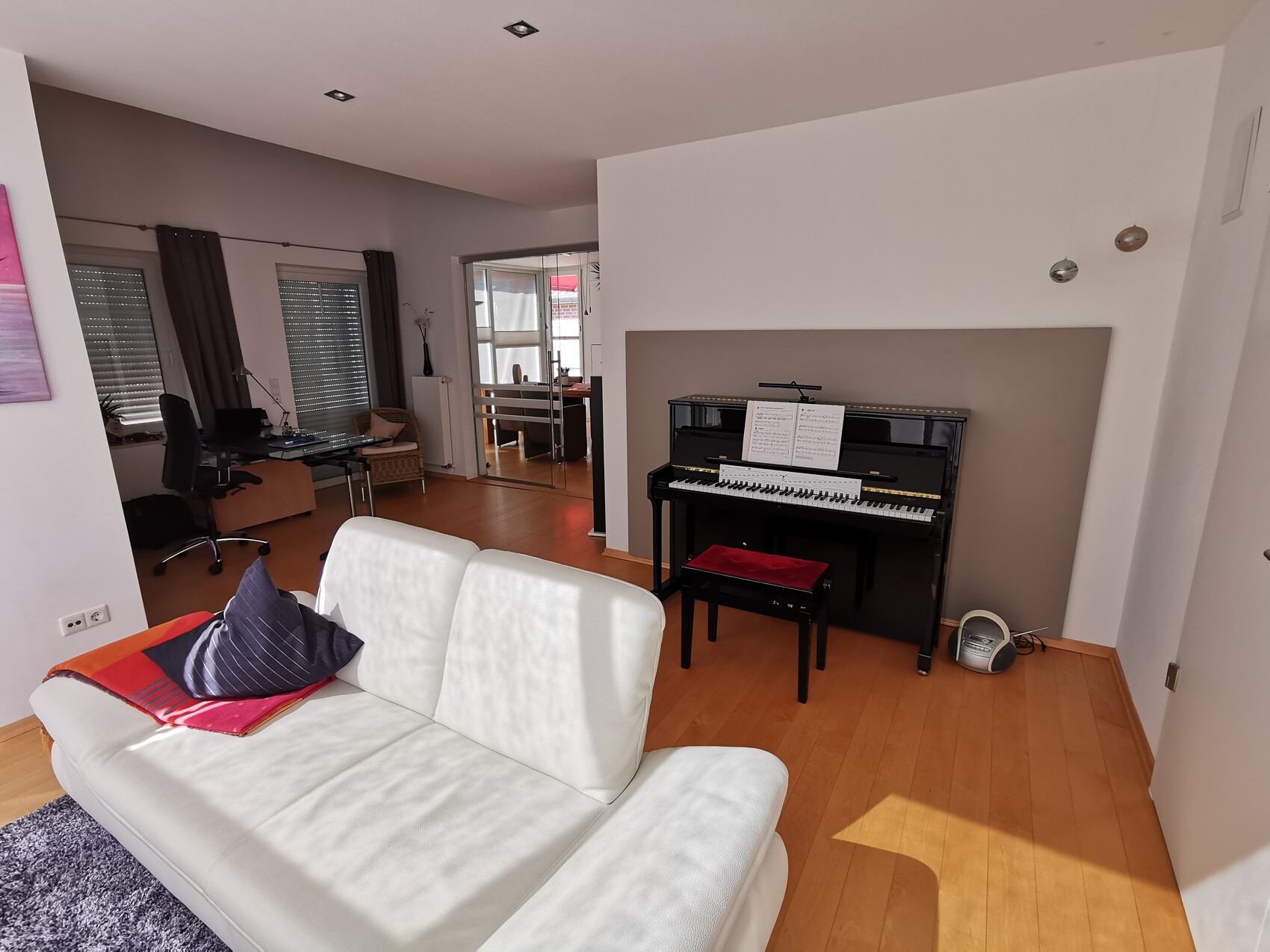
My question is whether this layout is even possible. The floor is made of Australian maple parquet screwed onto cross beams. Below the parquet is about 30cm (12 inches) of insulation material (glass wool), and beneath that is a screed layer.
Is it feasible to extend the fresh water and drainage connections into the middle of the room in this way? What slope must be observed for the drainage?
What are the typical costs for installing new fresh water and drainage connections in this scenario?
Is there anything else we should definitely consider when relocating the kitchen?
We are planning to relocate our kitchen to a new room. Currently, this room is used as an open office with a sofa and a piano.
Where the black/silver cabinet is now, water, drainage, and electrical connections are already installed. However, we plan to place the dining table exactly there.
The kitchen will consist of a built-in kitchen cabinet wall and a cooking island, which will be placed in front of the window.
The kitchen cabinet wall, including oven, refrigerator, and freezer, will be positioned along the wall where the piano currently is.
The cooking island, featuring an induction cooktop, recirculating extractor hood, dishwasher, and sink, will be where the white sofa is now:
My question is whether this layout is even possible. The floor is made of Australian maple parquet screwed onto cross beams. Below the parquet is about 30cm (12 inches) of insulation material (glass wool), and beneath that is a screed layer.
Is it feasible to extend the fresh water and drainage connections into the middle of the room in this way? What slope must be observed for the drainage?
What are the typical costs for installing new fresh water and drainage connections in this scenario?
Is there anything else we should definitely consider when relocating the kitchen?
 HausiKlausi22 Aug 2022 22:14
At first, everything seems doable. Drainage and water lines are also "just a few push-fit connections." BUT: You can never take direct routes and have to figure out where you can reasonably connect to the existing pipe run. An island in the middle of the room in an existing building is therefore probably the biggest challenge, because usually you can’t run pipes straight down from there and have to take complicated routes. Sacrificing the entire hardwood floor for that? Unlike electrical wiring, which can sometimes take unconventional paths, plumbing is very limited due to the slope requirements and the larger size of the pipes. If you’re lucky and the hardwood floor can be removed and reinstalled without damage AND the joist layout allows access to the pipe run, then it might work. Adequate space and slope would then be under the floorboards. However, the joists must not be oriented perpendicular to the route you need to take.

B
Blaustift23 Aug 2022 10:10[SIGNATURE="HausiKlausi, post: 591584, member: 50614"]
Sacrifice the entire parquet floor for this? Unlike electricity, which can sometimes follow unusual routes, your options for water and wastewater pipes are quite limited, mainly due to the required slope and the larger diameter of the pipes. If you’re lucky, the parquet can be removed and reinstalled without damage AND the joist structure up to the main stack allows it, then it might work. There would need to be enough space and slope under the floorboards. However, the joists must not run perpendicular to the path you want to create.
We definitely do not want to "sacrifice" the parquet. Since the parquet is screwed down, we assumed that removal, installation of the pipes, and reinstalling the wood parquet without damage would be possible. But I lack experience and expert assessment on that. The cross joists actually run favorably for this planned renovation project, that is, perpendicular to the direction of the parquet boards. So, laying pipes might even be possible without repeatedly crossing the wooden beam substructure, and pipes could probably be placed in the space between. Depending on the connection point to the stack pipe, only one "notch" or crossing through a cross beam might be necessary.
[SIGNATURE="K a t j a, post: 591590, member: 58334"]
... But maybe first clarify whether it’s a house or just an apartment, which floor it is, and whether it’s sole ownership. A floor plan including pipe layouts from the floors below would also be helpful.
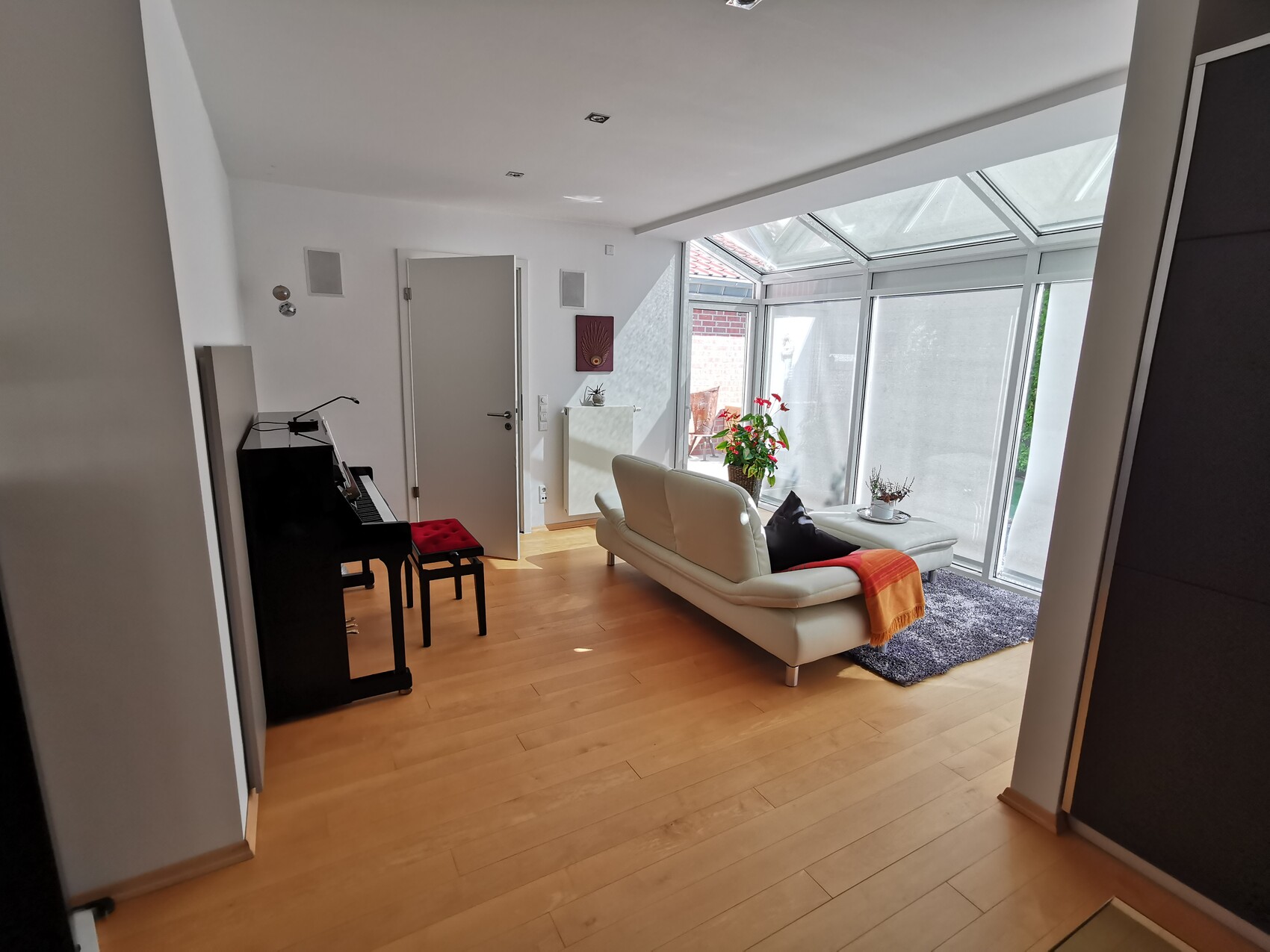
It is a single-family house built in 2006 and owned by us. The office and later the planned kitchen are on the ground floor. Unfortunately, I don’t have drawings with pipe layouts yet. Above the current position of the white sofa on the first floor, however, there is a bathroom. Considering that water and wastewater connections are located where the current black/silver cabinet is, I strongly assume that to the right of the white sofa in the photo below, the stack pipe runs along the wall.
Sacrifice the entire parquet floor for this? Unlike electricity, which can sometimes follow unusual routes, your options for water and wastewater pipes are quite limited, mainly due to the required slope and the larger diameter of the pipes. If you’re lucky, the parquet can be removed and reinstalled without damage AND the joist structure up to the main stack allows it, then it might work. There would need to be enough space and slope under the floorboards. However, the joists must not run perpendicular to the path you want to create.
We definitely do not want to "sacrifice" the parquet. Since the parquet is screwed down, we assumed that removal, installation of the pipes, and reinstalling the wood parquet without damage would be possible. But I lack experience and expert assessment on that. The cross joists actually run favorably for this planned renovation project, that is, perpendicular to the direction of the parquet boards. So, laying pipes might even be possible without repeatedly crossing the wooden beam substructure, and pipes could probably be placed in the space between. Depending on the connection point to the stack pipe, only one "notch" or crossing through a cross beam might be necessary.
[SIGNATURE="K a t j a, post: 591590, member: 58334"]
... But maybe first clarify whether it’s a house or just an apartment, which floor it is, and whether it’s sole ownership. A floor plan including pipe layouts from the floors below would also be helpful.
It is a single-family house built in 2006 and owned by us. The office and later the planned kitchen are on the ground floor. Unfortunately, I don’t have drawings with pipe layouts yet. Above the current position of the white sofa on the first floor, however, there is a bathroom. Considering that water and wastewater connections are located where the current black/silver cabinet is, I strongly assume that to the right of the white sofa in the photo below, the stack pipe runs along the wall.
That won't help. You need to find and show the complete plans. All floors and preferably all piping. It might be more practical to run water and wastewater lines through an adjacent room by going through one or two walls, rather than breaking up the parquet flooring or running pipes across the room.
Blaustift schrieb:
Under the parquet flooring, there is approximately 30 cm (12 inches) of insulation material (glass wool), and below that is the screed.Are you sure about that? What kind of unusual insulation is 30! cm! thick? Isn’t it more likely to be just 3 cm (1 inch) of insulation?Similar topics