
Hello everyone,
Our garden has been landscaped by the landscaper, and all the slopes have been filled in. Now we have a brown, dusty desert.
We do get a fair amount of rain during “normal” summers here, but we have built on sandy soil. The rainwater drains quickly, and summers tend to be rather dry. Basically, the situation here is similar to the area cleared for Tesla in Grünheide. Therefore, we want to focus on a more Mediterranean-style planting and ideally avoid irrigation.
On the south side of our brick house, I would like to plant a fig tree, which I want to benefit from the heat stored by the façade in the evenings. After doing some research, I thought that a planting distance of about 1 meter (3 feet) for the fig tree might be okay. Closer would be better for heat utilization. Shade is also an important factor given the increasingly hot summers.
My main question is about the roots and what they might do to the exterior basement insulation. The basement is built with a waterproof concrete wall, so roots shouldn’t penetrate it, and the house would never leak because of roots.
Should I be worried about the insulation when planting a fig tree at this distance, or is 1 meter (3 feet) sufficient?
If you walk around in France, or regions like the Pfalz, for example, you see fig trees growing from all sorts of cracks and corners. Their houses are still standing.
Should I just go ahead, or take precautions?
Attached again are pictures of the shell construction and the site after landscaping. The distance from the light well is also 1 meter (3 feet), just like the distance from the exterior wall.
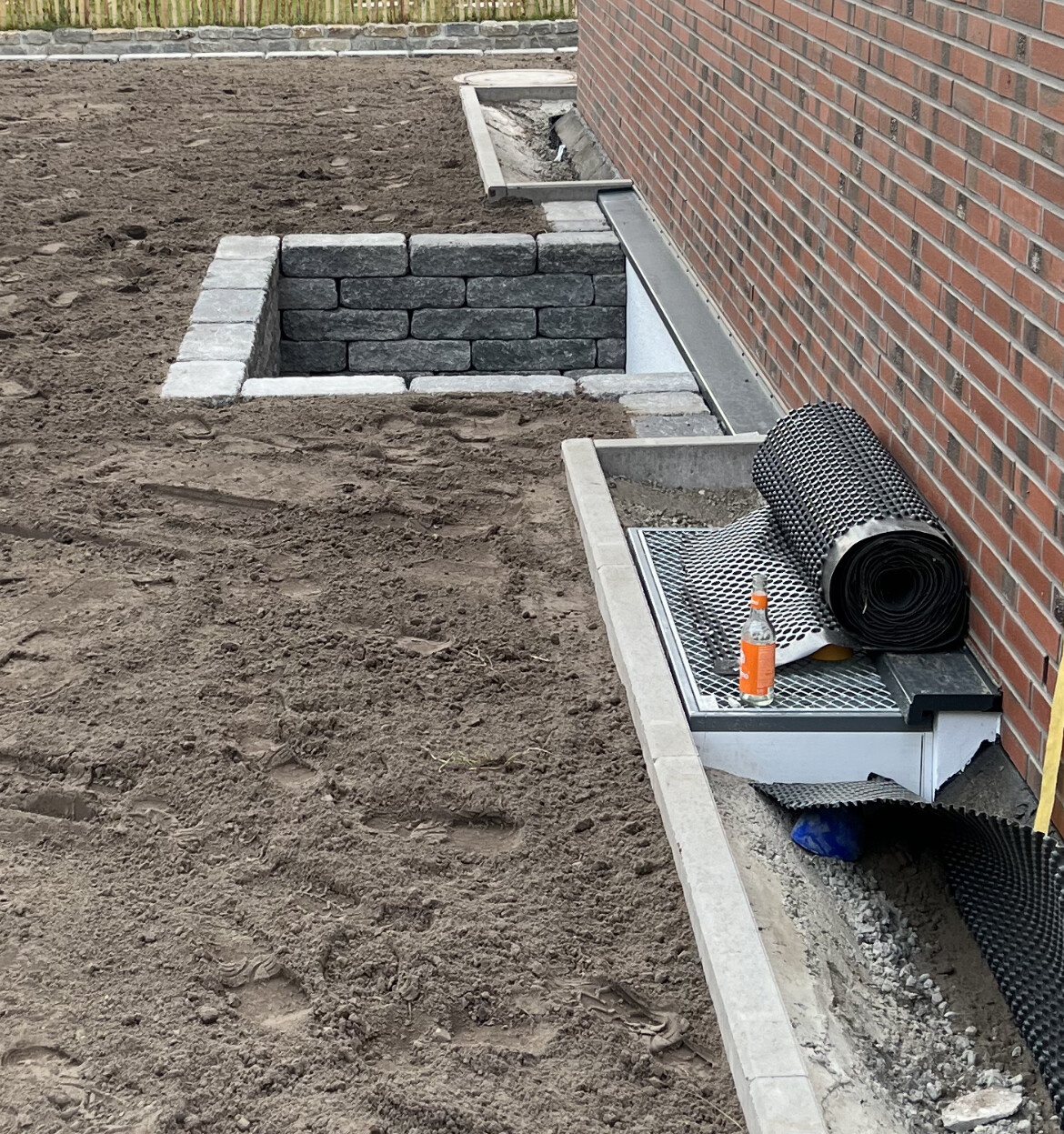
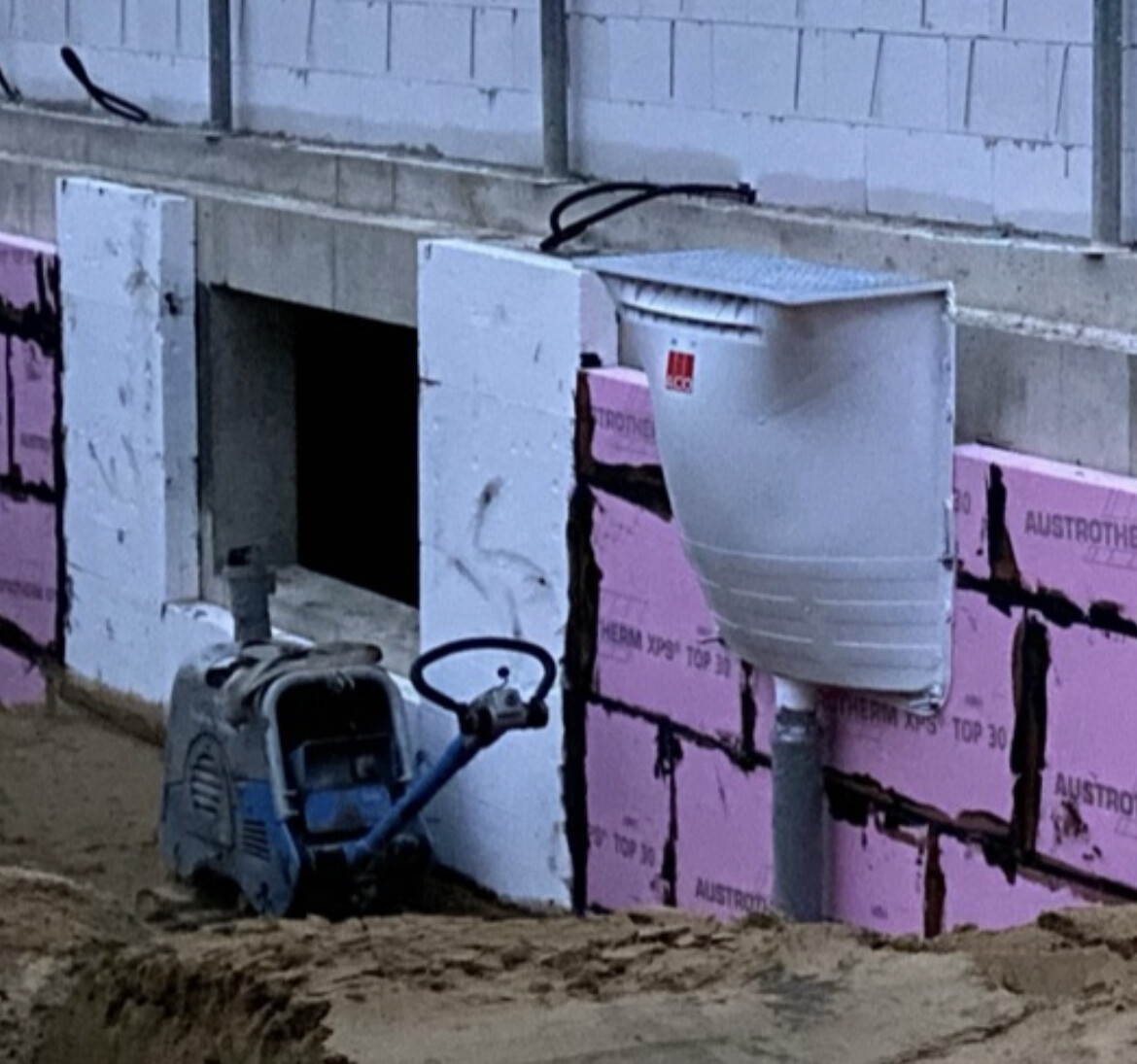
Our garden has been landscaped by the landscaper, and all the slopes have been filled in. Now we have a brown, dusty desert.
We do get a fair amount of rain during “normal” summers here, but we have built on sandy soil. The rainwater drains quickly, and summers tend to be rather dry. Basically, the situation here is similar to the area cleared for Tesla in Grünheide. Therefore, we want to focus on a more Mediterranean-style planting and ideally avoid irrigation.
On the south side of our brick house, I would like to plant a fig tree, which I want to benefit from the heat stored by the façade in the evenings. After doing some research, I thought that a planting distance of about 1 meter (3 feet) for the fig tree might be okay. Closer would be better for heat utilization. Shade is also an important factor given the increasingly hot summers.
My main question is about the roots and what they might do to the exterior basement insulation. The basement is built with a waterproof concrete wall, so roots shouldn’t penetrate it, and the house would never leak because of roots.
Should I be worried about the insulation when planting a fig tree at this distance, or is 1 meter (3 feet) sufficient?
If you walk around in France, or regions like the Pfalz, for example, you see fig trees growing from all sorts of cracks and corners. Their houses are still standing.
Should I just go ahead, or take precautions?
Attached again are pictures of the shell construction and the site after landscaping. The distance from the light well is also 1 meter (3 feet), just like the distance from the exterior wall.
W
WilderSueden15 Jul 2022 14:46The root systems vary depending on the tree species. As a general rule, the "root zone is about the same size as the canopy," but for fig trees, you would need to research if this also applies. In practice, conditions can be different—for example, if you have a leaking gutter or drainage, the area will be wetter and the roots may concentrate more there.
M
motorradsilke16 Jul 2022 07:56OWLer schrieb:
My dream would be for it to grow about 4-5 meters (13-16 feet) tall, so that the kids’ room at the top is partially shaded in summer. Then I wouldn’t need to fully close the shutters during the day.
But remember, this will ALWAYS shade the room. So also in summer early morning and evening when you’d like some sun and brightness in the room, and in spring and autumn when you wouldn’t want it shaded. And even without leaves, it blocks light during the darker months of the year.
If I were planting a tree that close to the house, I would install a root barrier in front of the insulation. There are root barrier membranes for bamboo in different thicknesses, and I would use one of those.
B
Bertram10016 Jul 2022 08:08motorradsilke schrieb:
But keep in mind that this thing always shades the room. Even in summer, in the early morning and evening when you want some sun and brightness inside, and also in spring and autumn when you might not want shading. And even when it has no leaves, it still blocks light during the darker months. However, this is quite limited with a fig tree. The fig tree has an open structure, is not heavily branched, and does not have dense foliage. Depending on the tree, a fig can even look somewhat sparse. If you like trees, I wouldn’t worry about permanent shading. Most houses have sufficiently large windows.
I grew up with a hazel bush in front of my window (the bush, of course, grew faster than I did). I really enjoyed the lovely atmosphere created by the leaves and the rustling sound right outside the window. I would like that again now, but unfortunately, it’s not possible.
M
motorradsilke16 Jul 2022 08:33Bertram100 schrieb:
That is quite limited with a fig tree. The fig tree is airy, not heavily branched, and doesn’t have dense foliage. Depending on the tree, a fig can even look rather sparse. If you like trees, I wouldn’t worry about permanent cladding. Most houses have sufficiently large windows.
Maybe there are different varieties? A friend of mine has a tree that develops a closed canopy during the growing season.

Similar topics