
ᐅ Floor Plan for Age-Appropriate Living (New Construction) in a Historic Courtyard Complex
Created on: 23 Jun 2022 23:29
K
karl.jonas
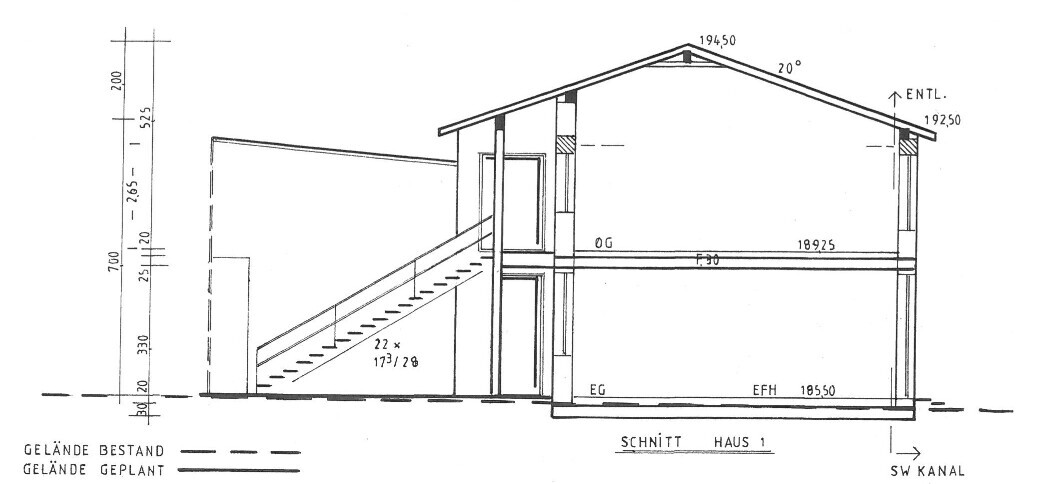
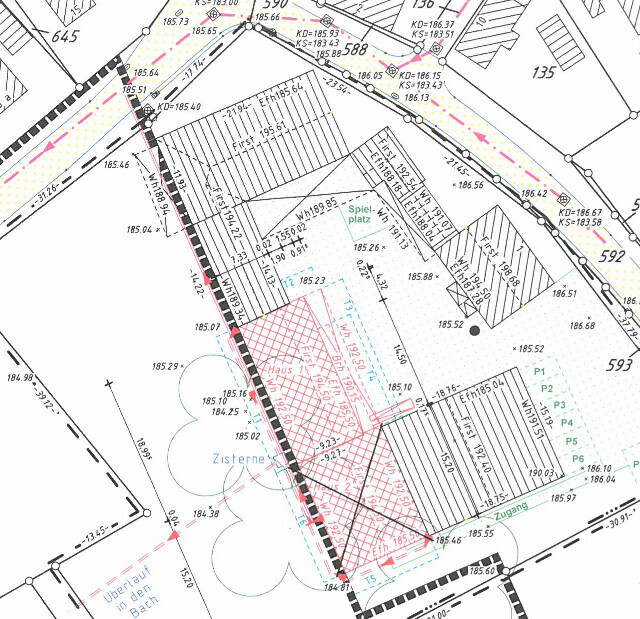
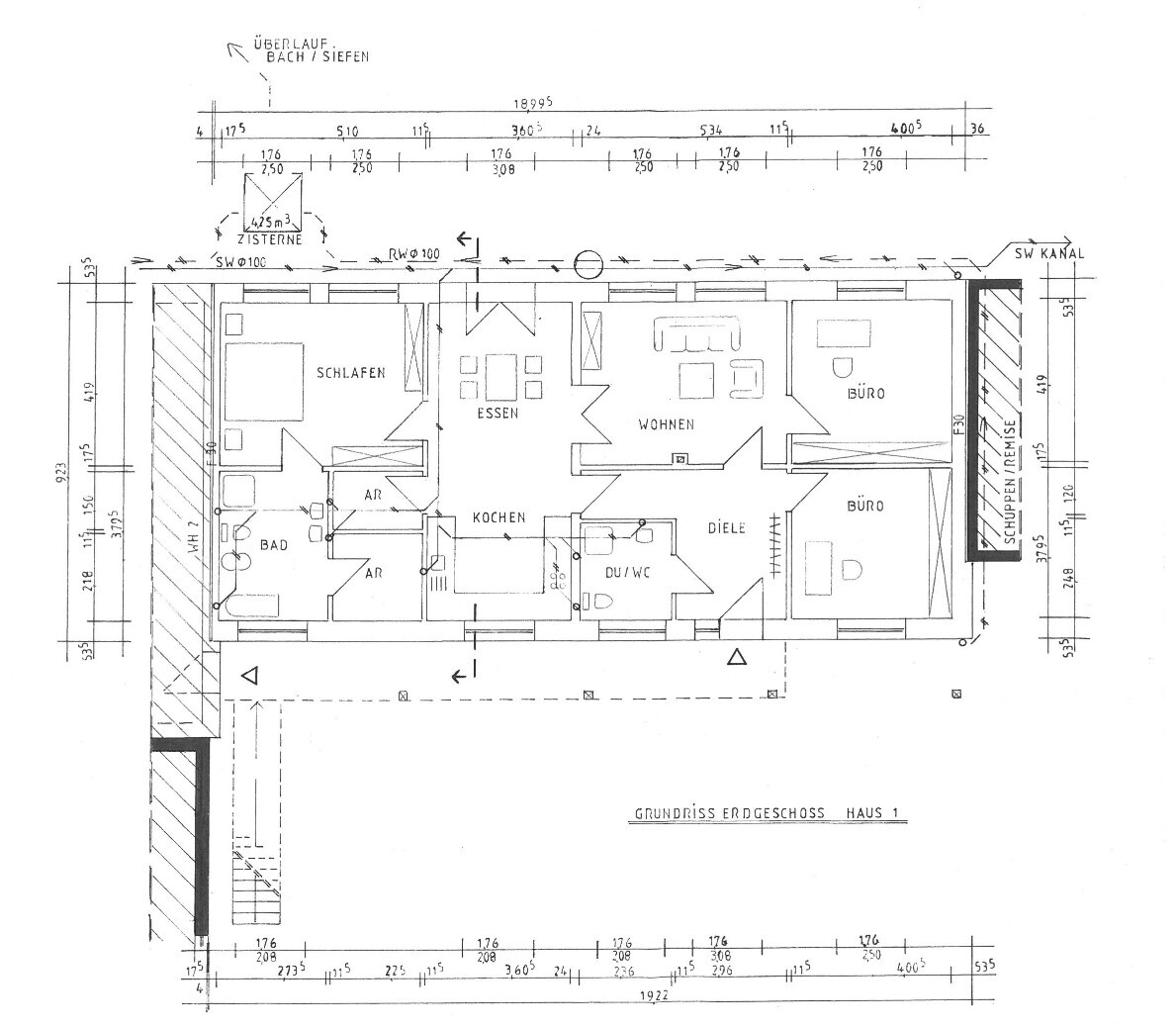
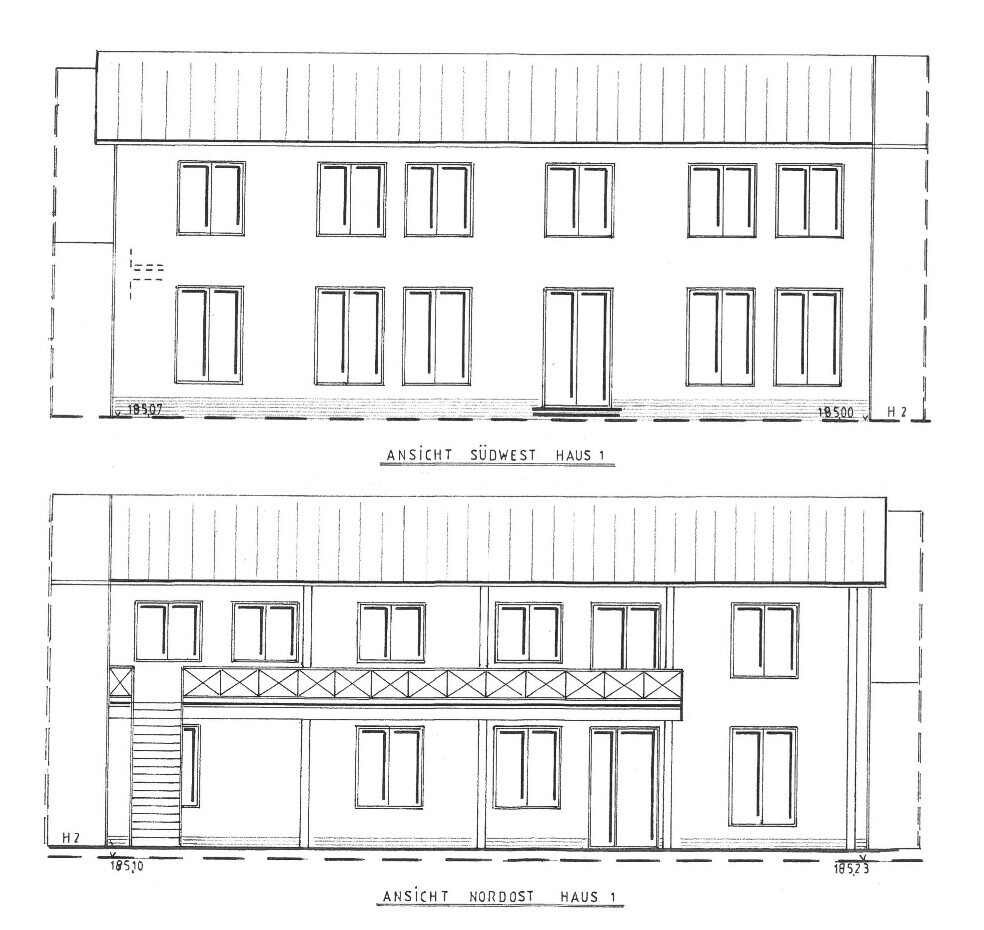
I want to replace two sheds in an existing courtyard complex (four-sided farmstead, brick) with two houses. Each house will have one apartment on the ground floor and one on the upper floor. Access will be from above via an external staircase / gallery, with the option to retrofit an outdoor elevator. The outer building boundary is defined by the existing courtyard complex and will not be expanded. Here, I first present the floor plan for the first apartment (ground floor, house 1) for discussion, which I plan to move into myself. I look forward to your comments.
Development Plan / Restrictions
Slope: no
Building window, building line, and boundary: within the existing courtyard
Edge development: no
Maximum heights / limits: surrounding buildings
Client Requirements
Style, roof type, building type: adapted to the existing courtyard complex; gable roof; two-family house
Basement, floors: no basement, ground floor, upper floor
Number of people, age: 2, over 60
Space requirements: sleeping, living, dining, cooking, plus 2 rooms for office/guests
Office: family use
Guest stays per year: multiple, sometimes simultaneous
Closed architecture
Conservative construction
Open kitchen: yes
Number of dining seats: 6
Fireplace: optional
Garage, carport: no
Additional wishes: very bright living rooms; senior-friendly
House Design
Planned by: architect
What do you like particularly? Why? High rooms with tall windows (-> lots of light); symmetrical exterior appearance (aesthetics)
What do you not like? Why? Uncertainty regarding usable space. Note: there is unlimited additional usable space available in the courtyard
Estimated cost according to architect/planner: 650,000
Preferred heating system: underfloor heating, heat pump; wood as desired
Why is the design as it is now? Family planning, consultation with friends, consultation with construction manager, implementation by the architect (two cycles)
What makes it particularly good or bad in your opinion? Fits well with the surrounding existing buildings; two additional rooms; very bright
What is the most important/basic question about the floor plan summarized in 130 characters? Where can the floor plan still be optimized?
Development Plan / Restrictions
Slope: no
Building window, building line, and boundary: within the existing courtyard
Edge development: no
Maximum heights / limits: surrounding buildings
Client Requirements
Style, roof type, building type: adapted to the existing courtyard complex; gable roof; two-family house
Basement, floors: no basement, ground floor, upper floor
Number of people, age: 2, over 60
Space requirements: sleeping, living, dining, cooking, plus 2 rooms for office/guests
Office: family use
Guest stays per year: multiple, sometimes simultaneous
Closed architecture
Conservative construction
Open kitchen: yes
Number of dining seats: 6
Fireplace: optional
Garage, carport: no
Additional wishes: very bright living rooms; senior-friendly
House Design
Planned by: architect
What do you like particularly? Why? High rooms with tall windows (-> lots of light); symmetrical exterior appearance (aesthetics)
What do you not like? Why? Uncertainty regarding usable space. Note: there is unlimited additional usable space available in the courtyard
Estimated cost according to architect/planner: 650,000
Preferred heating system: underfloor heating, heat pump; wood as desired
Why is the design as it is now? Family planning, consultation with friends, consultation with construction manager, implementation by the architect (two cycles)
What makes it particularly good or bad in your opinion? Fits well with the surrounding existing buildings; two additional rooms; very bright
What is the most important/basic question about the floor plan summarized in 130 characters? Where can the floor plan still be optimized?
Build in the way that is most convenient right now. The sink will be changed anyway. Choose whatever fits at the moment.
Home care services are only partially a point of contact for this. Usually, this is handled by the architect. There are standards to follow. Check the website I mentioned to you. Unfortunately, architects are only partially suitable for this. Those who design care facilities do not plan private homes.
There are care bed accessories available for regular beds. If a complete care bed is necessary, the question arises whether home care is still feasible.
For kitchen height, the kitchen showroom can help. At least good ones assist in determining the right height.
Home care services are only partially a point of contact for this. Usually, this is handled by the architect. There are standards to follow. Check the website I mentioned to you. Unfortunately, architects are only partially suitable for this. Those who design care facilities do not plan private homes.
There are care bed accessories available for regular beds. If a complete care bed is necessary, the question arises whether home care is still feasible.
For kitchen height, the kitchen showroom can help. At least good ones assist in determining the right height.
M
motorradsilke26 Jun 2022 19:50karl.jonas schrieb:
A very good point, thanks @Pinkiponk. The DIN standard is usually very strict in this regard. Does anyone know of a reliable study that links these heights to body height? For this reason, we have already raised all the appliances in the kitchen by 5cm (2 inches). My wife and I are 169cm (5 ft 7 in) and 189cm (6 ft 2 in) tall. You can install the sink at any height you prefer. We have it about 90cm (35 inches) high, which works perfectly for me at 1.68m (5 ft 6 in). I already had that height in my previous house and decided to keep it. Just try it out—make a mock-up using boxes or something similar.

motorradsilke schrieb:
Just give it a try,An ironing board is great for testing heights; 2cm (1 inch) can make a big difference.
motorradsilke schrieb:
You can have the sink installed however you prefer. Well, having a sink directly below the wastewater connection wouldn't be very ideal.
karl.jonas schrieb:
That is not entirely correct. Those plastic attachments that you place on "regular" toilets when needed are uncomfortable.
The room next to the bathroom would be for the washing machine and dryer, the (smaller) enclosed room for technical equipment and storage / drinks. Although I’m still uncertain about what exactly "technical equipment" means. Certainly the telephone network and fuse box, as well as the underfloor heating distribution. Perhaps controlled residential ventilation. "Smart Home" ideas are currently fading a bit...Connections are best placed on the exterior wall. Controlled residential ventilation can go on the ceiling. 200/300-liter (50/80-gallon) storage tank and heat pump outside? You have a total of 8.55 square meters (92 square feet)… not much at all! A partition wall won’t help if you have to constantly walk through the bathroom to get cleaning supplies. That’s also a barrier, even for healthy people.
Speaking of dimensions: 3.60 x 4.20 meters (12 x 14 feet), including plaster and so on, that’s already a bit cheeky from the architect with that tiny dining table!
I think the architect designed the guest toilet and office to be accessible with minimal barriers. Everything else can then continue to be used as before.
Similar topics