
ᐅ Floor Plan for Age-Appropriate Living (New Construction) in a Historic Courtyard Complex
Created on: 23 Jun 2022 23:29
K
karl.jonas
I want to replace two sheds in an existing courtyard complex (four-sided farmstead, brick) with two houses. Each house will have one apartment on the ground floor and one on the upper floor. Access will be from above via an external staircase / gallery, with the option to retrofit an outdoor elevator. The outer building boundary is defined by the existing courtyard complex and will not be expanded. Here, I first present the floor plan for the first apartment (ground floor, house 1) for discussion, which I plan to move into myself. I look forward to your comments.
Development Plan / Restrictions
Slope: no
Building window, building line, and boundary: within the existing courtyard
Edge development: no
Maximum heights / limits: surrounding buildings
Client Requirements
Style, roof type, building type: adapted to the existing courtyard complex; gable roof; two-family house
Basement, floors: no basement, ground floor, upper floor
Number of people, age: 2, over 60
Space requirements: sleeping, living, dining, cooking, plus 2 rooms for office/guests
Office: family use
Guest stays per year: multiple, sometimes simultaneous
Closed architecture
Conservative construction
Open kitchen: yes
Number of dining seats: 6
Fireplace: optional
Garage, carport: no
Additional wishes: very bright living rooms; senior-friendly
House Design
Planned by: architect
What do you like particularly? Why? High rooms with tall windows (-> lots of light); symmetrical exterior appearance (aesthetics)
What do you not like? Why? Uncertainty regarding usable space. Note: there is unlimited additional usable space available in the courtyard
Estimated cost according to architect/planner: 650,000
Preferred heating system: underfloor heating, heat pump; wood as desired
Why is the design as it is now? Family planning, consultation with friends, consultation with construction manager, implementation by the architect (two cycles)
What makes it particularly good or bad in your opinion? Fits well with the surrounding existing buildings; two additional rooms; very bright
What is the most important/basic question about the floor plan summarized in 130 characters? Where can the floor plan still be optimized?
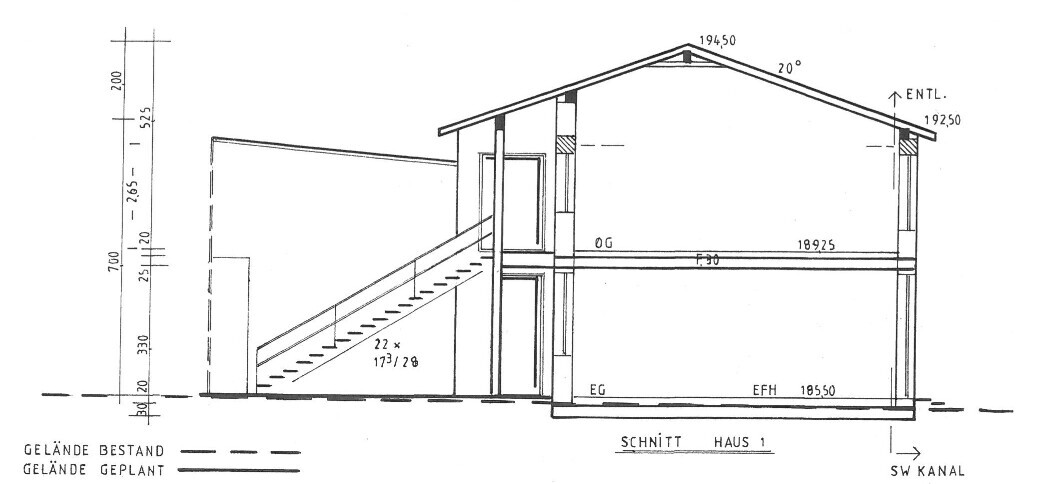
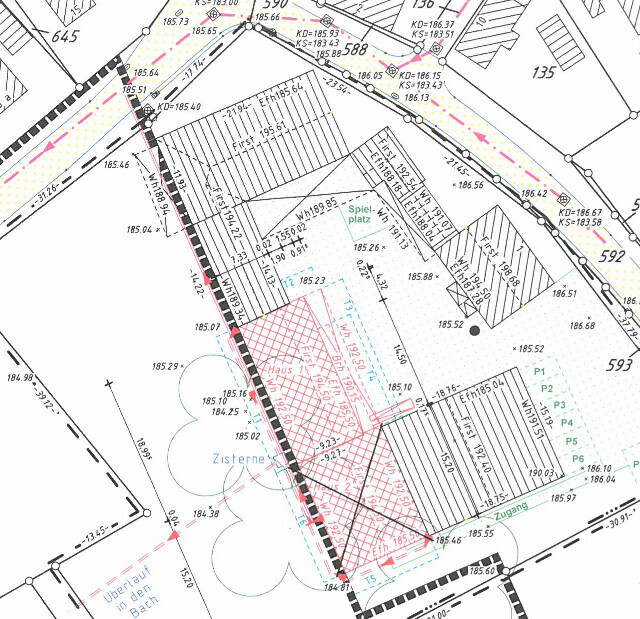
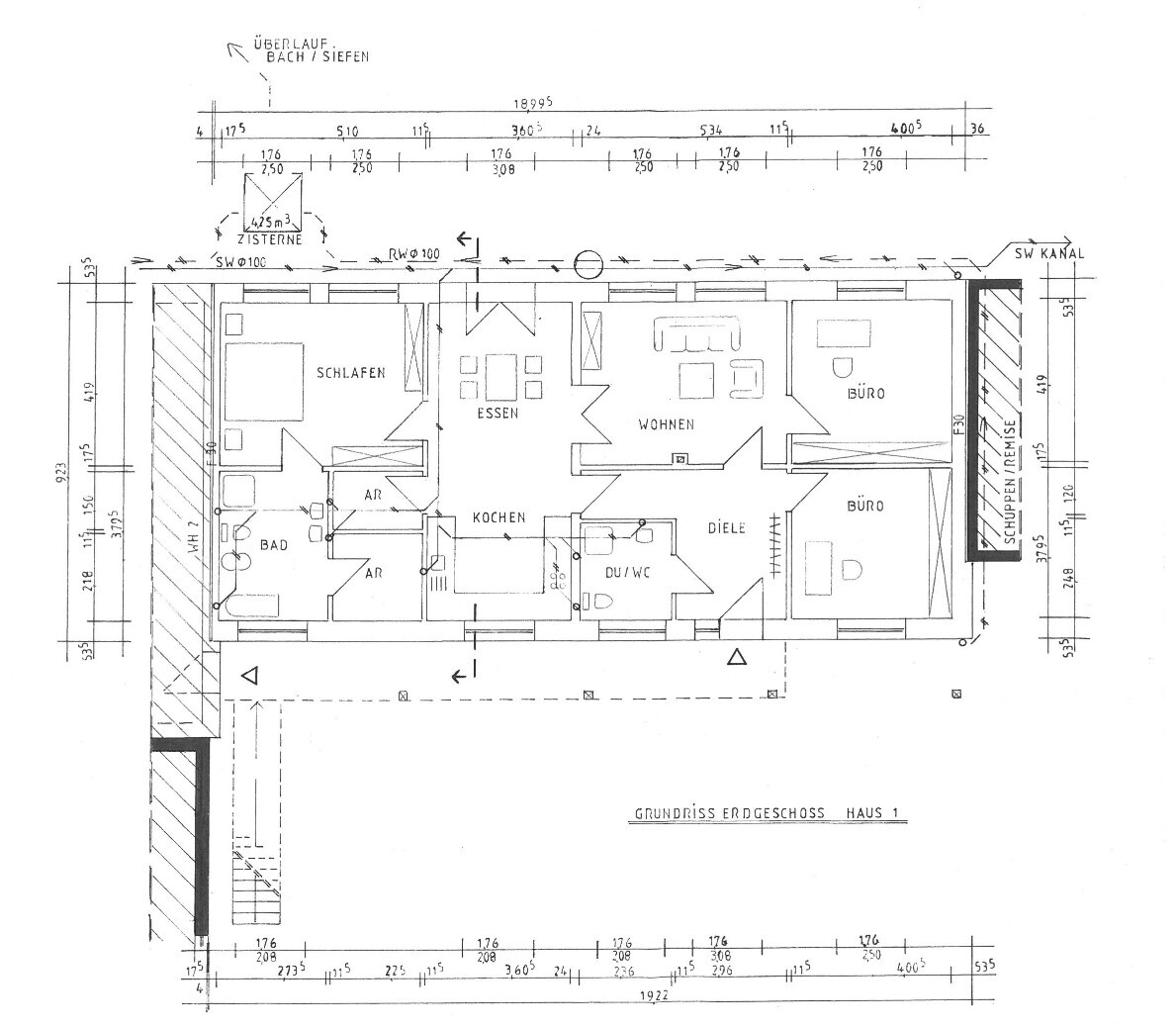
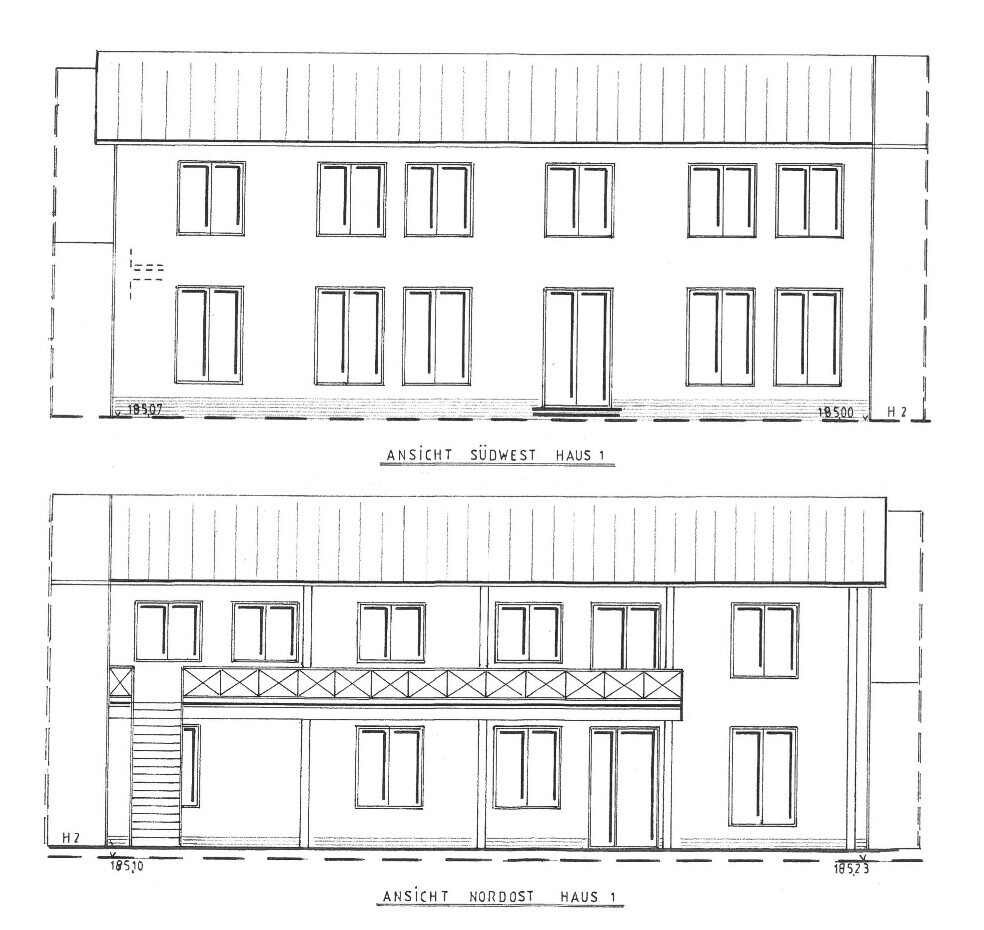
Development Plan / Restrictions
Slope: no
Building window, building line, and boundary: within the existing courtyard
Edge development: no
Maximum heights / limits: surrounding buildings
Client Requirements
Style, roof type, building type: adapted to the existing courtyard complex; gable roof; two-family house
Basement, floors: no basement, ground floor, upper floor
Number of people, age: 2, over 60
Space requirements: sleeping, living, dining, cooking, plus 2 rooms for office/guests
Office: family use
Guest stays per year: multiple, sometimes simultaneous
Closed architecture
Conservative construction
Open kitchen: yes
Number of dining seats: 6
Fireplace: optional
Garage, carport: no
Additional wishes: very bright living rooms; senior-friendly
House Design
Planned by: architect
What do you like particularly? Why? High rooms with tall windows (-> lots of light); symmetrical exterior appearance (aesthetics)
What do you not like? Why? Uncertainty regarding usable space. Note: there is unlimited additional usable space available in the courtyard
Estimated cost according to architect/planner: 650,000
Preferred heating system: underfloor heating, heat pump; wood as desired
Why is the design as it is now? Family planning, consultation with friends, consultation with construction manager, implementation by the architect (two cycles)
What makes it particularly good or bad in your opinion? Fits well with the surrounding existing buildings; two additional rooms; very bright
What is the most important/basic question about the floor plan summarized in 130 characters? Where can the floor plan still be optimized?
You can orient the floor plan accordingly during the planning stage. This means features like a height-adjustable washbasin, parking space for a wheelchair, and so on.
This is about the floor plan, and it is feasible, especially with so much space. It is not unlikely that within the next 20 years, one of the two homeowners may have a disability.
This is about the floor plan, and it is feasible, especially with so much space. It is not unlikely that within the next 20 years, one of the two homeowners may have a disability.
haydee schrieb:
When planning, you can align the floor plan accordingly. This means building features like an adjustable-height vanity, parking spaces for mobility scooters, and so on. As I said, "You can..."… _I_ would only do it if necessary.
And I mention it to encourage thinking about whether you really want to live healthily in that way now. You could also order walking sticks or mobility aids in advance to be prepared. But most don’t, even though it is feasible 😉
Well, I can get Tena Lady within a few minutes, but wider doors, threshold-free doors, and a bathroom that is large enough will probably take around 12 months. An apartment off the waiting list, assisted living. If the partner has the strength for that.
Urinary incontinence is a slow process; a stroke or a broken femoral neck can happen in a second.
The original poster wants to set up the basic conditions to then “only” have to apply for the aids.
To stick with Tena Lady as an example, he wants to do pelvic floor training.
If you consider the necessary basics, it’s really not complicated, and there’s no hospital look. It’s a home with a normal appearance and lifestyle.
Urinary incontinence is a slow process; a stroke or a broken femoral neck can happen in a second.
The original poster wants to set up the basic conditions to then “only” have to apply for the aids.
To stick with Tena Lady as an example, he wants to do pelvic floor training.
If you consider the necessary basics, it’s really not complicated, and there’s no hospital look. It’s a home with a normal appearance and lifestyle.
But it’s about the floor plan:
I would combine the two storage rooms into one. Having two doors in the bathroom is not beneficial. It also has nothing to do with being senior-friendly if the washing machine can only be reached by a long route through the bathroom. The door from the kitchen is much better positioned centrally, accessible via a shorter route.
Also, this bottleneck in front of the WC doesn’t help the design: why not place the WC on the other side? (Water pipes can cover quite a distance, so there’s no need to be overly strict with that during planning.) Then you would have the office and WC as a small unit.
I would combine the two storage rooms into one. Having two doors in the bathroom is not beneficial. It also has nothing to do with being senior-friendly if the washing machine can only be reached by a long route through the bathroom. The door from the kitchen is much better positioned centrally, accessible via a shorter route.
Also, this bottleneck in front of the WC doesn’t help the design: why not place the WC on the other side? (Water pipes can cover quite a distance, so there’s no need to be overly strict with that during planning.) Then you would have the office and WC as a small unit.
haydee schrieb:
Well, I can get Neja Tena Lady within a few minutes, but wider doors, a threshold-free door, and a bathroom that is large enough will probably take about 12 months. I haven't ruled out a large bathroom, wide doors, etc.
It’s just that before installing a height-adjustable sink, I’m more inclined to plan for 2 bedrooms.
haydee schrieb:
Stroke, hip fracture—it can happen in a matter of seconds. Yep, it can happen to you even in your mid-30s. Anyone who is still very active at 60 years old, without significant signs of rheumatism, osteoporosis, or stroke symptoms, has a low chance of ending up in a wheelchair in the coming years. Unless they still ride a Harley (or an e-bike 😉) and thus have an increased risk.
Similar topics