
ᐅ Basement versus Increased Living Space on the Ground Floor
Created on: 19 Apr 2022 20:36
H
HalloClarissa
Dear all,
We are planning to build a bungalow with 3 rooms and about 85 sqm (915 sq ft) of living space. Since the plot is on a slope, we need to build with a partial basement.
Which option would likely be more cost-effective:
1. Living area on the ground floor (including a guest room) of 85 sqm (915 sq ft) and a 50 sqm (538 sq ft) basement used mainly as a utility cellar with a technical room (then we would only need one bathroom).
2. Ground floor only 75 sqm (808 sq ft), guest room in the partially finished 50 sqm (538 sq ft) basement as living space (which would require a second bathroom but could be fitted out later by ourselves).
As soon as the basement is meant to have living space, the access routes must be heated and insulated. Also, an internal staircase is necessary. A purely utility basement could possibly be accessed only from outside without an internal staircase, saving space.
Theoretically, a room on the ground floor requires about 12 sqm (129 sq ft). If this room is located in the basement, additional space for stairs on both floors and another hallway is needed, approximately 24 sqm (258 sq ft).
Am I thinking about this correctly?
Has anyone calculated a similar case before?
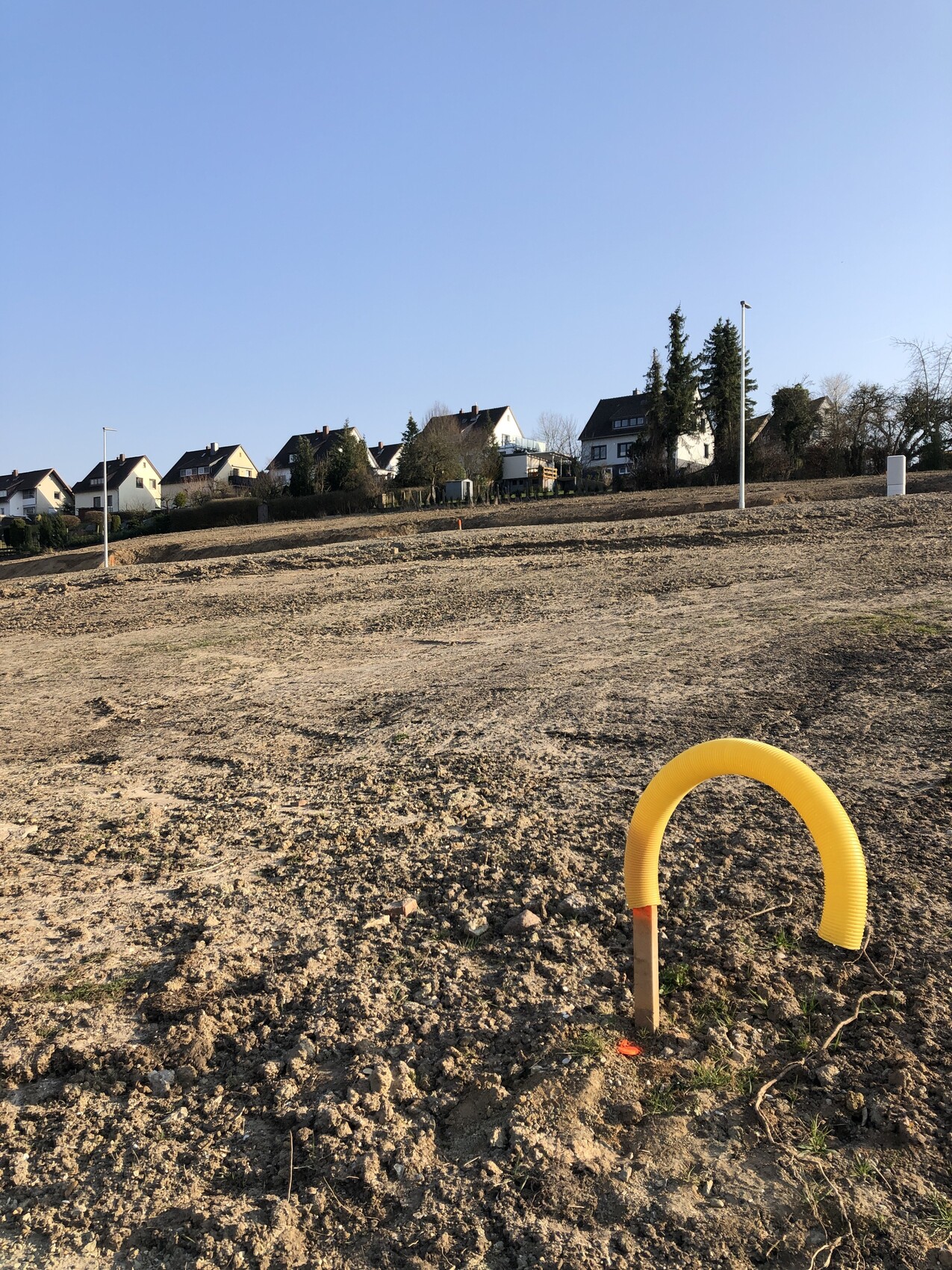
We are planning to build a bungalow with 3 rooms and about 85 sqm (915 sq ft) of living space. Since the plot is on a slope, we need to build with a partial basement.
Which option would likely be more cost-effective:
1. Living area on the ground floor (including a guest room) of 85 sqm (915 sq ft) and a 50 sqm (538 sq ft) basement used mainly as a utility cellar with a technical room (then we would only need one bathroom).
2. Ground floor only 75 sqm (808 sq ft), guest room in the partially finished 50 sqm (538 sq ft) basement as living space (which would require a second bathroom but could be fitted out later by ourselves).
As soon as the basement is meant to have living space, the access routes must be heated and insulated. Also, an internal staircase is necessary. A purely utility basement could possibly be accessed only from outside without an internal staircase, saving space.
Theoretically, a room on the ground floor requires about 12 sqm (129 sq ft). If this room is located in the basement, additional space for stairs on both floors and another hallway is needed, approximately 24 sqm (258 sq ft).
Am I thinking about this correctly?
Has anyone calculated a similar case before?
 HalloClarissa21 Apr 2022 07:48
11ant schrieb:
Only if absolutely necessary, since there would be some limitations: it would be possible if the partial basement is only on the downhill side; however, the utility room would then need to be accessed from the side for connections that are not under the building (because having a utility room on the ground floor wouldn’t work out well). On the pipe side, this would mean that only the parking space would be paved (the one on the other side could have a solid floor or even be a garage).
I’m curious to see how it goes. That’s exactly how I had planned it: basement on the downhill side and utility room in the basement.

HalloClarissa schrieb:
That’s how I had planned it as well: basement on the valley side and utility room (HAR) in the basement My suggestion in post #44 assumed that the utility room (HAR) would need to be extended all the way to the street side because of the non-covered pipes. In a situation like this, that is actually the best approach – but my “mental mistake” was treating it as the only option. In fact, it is also possible to locate the utility room in a partially basemented area on the valley side. However, in that case, it must be placed on one side. To avoid building over the pipes located in the side building setback, no garage or covered parking space with a solid floor (which is usually preferred in such a spot) can be placed above them. Instead, one has to settle for an uncovered parking space with a paved surface that could be easily removed if needed. On the other side’s building setback, a conventional garage could still be built.
https://www.instagram.com/11antgmxde/
https://www.linkedin.com/company/bauen-jetzt/
HalloClarissa21 Apr 2022 12:4111ant schrieb:
My suggestion in post #44 assumed that the utility room (HAR) would need to be extended all the way to the street side due to the presence of unbuilt-over utility lines. In a situation like this, that is actually the ideal solution – however, my "error in thinking" was treating it as the only option. In fact, it is also possible to locate the utility room in a partial basement on the valley side. However, this requires placing it along one side. To avoid building over the utility lines running in the lateral building setback area, no garage or covered parking space with a solid floor can be placed above them, which is often preferred in such a location. Instead, an uncovered parking space with a paved surface would have to suffice, which could be easily removed if necessary. On the opposite side’s setback area, a traditional garage could still be built.Okay, I will include that in the planning. However, we cannot build a driveway on the left/west side of the house because that’s exactly where the streetlight and the telecom cabinet are located ♀️ We don’t actually need a garage anyway, and with a carport the paving stones could be removed if needed.
HalloClarissa21 Apr 2022 12:58ypg schrieb:
Relative, exact.
I see it the same way: making the most of the wishes. And also getting the best and most cost-effective result despite possible additional costs. I consider split-level to be the most comfortable solution.
I have already explained my reasons above. Why don’t you post your project here in the floor plan planning subforum with all the details about the lot, zoning/planning permission, etc.? Then ambitious members would have something concrete to suggest. So, do you mean that a split-level design would be cheaper than a partial basement that serves as both utility and living cellar space and also eliminates the need for additional sheds, etc.?
Wouldn’t the wall between the hillside level and the street level, since it is in contact with soil, ultimately have to be constructed as some kind of waterproof concrete shell (“white tank”)?
How many meters (feet) of height difference can typically be achieved without problems using two staggered floor slabs?
HalloClarissa schrieb:
So, do you mean that a split-level design will be cheaper than a partial basement, which serves as both a utility and living basement, and therefore also eliminates the need for additional sheds and such? I thought we had agreed by now that a partial basement is sufficient for your utility basement needs (?), I consider split-level unsuitable since the stated goal is an accessible home suitable for wheelchair users; furthermore, split-level makes no sense if there is a height difference of a whole floor within the building footprint area.
https://www.instagram.com/11antgmxde/
https://www.linkedin.com/company/bauen-jetzt/
HalloClarissa21 Apr 2022 13:5111ant schrieb:
I thought we had agreed by now that a partial basement used only for storage purposes would be sufficient for you (?), I consider a split-level design unsuitable since a wheelchair-accessible home for seniors is clearly the goal; besides, split-level layouts don’t make sense if the ground level of the house footprint shows a height difference equivalent to a full floor. Okay, so we are looking at a partial basement on the valley side (a half basement costs about 75% of a full basement), and all necessary living spaces remain on the ground floor.
OR, as some suggest, a split-level house where the required rooms are at street level, but the guest room and utility/housekeeping room could be on the lower level.
Ultimately, if needed later on, a stair lift could be installed even for the relatively small split-level section.
Similar topics