
ᐅ House and Floor Plan Design – Initial Architect’s Draft Available
Created on: 14 Oct 2020 18:29
P
Pinkiponk
As previously announced, our old house in Baden-Württemberg has now been sold, we have moved to the Leipzig district, and we can now focus on our new house. Due to our age, we have deliberately downsized both the lot size and the living space. We have a first architect’s draft. I have already noted a few change requests and am now looking forward to your additions, criticism, and suggestions. If further plans or similar are needed, I will gladly provide them as long as I have them available.
Thank you in advance for taking the time to help me.
Development Plan / Restrictions
Lot size: 567sqm (6,105 sqft)
Slope: visually not noticeable; if this is important information, I will look for where to find it
Site occupancy index: 0.35
Floor area ratio: 0.8
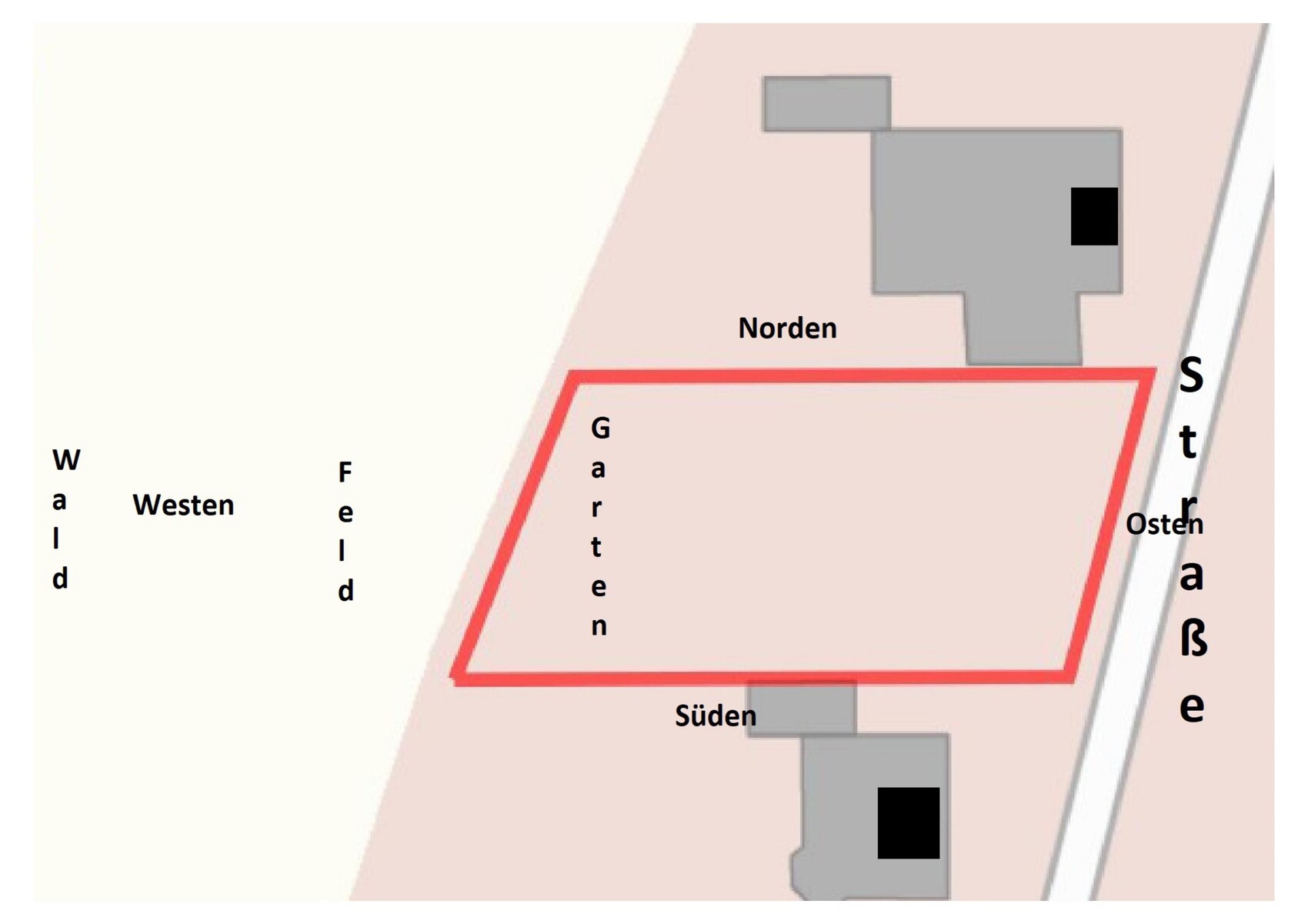
Building envelope, building line, and boundary: see attached drawing
Edge development: not allowed/desired on our part
Number of parking spaces: 2
Number of floors: 2
Roof type: hipped roof
Style: classic, conservative
Orientation: ?
Maximum heights/limits: “Top of raw floor slab of ground floor to ridge height of main roof max. 11.5 meters (38 feet)”; “Top of raw floor slab of ground floor to eave height of main roof max. 7.0 meters (23 feet)”
Further requirements
Client Requirements
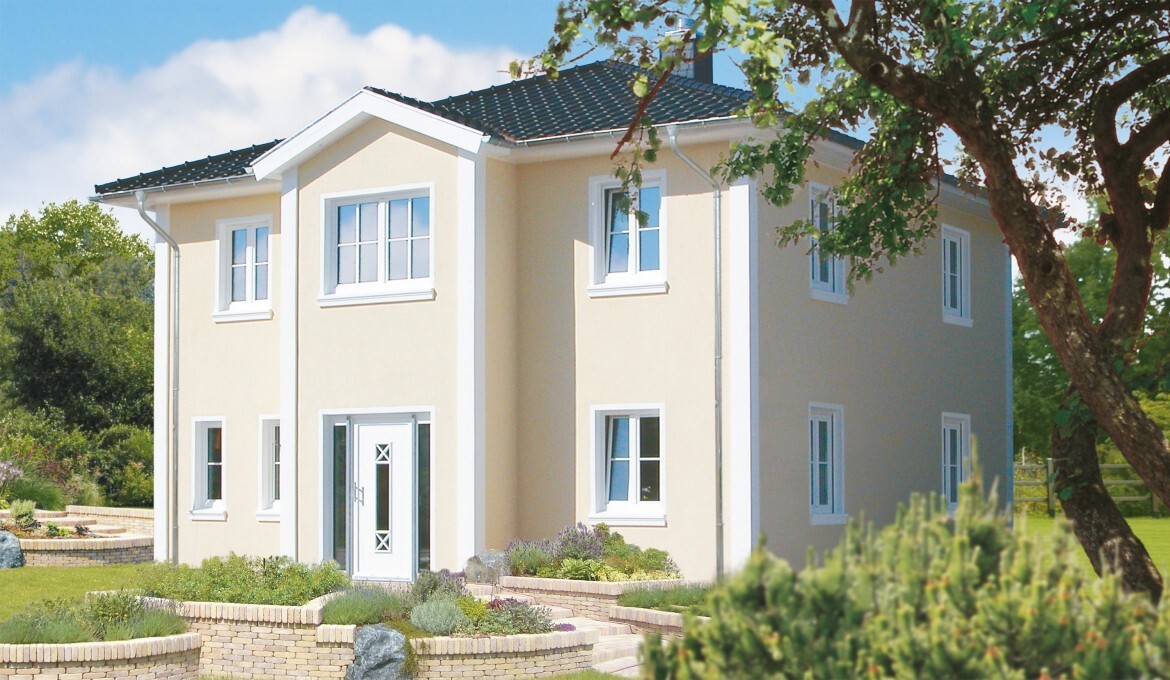
Style, roof shape, building type: we are trying to approximate the house shown in the photo below; however, without the gable projection; classic/conservative, hipped roof, town house
Basement, floors: no basement, 2 floors
Number of occupants, age: 1 male, 64 years old – 1 female, 58 years old
Space requirements on ground floor and upper floor:
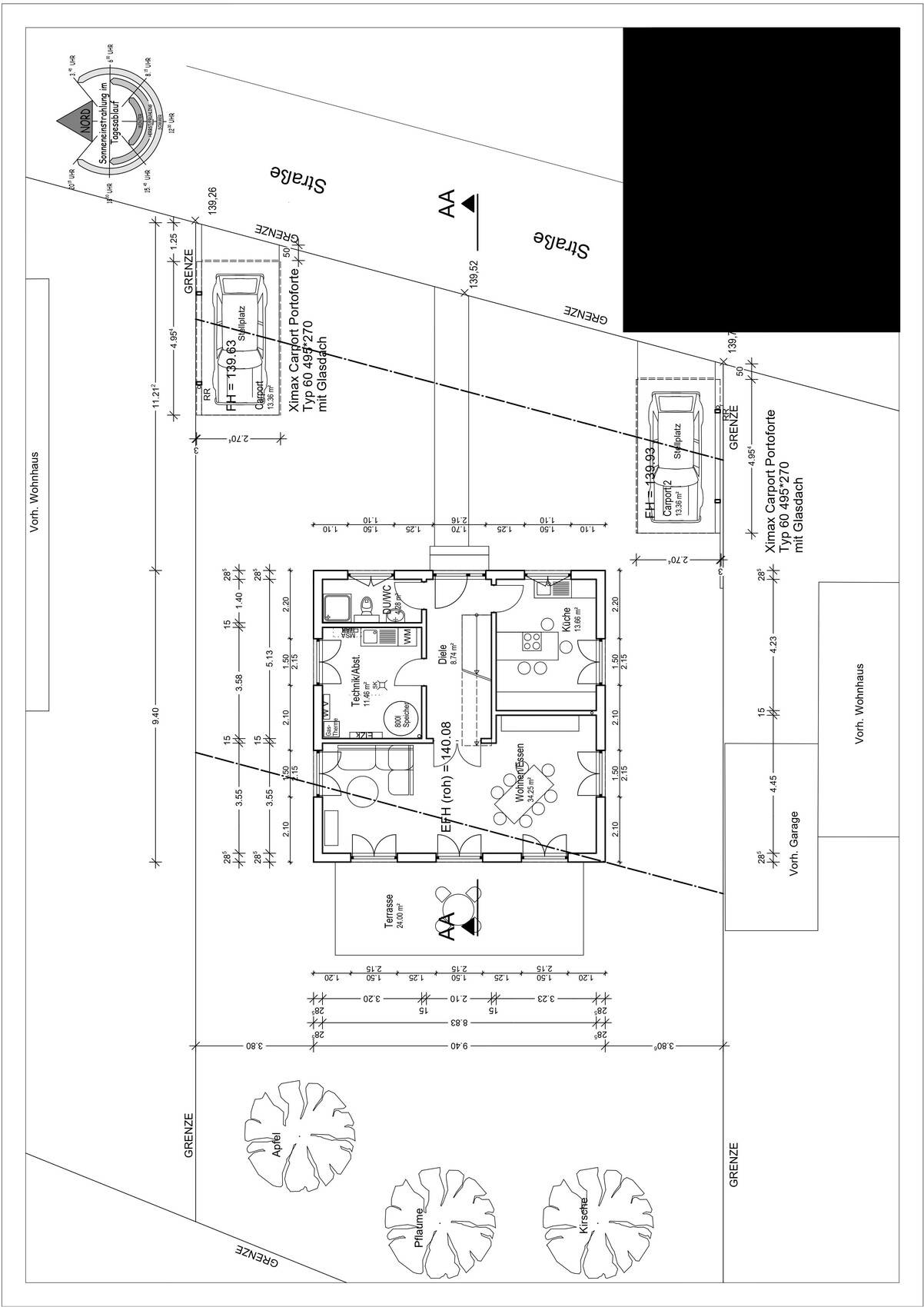
Ground floor → kitchen, shower bathroom, living/lounge room, utility room with kitchenette and floor drain, hallway;
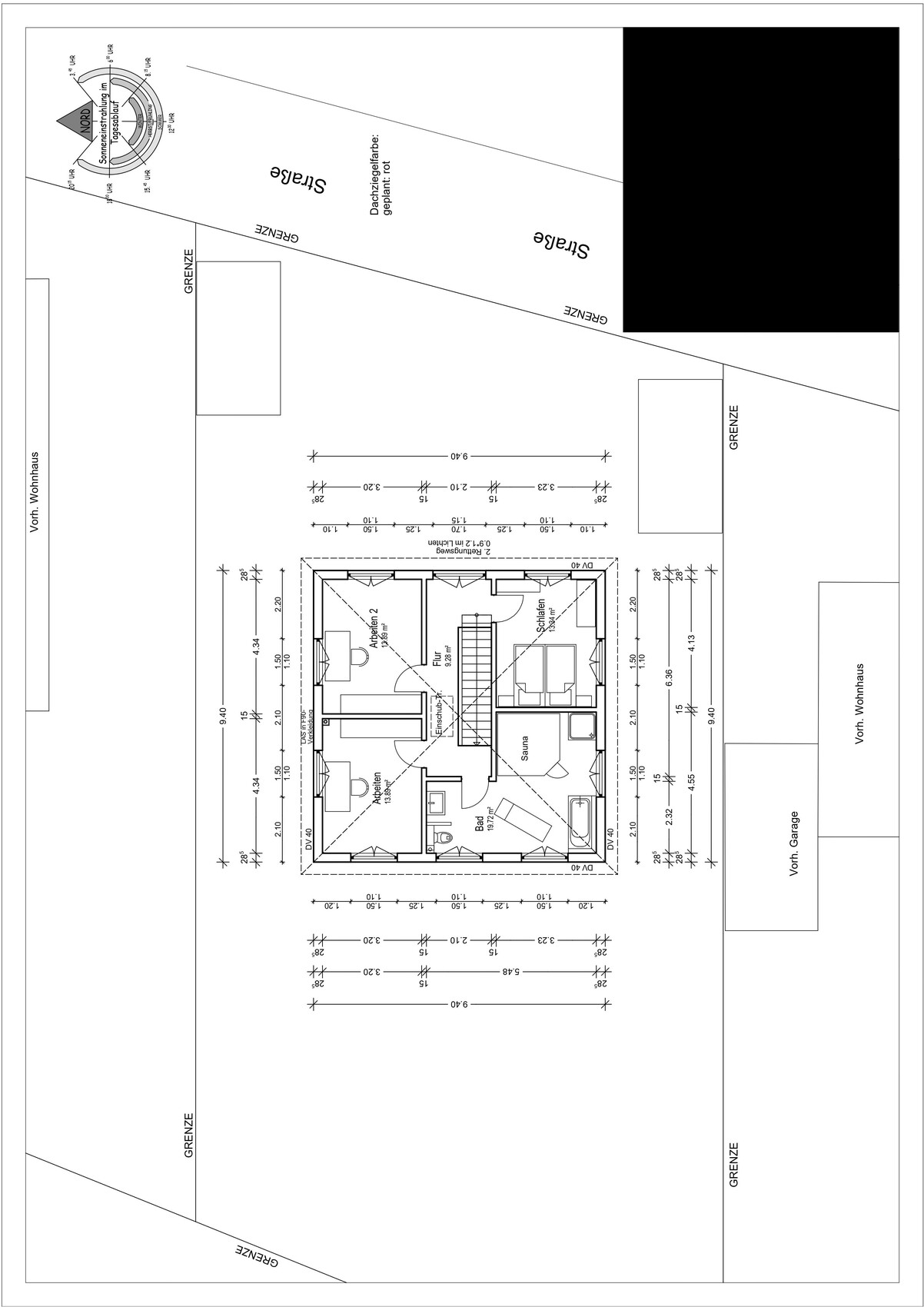
Upper floor → bathroom with tub, bedroom, 2 “wardrobe and storage rooms”
Office: family use or home office? Couple without children, no home office
Number of overnight guests per year: 10
Open or closed architecture: open on the outside, closed on the inside
Conservative or modern construction: conservative
Open kitchen, cooking island: no, classical L-shaped kitchen or similar (the plan includes a cooking island that will not be built)
Number of dining seats: 2 in the kitchen, up to 6–8 in the living/lounge room
Fireplace: gas stove chimney
Music/stereo wall: no
Balcony, roof terrace: both no
Garage, carport: 2 arched carports
Vegetable garden, greenhouse: both no
Additional wishes/particulars/daily routine, also reasons why some things should or should not be
House Design
Who created the plan:
– Planner from a construction company: yes, in cooperation with the clients
– Architect: unclear
– Do-it-yourself: yes, in cooperation with the prefabricated house manufacturer’s planner
What do you especially like? Why? Many windows and patio doors, lots of natural light and fresh air
What do you not like? Why? The windows on the upper floor are too low in the plan, but this will be changed
Price estimate according to architect/planner: already commissioned offer/order €312,780.00 (without carport, outdoor facilities, additional construction costs, land, ...)
Personal price limit for the house including equipment: €400,000.00
Preferred heating system: gas condensing boiler plus solar thermal (according to legal requirements)
If you have to forgo something, which details/upgrades
– What you can give up: we are already giving up shutters, whirlpool
– What you cannot give up: many windows and patio doors, muntins in the windows and doors
Why is the design as it is? For example:
A mixture of many examples from various magazines…
What do you think makes it good or bad? It generally meets our wishes. On the ground floor, we want access to the garden from every room. We find symmetry more pleasing than asymmetry. Few different window and door formats. No horizontal (“lying”) windows. Each of us has a separate room for clothing and such, so that no wardrobes have to be placed in the bedroom. We do not want a separate dressing room.
What is the most important/fundamental question about the floor plan in 130 characters?
The roof seems somewhat steep to me. Is a 30-degree roof pitch for a house with a base of 9.40m x 9.40m (31 feet x 31 feet) too steep? The standard according to the provider is 22 degrees. That seemed too flat, or you can hardly see the roof.
The development plan was too large to upload; I will try again in a separate post in this thread.
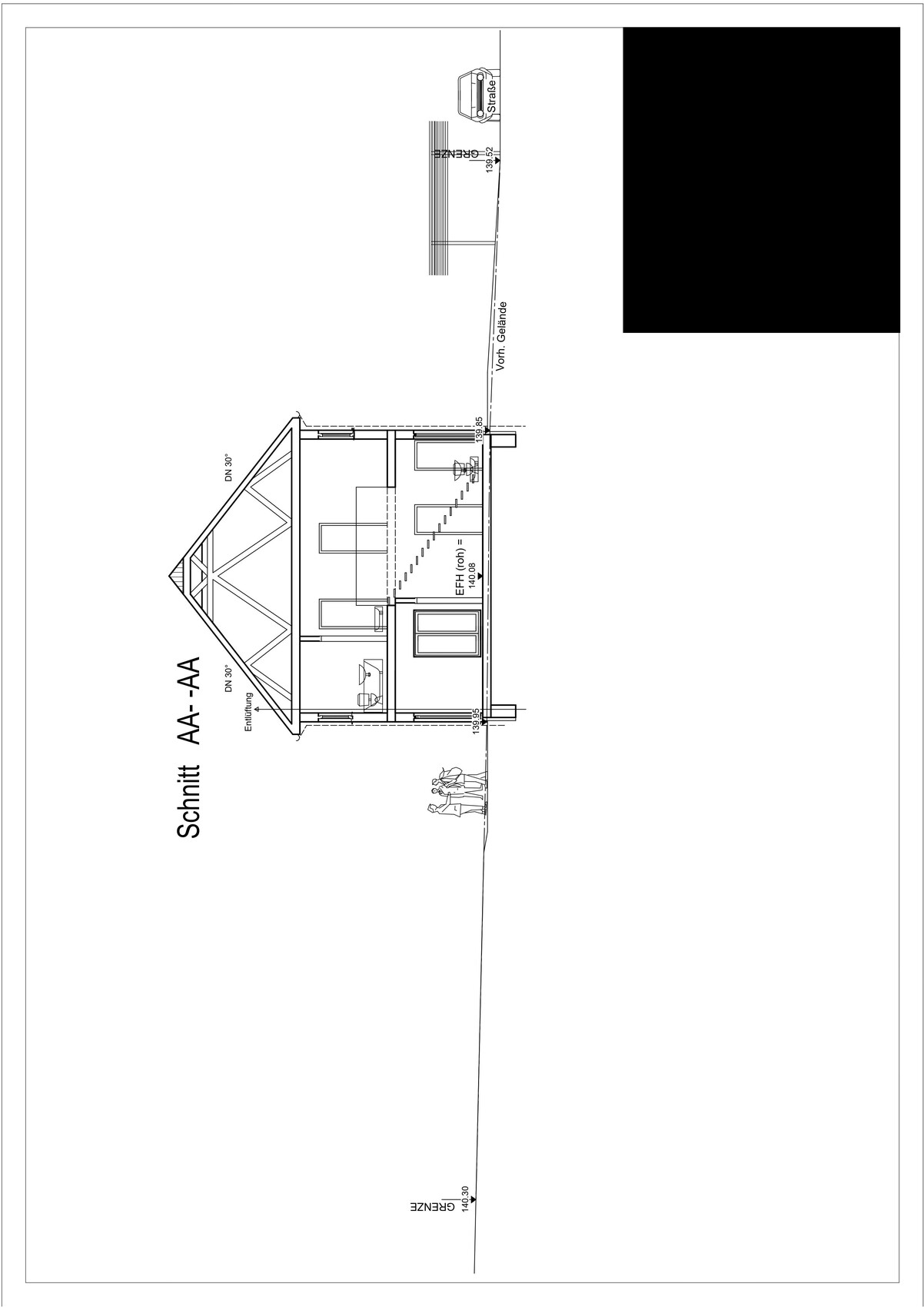
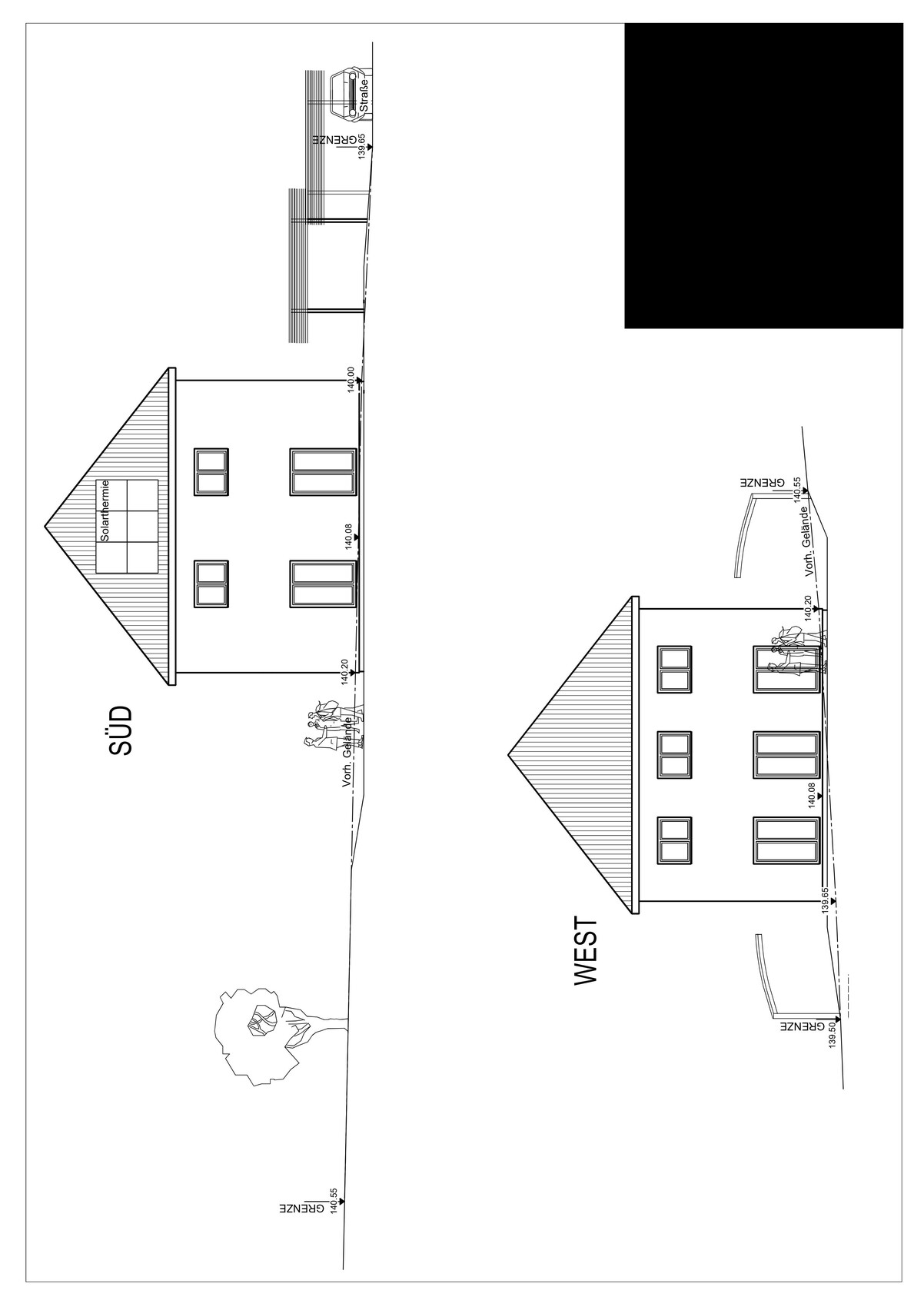
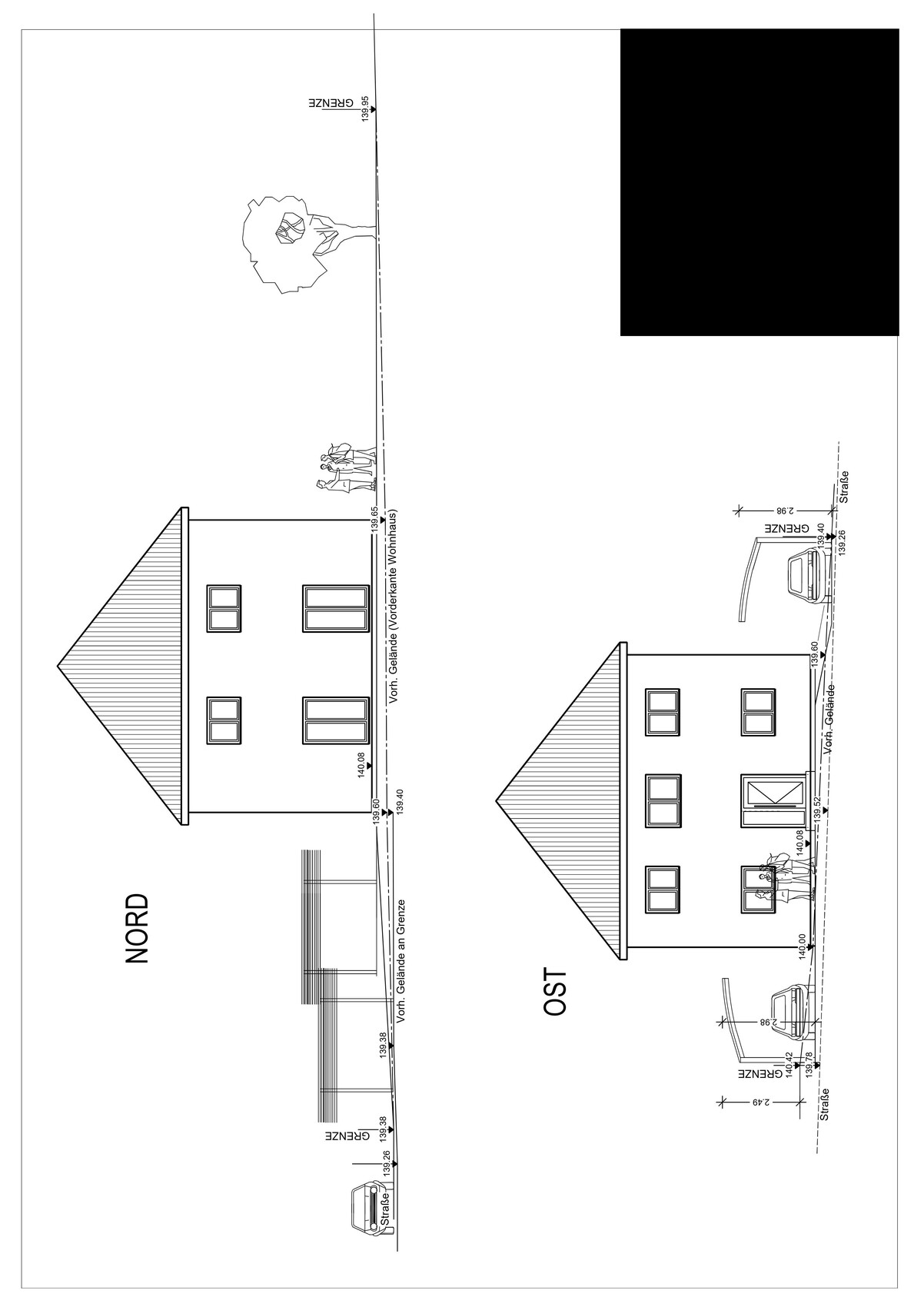
Thank you in advance for taking the time to help me.
Development Plan / Restrictions
Lot size: 567sqm (6,105 sqft)
Slope: visually not noticeable; if this is important information, I will look for where to find it
Site occupancy index: 0.35
Floor area ratio: 0.8
Building envelope, building line, and boundary: see attached drawing
Edge development: not allowed/desired on our part
Number of parking spaces: 2
Number of floors: 2
Roof type: hipped roof
Style: classic, conservative
Orientation: ?
Maximum heights/limits: “Top of raw floor slab of ground floor to ridge height of main roof max. 11.5 meters (38 feet)”; “Top of raw floor slab of ground floor to eave height of main roof max. 7.0 meters (23 feet)”
Further requirements
Client Requirements
Style, roof shape, building type: we are trying to approximate the house shown in the photo below; however, without the gable projection; classic/conservative, hipped roof, town house
Basement, floors: no basement, 2 floors
Number of occupants, age: 1 male, 64 years old – 1 female, 58 years old
Space requirements on ground floor and upper floor:
Ground floor → kitchen, shower bathroom, living/lounge room, utility room with kitchenette and floor drain, hallway;
Upper floor → bathroom with tub, bedroom, 2 “wardrobe and storage rooms”
Office: family use or home office? Couple without children, no home office
Number of overnight guests per year: 10
Open or closed architecture: open on the outside, closed on the inside
Conservative or modern construction: conservative
Open kitchen, cooking island: no, classical L-shaped kitchen or similar (the plan includes a cooking island that will not be built)
Number of dining seats: 2 in the kitchen, up to 6–8 in the living/lounge room
Fireplace: gas stove chimney
Music/stereo wall: no
Balcony, roof terrace: both no
Garage, carport: 2 arched carports
Vegetable garden, greenhouse: both no
Additional wishes/particulars/daily routine, also reasons why some things should or should not be
House Design
Who created the plan:
– Planner from a construction company: yes, in cooperation with the clients
– Architect: unclear
– Do-it-yourself: yes, in cooperation with the prefabricated house manufacturer’s planner
What do you especially like? Why? Many windows and patio doors, lots of natural light and fresh air
What do you not like? Why? The windows on the upper floor are too low in the plan, but this will be changed
Price estimate according to architect/planner: already commissioned offer/order €312,780.00 (without carport, outdoor facilities, additional construction costs, land, ...)
Personal price limit for the house including equipment: €400,000.00
Preferred heating system: gas condensing boiler plus solar thermal (according to legal requirements)
If you have to forgo something, which details/upgrades
– What you can give up: we are already giving up shutters, whirlpool
– What you cannot give up: many windows and patio doors, muntins in the windows and doors
Why is the design as it is? For example:
A mixture of many examples from various magazines…
What do you think makes it good or bad? It generally meets our wishes. On the ground floor, we want access to the garden from every room. We find symmetry more pleasing than asymmetry. Few different window and door formats. No horizontal (“lying”) windows. Each of us has a separate room for clothing and such, so that no wardrobes have to be placed in the bedroom. We do not want a separate dressing room.
What is the most important/fundamental question about the floor plan in 130 characters?
The roof seems somewhat steep to me. Is a 30-degree roof pitch for a house with a base of 9.40m x 9.40m (31 feet x 31 feet) too steep? The standard according to the provider is 22 degrees. That seemed too flat, or you can hardly see the roof.
The development plan was too large to upload; I will try again in a separate post in this thread.


In both of our minds, the structure is wood, but that could change again within a year (by then the house should be finished) 🙄. Inside, the floors were originally planned to be tiled, but now it’s definitely going to be hardwood 🙂.
Is it necessary to know this right away?
Is it necessary to know this right away?

Nixwill2 schrieb:
Sounds interesting. Could someone here explain exactly what needs to be said or requested during the selection appointment to get all windows floor-to-ceiling with the terrace? [...] In our case, this would involve a lift-and-slide door, a fixed glazing, and two floor-to-ceiling tilt-and-turn casement windows. Is it possible to arrange this for all existing windows? I believe the elements are indeed floor-to-ceiling, but the missing magic word would have been "threshold-free." From my understanding (I used to be a manufacturer of this stuff, complaints were handled by management, and I wouldn’t dare to use the same hardware for threshold-free installations), this involves different fittings, meaning traditional hinges instead of tilt-and-turn hardware. For this reason, I also see the need to decide which elements you want threshold-free and which ones you still want to be able to tilt. For lift-and-slide doors, the bottom guide rail cannot be taken lightly; therefore, if "threshold-free" is desired, the guide should likely be recessed into the screed.
Nixwill2 schrieb:
The way Tolentino described it here (with the terrace flooring running into the reveal) sounds like a very neat solution to me—what needs to be considered here to ensure it is ordered correctly during the selection appointment? The flooring—in my suggestion at least in the "opening area" of the door as a slatted floor—can also cover the drainage channel (which then wouldn’t need a grate cover).
https://www.instagram.com/11antgmxde/
https://www.linkedin.com/company/bauen-jetzt/
Not necessary, but it makes things a lot easier.
With wood, you can work with a substructure that basically adapts to the terrain. For example, I have about a 40 cm (16 inches) height difference between the interior floor and the outside ground level. Since I don’t want any steps from the interior to the terrace, I build the substructure so that the terrace decking ends up roughly at the same height as the interior floor. This is a bit more complicated and expensive when building the terrace, but it means I can skip special waterproofing measures because the soil outside is basically level with the slab. For me, a splash protection strip and possibly a drainage membrane at the facade are sufficient.
This also depends on my soil, which drains well. So the risk of standing water is not that high for me.
If you want a stone terrace, the substructure would have to be much higher. In that case, along the length of the terrace next to the house, there would be soil (or the substructure) directly at the base. More measures are necessary here to protect the plaster and masonry against standing water. There is also a much higher risk that heavy rain will push water directly against the window because it can run in at terrace level.
For that, you would need a channel drain or even a drainage system. Also, the waterproofing of the window element on the exterior must be more elaborate. In my approach, basically the minimum requirement for rainwater tightness is sufficient.
Still, I plan to seal it with liquid waterproofing. "Mother box" and "caution porcelain" and such.
With wood, you can work with a substructure that basically adapts to the terrain. For example, I have about a 40 cm (16 inches) height difference between the interior floor and the outside ground level. Since I don’t want any steps from the interior to the terrace, I build the substructure so that the terrace decking ends up roughly at the same height as the interior floor. This is a bit more complicated and expensive when building the terrace, but it means I can skip special waterproofing measures because the soil outside is basically level with the slab. For me, a splash protection strip and possibly a drainage membrane at the facade are sufficient.
This also depends on my soil, which drains well. So the risk of standing water is not that high for me.
If you want a stone terrace, the substructure would have to be much higher. In that case, along the length of the terrace next to the house, there would be soil (or the substructure) directly at the base. More measures are necessary here to protect the plaster and masonry against standing water. There is also a much higher risk that heavy rain will push water directly against the window because it can run in at terrace level.
For that, you would need a channel drain or even a drainage system. Also, the waterproofing of the window element on the exterior must be more elaborate. In my approach, basically the minimum requirement for rainwater tightness is sufficient.
Still, I plan to seal it with liquid waterproofing. "Mother box" and "caution porcelain" and such.
Phew, that actually sounds very professional. I think it will take some time before I fully understand it!
I plan to follow up in a dedicated thread once it becomes relevant for me. Until then, I’m confident I will have made more progress regarding the flooring. But I’m almost certain it will be wood, as that fits best since we want the terrace to wrap around two sides of the house. Due to the slope, it might look somewhat like a boardwalk, which we really like. However, that depends on many factors, such as the cost of filling in the slope. The ground floor is currently almost completely elevated, and the basement still needs to be backfilled. Discussions with the civil engineers and excavation contractors are ongoing.
Thanks already for the food for thought and the information!
I plan to follow up in a dedicated thread once it becomes relevant for me. Until then, I’m confident I will have made more progress regarding the flooring. But I’m almost certain it will be wood, as that fits best since we want the terrace to wrap around two sides of the house. Due to the slope, it might look somewhat like a boardwalk, which we really like. However, that depends on many factors, such as the cost of filling in the slope. The ground floor is currently almost completely elevated, and the basement still needs to be backfilled. Discussions with the civil engineers and excavation contractors are ongoing.
Thanks already for the food for thought and the information!
Not necessarily, we basically have a splash guard strip underneath the stone slabs. Although this initially caused some concern for the main contractor, there is absolutely no way for water to remain standing.
The lift-and-slide door has a small threshold, I think about 2.5 cm (1 inch) high and around 10 cm (4 inches) deep. It can be stepped on and driven over. If you’re not moving in as a wheelchair user, this works without the need for an expensive retractable track.
The lift-and-slide door has a small threshold, I think about 2.5 cm (1 inch) high and around 10 cm (4 inches) deep. It can be stepped on and driven over. If you’re not moving in as a wheelchair user, this works without the need for an expensive retractable track.
Similar topics