
ᐅ Building Material Choice: Brick or Aerated Concrete – Acoustic Assessment Considerations
Created on: 26 Feb 2022 10:49
S
Seb_Opf
Hello,
we are currently deciding on the building material... We have been offered both brick and aerated concrete, with no price difference according to what we were told, and the company uses both materials about 60/40%. There have been various trends, sometimes more brick, sometimes more aerated concrete.
The plan is to build a single-family house of 140-150 sqm (1500-1600 sq ft), KfW 40 standard (if eligible for subsidies, otherwise 55), monolithic, with a centralized ventilation system and an air-to-water heat pump. The shell construction will be managed by ourselves.
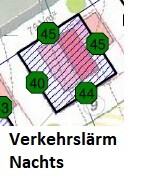
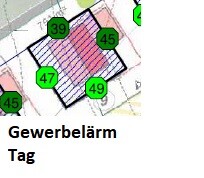
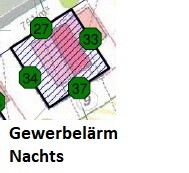
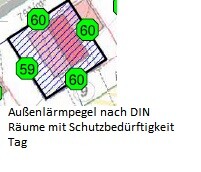
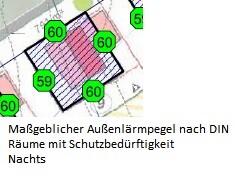
I have read that aerated concrete offers slightly better insulation, while brick is preferable for soundproofing. Even when asking several homeowners, you get 15 opinions from 10 people. A secondary school is being built nearby, and a state road runs about 300 m (980 ft) away. I have attached excerpts from the acoustic report.
Are there advantages to one of these materials in this situation, or can I basically just “flip a coin”?
Thanks for your opinions

we are currently deciding on the building material... We have been offered both brick and aerated concrete, with no price difference according to what we were told, and the company uses both materials about 60/40%. There have been various trends, sometimes more brick, sometimes more aerated concrete.
The plan is to build a single-family house of 140-150 sqm (1500-1600 sq ft), KfW 40 standard (if eligible for subsidies, otherwise 55), monolithic, with a centralized ventilation system and an air-to-water heat pump. The shell construction will be managed by ourselves.
I have read that aerated concrete offers slightly better insulation, while brick is preferable for soundproofing. Even when asking several homeowners, you get 15 opinions from 10 people. A secondary school is being built nearby, and a state road runs about 300 m (980 ft) away. I have attached excerpts from the acoustic report.
Are there advantages to one of these materials in this situation, or can I basically just “flip a coin”?
Thanks for your opinions
We had our second meeting with the general contractor today... It will probably come down to Ytong ThermUltra with a thickness of 42.5cm (17 inches). There is talk that KfW 40 certification will come back, but with the conditions of the 55 standard.
For KfW 55, the price for bricks and Ytong is roughly the same... For KfW 40, you would need to use a insulated brick, which would be significantly more expensive than Ytong.
Regards
For KfW 55, the price for bricks and Ytong is roughly the same... For KfW 40, you would need to use a insulated brick, which would be significantly more expensive than Ytong.
Regards
I have to bump this thread again... KFW40 is no longer an option for us since, without subsidies, the additional costs won’t pay off in our lifetime.
The exterior walls will now be 36.5cm (14 inches) – according to the company, the price is the same.
I saw in the plan that some interior walls are 11cm (4.3 inches) – is that too thin or "noisy" when using aerated concrete?
Thanks
The exterior walls will now be 36.5cm (14 inches) – according to the company, the price is the same.
I saw in the plan that some interior walls are 11cm (4.3 inches) – is that too thin or "noisy" when using aerated concrete?
Thanks
H
Hausbau 558 Apr 2022 21:21Seb_Opf schrieb:
I unfortunately have to bring this thread back up... KfW40 is no longer an option for us since, without subsidies, the additional costs won’t pay off in this lifetime...
The exterior walls will now be 36.5cm (14 inches) – according to the company, the price is about the same.
I saw in the plan that some walls are 11cm (4.3 inches) thick on the inside – is that too thin or “noisy” for aerated concrete?
Thanks Sound insulation usually depends on the weight per square meter of wall surface. 11.5cm (4.5 inches) are non-load-bearing interior walls, which you find in every building project. Personally, I would always have interior walls built with heavy materials. In our case, all interior walls are made of sand-lime brick with a density of 1.6.
Hausbau 55 schrieb:
Sound insulation usually depends on the weight per square meter of wall surface. 11.5cm (4.5 inches) are non-load-bearing interior walls, so they are found in every construction project. Personally, I would always have interior walls built with heavy materials. In our case, all interior walls are made of sand-lime brick with a bulk density of 1.6. That is of course ideal….
Since our general contractor wants to build everything with bricks, our non-load-bearing interior walls will also be 17.5cm (7 inches) instead of 11.5cm (4.5 inches). That should help somewhat.
H
Hausbau 558 Apr 2022 21:55Crixton schrieb:
That’s obviously ideal....
Since our general contractor wants all walls to be brick, even our non-load-bearing interior walls will be 17.5 cm (7 inches) instead of 11.5 cm (4.5 inches). It should make a difference. With a bungalow (which is what we built), you quickly get over 20 linear meters of interior walls. Using 11.5 cm (4.5 inches) instead of 17.5 cm (7 inches) walls adds more than 1 square meter of usable floor space. Using 17.5 cm (7 inches) interior walls instead of 11.5 cm (4.5 inches) means additional costs of about 2,500 EUR.
If my eyesight isn’t too bad, the only walls are 11.5
Bedroom - Walk-in closet
Child 1 - Child 2
Kitchen - Pantry
Maybe have the wall between the children’s rooms built as 17?
Only brick or aerated concrete? Just so you know, I’ll be helping on the shell construction for six weeks...
The other thing is, if the house ever needs to be demolished, aerated concrete is considered more expensive hazardous waste, right? Well, I probably won’t live to see that...
Bedroom - Walk-in closet
Child 1 - Child 2
Kitchen - Pantry
Maybe have the wall between the children’s rooms built as 17?
Only brick or aerated concrete? Just so you know, I’ll be helping on the shell construction for six weeks...
The other thing is, if the house ever needs to be demolished, aerated concrete is considered more expensive hazardous waste, right? Well, I probably won’t live to see that...
Similar topics