
Hello everyone,
We purchased a kitchen from a relatively large kitchen planner, and our countertop island features a darker granite stone.
During the kitchen installation, we noticed an inclusion (about the size of a 20-cent coin) in the stone. The installers initially fitted the countertop "temporarily" and said it would be replaced after our complaint. This is the only inclusion of this size and it completely disrupts the overall design. However, the stonemason is now, through the planner, saying that it’s a natural product and we have to accept it. We are insisting on a replacement… has anyone had experience with this?
We have requested a replacement, but currently don’t have high hopes. It’s a shame given the significant cost for us.
Thank you for your suggestions.
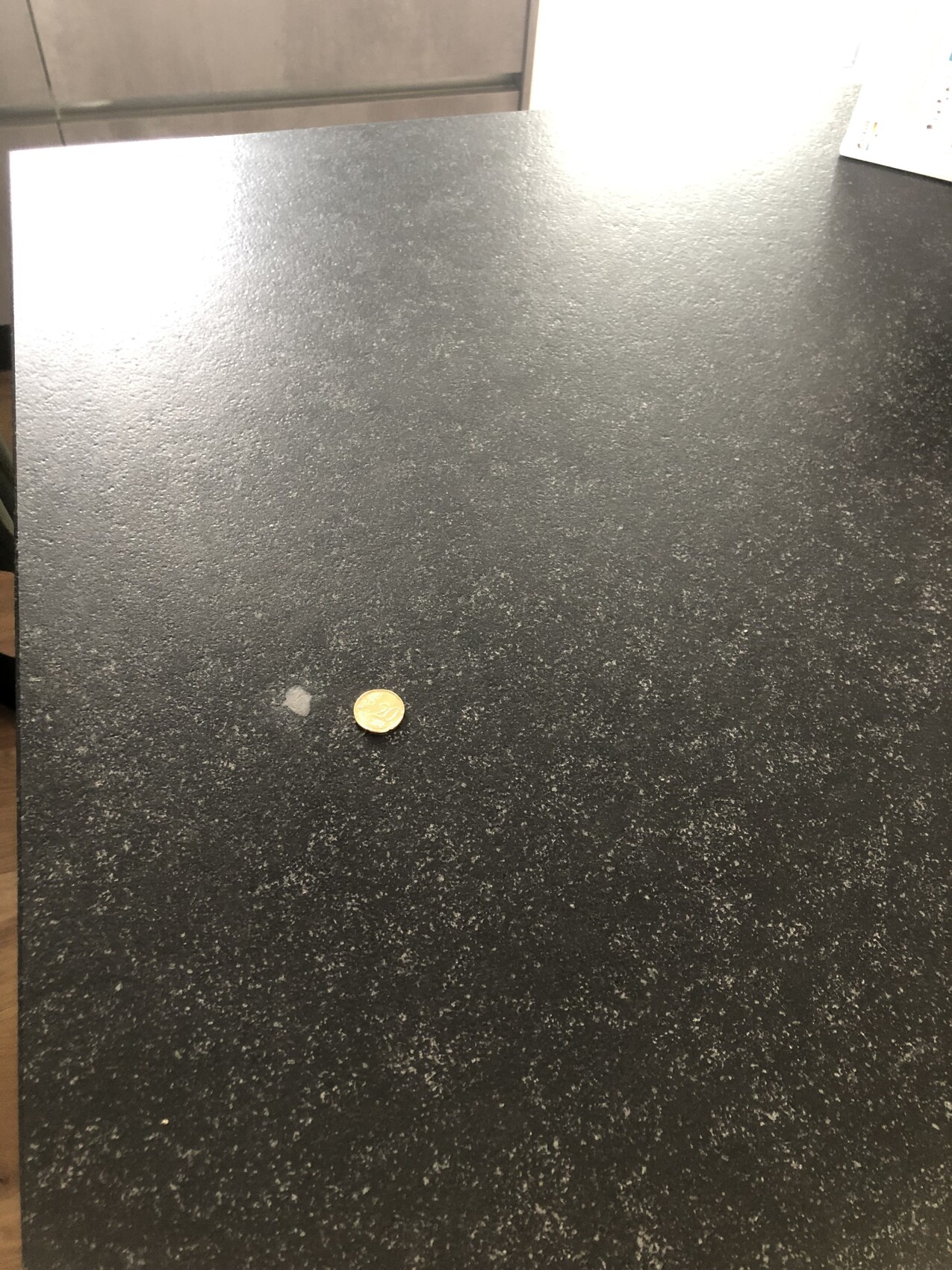
We purchased a kitchen from a relatively large kitchen planner, and our countertop island features a darker granite stone.
During the kitchen installation, we noticed an inclusion (about the size of a 20-cent coin) in the stone. The installers initially fitted the countertop "temporarily" and said it would be replaced after our complaint. This is the only inclusion of this size and it completely disrupts the overall design. However, the stonemason is now, through the planner, saying that it’s a natural product and we have to accept it. We are insisting on a replacement… has anyone had experience with this?
We have requested a replacement, but currently don’t have high hopes. It’s a shame given the significant cost for us.
Thank you for your suggestions.

I would first check whether this is truly a natural inclusion or if it has been tampered with.
This can be tested with heat. Natural stone is heat-resistant, while quartz composite is not. So, put a suitable roasting pan in the oven at 200°C (392°F) — preferably roasting a duck or goose beforehand to make the energy use worthwhile — and then place it right on the spot in question after taking it out.
If the stain looks exactly the same as before, it is probably natural. If the stain is discolored, it indicates a repaired area and clearly not a natural inclusion. In that case, I would file a complaint.
I’m not sure if less invasive tests exist, as normally any “destruction” of the countertop would complicate a complaint, but in this case, it would reveal the manufacturer’s deception.
This can be tested with heat. Natural stone is heat-resistant, while quartz composite is not. So, put a suitable roasting pan in the oven at 200°C (392°F) — preferably roasting a duck or goose beforehand to make the energy use worthwhile — and then place it right on the spot in question after taking it out.
If the stain looks exactly the same as before, it is probably natural. If the stain is discolored, it indicates a repaired area and clearly not a natural inclusion. In that case, I would file a complaint.
I’m not sure if less invasive tests exist, as normally any “destruction” of the countertop would complicate a complaint, but in this case, it would reveal the manufacturer’s deception.
 In der Ruine28 Mar 2022 11:24
Here, the stonemason company simply did a poor job. Professionals would have noticed this and would not have installed it that way.
When working with leather, care is also taken to avoid insect bites, and the affected areas are placed in inconspicuous spots.
A carpenter also ensures that a homogeneous wooden tabletop does not have a knot hole in the center.
Of course, natural materials should look natural, but not like this.
Another good example is dead pixels on a display. Up to a certain number, one must (or had to) accept them. But I couldn’t look at a display with a dead pixel permanently. That drives my inner perfectionist crazy.
When working with leather, care is also taken to avoid insect bites, and the affected areas are placed in inconspicuous spots.
A carpenter also ensures that a homogeneous wooden tabletop does not have a knot hole in the center.
Of course, natural materials should look natural, but not like this.
Another good example is dead pixels on a display. Up to a certain number, one must (or had to) accept them. But I couldn’t look at a display with a dead pixel permanently. That drives my inner perfectionist crazy.
S
Stefan00128 Mar 2022 12:23Tolentino schrieb:
I would first check whether it is really a natural inclusion or if there has been some cheating involved. It can definitely also be a natural cavity that might have been properly filled according to the generally accepted rules of technology (a.a.R.d.T.).
That does not mean it is cheating, and discoloration is not proof that it is a natural defect.
M
Myrna_Loy28 Mar 2022 12:31First of all, they should not have used white filler, which the customer would have immediately complained about. 🙄
The original poster should review their contract documents to see what is specified regarding deviations and the chosen stone quality class. Everything is clearly defined there.
The original poster should review their contract documents to see what is specified regarding deviations and the chosen stone quality class. Everything is clearly defined there.

ToFi1988 schrieb:
We already noticed an inclusion (about the size of a 20-cent coin) during the kitchen installation.Not only do I think the size description is exaggerated, but I also don’t consider it an inclusion (which, in fact, wouldn’t be a "defect" in a natural product), rather a poorly done spot repair attempt.https://www.instagram.com/11antgmxde/
https://www.linkedin.com/company/bauen-jetzt/
