
ᐅ Increase the supply temperature from 40°C to 35°C or not?
Created on: 5 Mar 2022 00:47
H
HoisleBauer22
Hello everyone,
My home construction company specified a flow temperature of 40 degrees Celsius (104°F) in the contract "to save money," meaning a larger pipe spacing, probably increasing from 10-15 cm (4-6 inches) to 20 cm (8 inches).
The key data for the house (planned): KfW 55 standard, Daikin Altherma 3 R ECH2O 308/508, annual performance factor around 4, living area 145 m² (1560 ft²) with the basement also heated (this was required for KfW), the basement itself has 80 m² (860 ft²) of usable/floor space, but is not considered living space according to standards due to insufficient natural light.
We have a controlled ventilation system with heat recovery. We also plan to install a photovoltaic system of about 10 kW peak on the roof at some point.
Now I’m wondering if it would be worthwhile to reduce the flow temperature from 40 degrees Celsius (104°F) to 35 degrees Celsius (95°F) given an assumed electricity price of around 45 cents per kWh. The additional costs are about €15 per m² for the upgrade. The crucial point is how much energy savings percentage is achieved per degree of reduction. It is usually assumed to be 2.5 percent per degree, which would amount to 10–12.5 percent savings at 5 degrees lower flow temperature.
Does anyone have any ideas on how to calculate this or if there is a website available for such calculations?
My home construction company specified a flow temperature of 40 degrees Celsius (104°F) in the contract "to save money," meaning a larger pipe spacing, probably increasing from 10-15 cm (4-6 inches) to 20 cm (8 inches).
The key data for the house (planned): KfW 55 standard, Daikin Altherma 3 R ECH2O 308/508, annual performance factor around 4, living area 145 m² (1560 ft²) with the basement also heated (this was required for KfW), the basement itself has 80 m² (860 ft²) of usable/floor space, but is not considered living space according to standards due to insufficient natural light.
We have a controlled ventilation system with heat recovery. We also plan to install a photovoltaic system of about 10 kW peak on the roof at some point.
Now I’m wondering if it would be worthwhile to reduce the flow temperature from 40 degrees Celsius (104°F) to 35 degrees Celsius (95°F) given an assumed electricity price of around 45 cents per kWh. The additional costs are about €15 per m² for the upgrade. The crucial point is how much energy savings percentage is achieved per degree of reduction. It is usually assumed to be 2.5 percent per degree, which would amount to 10–12.5 percent savings at 5 degrees lower flow temperature.
Does anyone have any ideas on how to calculate this or if there is a website available for such calculations?

The calculation is valid, but with a flow temperature of 40°C (104°F) and a COP of 3.8, the pipe spacing is probably still 7.5cm (3 inches), and they are only increasing the flow temperature. This does not apply in your case.
Here is a table from a site that is not allowed to be linked, just for reference.
The COP values range from 2.6 to 4.6, which usually corresponds to brine-to-water heat pumps, etc.
It’s a pity that the pipe spacing is not included.

Here is a table from a site that is not allowed to be linked, just for reference.
The COP values range from 2.6 to 4.6, which usually corresponds to brine-to-water heat pumps, etc.
It’s a pity that the pipe spacing is not included.
@HoisleBauer22 .. I don’t know much about the technical details, but I wonder what the point is of working with a flow temperature of 40°C (104°F), using wide spacing for your underfloor heating pipes, and basically relying on outdated technology. I’m firmly convinced that in the next 10 years, there will be many new technological advancements in this area. As a homeowner, I would install my planned underfloor heating system based on the current optimal standards. That means using narrow pipe spacing to allow for the lowest possible flow temperatures.
Another issue with higher flow temperatures is that underfloor heating tends to cause uneven overheating of the floors, which, as was common from the 1970s to the 1990s, leads to the drawback of uncomfortable “hot” feet and similar problems.
Another issue with higher flow temperatures is that underfloor heating tends to cause uneven overheating of the floors, which, as was common from the 1970s to the 1990s, leads to the drawback of uncomfortable “hot” feet and similar problems.
H
HoisleBauer225 Mar 2022 15:08I actually want to work with the lowest possible supply temperature, but my general contractor wants to save money (time for execution, material costs...) during installation. However, I also don’t want to throw my money out the window, so it’s really about cost-effectiveness. 🙂
@tomtom79 : The average annual performance factor values in the screenshot are 3.8 😎. You’re right, supply temperature info would be helpful.
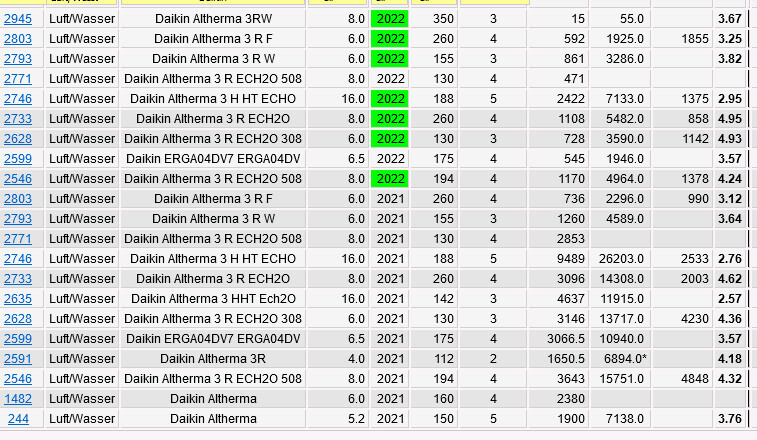
@tomtom79 : The average annual performance factor values in the screenshot are 3.8 😎. You’re right, supply temperature info would be helpful.
D
Deliverer5 Mar 2022 15:34HoisleBauer22 schrieb:
but my general contractor wants to save money No, he wants to charge you more money for the standard version. That’s the difference. It might be about 5 euros more material per square meter and one more minute of labor. Ask him to show you his calculation.Similar topics