
ᐅ Extending electrical outlets in the kitchen and relocating a ceiling light fixture in a concrete ceiling
Created on: 17 Feb 2022 01:21
H
HubiTrubi40H
HubiTrubi4017 Feb 2022 01:21Hello everyone,
I’m currently working on some electrical installations. I want to increase the number of power outlets in the kitchen or replace some single outlets with doubles, or doubles with triples. We would also like to split the living room ceiling light (center of the room) into two lights, each connected from this point and offset by about 2 meters (6.5 feet) (I’ve attached a sketch with arrows showing where the new light connections should go). The painter advised us to take the opportunity to do this flush-mounted before wallpapering. I’ve contacted an electrician who said he could do it. However, this is pushing my budget a bit, so I’m thinking about saving some costs by doing part of the work myself. A friend of mine has experience installing outlets and said we could at least do the preparatory work (drilling holes for outlets, chasing the walls). He connected all the outlets in his own house, so he has some experience. Would it be sufficient to then have a licensed electrician inspect and do an electrical safety check? Otherwise, I could have a friend who is an electrician connect the outlets (would that be sufficient for insurance purposes?).
The electrical company also suggested protecting the circuits with several RCDs (residual current devices), which is important to me. Currently, only the bathroom and partly the upper floor are protected. But that should be possible to do independently of the installation work mentioned above, right?
Another concern I have is chasing the concrete ceiling. Could this be a critical issue? I initially planned to do it myself with an angle grinder, but I read that you really need to be careful because of the reinforcement. I assume the electrician who offered the job knows what he’s doing, right? Are there any alternatives to chasing the concrete? Surface-mounted cable ducts probably don’t look as neat but would be easier to install by myself and likely much cheaper. Otherwise, there’s also wireless solutions, but over such a distance? Each run is about 2 meters (6.5 feet).
Looking forward to your input. Thanks in advance.
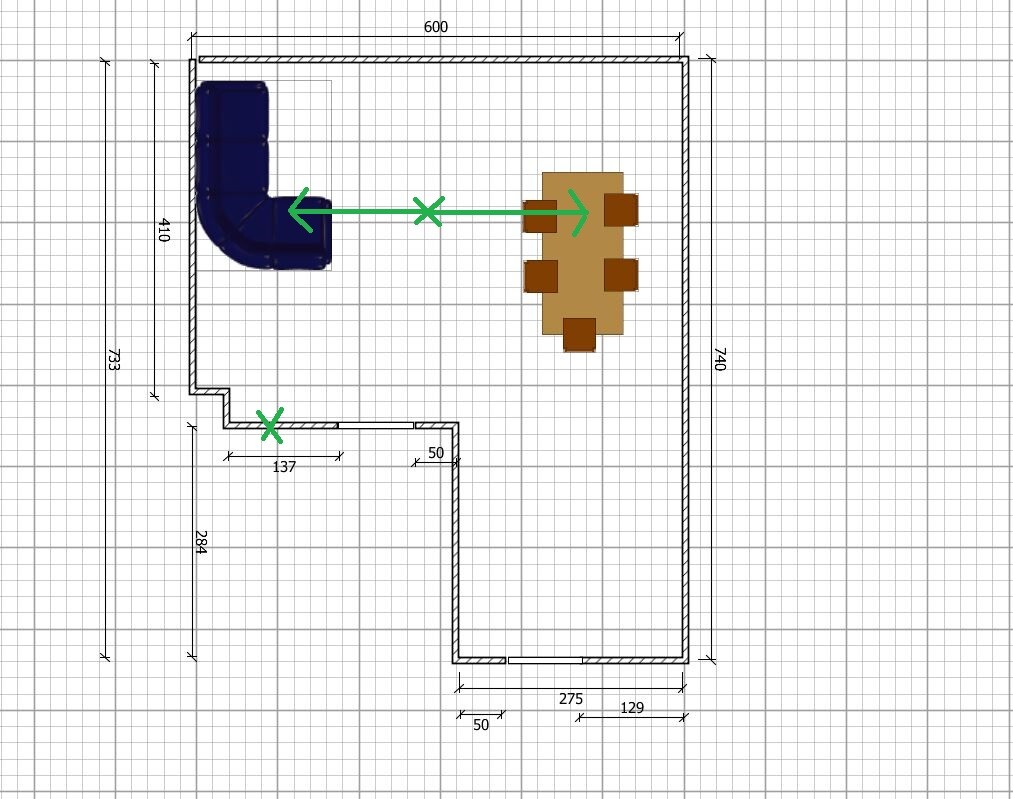
I’m currently working on some electrical installations. I want to increase the number of power outlets in the kitchen or replace some single outlets with doubles, or doubles with triples. We would also like to split the living room ceiling light (center of the room) into two lights, each connected from this point and offset by about 2 meters (6.5 feet) (I’ve attached a sketch with arrows showing where the new light connections should go). The painter advised us to take the opportunity to do this flush-mounted before wallpapering. I’ve contacted an electrician who said he could do it. However, this is pushing my budget a bit, so I’m thinking about saving some costs by doing part of the work myself. A friend of mine has experience installing outlets and said we could at least do the preparatory work (drilling holes for outlets, chasing the walls). He connected all the outlets in his own house, so he has some experience. Would it be sufficient to then have a licensed electrician inspect and do an electrical safety check? Otherwise, I could have a friend who is an electrician connect the outlets (would that be sufficient for insurance purposes?).
The electrical company also suggested protecting the circuits with several RCDs (residual current devices), which is important to me. Currently, only the bathroom and partly the upper floor are protected. But that should be possible to do independently of the installation work mentioned above, right?
Another concern I have is chasing the concrete ceiling. Could this be a critical issue? I initially planned to do it myself with an angle grinder, but I read that you really need to be careful because of the reinforcement. I assume the electrician who offered the job knows what he’s doing, right? Are there any alternatives to chasing the concrete? Surface-mounted cable ducts probably don’t look as neat but would be easier to install by myself and likely much cheaper. Otherwise, there’s also wireless solutions, but over such a distance? Each run is about 2 meters (6.5 feet).
Looking forward to your input. Thanks in advance.
G
Gartenfreund17 Feb 2022 03:07Making a hole of the appropriate size next to the existing switch boxes is not a problem. However, the installed switch box is often damaged in the process and should be replaced.
Before using a hammer and chisel, it is important to determine from which side the cable is coming.
Will the electrician accept such DIY work?
You can also connect the lamps using a cord with fixed wiring cable.
If you find the electrician’s costs too high and want to save money, I wonder why you don’t do the wallpapering yourself. It’s really not complicated, and you can save a lot of money.
Before using a hammer and chisel, it is important to determine from which side the cable is coming.
Will the electrician accept such DIY work?
You can also connect the lamps using a cord with fixed wiring cable.
If you find the electrician’s costs too high and want to save money, I wonder why you don’t do the wallpapering yourself. It’s really not complicated, and you can save a lot of money.
Instead of chasing the concrete ceiling, you can install a dropped ceiling. However, this involves more work. You’re not planning to replace the screed above, right? Otherwise, you could have drilled directly upwards.
I would probably have done it like this: a narrow beam towards the dining area, and that’s it. Ceiling lamps in the living room directly above the sofa are not used that often. You can easily compensate with floor lamps and similar.
I would probably have done it like this: a narrow beam towards the dining area, and that’s it. Ceiling lamps in the living room directly above the sofa are not used that often. You can easily compensate with floor lamps and similar.


Yes, you have to find an electrician who will inspect work done by others. They do exist; there is even a whole business model built around this, but I think more electricians do not offer this service.
The electrician from my general contractor did not respond at all when I asked about this.
The electrician from my general contractor did not respond at all when I asked about this.
H
HubiTrubi4017 Feb 2022 22:50Mycraft schrieb:
I don’t see any problems with your plan.I’ve now spoken with the electrician. He could do the channeling in the living room and wire the switches so that the lights can be controlled independently (although I’m wondering if in the end we’ll just use wireless-controlled LED lights anyway). He estimates it should cost around 400 euros. I would handle the preparations in the kitchen myself—installing the boxes, etc.—and he would just do the connections and distribute the circuits on RCDs (residual current devices). It still won’t be cheap, but overall I should be able to manage with a budget of 1500 to 2000 euros.
Is it actually a regulation that if you add an outlet to an existing circuit that doesn’t have RCD protection, you have to install an RCD in that circuit? That’s what the electrician said. Personally, I’m hearing this for the first time. Thanks to everyone!
Similar topics