
T
Thorben8116 Feb 2022 21:53Hello,
We have purchased a house in Denmark (Vejle) with a 2-year-old photovoltaic system on the roof. There are 6 panels, but I can’t identify the exact type. I assume the capacity is around 2 kWp.
Inside the house, we have a Fronius Primo 3.0.1 inverter, which can easily handle double or more of that capacity. There is plenty of additional space on the roof, probably 3 to 5 times more.
We also have an electric car and an EVBox Elvi charger in the house. Our electricity consumption seems quite high even without the electric car—estimated to be over 6,000 to 7,000 kWh per year.
The local company that installed the system seems to be unresponsive and difficult to reach.
My questions:
1. Does it make sense to fully utilize the inverter up to its maximum capacity?
2. Can I hire a different company to upgrade the roof system, or is it essential to use the same installer?
3. I enjoy analyzing data. I could buy a Fronius Smart Switch for around 300 euros, or an SMA Sunny Home Manager 2.0 for twice that price, which also allows control of our dishwasher. I’m leaning towards the SMA.
I look forward to hearing your advice and tips!
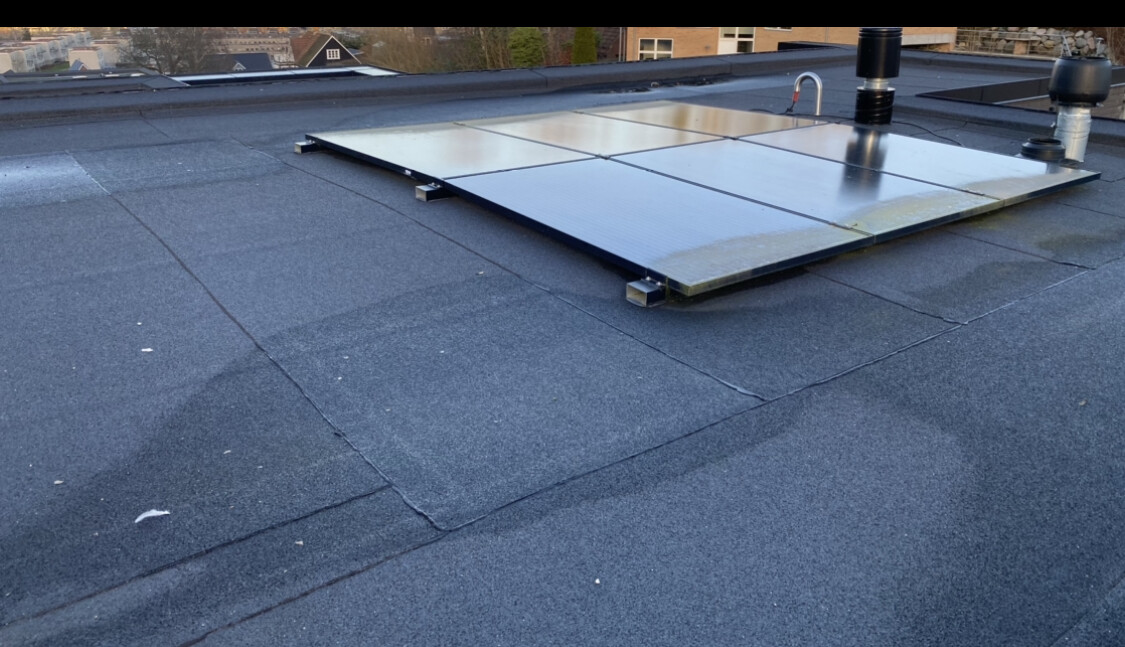
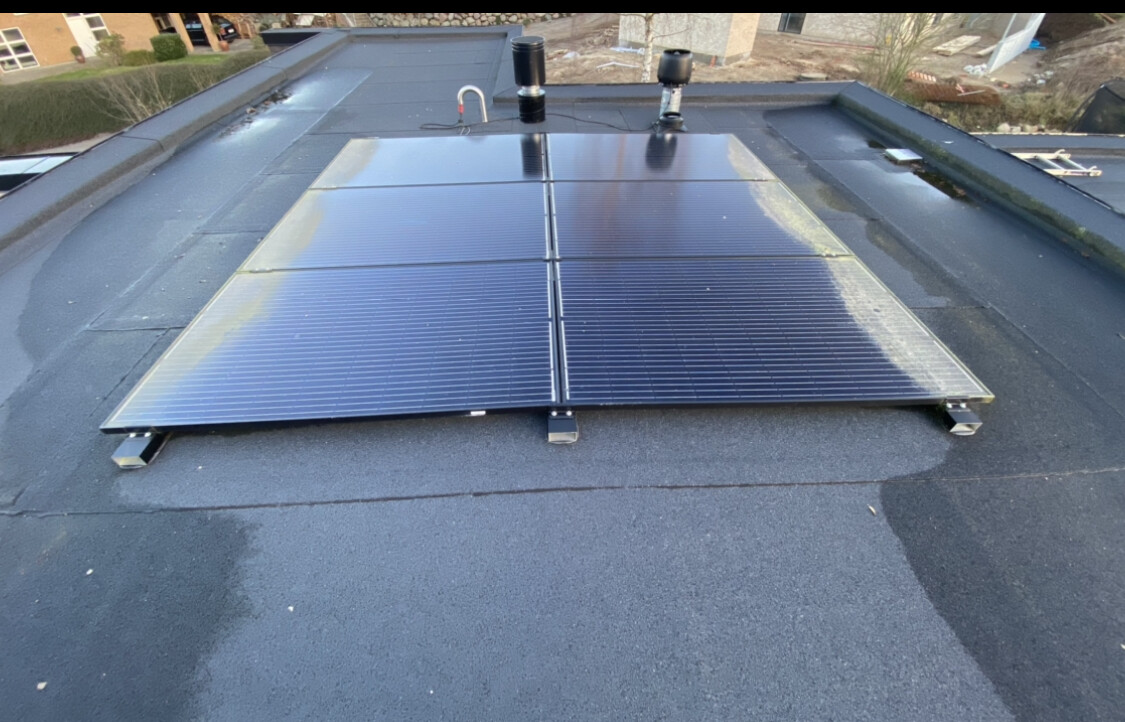
We have purchased a house in Denmark (Vejle) with a 2-year-old photovoltaic system on the roof. There are 6 panels, but I can’t identify the exact type. I assume the capacity is around 2 kWp.
Inside the house, we have a Fronius Primo 3.0.1 inverter, which can easily handle double or more of that capacity. There is plenty of additional space on the roof, probably 3 to 5 times more.
We also have an electric car and an EVBox Elvi charger in the house. Our electricity consumption seems quite high even without the electric car—estimated to be over 6,000 to 7,000 kWh per year.
The local company that installed the system seems to be unresponsive and difficult to reach.
My questions:
1. Does it make sense to fully utilize the inverter up to its maximum capacity?
2. Can I hire a different company to upgrade the roof system, or is it essential to use the same installer?
3. I enjoy analyzing data. I could buy a Fronius Smart Switch for around 300 euros, or an SMA Sunny Home Manager 2.0 for twice that price, which also allows control of our dishwasher. I’m leaning towards the SMA.
I look forward to hearing your advice and tips!

What is the legal situation in Denmark? In Germany, depending on the age of the system, you cannot expand the installation and must build and register a new one.
If there are no legal issues, I would have another company fully equip the roof with a new system, including an additional inverter.
Which one you choose is a matter of preference. You will have enough output so that controlling the dishwasher is neither necessary nor practical.
If there are no legal issues, I would have another company fully equip the roof with a new system, including an additional inverter.
Which one you choose is a matter of preference. You will have enough output so that controlling the dishwasher is neither necessary nor practical.
T
Thorben8117 Feb 2022 10:30rick2018 schrieb:
What is the legal situation in Denmark? In Germany, depending on the system’s age, you may not be allowed to expand it and have to build and register a new one.
If it’s not legally an issue, I would have another company fully cover the roof with a new system, including an additional inverter.
Which one you choose is a matter of preference. You will generate enough output, so controlling the dishwasher is neither necessary nor practical. I won’t receive any subsidies or increased feed-in tariffs anyway, so from a legal standpoint, it probably doesn’t matter whether I expand or not.
I just think I should fully utilize the current infrastructure (inverter, wiring, etc.) by installing additional panels. As far as I understand, they only cost about 1000 euros/kWp (kilowatt peak).

T
Thorben8126 Feb 2022 14:07In the meantime, I received a response from the local company here in Vejle/DK. They said they simply have no time for any additional projects, so I’m on my own. Crazy.
How realistic is it to set up a basic frame structure (or flat) and 6 to 9 additional panels? I would then hire an electrician for the connection.
I have a fairly large roof area that I could fully utilize, but then I would need to replace the inverter and probably also consider battery storage soon. Feed-in tariffs are practically nonexistent here.
Many thanks for your assessment!!!!
How realistic is it to set up a basic frame structure (or flat) and 6 to 9 additional panels? I would then hire an electrician for the connection.
I have a fairly large roof area that I could fully utilize, but then I would need to replace the inverter and probably also consider battery storage soon. Feed-in tariffs are practically nonexistent here.
Many thanks for your assessment!!!!
T
Thorben811 Mar 2022 09:25Hello again.
By now, I have a rough idea of which panels I have. They are from "JA Solar" and belong to the JAM60S02 series. Unfortunately, I don’t know the exact model (300, 305, 310, 315, or 320 Watt). I have quite a large roof area (3 flat roofs at different heights) and could also angle the panels, for example, to increase the “production window” and maximize the inverter’s capacity.
Unfortunately, these JAM60S02 panels are not available anywhere, so I will probably have to sell the existing panels?!
Additionally, I would really like to install a smart meter, either SMA Solar, Fronius, or something entirely different.
The Fronius Primo 3.01 is a single-phase inverter.
What is your first impression?
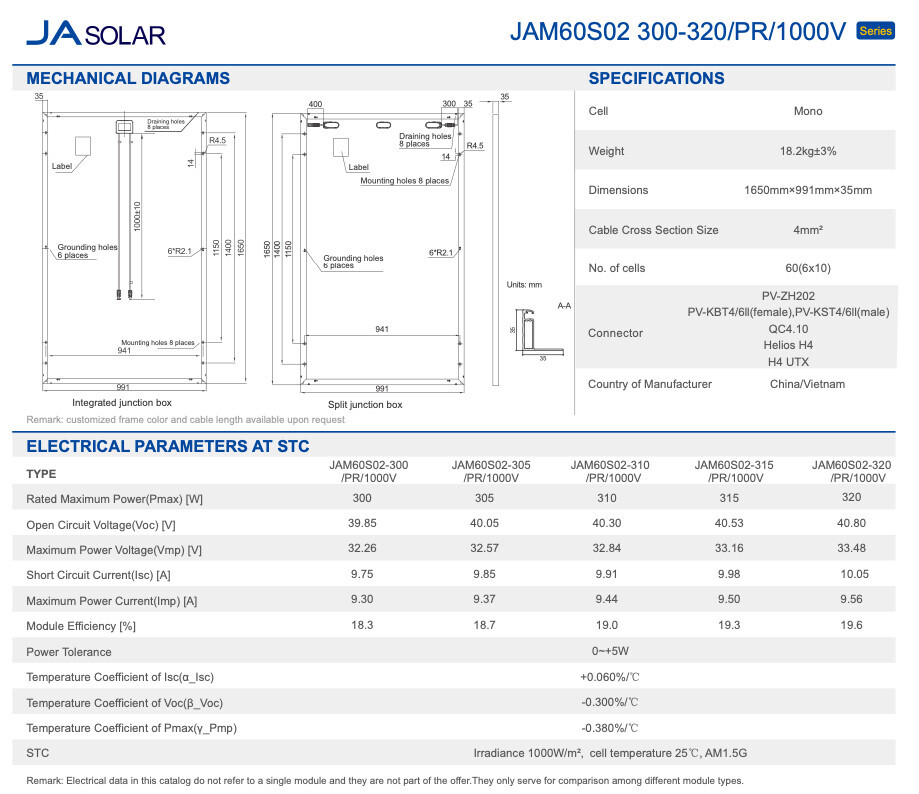
By now, I have a rough idea of which panels I have. They are from "JA Solar" and belong to the JAM60S02 series. Unfortunately, I don’t know the exact model (300, 305, 310, 315, or 320 Watt). I have quite a large roof area (3 flat roofs at different heights) and could also angle the panels, for example, to increase the “production window” and maximize the inverter’s capacity.
Unfortunately, these JAM60S02 panels are not available anywhere, so I will probably have to sell the existing panels?!
Additionally, I would really like to install a smart meter, either SMA Solar, Fronius, or something entirely different.
The Fronius Primo 3.01 is a single-phase inverter.
What is your first impression?
Similar topics