
Hello everyone,
maybe this thread is a bit early since we don’t have a planned floor plan yet. But we would still appreciate your advice. First of all, because this is probably the most important information: We are planning with a budget of 600,000 euros for the house plus additional building-related costs. We have received approval to purchase the plot shown here. We will sign the purchase contract at the end of next week. Now to our problem:
We are very uncertain about which is the better decision for our plot: a (partial) basement with a smaller floor plan (about 130 – 140 m² (1400 – 1500 sq ft)) (Option A), or a slab foundation with a slightly larger floor plan (about 170 m² (1800 sq ft)) (Option B).
I will list the pros and cons as we see them for each option.
Option A:
+ Utility room in the basement frees up space on the ground floor; no noise issues
+ More usable space overall
+ Hobby room can also be used flexibly for gatherings
+ Storage space!
+ Possibility of a double parking space
- Expensive (a full basement is probably unrealistic with our budget; is a partial basement more sensible?)
- Less space on the ground and upper floors
Option B:
+ More living space on the ground and upper floors
+ High potential for cost savings!
+ Possible to use the attic for storage?
- Is there still enough space for a double parking space?
- Possible issues with the plot ratio? If we understand correctly, the footprint of the house may be limited to 143 m² (1540 sq ft) plus 70 m² (750 sq ft) for driveway, garage, etc. My feeling is that the developed area might easily be underestimated and reach the limit quickly.
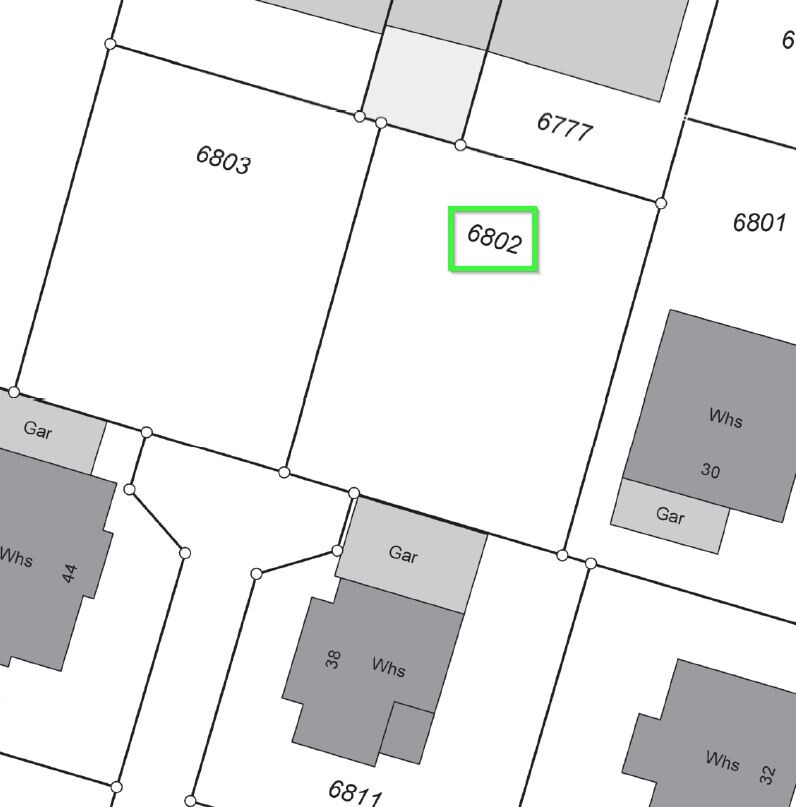
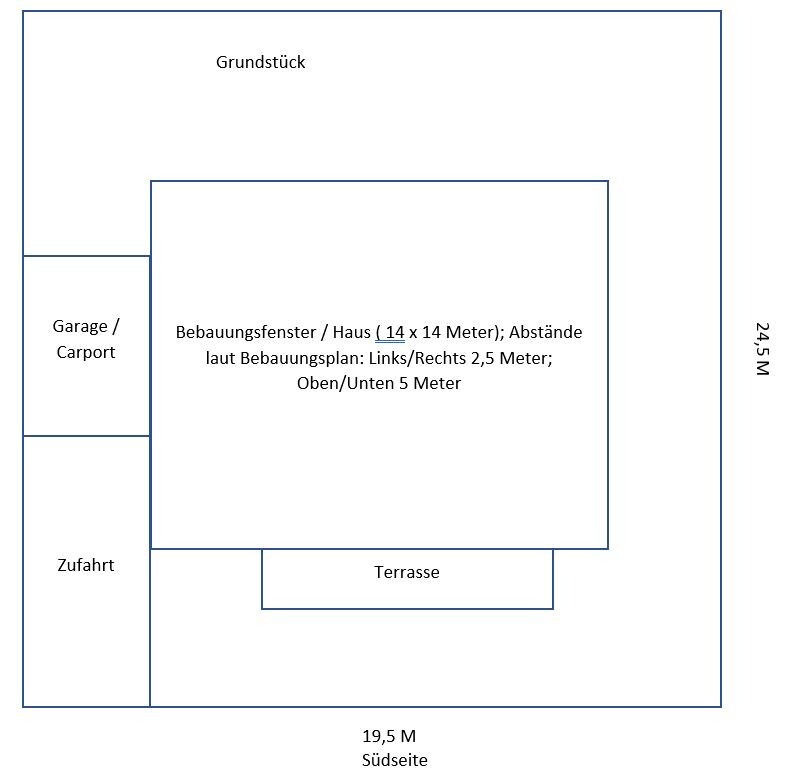
We would be interested in your opinion on how you would build on this plot. I have made a very rough sketch of how we imagine the orientation of the house and placement of parking spaces, etc. I have also attached the site plan and development plan. The questionnaire is mostly filled out, but a “final” floor plan is still missing, as mentioned. This will also largely depend on the question of whether to have a basement or not.
I hope I haven’t forgotten anything...
Best regards
Development Plan / Restrictions
Plot size 477 m² (5130 sq ft)
Slope Minimal
Plot ratio (ground coverage ratio) 0.3
Floor area ratio 0.8
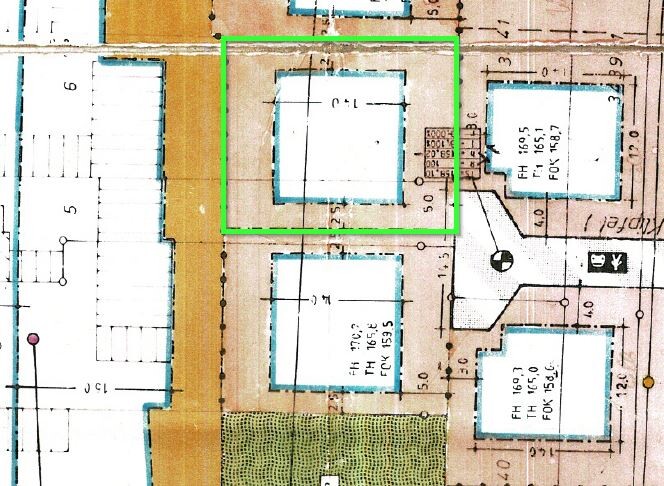
Building envelope, building line, boundary 14 x 14 meters (see image)
Edge development see image
Number of parking spaces unknown
Building height up to 2 full stories
Roof type Hip roof or gable roof 30-40 degrees
Architectural style unknown
Orientation unknown
Maximum height / limits unknown
Other requirements unknown
Homeowners’ Requirements
Architectural style, Roof type Gable or hip roof (open to either)
Basement, number of floors Basement yes/no is the big question. 1.5 – 2 full stories
Number of occupants, ages 2 adults (32 and 33), 1 child (1), 1 more child planned
Room requirements on ground and upper floors Utility room, guest toilet with shower, guest room, study (a study nook might also be sufficient), 2 children’s rooms, master bedroom, bathroom
Office: family use or home office? Both
Overnight guests per year Parents-in-law should be able to stay regularly (about once a month)
Open or closed layout Open kitchen / living / dining area
Conservative or modern design Exterior should be clean and simple – relatively straightforward
Open kitchen, kitchen island Yes, at least a peninsula
Number of dining places in the kitchen No dining space needed in the kitchen; the dining room should have space for a large table
Fireplace If budget allows; not mandatory
Music / sound wall 11.2.4 sound system + TV to be integrated into the study (or guest room)
Balcony, roof terrace Not necessary
Garage, carport Double carport or double garage would be nice if space allows; otherwise 2 parking spaces in tandem
Utility garden, greenhouse Not planned
Other wishes / special features / daily routine, including reasons why some options are preferred or rejected Smart home with KNX (or Loxone); controlled ventilation system, photovoltaic system (+ possibly battery storage), air-to-water heat pump
House Design
Who did the planning:
- Planner from a construction company
- Architect
- Do-it-yourself
What do you especially like? Why?
What do you dislike? Why?
Estimated cost according to architect/planner:
Personal budget limit for the house, including equipment:
Preferred heating technology: Air-to-water heat pump + photovoltaic system (+ possibly small battery storage)
If you have to give up something, which details or features
- can you do without:
- cannot do without:
maybe this thread is a bit early since we don’t have a planned floor plan yet. But we would still appreciate your advice. First of all, because this is probably the most important information: We are planning with a budget of 600,000 euros for the house plus additional building-related costs. We have received approval to purchase the plot shown here. We will sign the purchase contract at the end of next week. Now to our problem:
We are very uncertain about which is the better decision for our plot: a (partial) basement with a smaller floor plan (about 130 – 140 m² (1400 – 1500 sq ft)) (Option A), or a slab foundation with a slightly larger floor plan (about 170 m² (1800 sq ft)) (Option B).
I will list the pros and cons as we see them for each option.
Option A:
+ Utility room in the basement frees up space on the ground floor; no noise issues
+ More usable space overall
+ Hobby room can also be used flexibly for gatherings
+ Storage space!
+ Possibility of a double parking space
- Expensive (a full basement is probably unrealistic with our budget; is a partial basement more sensible?)
- Less space on the ground and upper floors
Option B:
+ More living space on the ground and upper floors
+ High potential for cost savings!
+ Possible to use the attic for storage?
- Is there still enough space for a double parking space?
- Possible issues with the plot ratio? If we understand correctly, the footprint of the house may be limited to 143 m² (1540 sq ft) plus 70 m² (750 sq ft) for driveway, garage, etc. My feeling is that the developed area might easily be underestimated and reach the limit quickly.
We would be interested in your opinion on how you would build on this plot. I have made a very rough sketch of how we imagine the orientation of the house and placement of parking spaces, etc. I have also attached the site plan and development plan. The questionnaire is mostly filled out, but a “final” floor plan is still missing, as mentioned. This will also largely depend on the question of whether to have a basement or not.
I hope I haven’t forgotten anything...
Best regards
Development Plan / Restrictions
Plot size 477 m² (5130 sq ft)
Slope Minimal
Plot ratio (ground coverage ratio) 0.3
Floor area ratio 0.8
Building envelope, building line, boundary 14 x 14 meters (see image)
Edge development see image
Number of parking spaces unknown
Building height up to 2 full stories
Roof type Hip roof or gable roof 30-40 degrees
Architectural style unknown
Orientation unknown
Maximum height / limits unknown
Other requirements unknown
Homeowners’ Requirements
Architectural style, Roof type Gable or hip roof (open to either)
Basement, number of floors Basement yes/no is the big question. 1.5 – 2 full stories
Number of occupants, ages 2 adults (32 and 33), 1 child (1), 1 more child planned
Room requirements on ground and upper floors Utility room, guest toilet with shower, guest room, study (a study nook might also be sufficient), 2 children’s rooms, master bedroom, bathroom
Office: family use or home office? Both
Overnight guests per year Parents-in-law should be able to stay regularly (about once a month)
Open or closed layout Open kitchen / living / dining area
Conservative or modern design Exterior should be clean and simple – relatively straightforward
Open kitchen, kitchen island Yes, at least a peninsula
Number of dining places in the kitchen No dining space needed in the kitchen; the dining room should have space for a large table
Fireplace If budget allows; not mandatory
Music / sound wall 11.2.4 sound system + TV to be integrated into the study (or guest room)
Balcony, roof terrace Not necessary
Garage, carport Double carport or double garage would be nice if space allows; otherwise 2 parking spaces in tandem
Utility garden, greenhouse Not planned
Other wishes / special features / daily routine, including reasons why some options are preferred or rejected Smart home with KNX (or Loxone); controlled ventilation system, photovoltaic system (+ possibly battery storage), air-to-water heat pump
House Design
Who did the planning:
- Planner from a construction company
- Architect
- Do-it-yourself
What do you especially like? Why?
What do you dislike? Why?
Estimated cost according to architect/planner:
Personal budget limit for the house, including equipment:
Preferred heating technology: Air-to-water heat pump + photovoltaic system (+ possibly small battery storage)
If you have to give up something, which details or features
- can you do without:
- cannot do without:
W
WilderSueden8 Feb 2022 08:42You know the usual suspects once you have read quite a bit there yourself.
Why are you so focused on a prefabricated house? Fast, simple, affordable, everything from a single source?
These are just marketing promises; the reality will be quite different.
Why are you so focused on a prefabricated house? Fast, simple, affordable, everything from a single source?
These are just marketing promises; the reality will be quite different.
S
SandyBlack8 Feb 2022 08:48We have not made a final decision yet. We are also in talks with architects.
However, the biggest factor in favor of a prefabricated house for us is the price guarantee.
We are concerned that if we build with an architect, the prices of the components could increase so much that our plan would no longer be feasible. We have already spoken with an architect who came highly recommended and is known for very accurate cost estimates. But even he told us beforehand that he can no longer guarantee this in the current situation, as they themselves are repeatedly surprised by price increases—especially in terms of their magnitude.
With prefabricated house suppliers, we feel we can plan better using the quoted price. We make sure that the price guarantee lasts longer than the construction warranty.
But as I said, traditional masonry construction is not entirely off the table.
However, the biggest factor in favor of a prefabricated house for us is the price guarantee.
We are concerned that if we build with an architect, the prices of the components could increase so much that our plan would no longer be feasible. We have already spoken with an architect who came highly recommended and is known for very accurate cost estimates. But even he told us beforehand that he can no longer guarantee this in the current situation, as they themselves are repeatedly surprised by price increases—especially in terms of their magnitude.
With prefabricated house suppliers, we feel we can plan better using the quoted price. We make sure that the price guarantee lasts longer than the construction warranty.
But as I said, traditional masonry construction is not entirely off the table.
A
altoderneu8 Feb 2022 08:58SandyBlack schrieb:
If you want a basement and the prefab house provider doesn’t offer that – would that be a deal breaker when choosing? ANY provider who doesn’t deliver what YOU want should be removed from the selection.
The real question is how to best align your budget, planning permission requirements, and wish list...
W
WilderSueden8 Feb 2022 09:04I think you’re mixing up a few topics. Basically, there are two main ways to build:
1. With a general contractor/general builder and a fixed price. In this case, a single contractor handles everything and guarantees you a price based on the scope of work.
2. With individual contracts: here, you (or the architect) prepare a tender according to your specifications and then award the individual trades to the craftsmen offering the best price.
Prefab house manufacturers are just a specific type of general contractor; the basic principle is the same in solid construction. What matters is that your desired standard corresponds to the usual standard, and that you don’t make many upgrades later on. Upgrades tend to be quite expensive with a general contractor.
With many prefab house manufacturers, price control is more of an illusion. It starts during the offer phase—our initial quote was more than €100,000 (over $100,000) higher than the catalogue price, even though we hadn’t selected any luxury upgrades. Some items in the offers are simply ridiculous. For example, a €100/sq m (€100 per square meter) surcharge (!) for vinyl flooring instead of standard carpet—the vinyl must be laying on a gold leaf underlay. This is how customers get overcharged. Of course, you can remove these extras and hire those trades yourself, but then you become a private construction manager.
Earthworks are rarely included by prefab house providers. Often, basic costs like those for the architect or waste disposal are missing as well. The latter can be quite a hassle; a friend of mine spent evenings sorting the dumpsters because mixed waste is the most expensive.
Long story short: just because something has “prefab” in the name doesn’t mean it actually is. And a price guarantee always depends on exactly what is included.
1. With a general contractor/general builder and a fixed price. In this case, a single contractor handles everything and guarantees you a price based on the scope of work.
2. With individual contracts: here, you (or the architect) prepare a tender according to your specifications and then award the individual trades to the craftsmen offering the best price.
Prefab house manufacturers are just a specific type of general contractor; the basic principle is the same in solid construction. What matters is that your desired standard corresponds to the usual standard, and that you don’t make many upgrades later on. Upgrades tend to be quite expensive with a general contractor.
With many prefab house manufacturers, price control is more of an illusion. It starts during the offer phase—our initial quote was more than €100,000 (over $100,000) higher than the catalogue price, even though we hadn’t selected any luxury upgrades. Some items in the offers are simply ridiculous. For example, a €100/sq m (€100 per square meter) surcharge (!) for vinyl flooring instead of standard carpet—the vinyl must be laying on a gold leaf underlay. This is how customers get overcharged. Of course, you can remove these extras and hire those trades yourself, but then you become a private construction manager.
Earthworks are rarely included by prefab house providers. Often, basic costs like those for the architect or waste disposal are missing as well. The latter can be quite a hassle; a friend of mine spent evenings sorting the dumpsters because mixed waste is the most expensive.
Long story short: just because something has “prefab” in the name doesn’t mean it actually is. And a price guarantee always depends on exactly what is included.
S
SandyBlack8 Feb 2022 09:19Sorry, I actually used the term turnkey builder synonymously with general contractor 🙂.
So, our favorite option is to build with a general contractor (GC) / turnkey builder (what is the difference there?). We are quite open regarding whether to use timber frame construction or solid/masonry construction.
So far, we have only had initial discussions with various providers. We understand that upgrading packages can be a potential pitfall, but there are also providers who, for example, offer preliminary selections or provide detailed cost information for upgrade components in advance.
100,000 euros is obviously a lot... May I ask who you built with and whether you were satisfied apart from the upgrades?
Feel free to send a private message if that’s preferred here.
We are always happy to receive recommendations 😉
So, our favorite option is to build with a general contractor (GC) / turnkey builder (what is the difference there?). We are quite open regarding whether to use timber frame construction or solid/masonry construction.
So far, we have only had initial discussions with various providers. We understand that upgrading packages can be a potential pitfall, but there are also providers who, for example, offer preliminary selections or provide detailed cost information for upgrade components in advance.
100,000 euros is obviously a lot... May I ask who you built with and whether you were satisfied apart from the upgrades?
Feel free to send a private message if that’s preferred here.
We are always happy to receive recommendations 😉
W
WilderSueden8 Feb 2022 09:44We decided against one of the large providers and chose a smaller general contractor from the region instead. So far, I’m quite satisfied. We experienced some delays with site development, which caused us to lose our price guarantee while prices at the same time soared. However, the general contractor had secured most of the costs with fixed-price agreements, and we managed with a small additional charge (€1,500) for the carpenter. It would probably have been different with a prefabricated house supplier.
It was also important to me that the general contractor handles almost everything: earthworks, energy consultant services, architectural planning, and temporary construction power.
It was also important to me that the general contractor handles almost everything: earthworks, energy consultant services, architectural planning, and temporary construction power.
Similar topics