
Hello dear forum,
For quite some time, we had been toying with the idea of extending our single-family home (built in 1962), which we purchased in 2014/15, and finally decided to start concrete planning with an architect based on our needs and ideas.
Background: We bought the house in 2014 in a “dilapidated” condition. With the help of friends, acquaintances, and generous tradespeople, we carried out a full renovation ourselves over three months (floors, plaster, electrical, water/sewage/heating pipes, bathrooms), alongside our regular jobs, completely transforming the property. So far, so good. Even then, we knew this wouldn’t be the end; with children arriving, we would sooner or later have to take action again.
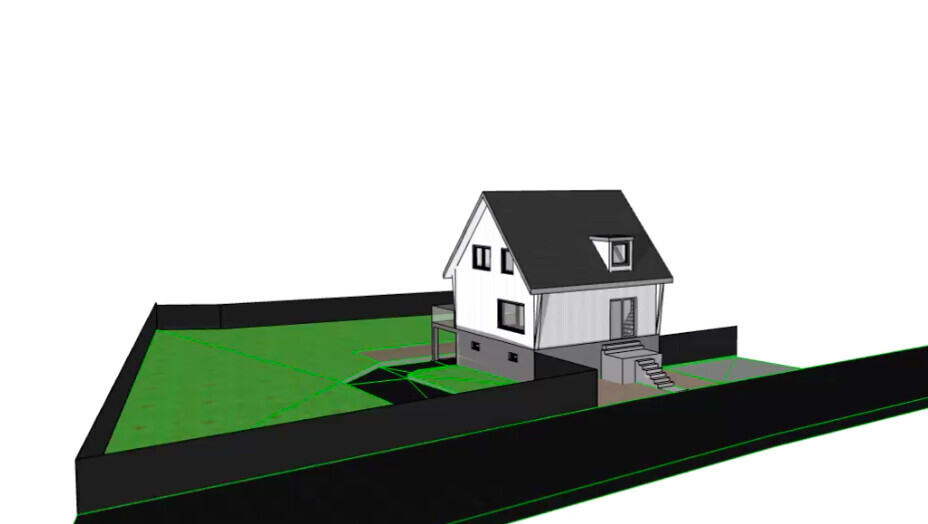
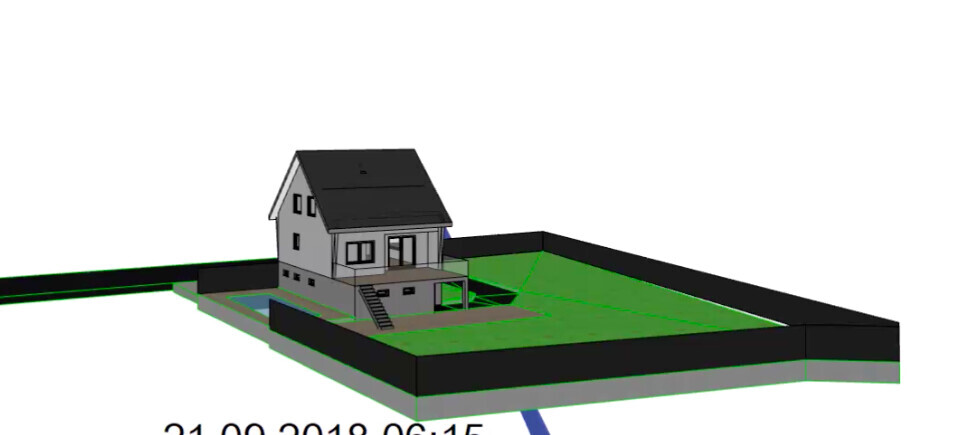
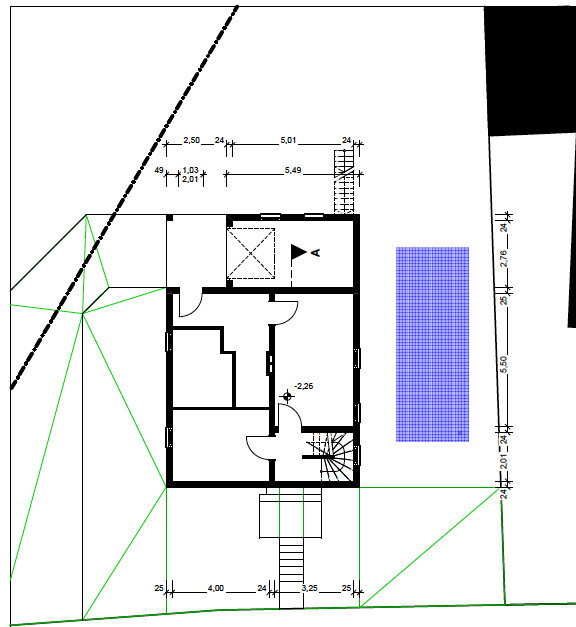
The house is located right next to my parents-in-law, at the edge of a small woodland (forest to the south). Since we have a very good relationship with my wife’s parents and hardly used the side of the property facing them, my parents-in-law built a double garage (with two adjacent parking spaces) and a pool there in 2019 (which we didn’t really oppose). Building in that direction is therefore practically ruled out (because of the pool and garage). On the other side of the house (and shown in the basement plans) is the city of Bonn’s main water supply line with protective zones of 4m (13 feet) in both directions, which also significantly limits the extension area. Thus, we can effectively only extend on the existing footprint and towards the rear.
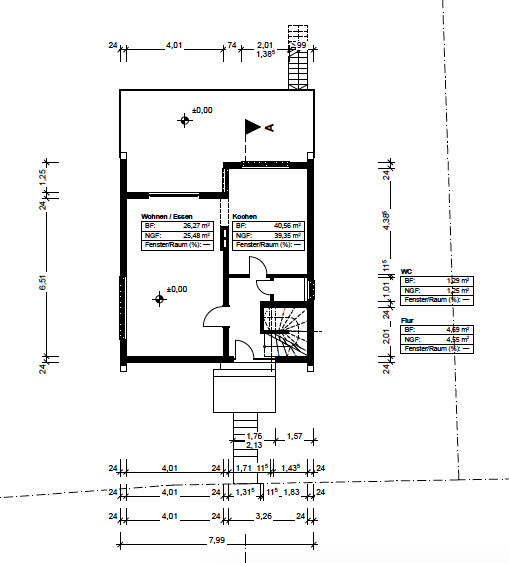
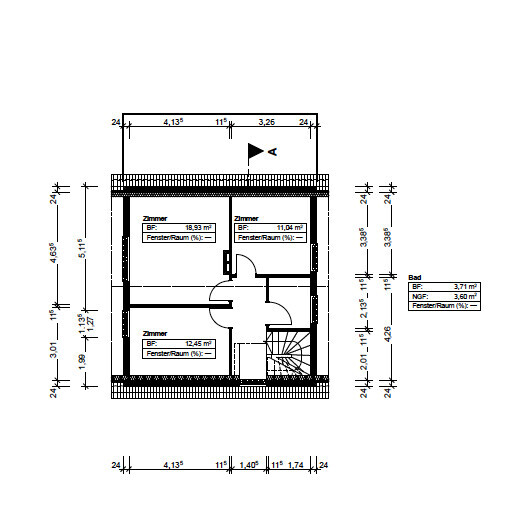
Here are the current plans of the property (consisting of basement – essentially a cellar –, ground floor, and upper floor). The house also has a converted attic but it is not worth mentioning.
Basement:
Ground Floor:
Upper Floor:
We have now lived in the house for several years and know our routines and needs quite well. Based on this, we have filled out the following form about our space requirements to share our needs as clearly as possible with you.
Building regulations / restrictions
Lot size –
1023 m2 (about 11,000 sq ft)
Slope:
No
Floor area ratio (FAR):
Not listed in the online zoning plan of the city of Bonn → Fits into the neighbourhood (smallest house on the street). The architect has already visited the street and gained a good overview.
Floor space index (FSI):
Same as floor area ratio
Building framework, building line, and boundary:
Existing building already slightly outside the building line due to protective zones of the Wahnbachtalsperre reservoir
Edge development:
Garage and pool added in 2019, coordinated with neighbours (parents-in-law) and approved by the city
(Plaster, floors, electrical, heating pipes, and water lines)
3
Number of stories:
Neighbouring houses all at least 2.5 stories
Roof style:
Various along the street: flat roof, shed roof, pitched roof
Architectural style:
Flexible
Orientation:
Terrace faces south
Maximum height / restrictions:
Considered by the architect; due to §§33/34 (local planning laws) there is quite a bit of “headroom” for height
Additional requirements
8m (26 ft) protective zone (4 m (13 ft) each side) to the main water supply line running through the property (marked in the basement plans).
Client requirements
Architectural style, roof type, building type
Existing building from 1962, fully renovated in 2015 (plaster, floors, electrical, heating pipes, and water lines) with DIY and tradespeople for specialist work
Extension of the existing living area (approx. 85 m2 (900 sq ft)) by adding an extension and changing the floor plans. Stylistically, we want a good mix of the original (classic 1962 house) with modern elements and a rather linear extension with lots of glass and natural light.
Basement, number of floors
Basement already exists and will be needed + flexible number of floors (to meet the relaxed family lifestyle we want)
Number and age of occupants
4 persons:
Parents (31/32 years)
Children (2 daughters, 3 and 1 years)
2 dogs
Space requirements on ground and upper floors
The ground floor should be the family living area with everything it entails (kitchen, dining room, living & daily living area)
The upper floor should have at least space for the girls with their own bathroom. There is already a large office room included.
The plans also include an attic, which will be expanded and developed. It will have room for the master bedroom, an en-suite bathroom, and a large roof terrace.
Office: family use or home office?
Used as a home office (both my wife and I work on laptops and can work from anywhere)
Guests overnight annually
Limited to few
Open or closed layout
We are quite flexible here; both have their advantages and disadvantages. Currently the ground and attic floors are rather open, the upper floor is more closed (children’s rooms, office, bathroom)
Conservative or modern construction
Rather modern construction with many windows and views into nature (the house is directly at the forest edge with green views)
Open kitchen, kitchen island
The kitchen is already quite open with a passageway to the living/dining area. We want to maintain this for communication with guests (we like to entertain) or to create a lively atmosphere in the ground floor (“family living space”). We currently plan to expand the kitchen by 110–120 cm (43–47 inches) towards the terrace/dining room area with a half-island for workspace, buffet, counter, or coffee bar.
Number of dining seats
Daily use for 4, about 15 for Christmas, around 8 for regular guest evenings
Fireplace
Still considering, depending on budget.
Music / stereo wall
No
Balcony, roof terrace
Roof terrace in the attic adjacent to the bedroom (for mild summer evenings with a good glass of wine). A balcony/terrace on the ground floor is planned to extend family and guest space and allow outdoor dining in summer.
Garage, carport
Well covered due to existing basement garage and a new garage built in 2020 with two parking spaces in front
Utility garden, greenhouse
Not needed or partially already developed on the property over the last 7 years (small beds and a chicken coop with run)
Other wishes / special features / daily routine, also reasons why certain things should or should not be included
We want to design the house so that it suits our family’s needs for the next 20 years.
Additionally, we have considered designing the house so it could be divided into two separate living units (in case we live abroad for longer periods or need less space as we age, enabling rental possibilities). Access to the second unit would be via an external staircase on the right side of the building.
Living Unit 1 (LU1) would be the entire ground floor plus stairs to the upper floor and the directly adjacent room and bathroom. This area would be separated off in the hallway.
Living Unit 2 (LU2) would then be the other half of the upper floor plus the entire attic with roof terrace.
From our perspective, both units would be fully functional and rentable. LU1 would be more than sufficient for us in old age.
House design
Who designed the plans:
Architect, based on our wishes and partially for sustainability reasons planned as timber frame construction.
What do you like most? Why?
Overall, the amount of windows/glass facing the forest. The location was a major plus for us at the time (end of the street bordering a small forest).
The attic with the terrace is also very appealing. The office on the upper floor is great and can be shared by both of us (possibly adding a partition wall). The open kitchen towards the dining room and the additional balcony are also very nice.
What do you like least? Why?
The access to the potential second unit via the external staircase is currently not ideal but is, in our view, the best solution for having two separate units in the future.
Price estimate according to architect/planner:
Our architect currently estimates roughly €250,000 to €300,000 (complete work by tradespeople)
Personal budget limit for the house including fittings:
We originally bought the house for €280,000. For the extension, we want to take on no more than an additional €150,000 in debt. We currently have about €50,000 in equity saved and are looking to benefit from the anticipated reactivation of the KfW 261/262 programs (according to the energy expert/architect just a matter of time), which could mean an additional €60,000 or €120,000 for the two-unit expansion.
Preferred heating technology:
We currently have an oil heating system. We want and will replace it as part of the renovation. This is not yet finalized with the architect/energy expert. We also want to install photovoltaics or solar thermal systems depending on feasibility and budget. Most likely, it will end up being pellets.
The overall goal is renovation to a KfW 70 EE standard (energy-efficient house).
If you have to give up something, which details/extensions can you do without?
- What can you do without: Only what is necessary.
- What can’t you do without: Anything that gives us a lot of living space for “little” money.
Why is the design the way it is now?
The design is based on ideas and wishes that have accumulated over the years, constantly reassessed and then finally incorporated into the briefing for the architect. The house cannot be demolished because of the garage and pool built by the parents-in-law, and we stand by that.
For various reasons, we prefer to build the extension as timber frame construction.
What is the most important/fundamental question about the floor plan in 130 characters?
Are we overcomplicating things with the house and planned extension, or is this the “best possible” solution given our needs, wishes, and budget?
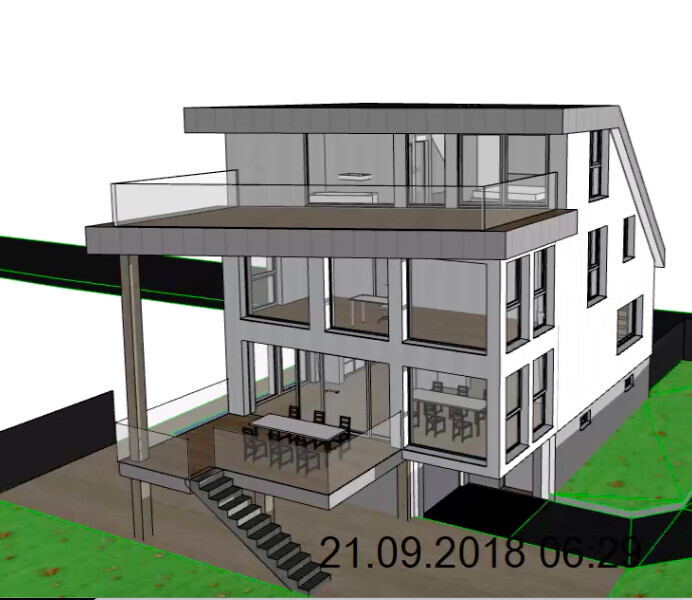
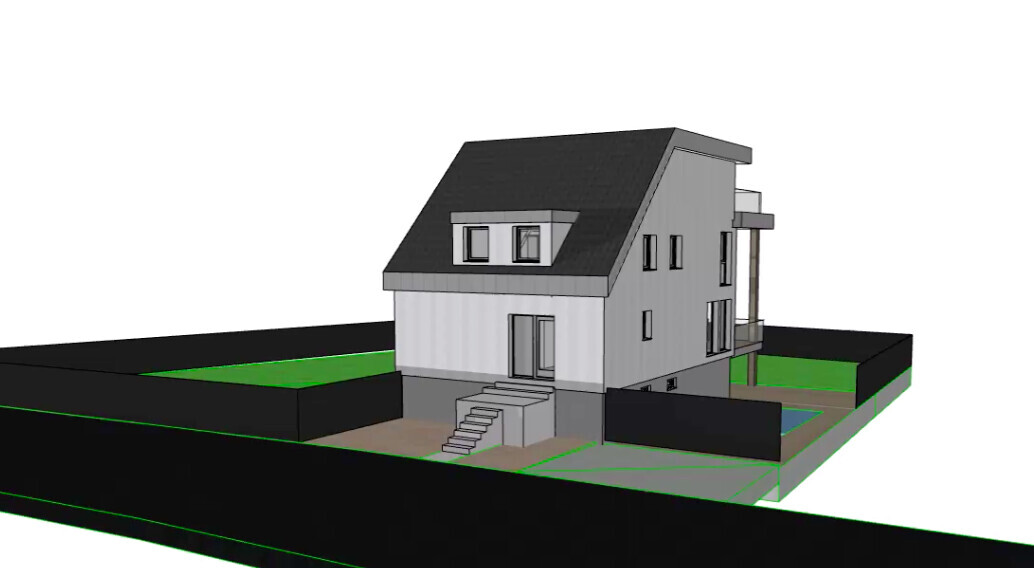
Here are the architect’s current plans, which show a lot. The “oversized” post supports the roof load to cantilever around the corner in front of the garage (the building authority and the Wahnbachtalsperre have indicated they would prefer if the post installed by the previous owner under the terrace disappeared).
Ground Floor:
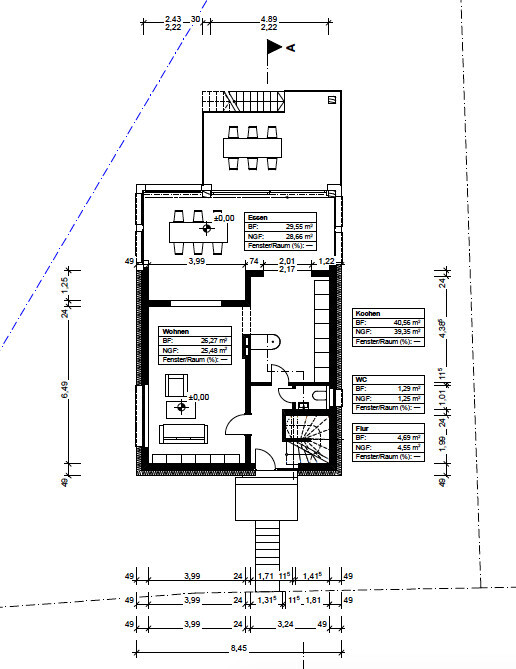
Upper Floor:
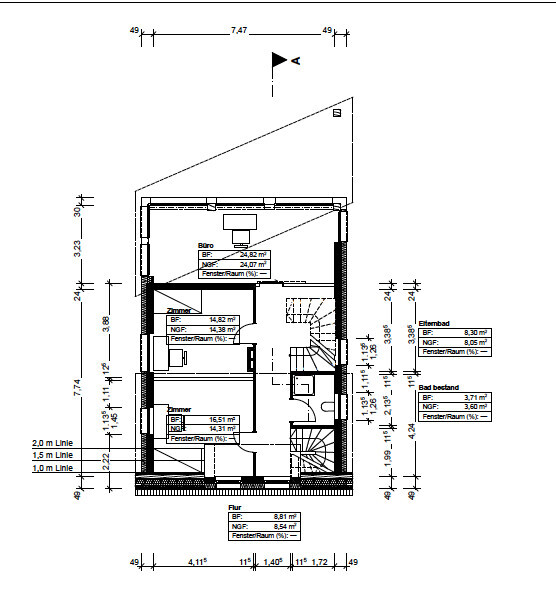
Attic:
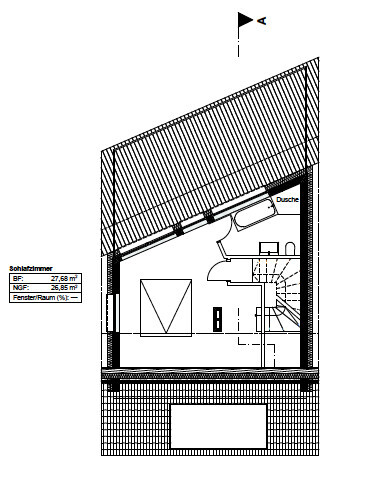
For quite some time, we had been toying with the idea of extending our single-family home (built in 1962), which we purchased in 2014/15, and finally decided to start concrete planning with an architect based on our needs and ideas.
Background: We bought the house in 2014 in a “dilapidated” condition. With the help of friends, acquaintances, and generous tradespeople, we carried out a full renovation ourselves over three months (floors, plaster, electrical, water/sewage/heating pipes, bathrooms), alongside our regular jobs, completely transforming the property. So far, so good. Even then, we knew this wouldn’t be the end; with children arriving, we would sooner or later have to take action again.
The house is located right next to my parents-in-law, at the edge of a small woodland (forest to the south). Since we have a very good relationship with my wife’s parents and hardly used the side of the property facing them, my parents-in-law built a double garage (with two adjacent parking spaces) and a pool there in 2019 (which we didn’t really oppose). Building in that direction is therefore practically ruled out (because of the pool and garage). On the other side of the house (and shown in the basement plans) is the city of Bonn’s main water supply line with protective zones of 4m (13 feet) in both directions, which also significantly limits the extension area. Thus, we can effectively only extend on the existing footprint and towards the rear.
Here are the current plans of the property (consisting of basement – essentially a cellar –, ground floor, and upper floor). The house also has a converted attic but it is not worth mentioning.
Basement:
Ground Floor:
Upper Floor:
We have now lived in the house for several years and know our routines and needs quite well. Based on this, we have filled out the following form about our space requirements to share our needs as clearly as possible with you.
Building regulations / restrictions
Lot size –
1023 m2 (about 11,000 sq ft)
Slope:
No
Floor area ratio (FAR):
Not listed in the online zoning plan of the city of Bonn → Fits into the neighbourhood (smallest house on the street). The architect has already visited the street and gained a good overview.
Floor space index (FSI):
Same as floor area ratio
Building framework, building line, and boundary:
Existing building already slightly outside the building line due to protective zones of the Wahnbachtalsperre reservoir
Edge development:
Garage and pool added in 2019, coordinated with neighbours (parents-in-law) and approved by the city
(Plaster, floors, electrical, heating pipes, and water lines)
3
Number of stories:
Neighbouring houses all at least 2.5 stories
Roof style:
Various along the street: flat roof, shed roof, pitched roof
Architectural style:
Flexible
Orientation:
Terrace faces south
Maximum height / restrictions:
Considered by the architect; due to §§33/34 (local planning laws) there is quite a bit of “headroom” for height
Additional requirements
8m (26 ft) protective zone (4 m (13 ft) each side) to the main water supply line running through the property (marked in the basement plans).
Client requirements
Architectural style, roof type, building type
Existing building from 1962, fully renovated in 2015 (plaster, floors, electrical, heating pipes, and water lines) with DIY and tradespeople for specialist work
Extension of the existing living area (approx. 85 m2 (900 sq ft)) by adding an extension and changing the floor plans. Stylistically, we want a good mix of the original (classic 1962 house) with modern elements and a rather linear extension with lots of glass and natural light.
Basement, number of floors
Basement already exists and will be needed + flexible number of floors (to meet the relaxed family lifestyle we want)
Number and age of occupants
4 persons:
Parents (31/32 years)
Children (2 daughters, 3 and 1 years)
2 dogs
Space requirements on ground and upper floors
The ground floor should be the family living area with everything it entails (kitchen, dining room, living & daily living area)
The upper floor should have at least space for the girls with their own bathroom. There is already a large office room included.
The plans also include an attic, which will be expanded and developed. It will have room for the master bedroom, an en-suite bathroom, and a large roof terrace.
Office: family use or home office?
Used as a home office (both my wife and I work on laptops and can work from anywhere)
Guests overnight annually
Limited to few
Open or closed layout
We are quite flexible here; both have their advantages and disadvantages. Currently the ground and attic floors are rather open, the upper floor is more closed (children’s rooms, office, bathroom)
Conservative or modern construction
Rather modern construction with many windows and views into nature (the house is directly at the forest edge with green views)
Open kitchen, kitchen island
The kitchen is already quite open with a passageway to the living/dining area. We want to maintain this for communication with guests (we like to entertain) or to create a lively atmosphere in the ground floor (“family living space”). We currently plan to expand the kitchen by 110–120 cm (43–47 inches) towards the terrace/dining room area with a half-island for workspace, buffet, counter, or coffee bar.
Number of dining seats
Daily use for 4, about 15 for Christmas, around 8 for regular guest evenings
Fireplace
Still considering, depending on budget.
Music / stereo wall
No
Balcony, roof terrace
Roof terrace in the attic adjacent to the bedroom (for mild summer evenings with a good glass of wine). A balcony/terrace on the ground floor is planned to extend family and guest space and allow outdoor dining in summer.
Garage, carport
Well covered due to existing basement garage and a new garage built in 2020 with two parking spaces in front
Utility garden, greenhouse
Not needed or partially already developed on the property over the last 7 years (small beds and a chicken coop with run)
Other wishes / special features / daily routine, also reasons why certain things should or should not be included
We want to design the house so that it suits our family’s needs for the next 20 years.
Additionally, we have considered designing the house so it could be divided into two separate living units (in case we live abroad for longer periods or need less space as we age, enabling rental possibilities). Access to the second unit would be via an external staircase on the right side of the building.
Living Unit 1 (LU1) would be the entire ground floor plus stairs to the upper floor and the directly adjacent room and bathroom. This area would be separated off in the hallway.
Living Unit 2 (LU2) would then be the other half of the upper floor plus the entire attic with roof terrace.
From our perspective, both units would be fully functional and rentable. LU1 would be more than sufficient for us in old age.
House design
Who designed the plans:
Architect, based on our wishes and partially for sustainability reasons planned as timber frame construction.
What do you like most? Why?
Overall, the amount of windows/glass facing the forest. The location was a major plus for us at the time (end of the street bordering a small forest).
The attic with the terrace is also very appealing. The office on the upper floor is great and can be shared by both of us (possibly adding a partition wall). The open kitchen towards the dining room and the additional balcony are also very nice.
What do you like least? Why?
The access to the potential second unit via the external staircase is currently not ideal but is, in our view, the best solution for having two separate units in the future.
Price estimate according to architect/planner:
Our architect currently estimates roughly €250,000 to €300,000 (complete work by tradespeople)
Personal budget limit for the house including fittings:
We originally bought the house for €280,000. For the extension, we want to take on no more than an additional €150,000 in debt. We currently have about €50,000 in equity saved and are looking to benefit from the anticipated reactivation of the KfW 261/262 programs (according to the energy expert/architect just a matter of time), which could mean an additional €60,000 or €120,000 for the two-unit expansion.
Preferred heating technology:
We currently have an oil heating system. We want and will replace it as part of the renovation. This is not yet finalized with the architect/energy expert. We also want to install photovoltaics or solar thermal systems depending on feasibility and budget. Most likely, it will end up being pellets.
The overall goal is renovation to a KfW 70 EE standard (energy-efficient house).
If you have to give up something, which details/extensions can you do without?
- What can you do without: Only what is necessary.
- What can’t you do without: Anything that gives us a lot of living space for “little” money.
Why is the design the way it is now?
The design is based on ideas and wishes that have accumulated over the years, constantly reassessed and then finally incorporated into the briefing for the architect. The house cannot be demolished because of the garage and pool built by the parents-in-law, and we stand by that.
For various reasons, we prefer to build the extension as timber frame construction.
What is the most important/fundamental question about the floor plan in 130 characters?
Are we overcomplicating things with the house and planned extension, or is this the “best possible” solution given our needs, wishes, and budget?
Here are the architect’s current plans, which show a lot. The “oversized” post supports the roof load to cantilever around the corner in front of the garage (the building authority and the Wahnbachtalsperre have indicated they would prefer if the post installed by the previous owner under the terrace disappeared).
Ground Floor:
Upper Floor:
Attic:
A
aw39_bonn7 Feb 2022 06:47HilfeHilfe schrieb:
Where did the old house go??? Demolition and rebuild?
I somehow can’t recognize the old house in the photo of the new oneFrom the old house, the following remain:
- Basement
- Ground floor foundation walls
- Upper floor walls on the sides and front
Extension:
- Newly constructed roof
- Wider dormer at the front
- A "cube" structure built up on the old outdoor terrace, extending up to the roof ridge, containing the dining room, office, and in the attic floor a bedroom and bathroom
- Attic floor plus roof terrace and posts to support the load of the cantilevered corner of the house (due to a water pipe, see original post)
aw39_bonn schrieb:
Demolition and new build: unrealistic. 160m2 (1,722 sq ft) x 2000 euros already amounts to 320,000 euros.And 2000 euros are never enough.The plans confuse me somewhat as well. I read that you had a major renovation in 2015 and now you want to completely start over again? Or am I mistaken?
Are you planning the second dwelling unit because of the subsidy? Those are exactly the kind of windfall effects that are meant to be avoided 😉 So I wouldn’t count on any future grants because of that.

aw39_bonn schrieb:
Redesigning the front or switching entirely to a flat roof would add a significant amount to the costs.
That’s exactly what I would do, but it will probably fail due to the budget.A
aw39_bonn7 Feb 2022 07:00Ysop*** schrieb:
And 2000 € will never be enough.
The plans confuse me a bit as well. I read that you carried out a major renovation in 2015 and now you want to completely change things again? Or is that a misunderstanding?
Are you planning the second dwelling unit because of funding? That’s usually exactly the kind of unintended effect they want to avoid 😉 So I wouldn’t count on that for possible future subsidy programs. We did a major renovation in the areas that urgently needed it, at a reasonable standard and with about €15,000 (approx. $16,000) material costs 😉 Back then, we just brought the house up to standard knowing we would need more later.
The second dwelling unit is planned as a rental for us in the long term – whether to our children or external tenants is something to decide later. For that reason, the exterior staircase as a separate entrance will be included (not yet shown in the plans).
Ah, okay, the 15k are actually quite manageable 🙂
However, I am quite sure that there will be no subsidies in the new program for a second residential unit that is either intended for rental at some point or never rented, as this was recognized as a completely wrong incentive and has already been criticized as such. However, you might still be lucky this year if the old program continues unchanged.
However, I am quite sure that there will be no subsidies in the new program for a second residential unit that is either intended for rental at some point or never rented, as this was recognized as a completely wrong incentive and has already been criticized as such. However, you might still be lucky this year if the old program continues unchanged.
A
aw39_bonn7 Feb 2022 07:56Ysop*** schrieb:
Ah, okay, the 15k are indeed quite manageable 🙂
However, I am quite certain that there will be no subsidies in the new program for a second residential unit that is intended for rental now or eventually never rented out, because that was a clear wrong incentive and has already been identified as such. You might still be lucky this year if the old program continues unchanged. The question of "if" does not arise; in the long term, we do want to rent it out, also as additional income for retirement. To whom and when are the open questions.
But yes, whether it will still be supported in the new program is uncertain.
Similar topics