
ᐅ New Build KfW 55 EE: Differing Opinions Between Energy Consultant and General Contractor
Created on: 4 Feb 2022 22:19
H
HausJam
Hello everyone,
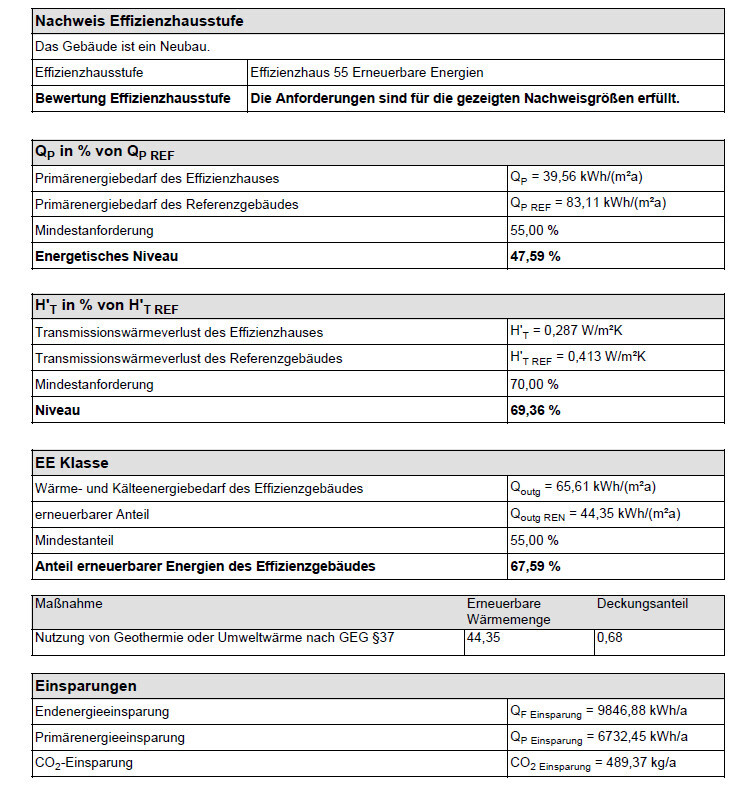
We are currently in the final stages of planning our KfW 55 EE single-family house (the application has already been approved).
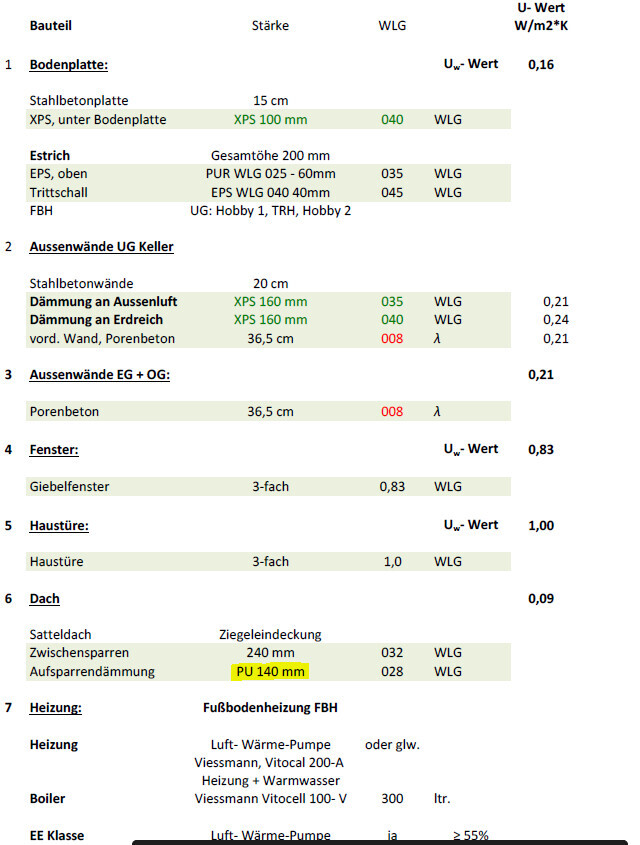
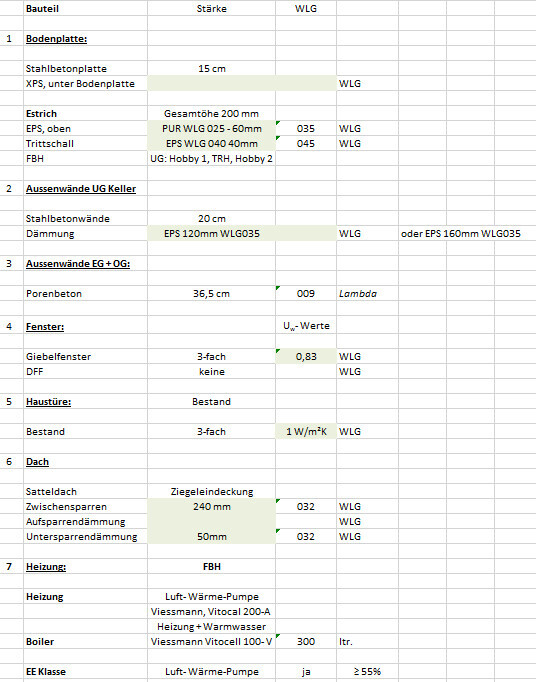
During the planning phase, our main contractor provided the energy consultant with a list of building components, which the consultant then used to complete the KfW 55 EE calculation. However, the energy consultant considers the listed components insufficient and therefore recommends the following changes to meet the KfW 55 EE standard:
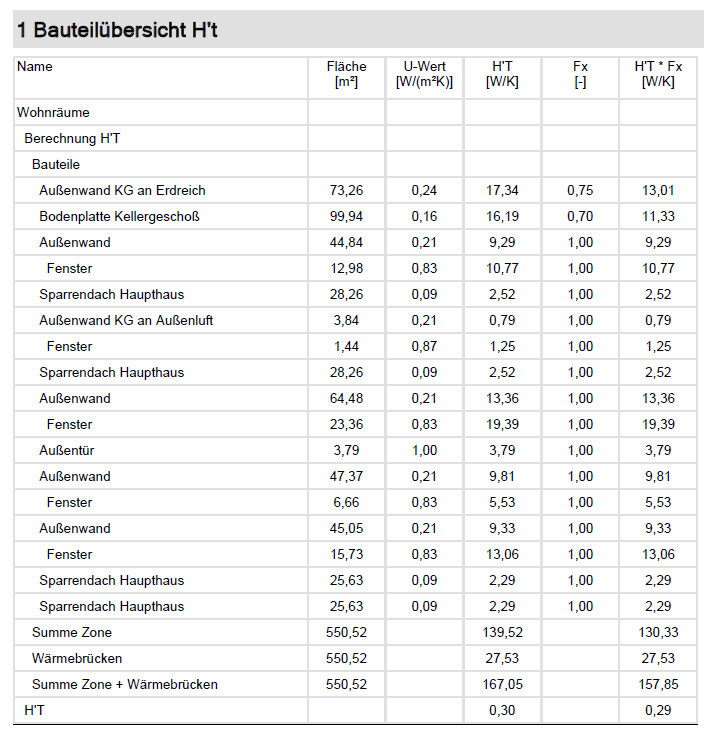
The main contractor now believes that the additional insulation measures are unnecessary and only included because the energy consultant applied a blanket calculation for thermal bridges.
We now have the following questions:
Thanks in advance!
HausJam
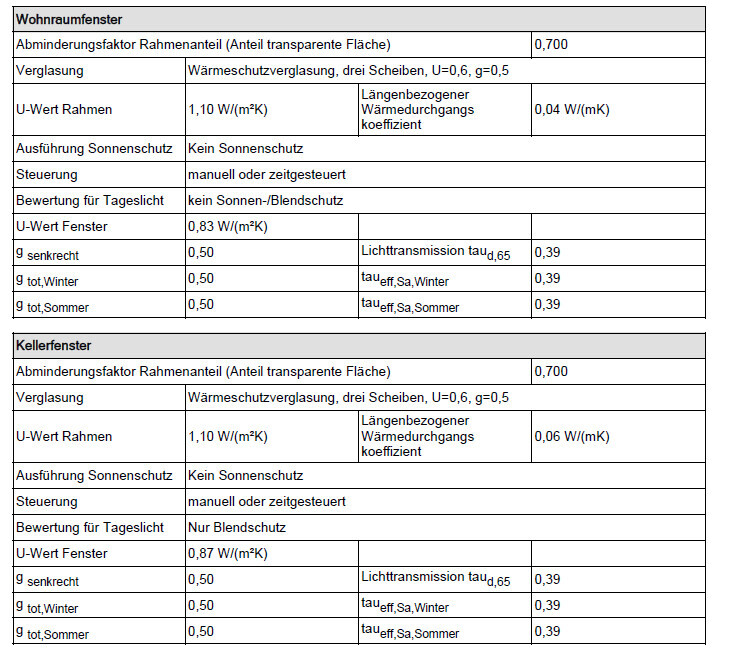
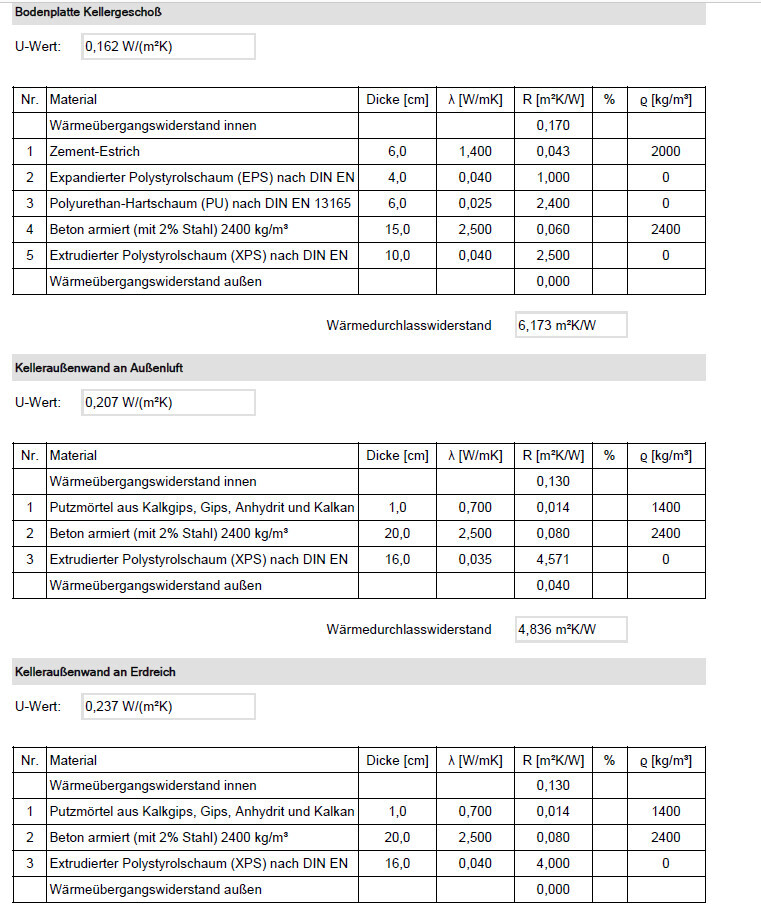
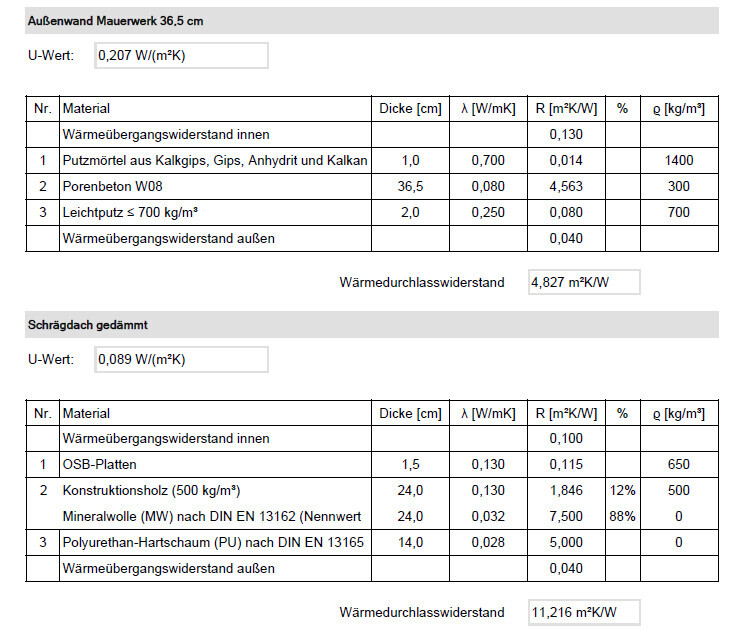
We are currently in the final stages of planning our KfW 55 EE single-family house (the application has already been approved).
During the planning phase, our main contractor provided the energy consultant with a list of building components, which the consultant then used to complete the KfW 55 EE calculation. However, the energy consultant considers the listed components insufficient and therefore recommends the following changes to meet the KfW 55 EE standard:
- Ground slab
- Additional insulation below the ground slab: XPS 100 mm (4 inches)
- Exterior basement walls (north, east, south)
- Insulation: XPS 160 mm (6 inches) instead of EPS 120 mm (5 inches)
- Exterior basement wall (west only) + exterior walls on the ground floor and upper floor
- Aerated concrete 008 instead of 009
- Roof
- Above-rafter insulation PU 140 mm (6 inches) instead of under-rafter insulation 50 mm (2 inches) glass wool
The main contractor now believes that the additional insulation measures are unnecessary and only included because the energy consultant applied a blanket calculation for thermal bridges.
We now have the following questions:
- Are the building components proposed by the main contractor sufficient for a KfW 55 EE house, or are they far from the standard?
- Are the extra measures demanded by the energy consultant unnecessary?
- How much heating cost savings can roughly be expected from the additional insulation?
- Can anyone provide a rough estimate of the costs for the additional measures?
Thanks in advance!
HausJam
parcus schrieb:
2cm (1 inch) air gap?
Where exactly is that? There’s no possibility for external ventilation there, right? In my wall construction: interior plaster, 17.5cm (7 inches) calcium silicate block, 20cm (8 inches) insulation, 2cm (1 inch) air gap, 11.5cm (4.5 inches) facing brick.
Of course, not with plastered surfaces! But then you don’t have mineral wool insulation.
Considering that 1.5 years ago mineral wool with a thermal conductivity of 0.032 W/mK cost me almost 90€ per cubic meter, it was definitely worth it.

TmMike_2 schrieb:
In my wall construction: interior plaster, 17.5cm (7 inches) calcium silicate block, 20cm (8 inches) insulation, 2cm (0.8 inches) air cavity, 11.5cm (4.5 inches) facing brick. Who comes up with such a labor-intensive wall structure that requires so much sawing or a very complex bonding pattern?
https://www.instagram.com/11antgmxde/
https://www.linkedin.com/company/bauen-jetzt/
11ant schrieb:
Who comes up with such a wall structure that requires so much sawing (or forces a complicated staggering of joints)?The design architect who has zero practical knowledge. But using a wet saw actually made it no problem.
My attic was much more complex.
TmMike_2 schrieb:
The design architect with zero knowledge. [...] My attic floor was considerably more complex.Have you already shown the house here? TmMike_2 schrieb:
But using a wet cutting machine was actually no problem.I know that bricks are not shipped to cutting factories just for the sake of sawing. But ignorance of brick dimensions continues to spread; with relatively little "effort," this affects the overlap dimensions. In recent years, I have increasingly suspected that there is a younger generation of architects with something like a "barely passing diploma" and no on-site construction internship. Ever since CAD flooded even the smallest offices, these posh types have allowed themselves complete ignorance and no longer pick up a bound Neufert manual. It’s no surprise, then, that many houses end up looking like they’re dressed in anthracite mourning colors. But the more sloppiness dominates in training, the more often the construction supervisor has to enforce discipline on site :-(https://www.instagram.com/11antgmxde/
https://www.linkedin.com/company/bauen-jetzt/
Similar topics