
ᐅ Planning a new build with a design inspired by "Schinkel" or "Persius" style
Created on: 31 Jan 2022 13:41
P
Pianist
Good day!
Are there people here who have completed a house project where they aimed to build everything exactly as it would have been done in Schinkel’s time? I mean a house that meets today’s technical and energy standards, but where every visual detail is crafted just like the old master or one of his students would have done. In the end, you get a building that is technically state-of-the-art but looks as if it has stood there for around 200 years. Of course, such a building needs to be located in a suitable place, not in a generic new housing development, so let’s leave the question of the plot aside. Naturally, I also assume that it complies with any existing textual requirements of a building permit / planning permission.
But the question is: Is this done? Is it appropriate? Or is it a “no-go”? There are of course historicist approaches realized by contemporary architectural firms, but I mean a 1:1 replica of a building that genuinely could have been built back then.
Technically, it should be no problem to implement this with skilled craftsmen specialized in renovating such buildings—for example, for the plaster façade with decorative elements or for the windows. You could also work with a shallow-pitched gable roof where photovoltaic panels could be integrated in a way that they are barely visible from below.
I would simply find such a project “cool,” but I don’t know if it might inadvertently violate some ethos or an unwritten architectural rule...
And to make one thing very clear right away: I am very glad to live in the Federal Republic of Germany in the year 2022. Just to avoid any misunderstandings...
Matthias
Are there people here who have completed a house project where they aimed to build everything exactly as it would have been done in Schinkel’s time? I mean a house that meets today’s technical and energy standards, but where every visual detail is crafted just like the old master or one of his students would have done. In the end, you get a building that is technically state-of-the-art but looks as if it has stood there for around 200 years. Of course, such a building needs to be located in a suitable place, not in a generic new housing development, so let’s leave the question of the plot aside. Naturally, I also assume that it complies with any existing textual requirements of a building permit / planning permission.
But the question is: Is this done? Is it appropriate? Or is it a “no-go”? There are of course historicist approaches realized by contemporary architectural firms, but I mean a 1:1 replica of a building that genuinely could have been built back then.
Technically, it should be no problem to implement this with skilled craftsmen specialized in renovating such buildings—for example, for the plaster façade with decorative elements or for the windows. You could also work with a shallow-pitched gable roof where photovoltaic panels could be integrated in a way that they are barely visible from below.
I would simply find such a project “cool,” but I don’t know if it might inadvertently violate some ethos or an unwritten architectural rule...
And to make one thing very clear right away: I am very glad to live in the Federal Republic of Germany in the year 2022. Just to avoid any misunderstandings...
Matthias

Pianist schrieb:
Otherwise, they are just there for the appearance,I don’t actually remember your house (?)Georgian2019 schrieb:
Yes, the window reveals would indeed be in the way, or you would have to install a suitable construction.I don’t see anything here that wouldn’t have been successfully solved in earlier times as well, without reinventing the wheel.https://www.instagram.com/11antgmxde/
https://www.linkedin.com/company/bauen-jetzt/
J
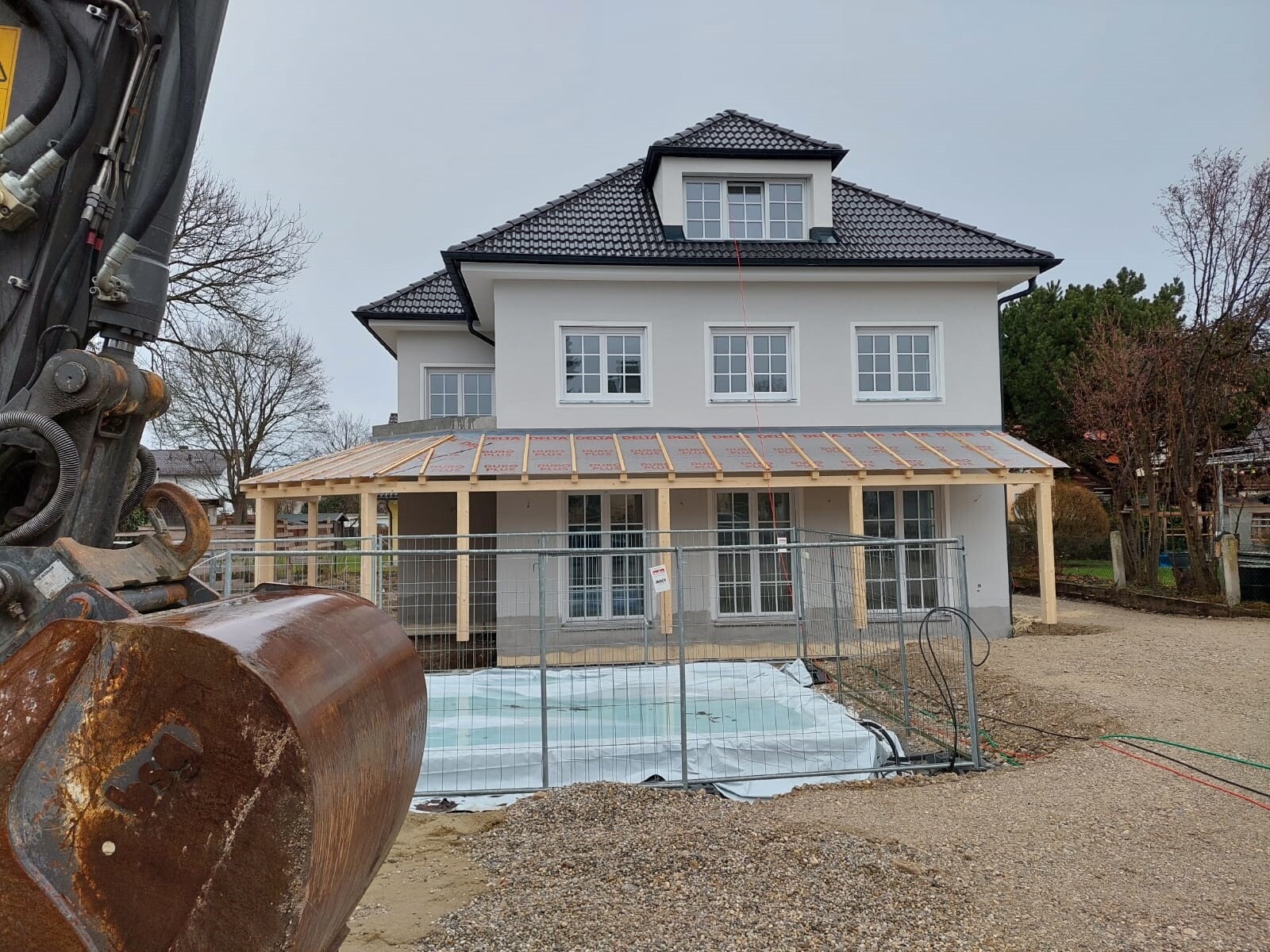
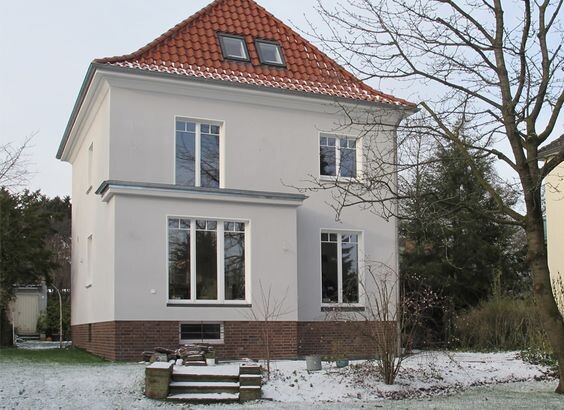
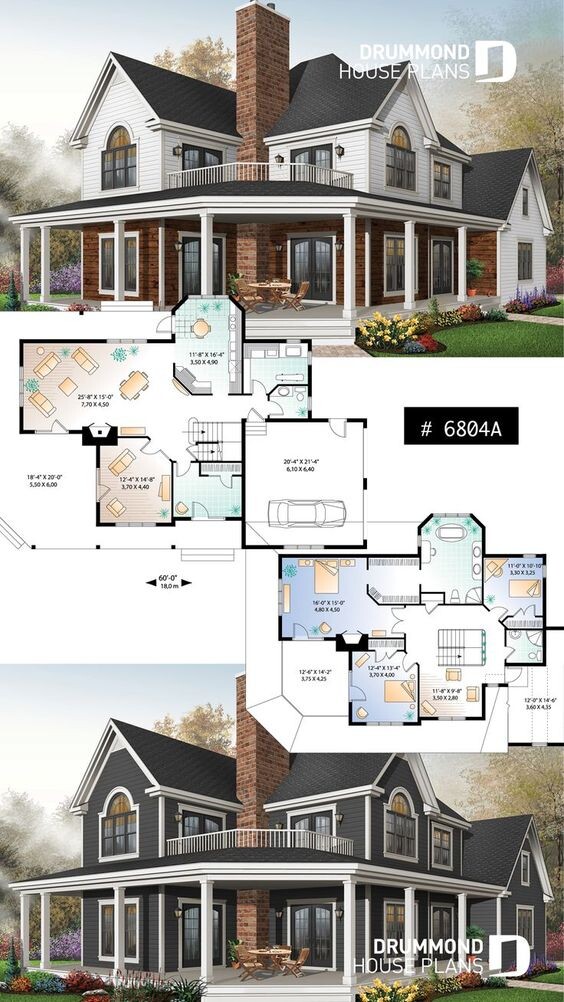
JuliaMünchen3 Feb 2022 10:53We didn’t build the style you mentioned (although you can occasionally see something similar in villa districts here), but maybe it encourages you to build exactly what you want. My dream has always been a house that looks like an old building. When we started exploring the idea of building a house, it quickly became clear that I was drawn both to American houses and the old “coffee mill” houses standing in Munich. We then used an architectural design program to create a prototype of our house ourselves and asked a regular architect (not specialized in this style) to turn it into a plan suitable for building approval. What we ended up with is a mix of both styles that we really like. If we hadn’t built in Germany, it would probably have looked even more American, but many elements that define that style there are often either too expensive, take up too much space, or are not approved here. Some people don’t like this at all (which was also a reason why I chose not to work with a construction company that said such a style mix just wouldn’t work. Well, for me, a construction company that thinks my house is stupid simply isn’t an option 🙂), while others stop by and speak to us enthusiastically when we’re at the construction site.
We are in an established neighborhood where fortunately the only rule was to keep the building dimensions consistent with the surrounding houses; everything else, like shapes and colors, was free. Personally, for this reason, I wouldn’t have been very happy in a new development because I just don’t like the anthracite-colored boxes. I also personally hope I am never forced to install solar panels on my house, because despite their great benefits, they would ruin the entire look of it—but everyone has to decide that for themselves.
So my advice is to just go for it if you find a plot where it’s allowed, if it’s affordable, and if you find a company that says “yes, gladly” instead of “ohhh, really?” Whether a 20-year-old architecture student thinks it’s unbelievable or impossible, or some neighbors gossip, I wouldn’t care at all. Enthusiasm is often contagious, and I think there are far too few individual houses anyway, so I’m happy about every home that doesn’t fit the usual anthracite-colored gable roof with full solar panels and large glass fronts—types that of course also have their justification for those who really like them.
We are in an established neighborhood where fortunately the only rule was to keep the building dimensions consistent with the surrounding houses; everything else, like shapes and colors, was free. Personally, for this reason, I wouldn’t have been very happy in a new development because I just don’t like the anthracite-colored boxes. I also personally hope I am never forced to install solar panels on my house, because despite their great benefits, they would ruin the entire look of it—but everyone has to decide that for themselves.
So my advice is to just go for it if you find a plot where it’s allowed, if it’s affordable, and if you find a company that says “yes, gladly” instead of “ohhh, really?” Whether a 20-year-old architecture student thinks it’s unbelievable or impossible, or some neighbors gossip, I wouldn’t care at all. Enthusiasm is often contagious, and I think there are far too few individual houses anyway, so I’m happy about every home that doesn’t fit the usual anthracite-colored gable roof with full solar panels and large glass fronts—types that of course also have their justification for those who really like them.
For me, this is a project with at best medium-term potential for implementation. I am currently well provided with housing, having built on my parents’ property 20 years ago, and as long as they are doing well, nothing will change. After that, I will have to reassess. Maybe I will stay here until the end of my life. It will probably fail simply because I won’t find a suitable plot of land in the Berlin surrounding area that is at least not a downgrade compared to now. Of course, it’s always a matter of personal assessment of certain criteria what counts as an improvement or a deterioration.
In any case, I would have the ambition that the next house will not burn heating oil or natural gas...
In any case, I would have the ambition that the next house will not burn heating oil or natural gas...
Pianist schrieb:
Anyway, I would definitely be ambitious enough to ensure that the next house doesn’t burn heating oil or gas...It could also burn money directly, which would be "more efficient" in a sense because of the higher efficiency without detours, but unfortunately that doesn’t work with fiat money ;-)https://www.instagram.com/11antgmxde/
https://www.linkedin.com/company/bauen-jetzt/