
Hello everyone,
I’m not looking for rental law advice here, but please allow me to share the background story.
In the apartment my wife and I rent, black mold started forming this winter despite us ventilating adequately (3 to 5 times a day for about 5 minutes each time by fully opening windows in winter. Naturally, more often in spring, autumn, and especially summer), heating properly, constantly monitoring humidity levels with hygrometers, and using a dehumidifier. Whenever the humidity exceeds 58% due to reasons beyond our control (for example, when it is simply too damp outside), we turn on the dehumidifier.
There is a particular feature in this apartment: the radiators are located far from the windows, specifically next to the room’s entrance door. The mold growth is on the exterior wall in the bedroom, which is far away from the radiator—in the corner furthest from the window.
So far, the mold is limited. However, it is black and seems to grow fast. Black mold can be very hazardous to health and cannot be permanently removed with common household products. Therefore, I asked the landlord to hire a specialist to inspect the whole apartment and address this issue—just in case I missed other mold-affected areas.
The landlord replied that the likely cause “with high probability” is the tenant’s heating behavior. They said that, for example, in 2020 we heated less than one third of what the average tenant in the building used, which is insufficient, and that we should definitely heat more. According to them, if we did this, mold would no longer form and we could also save on the energy costs of the dehumidifier and hygrometers. The landlord also said that commercially available mold removers completely eliminate mold spores and are not harmful to health, though mold can of course reappear in the same spot.
I then started wondering:
- Do we really have to heat three times as much just to reach the average, even if that causes us to sweat more and therefore increase humidity?
- Does it even matter how much we heated in 2020, especially when we heated more in 2021? The mold only appeared in early 2022.
- Is the unfortunate position of the radiator irrelevant, even though it is not the tenant’s fault?
- Isn’t it completely unacceptable that the landlord is relying on mere assumptions for their decision? Regarding the “heating less than a third of the average”: first, the landlord compared our total heating usage to the whole apartment’s average, but mold does not occur throughout the entire apartment. It is mainly in the bedroom (black mold), with some green mold in the kitchen, which is also in the corner furthest from the radiator, like in the bedroom. Second, we naturally heat the bedroom more than other rooms. Third, I reviewed the heating cost allocator for 2021, and it shows almost 80% higher consumption than in 2020. How could it then be that we need to heat even more when the mold appeared after we increased our heating? As I said, I can’t understand why the year 2020 is even taken into account. If it is, and no mold was present then, that would imply we should heat less according to this logic. Fourth, what is heating for? For a comfortable room temperature or something else? Our indoor temperature is always between 18 and 21 degrees Celsius (64 and 70°F), which I believe is officially considered a healthy range, so that should mean we heat enough, right? Isn’t it true that mold formation generally only becomes critical at temperatures below 14 degrees Celsius (57°F)?
- Is there actually a regulation specifying how much heating is required? I can’t imagine how this could be enforced. It’s not like ventilating, where there are clear instructions on frequency and duration.
- Even if the mold was my fault, shouldn’t the exact cause be determined so I can adjust my behavior where necessary? And even if it is related to heating—how am I supposed to know how much others heat in a given year? It also concerns wasting money (heating costs) and environmental impact.
- Nothing has changed on our end. We don’t dry laundry in the bedroom. So, what is going on?
- Isn’t it true that every winter and every tenant situation is different?
- Even if it is partly related to heating, does that mean it is the only cause? Could it not be due to multiple factors?
Ultimately, my main question to myself was:
- Is this just a typical case of a landlord refusing to deal with mold issues and simply blaming the tenant?
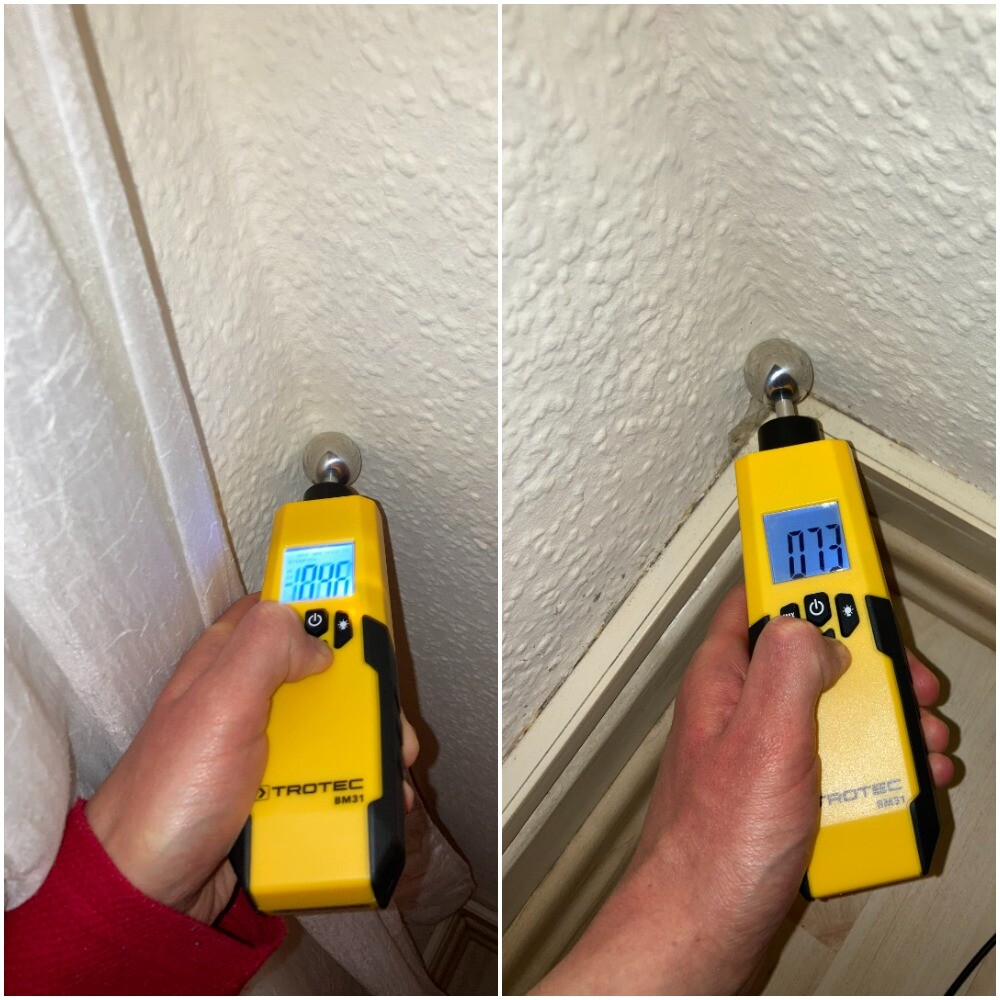
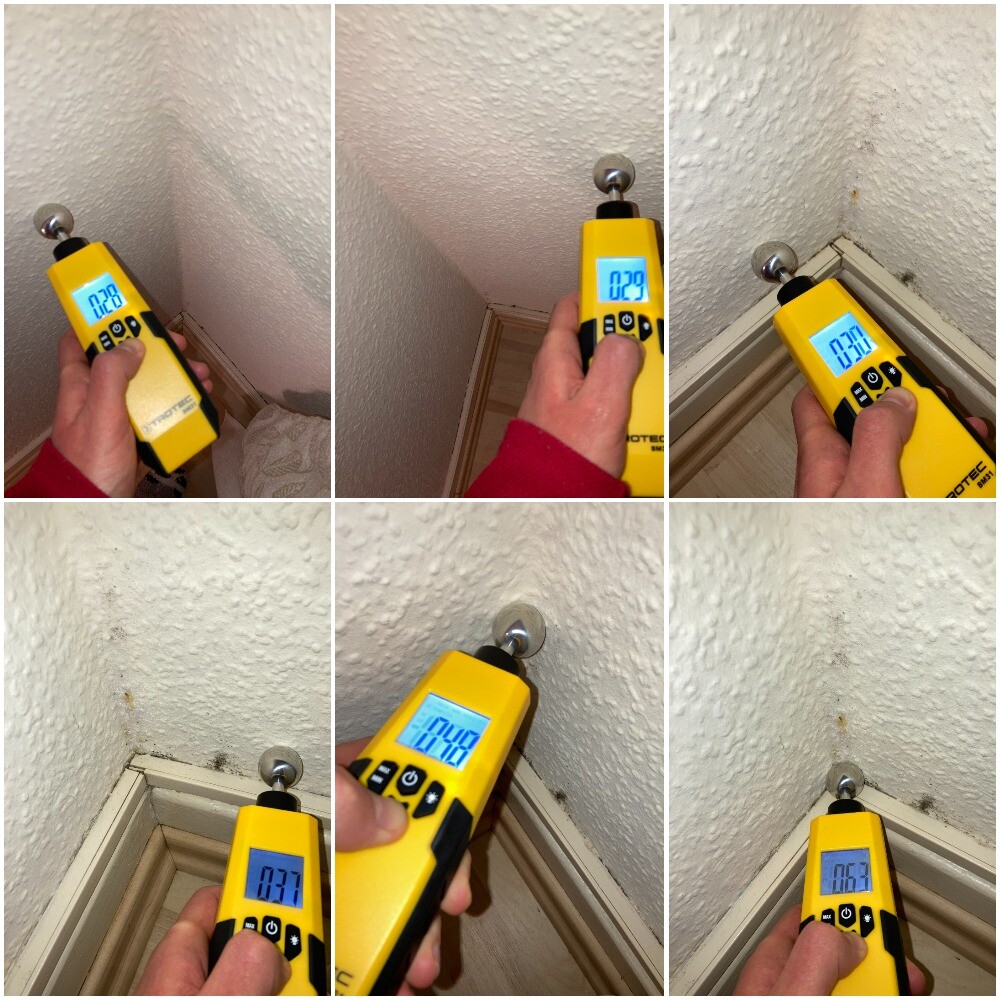
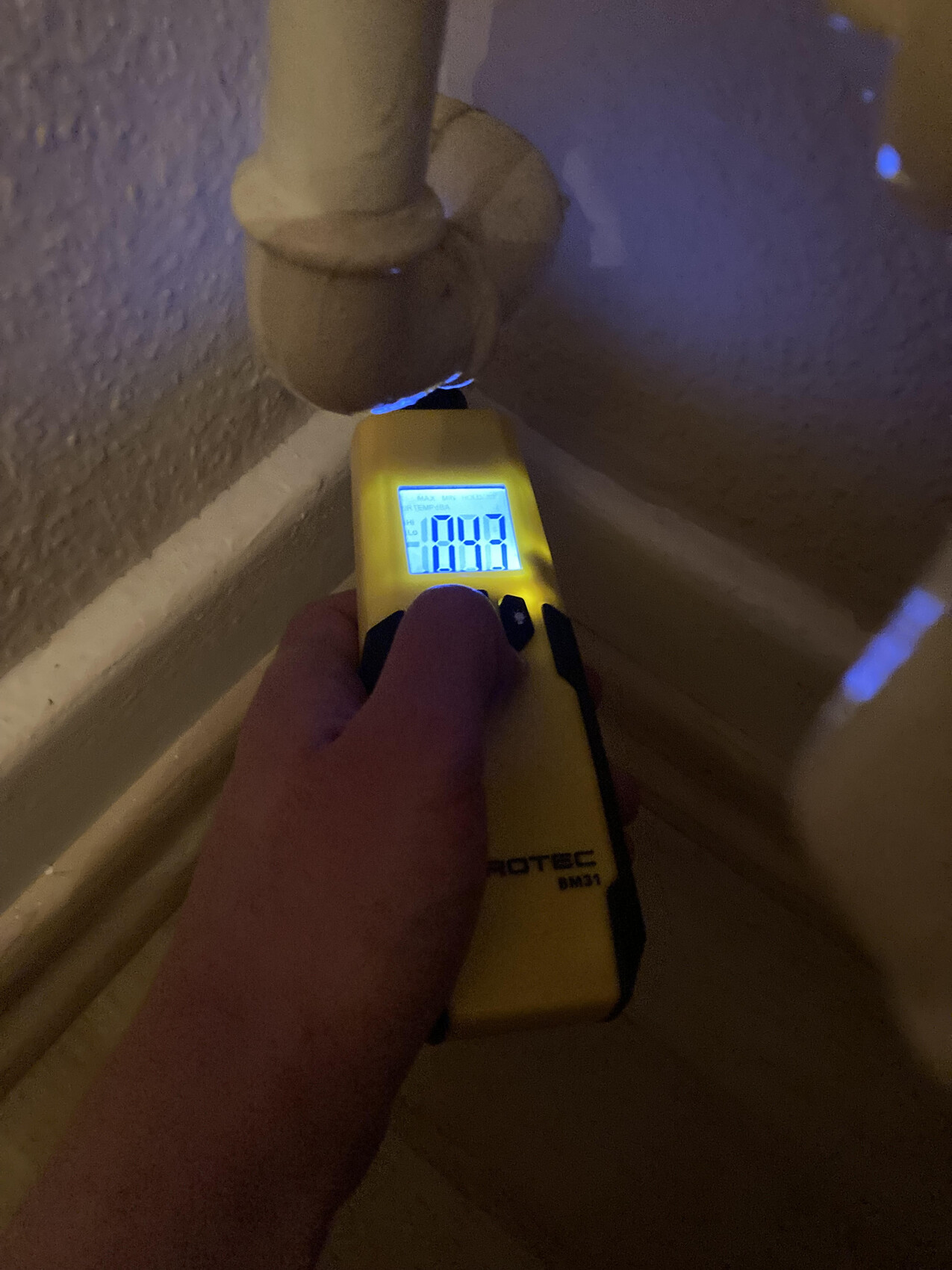
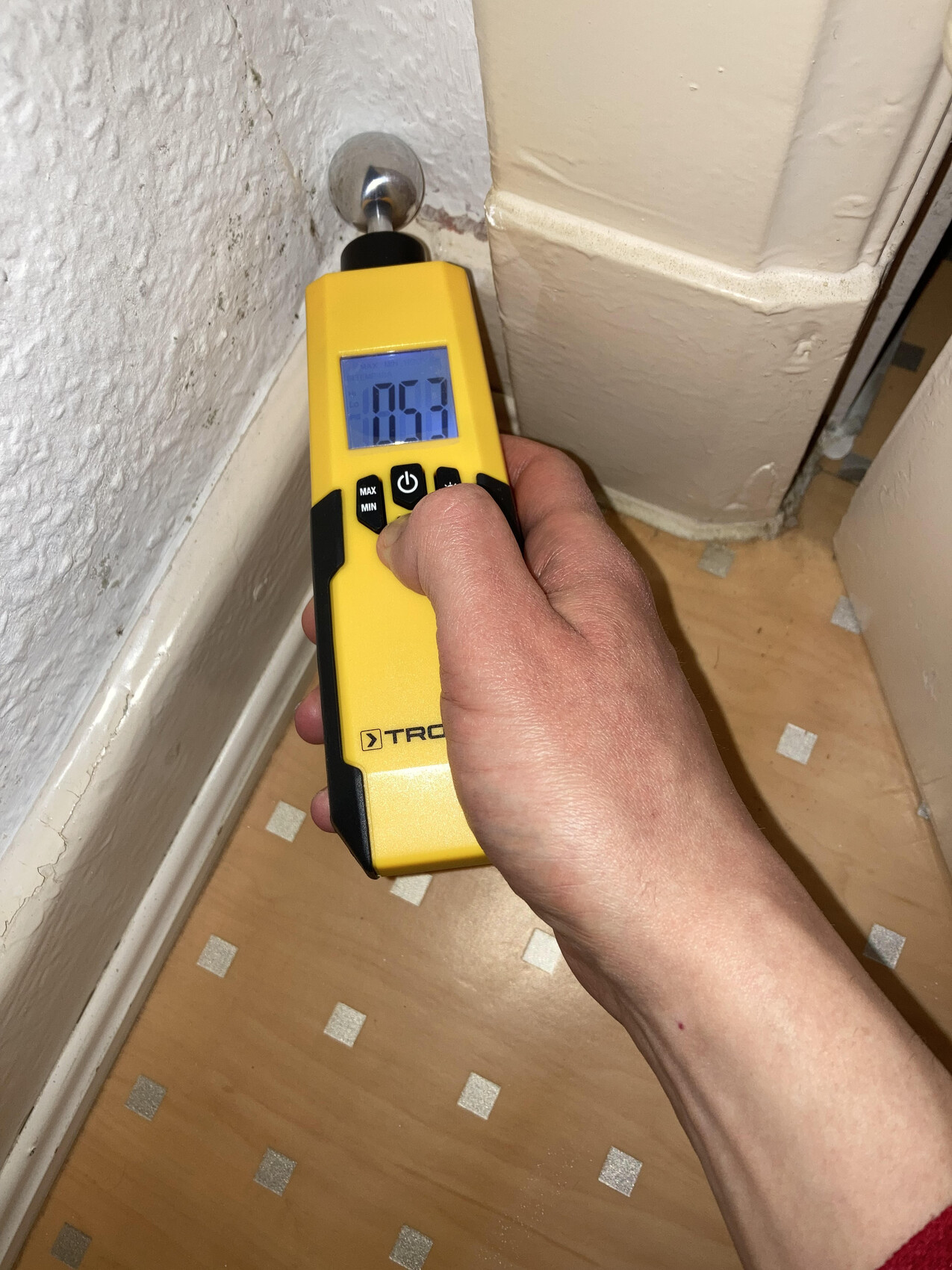
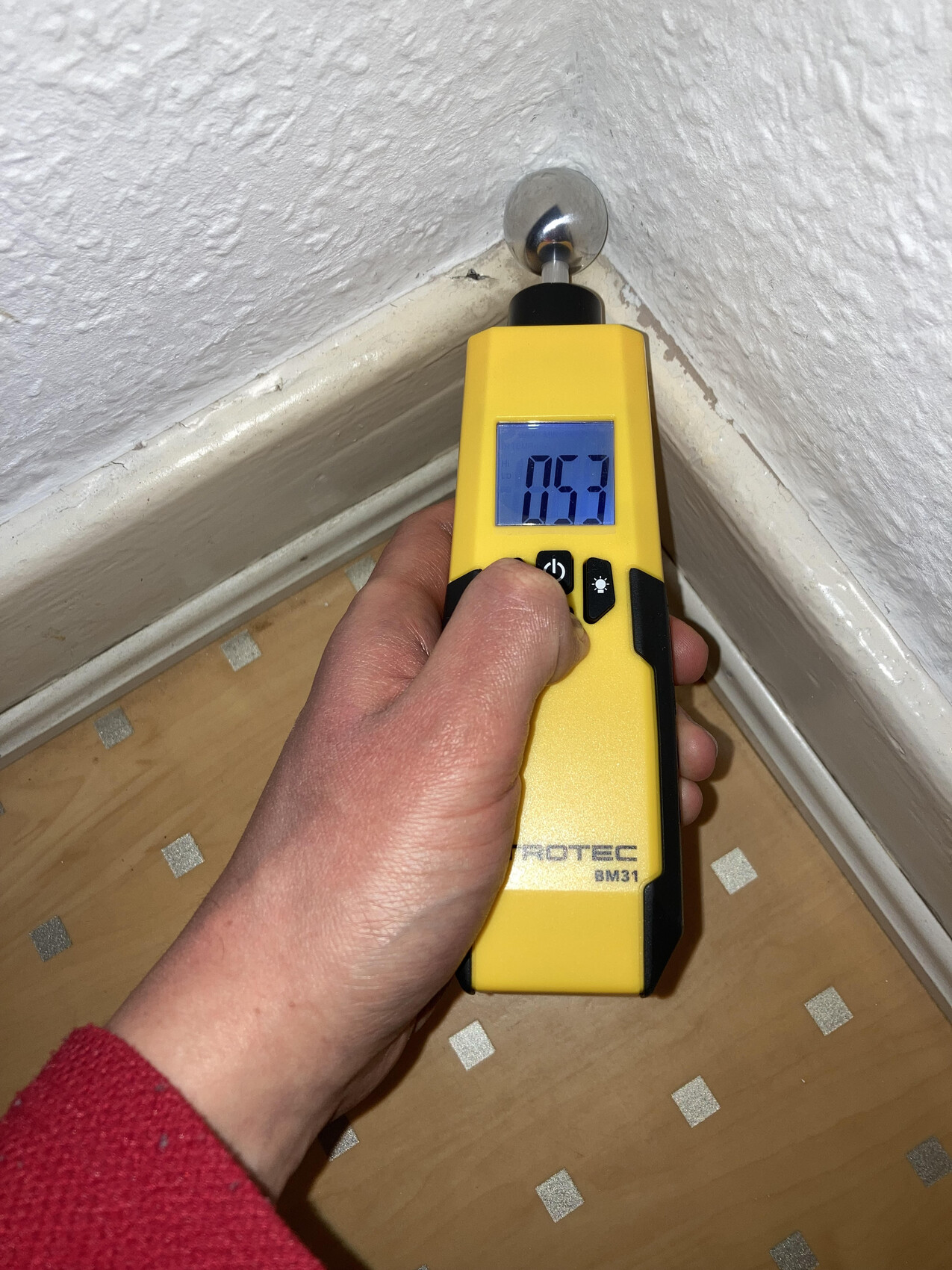
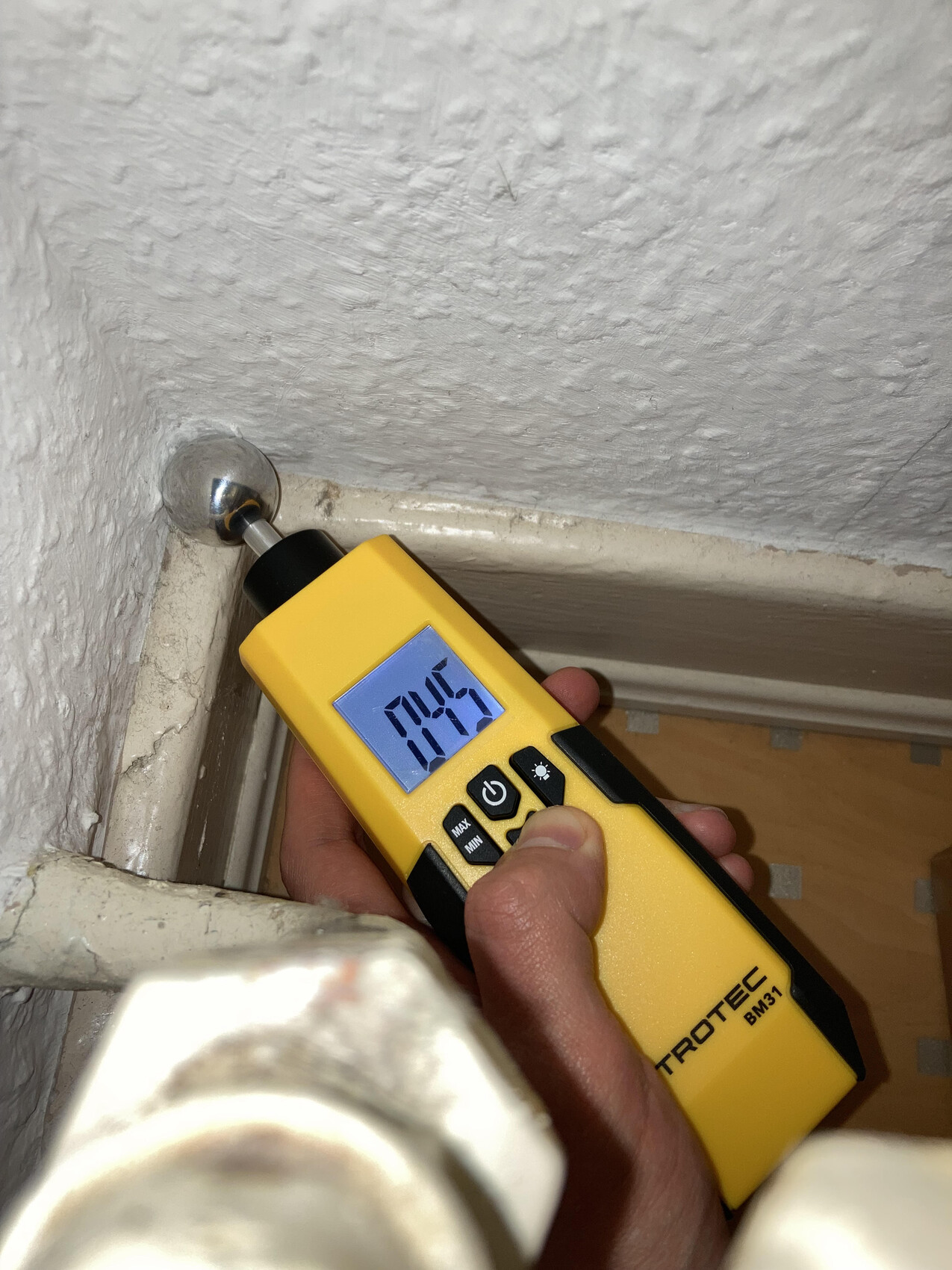
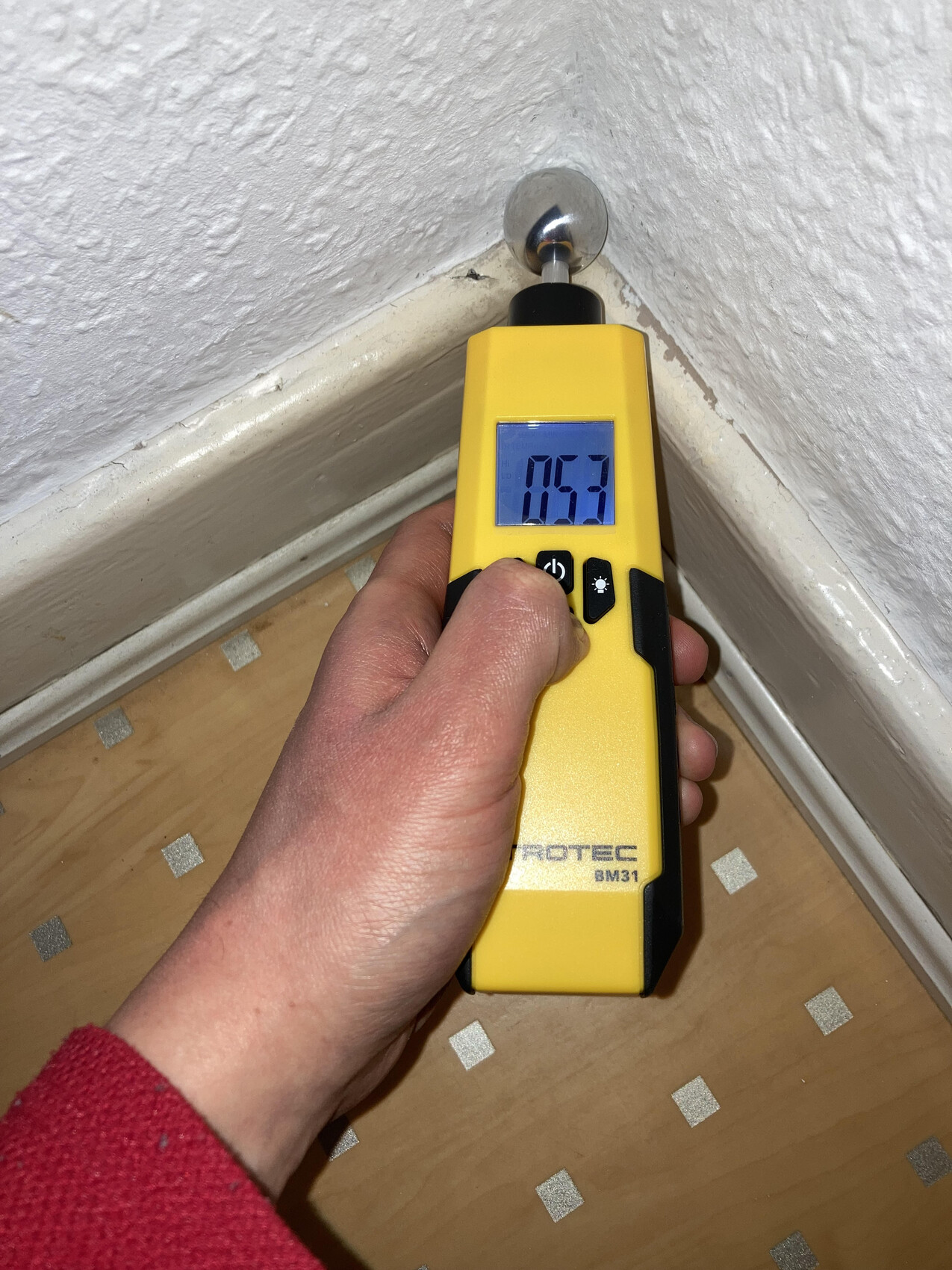
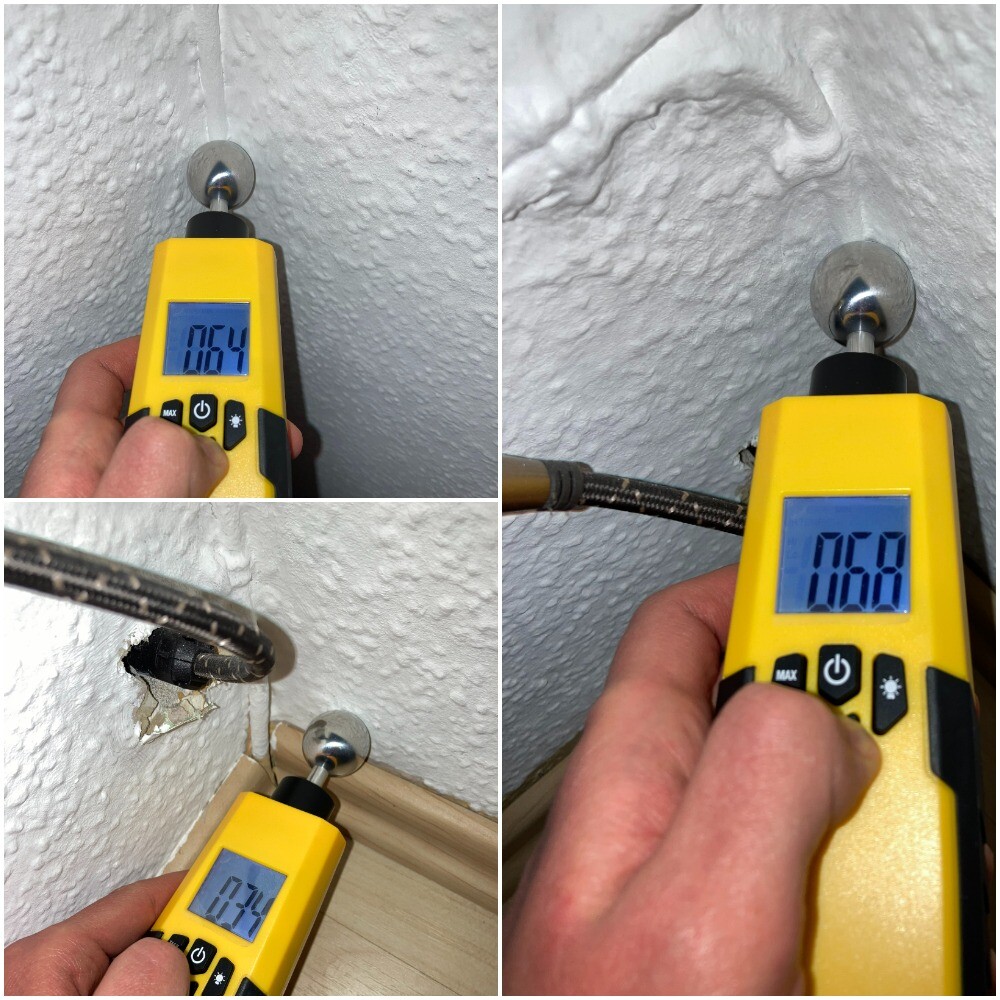
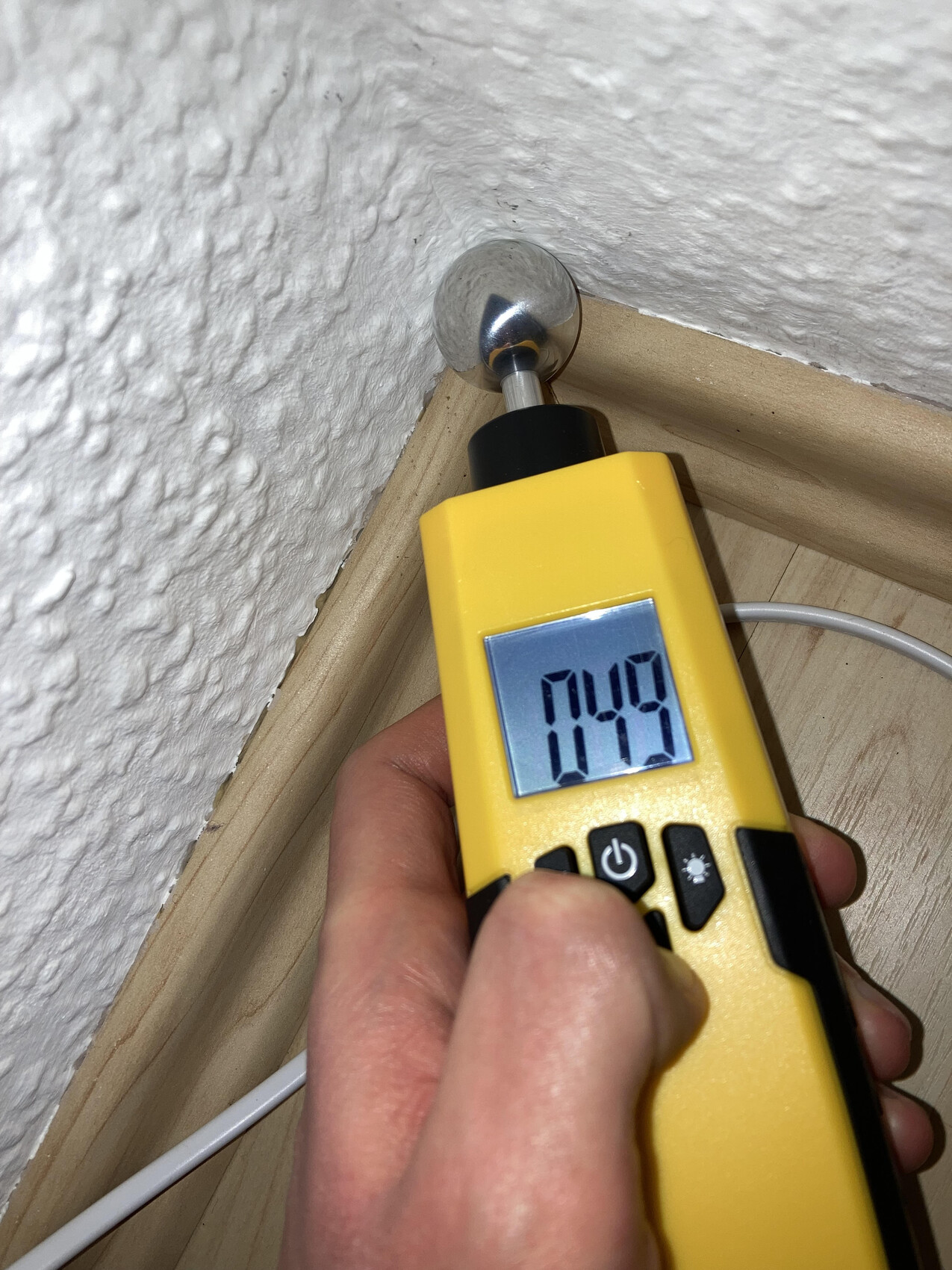
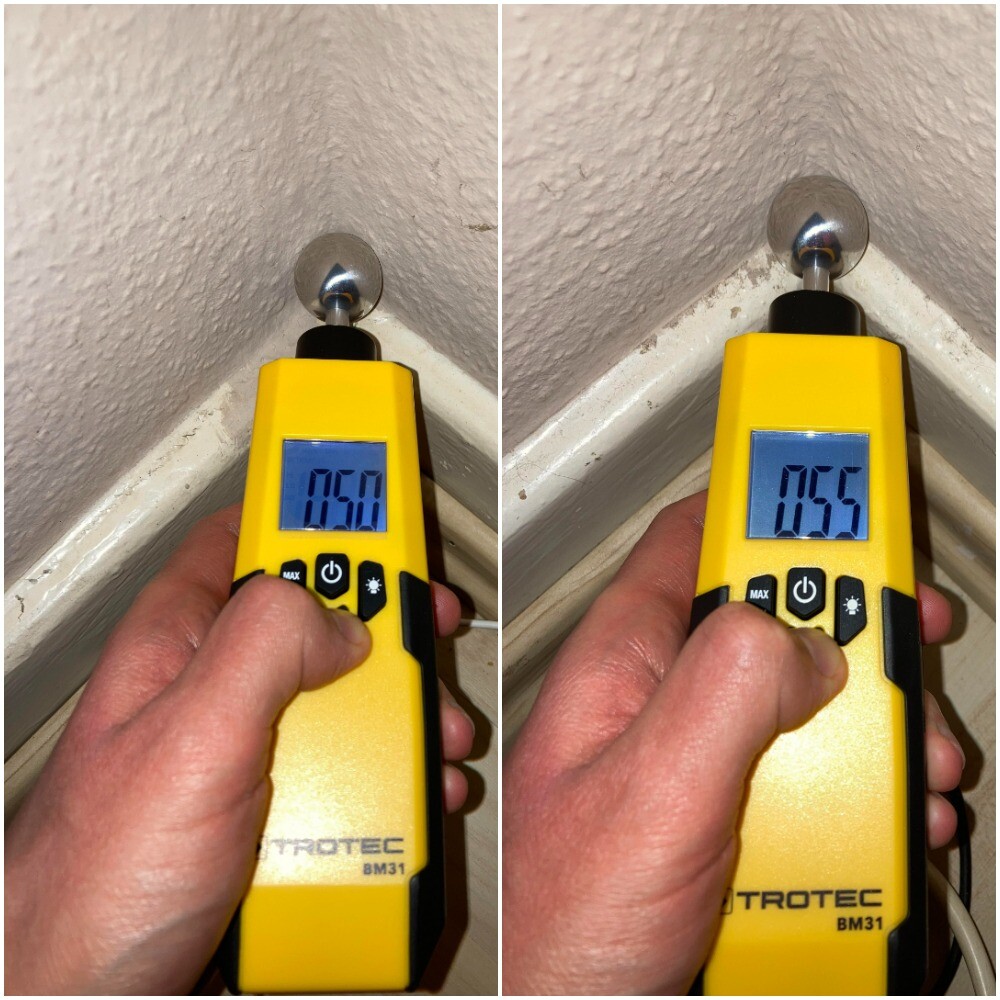
I made an effort and took some measurements regarding moisture and thermal bridges. I definitely need your help interpreting these. For moisture measurement, I used the TROTEC BM31, which shows moisture not in percent but in dimensionless digital values. In the mold corner, the moisture is very high only in one spot—in the actual corner itself. The highest moisture is in the corner of the same room (bedroom) on the same exterior wall, but where there is no mold yet (though maybe it could appear?).
I hope the photo filenames give a reasonable idea of the locations. If not, I would be happy to answer questions.
Thanks in advance
I’m not looking for rental law advice here, but please allow me to share the background story.
In the apartment my wife and I rent, black mold started forming this winter despite us ventilating adequately (3 to 5 times a day for about 5 minutes each time by fully opening windows in winter. Naturally, more often in spring, autumn, and especially summer), heating properly, constantly monitoring humidity levels with hygrometers, and using a dehumidifier. Whenever the humidity exceeds 58% due to reasons beyond our control (for example, when it is simply too damp outside), we turn on the dehumidifier.
There is a particular feature in this apartment: the radiators are located far from the windows, specifically next to the room’s entrance door. The mold growth is on the exterior wall in the bedroom, which is far away from the radiator—in the corner furthest from the window.
So far, the mold is limited. However, it is black and seems to grow fast. Black mold can be very hazardous to health and cannot be permanently removed with common household products. Therefore, I asked the landlord to hire a specialist to inspect the whole apartment and address this issue—just in case I missed other mold-affected areas.
The landlord replied that the likely cause “with high probability” is the tenant’s heating behavior. They said that, for example, in 2020 we heated less than one third of what the average tenant in the building used, which is insufficient, and that we should definitely heat more. According to them, if we did this, mold would no longer form and we could also save on the energy costs of the dehumidifier and hygrometers. The landlord also said that commercially available mold removers completely eliminate mold spores and are not harmful to health, though mold can of course reappear in the same spot.
I then started wondering:
- Do we really have to heat three times as much just to reach the average, even if that causes us to sweat more and therefore increase humidity?
- Does it even matter how much we heated in 2020, especially when we heated more in 2021? The mold only appeared in early 2022.
- Is the unfortunate position of the radiator irrelevant, even though it is not the tenant’s fault?
- Isn’t it completely unacceptable that the landlord is relying on mere assumptions for their decision? Regarding the “heating less than a third of the average”: first, the landlord compared our total heating usage to the whole apartment’s average, but mold does not occur throughout the entire apartment. It is mainly in the bedroom (black mold), with some green mold in the kitchen, which is also in the corner furthest from the radiator, like in the bedroom. Second, we naturally heat the bedroom more than other rooms. Third, I reviewed the heating cost allocator for 2021, and it shows almost 80% higher consumption than in 2020. How could it then be that we need to heat even more when the mold appeared after we increased our heating? As I said, I can’t understand why the year 2020 is even taken into account. If it is, and no mold was present then, that would imply we should heat less according to this logic. Fourth, what is heating for? For a comfortable room temperature or something else? Our indoor temperature is always between 18 and 21 degrees Celsius (64 and 70°F), which I believe is officially considered a healthy range, so that should mean we heat enough, right? Isn’t it true that mold formation generally only becomes critical at temperatures below 14 degrees Celsius (57°F)?
- Is there actually a regulation specifying how much heating is required? I can’t imagine how this could be enforced. It’s not like ventilating, where there are clear instructions on frequency and duration.
- Even if the mold was my fault, shouldn’t the exact cause be determined so I can adjust my behavior where necessary? And even if it is related to heating—how am I supposed to know how much others heat in a given year? It also concerns wasting money (heating costs) and environmental impact.
- Nothing has changed on our end. We don’t dry laundry in the bedroom. So, what is going on?
- Isn’t it true that every winter and every tenant situation is different?
- Even if it is partly related to heating, does that mean it is the only cause? Could it not be due to multiple factors?
Ultimately, my main question to myself was:
- Is this just a typical case of a landlord refusing to deal with mold issues and simply blaming the tenant?
I made an effort and took some measurements regarding moisture and thermal bridges. I definitely need your help interpreting these. For moisture measurement, I used the TROTEC BM31, which shows moisture not in percent but in dimensionless digital values. In the mold corner, the moisture is very high only in one spot—in the actual corner itself. The highest moisture is in the corner of the same room (bedroom) on the same exterior wall, but where there is no mold yet (though maybe it could appear?).
I hope the photo filenames give a reasonable idea of the locations. If not, I would be happy to answer questions.
Thanks in advance
SoL schrieb:
A bit too much text with little context.
How do you come to the conclusion that heating more increases the humidity? Just look up relative humidity. I didn’t really mean it that way; I was just repeating the landlord’s logic. She said I should heat more to prevent mold. But the mold appeared only after I started heating almost 80% more.
karambol schrieb:
- Do you really need to heat three times as much to reach the average, even if that causes excessive sweating and therefore actually raises the humidity?This is the part I mean... It just doesn’t fit.A guess: Could it be that previously, with lower temperatures (less heating), you maintained around 60% relative humidity, and now (with more heating) you are again targeting 60%?
At 20°C (68°F) and 60% relative humidity, the dew point is 12°C (54°F), which is above the surface temperature of your walls in the kitchen and bedroom. This means condensation forms on your walls, making them damp and creating an environment for airborne particles such as mold spores to settle and grow.
Similar topics