
Hello
we are planning a new semi-detached house.
We want to install a photovoltaic system later on.
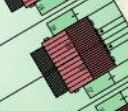
We will get the right half shown in the photo. Orientation is southwest.
The photovoltaic system will of course be installed on the southwest side facing the garden.
The black area is the 3x5 m (10x16 ft) terrace, which will later be covered with a fixed terrace roof measuring 4 m (13 ft) deep and 5.5 m (18 ft) wide.
My question is whether it will still be possible to install a photovoltaic system on the roof once the fixed terrace roof is there?
If the terrace roof is on the southwest side in the garden, it will no longer be possible to set up scaffolding.
For maintenance or in case of problems, access to the photovoltaic system will be necessary later on (is access without scaffolding not possible?)
Or can the photovoltaic system be installed without scaffolding?
The house will have a gable roof and 2.5 full stories.
we are planning a new semi-detached house.
We want to install a photovoltaic system later on.
We will get the right half shown in the photo. Orientation is southwest.
The photovoltaic system will of course be installed on the southwest side facing the garden.
The black area is the 3x5 m (10x16 ft) terrace, which will later be covered with a fixed terrace roof measuring 4 m (13 ft) deep and 5.5 m (18 ft) wide.
My question is whether it will still be possible to install a photovoltaic system on the roof once the fixed terrace roof is there?
If the terrace roof is on the southwest side in the garden, it will no longer be possible to set up scaffolding.
For maintenance or in case of problems, access to the photovoltaic system will be necessary later on (is access without scaffolding not possible?)
Or can the photovoltaic system be installed without scaffolding?
The house will have a gable roof and 2.5 full stories.

halmi schrieb:
But that shouldn’t matter anymore now, right?That only came into effect last year, didn’t it? Has it been changed again retroactively?D
Deliverer22 Jan 2022 10:36Be careful, these are different matters. The old 10 kWp limit referred to the proportional Renewable Energy Act surcharge applicable to self-consumption. This limit has been increased to 30 kWp.
However, the hobbyist election rule still seems to apply to 10 kWp. In November 2021, the Federal Council submitted a proposal to the government to raise this limit to 30 kWp as well. However, I have not found any indication that this has already been enacted into law. It is likely that this process is still progressing slowly under the current coalition government.
However, the hobbyist election rule still seems to apply to 10 kWp. In November 2021, the Federal Council submitted a proposal to the government to raise this limit to 30 kWp as well. However, I have not found any indication that this has already been enacted into law. It is likely that this process is still progressing slowly under the current coalition government.
halmi schrieb:
Yes, since 2021, so in my opinion it no longer matters and that is the reason why the system was planned with 11 kWp. Do you have a source for that? Everything I find on this, including information from the end of last year, always explicitly mentions the limit of 10 kWp for photovoltaic systems.
There was an additional letter from the Federal Ministry of Finance (BMF) on 29.10.2021 (IV C 6 - S 2240/19/10006 :006), which also states:
one or more photovoltaic systems with a total installed capacity […] of up to 10.0 kW/kWpD
Deliverer22 Jan 2022 10:44It is also worth carefully calculating whether it might be better to handle a bit more tax paperwork for five years in order to reclaim the input VAT. Since this tends to be beneficial, especially for large systems with a lower percentage of self-consumption, it is probably not reasonable for most people to have a system larger than 10 kWp classified as a hobby.
Google and
Google photovoltaic system 10 kWp limit 2021
With the changes in the Renewable Energy Act that came into effect at the beginning of 2021, this limit of 10 kWp no longer applies. It was raised to a capacity of 30 kWp or 30 MWh per year. ... This has improved the economic viability of self-consumption of electricity from the photovoltaic system.
Deliverer schrieb:
Be careful, these are different things. The old 10 kWp limit referred to the share of the Renewable Energy Act surcharge payable for self-consumption of electricity. This was raised to 30 kWp.
However, the hobby rule still seems to apply to 10 kWp. The Federal Council only made a proposal to the government in November '21 to also increase this to 30 kWp. But I couldn’t find any indication that this has already been enacted into law. It’s probably all still slowly progressing under the current coalition.
Google photovoltaic system 10 kWp limit 2021
With the changes in the Renewable Energy Act that came into effect at the beginning of 2021, this limit of 10 kWp no longer applies. It was raised to a capacity of 30 kWp or 30 MWh per year. ... This has improved the economic viability of self-consumption of electricity from the photovoltaic system.
Similar topics