
Hello everyone,
Please only serious and helpful responses. If possible, without any sarcasm. ;-)
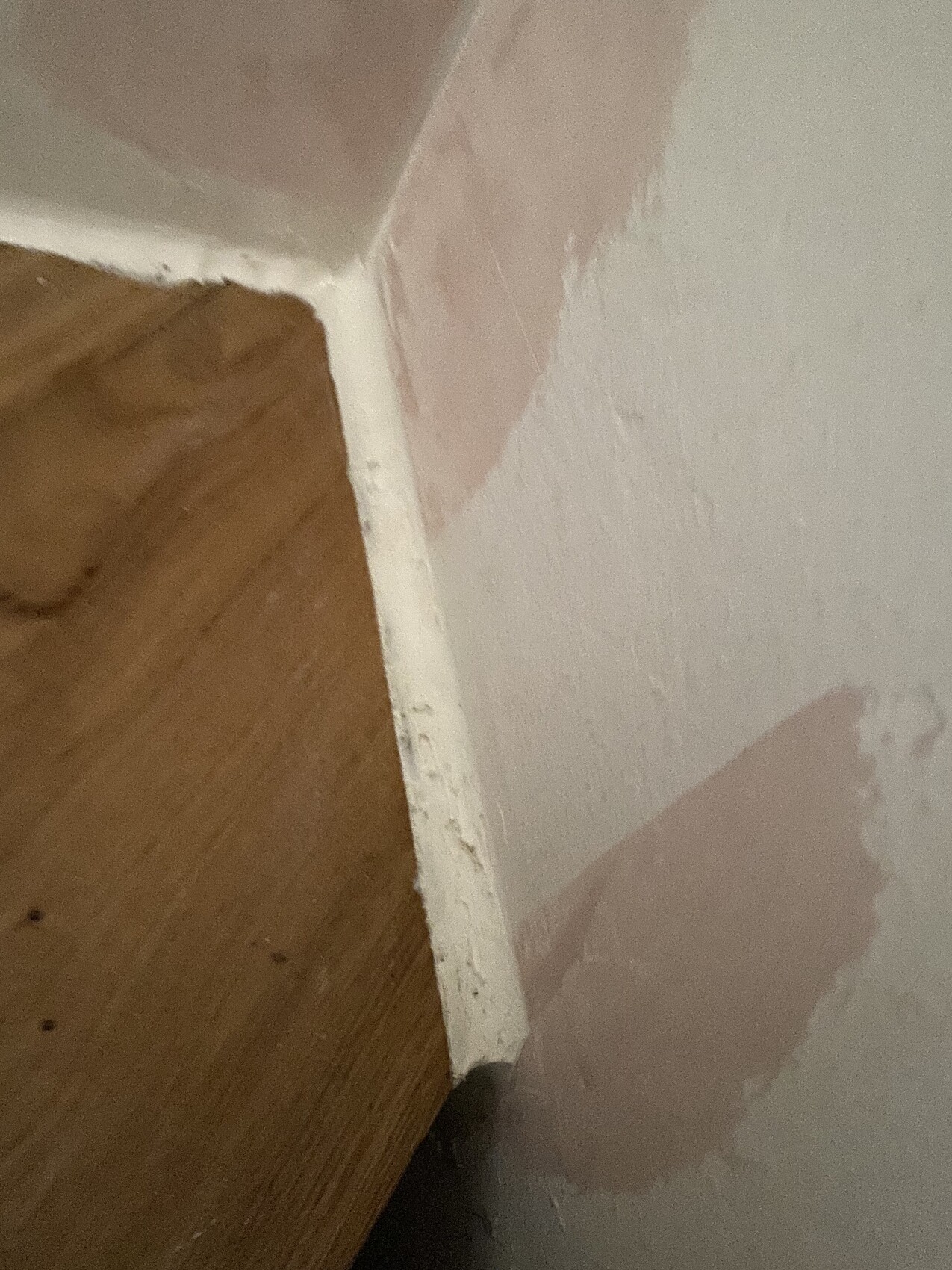
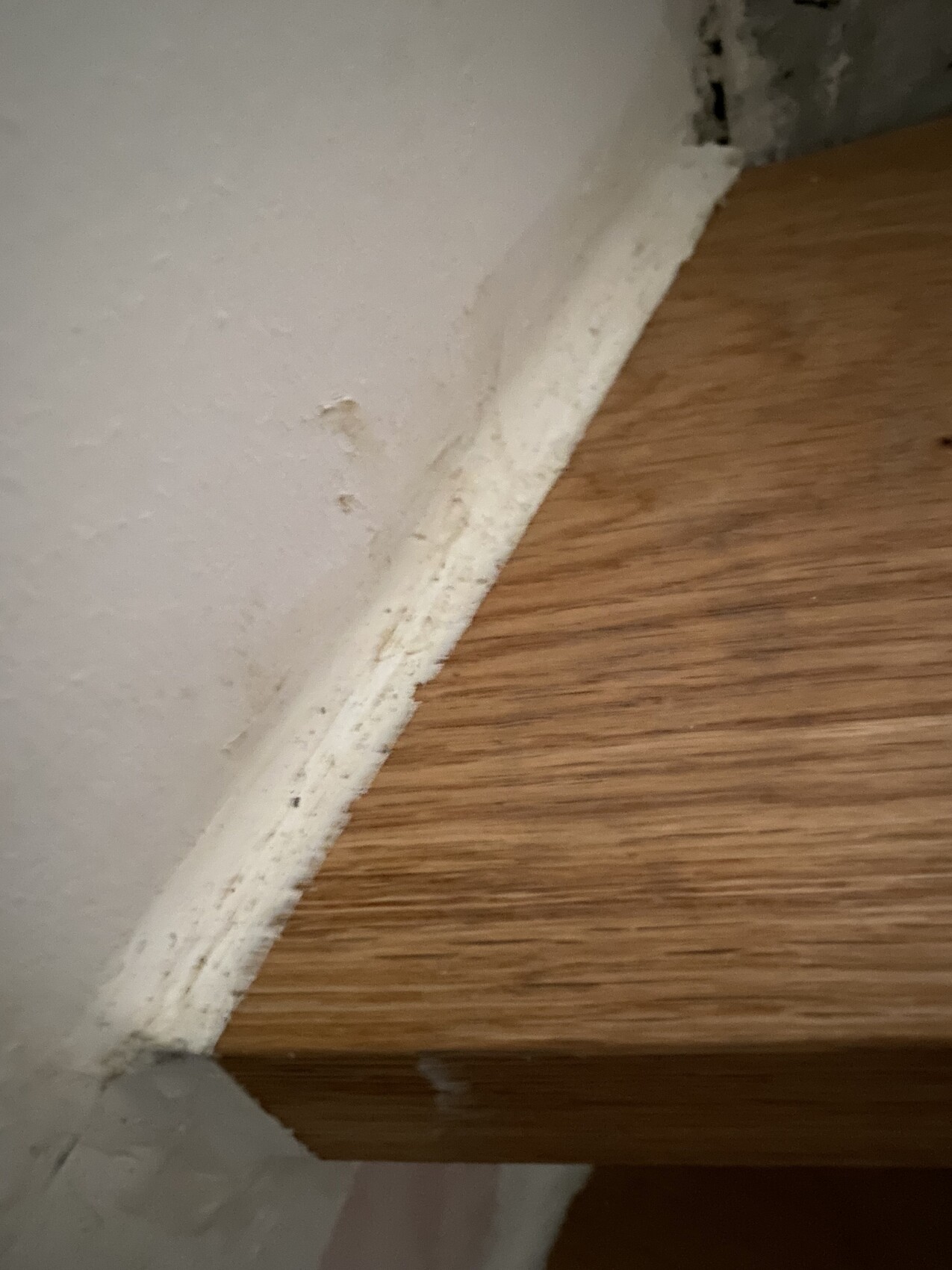
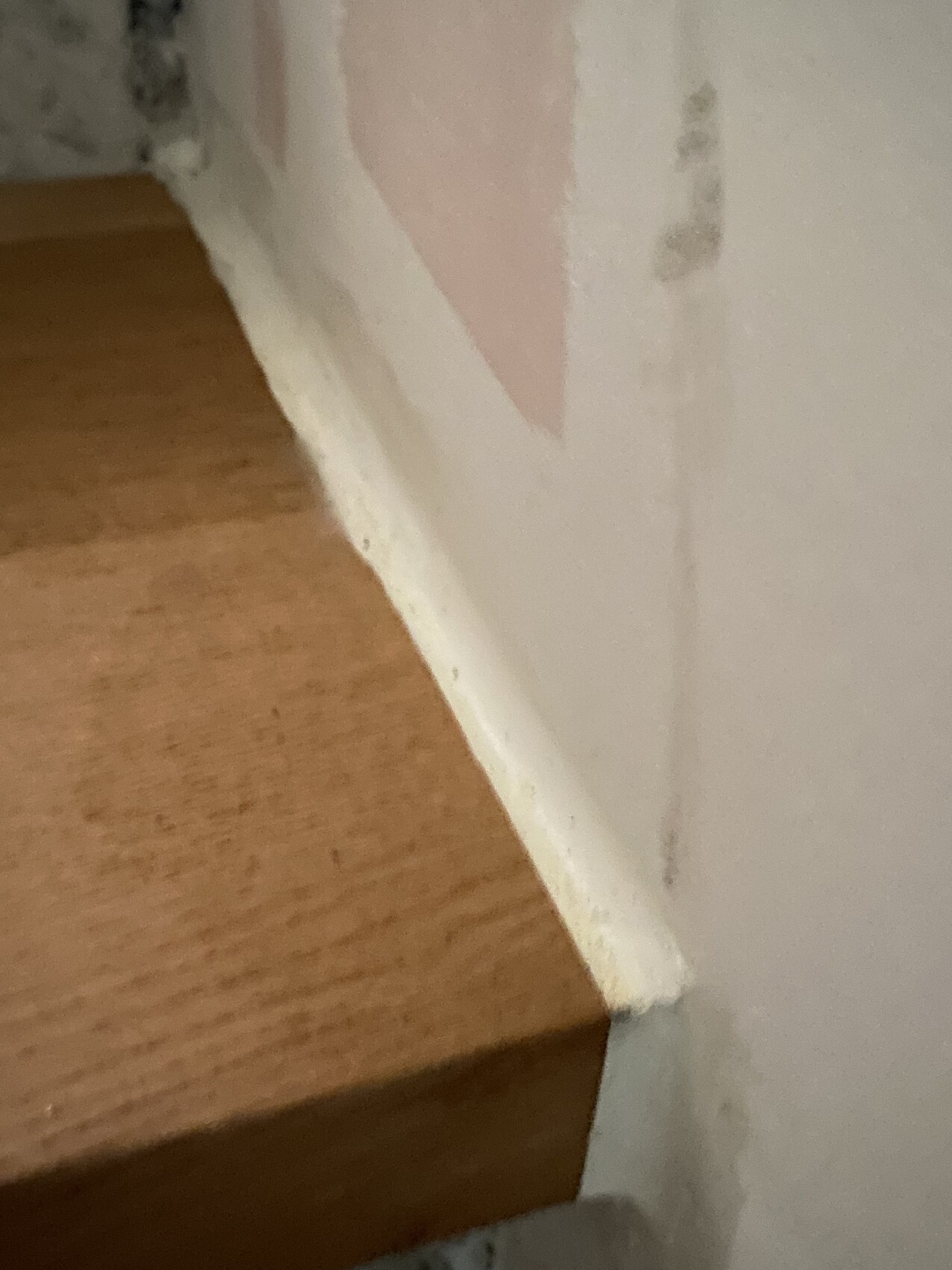
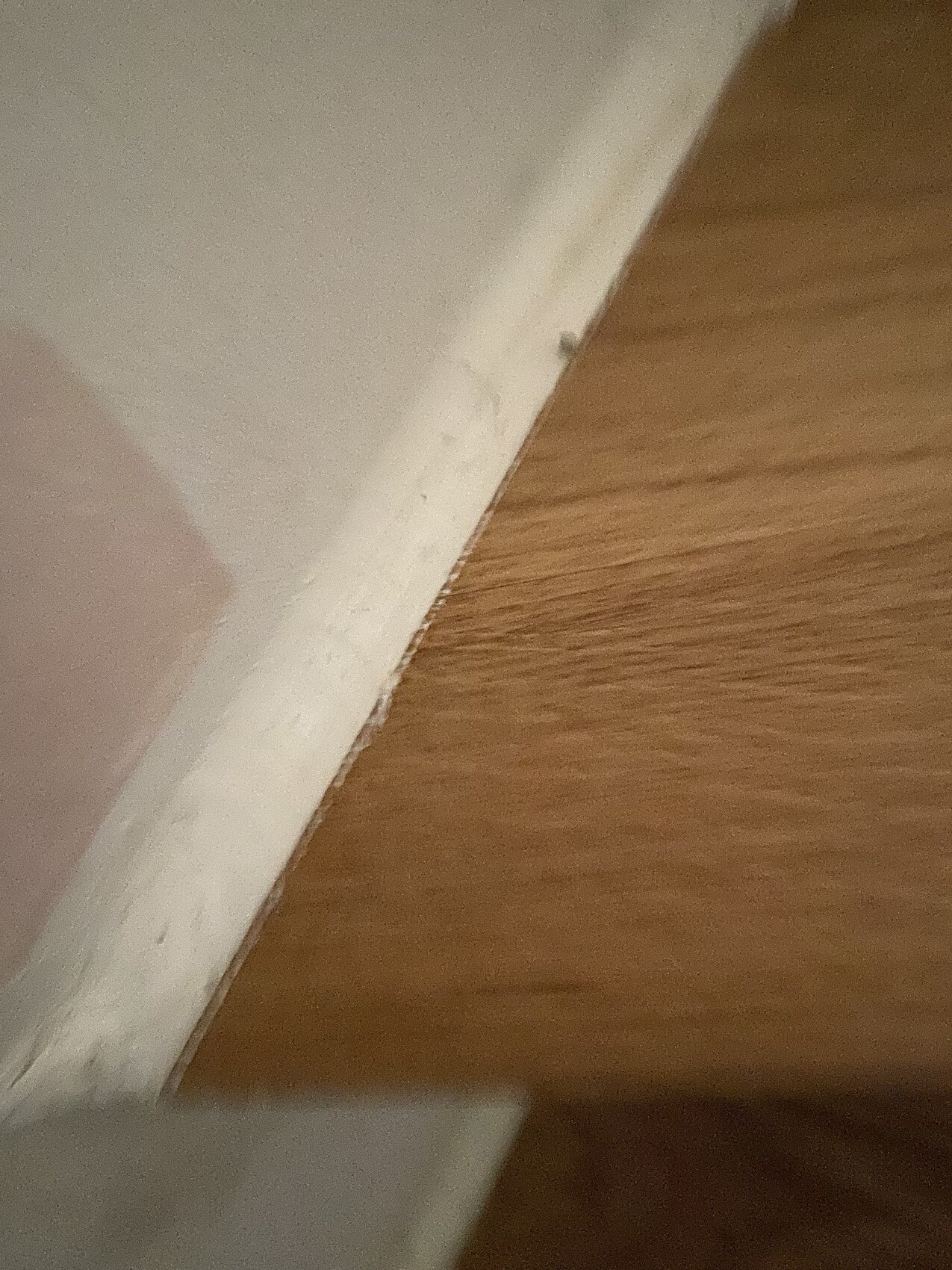
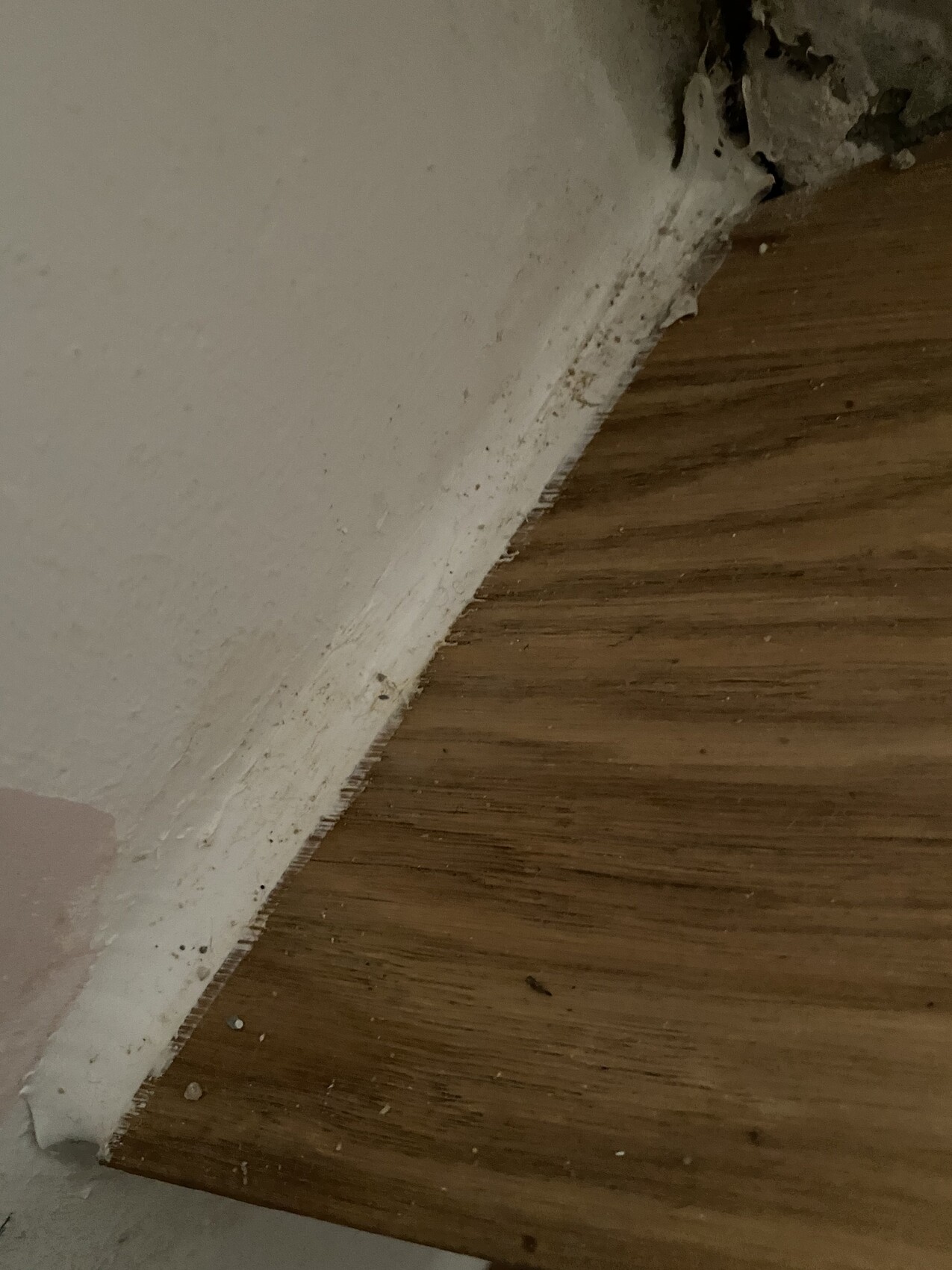
Shortly before Christmas, the carpenter created an absolute silicone disaster with the joints on the oak stair treads. In short, this is unacceptable and cannot be dismissed as just a “tolerance issue.”
How do you assess this, and is there any way to fix it? Because the silicone is no longer simply removable from the wood.
Many thanks in advance,
Michael
Please only serious and helpful responses. If possible, without any sarcasm. ;-)
Shortly before Christmas, the carpenter created an absolute silicone disaster with the joints on the oak stair treads. In short, this is unacceptable and cannot be dismissed as just a “tolerance issue.”
How do you assess this, and is there any way to fix it? Because the silicone is no longer simply removable from the wood.
Many thanks in advance,
Michael
K1300S schrieb:
We had several steps replaced because they were too short. The craftsman wasn’t happy about it but agreed that it wasn’t acceptable as it was. At least that’s a reasonable craftsman! That alone is worth something. Just to clarify upfront: we chose a local trades company. Their offer was the most expensive one. I’m only mentioning this to say we didn’t bring in a company from elsewhere. Carpentry firm with 35 employees.
M
Myrna_Loy16 Jan 2022 10:02Wasn’t an on-site measurement taken?
Myrna_Loy schrieb:
Was no on-site measurement taken?Of course, but I think it was measured roughly, judging by the looks.P
pagoni202016 Jan 2022 10:32We have dealt with such issues repeatedly during the construction of our house and still do. I often hear about a DIN standard or tolerances, but other craftsmen or specialists brought in tell me the opposite.
That is, of course, very frustrating, and I can probably understand exactly how you feel! 🤨 You pay a fair price, don’t cause trouble, use a local company, maybe even offer coffee and cake, same here... and then something like this happens, along with a dismissive reaction.
The situation seems quite clear to me—it’s not acceptable as it is; the question is more how you handle the knowledge of your rights when dealing with someone who has a pathological defensive reflex. The usual question of having the right versus actually enforcing it.
Besides that, I would personally (as we do) look at how to still make it look good, and I think there are always options if you can't enforce your “right” to correction or replacement. Stomach ulcers or chronic teeth grinding when walking on the stairs shouldn’t be the solution.
In addition to the mentioned options, you might want to consider adding a trim, although it doesn’t have to be the ugly scuff strip you may be imagining. Perhaps something metal or similar could cover the large gap but still look deliberate. In our case, they drilled through a window frame in the visible area to run a cable; now it is supposed to be covered with a rail... just to give a small example of praised craftsmanship.
At least you’re not alone, even though no one wants to fix the gap, unfortunately.
That is, of course, very frustrating, and I can probably understand exactly how you feel! 🤨 You pay a fair price, don’t cause trouble, use a local company, maybe even offer coffee and cake, same here... and then something like this happens, along with a dismissive reaction.
The situation seems quite clear to me—it’s not acceptable as it is; the question is more how you handle the knowledge of your rights when dealing with someone who has a pathological defensive reflex. The usual question of having the right versus actually enforcing it.
Besides that, I would personally (as we do) look at how to still make it look good, and I think there are always options if you can't enforce your “right” to correction or replacement. Stomach ulcers or chronic teeth grinding when walking on the stairs shouldn’t be the solution.
In addition to the mentioned options, you might want to consider adding a trim, although it doesn’t have to be the ugly scuff strip you may be imagining. Perhaps something metal or similar could cover the large gap but still look deliberate. In our case, they drilled through a window frame in the visible area to run a cable; now it is supposed to be covered with a rail... just to give a small example of praised craftsmanship.
At least you’re not alone, even though no one wants to fix the gap, unfortunately.

pagoni2020 schrieb:
We have gone through these issues one after another during our new build and we are still dealing with them. I keep hearing about a DIN standard or tolerances, but other craftsmen or consulted experts tell me the opposite.
That’s really frustrating, and I can totally understand how you feel! 🤨 You pay well, don’t negotiate, use the local company, maybe even offer coffee or cake—same here… and then this happens, along with an indifferent response.
The situation seems quite clear to me: this is not acceptable; the real question is how you handle someone with a pathological defensive reaction when you know your rights. It’s the usual dilemma of knowing you’re right but actually getting justice.
Besides that, I would look at how to still make it look good (which is what we do), and I believe there are always options if you can’t enforce your “right” to correction or replacement. Stomach ulcers or constant teeth grinding when stepping on the stairs shouldn’t be the solution.
In addition to the options mentioned, you might want to consider a molding strip, although it doesn’t have to be the ugly trim you might be imagining. Perhaps something metal or similar could cover the large joint but still look intentional. For example, they drilled through a window in our visible area to run a cable; now they want to cover it with some kind of channel—just a small example of so-called excellent craftsmanship.
At least you’re not alone, even if no one fixes the joint unfortunately. Thanks! 🙂
No one here should be using DIN standards or tolerances as an excuse. But of course, that argument is always made…
This isn’t about unrealistic customer expectations or bashing craftsmen without knowledge. I actually have a lot of respect for many craftsmen. Just not for work of this quality.
A molding strip, due to the width of the silicone joint, is no longer delicate but has to cover it, making it bulky. One thing inevitably comes with the other, unfortunately.
Similar topics