
See photo:
A stairwell (basement, ground floor, first floor, attic) has larger areas with moisture stains. At low outside temperatures, moisture has condensed there.
1) Can the stains be removed, or is repainting necessary?
2) Which type of paint would you recommend for this?
In the basement hallway area, which was especially affected before, I used Auro anti-mold paint. That worked very well. However, five liters cost about 50 € (around 50 USD). Also, the paint was not very economical for me. For the entire hallway, I would then expect to pay about 500 € (around 500 USD).
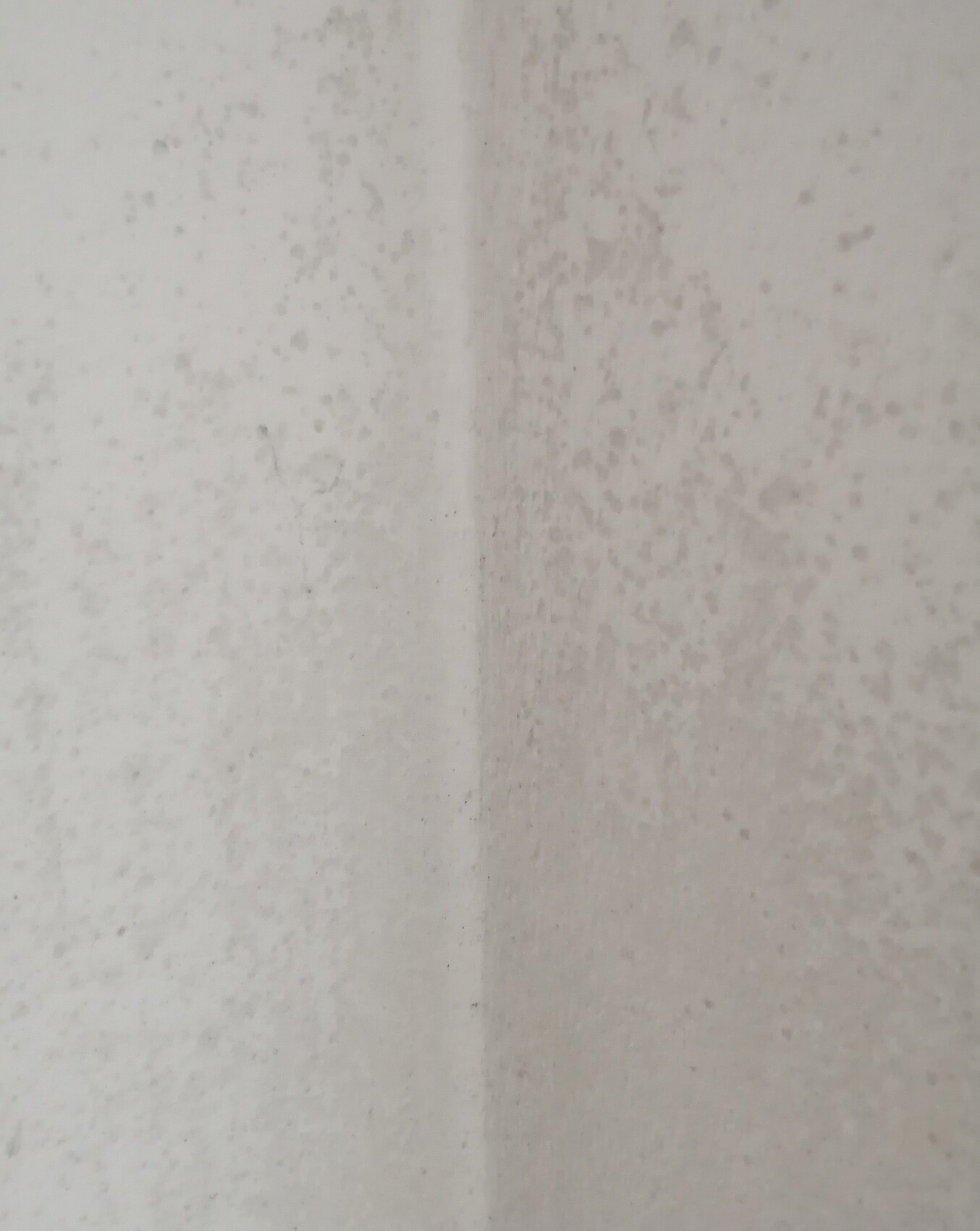
A stairwell (basement, ground floor, first floor, attic) has larger areas with moisture stains. At low outside temperatures, moisture has condensed there.
1) Can the stains be removed, or is repainting necessary?
2) Which type of paint would you recommend for this?
In the basement hallway area, which was especially affected before, I used Auro anti-mold paint. That worked very well. However, five liters cost about 50 € (around 50 USD). Also, the paint was not very economical for me. For the entire hallway, I would then expect to pay about 500 € (around 500 USD).

i_b_n_a_n schrieb:
Eliminate the cause, not just the visible effects. Otherwise, you’ll be repainting there for years – right? Like missing heating, thermal bridges, poor ventilation... ?You are right. Unfortunately, the hallway is not heated. The hallway is "well ventilated" because the front door is not completely sealed. It has been fine for over 20 years. So far, we have only had the problem in the lowest area. There, the Auro anti-mold paint has worked well. Upstairs, the moisture has settled on the windows and was removed several times a day with cloths. In the basement, we have a 200 W air dehumidifier, but we do not use it continuously.
 HausiKlausi27 Dec 2021 00:02
Painting on damp walls is like pouring water into a dry well: the symptoms disappear briefly, but the cause remains. As mentioned above, you should look for the underlying causes and address them accordingly. You cannot outsmart physics with a bucket of "Schöner Wohnen Weiß Premium."
I share the same view that the root cause should be addressed.
Using a 200 W dehumidifier on the lowest level with the basement door closed, I can reduce the relative humidity by about 5% after running it for several hours.
Currently, I have a 200 W dehumidifier running intermittently in the stairwell on the basement level. It lowers the humidity there by approximately 5%. On the ground floor, the humidity then drops slightly to around 60%.
I bought three temperature and relative humidity meters for a total of 10 € from a grocery store. I placed one in the basement level, one on the ground floor, and one on the windowsill at 45cm (18 inches) height on the landing between the ground and first floors. Visual inspection of the hallway windows also shows no signs of moisture anymore.
Using a 200 W dehumidifier on the lowest level with the basement door closed, I can reduce the relative humidity by about 5% after running it for several hours.
Currently, I have a 200 W dehumidifier running intermittently in the stairwell on the basement level. It lowers the humidity there by approximately 5%. On the ground floor, the humidity then drops slightly to around 60%.
I bought three temperature and relative humidity meters for a total of 10 € from a grocery store. I placed one in the basement level, one on the ground floor, and one on the windowsill at 45cm (18 inches) height on the landing between the ground and first floors. Visual inspection of the hallway windows also shows no signs of moisture anymore.
Similar topics