
Hello everyone,
we have decided on a central controlled residential ventilation system for our new build.
The rough installation is now complete.
We did not interfere beforehand and trusted our installer.
However, we now have a few questions to better understand the setup and would also appreciate a brief confirmation on whether the installation was carried out correctly, if it can be done this way, or if there are alternative options.
--> The system is located in the laundry room because the technical room, due to the kitchen above, was not suitable for it (according to the installer).
So, we chose to separate the ventilation system and the air-to-water heat pump.
1. Is this feasible? Can the devices still communicate with each other (important for BAFA funding)? So far, I have not seen any wired connection between the two rooms (the rough installation has been completed since yesterday evening).
Unfortunately, I don’t have a picture of the laundry room at the moment, but logically the pipes come out of the ceiling in the basement in the same arrangement.
2. How should the piping be installed? Are additional pipes laid on the floor from the respective pipe outlets, possibly together with the underfloor heating pipes? These would then connect to the respective connection points (we have ventilation outlets either at the ceiling or high up on the wall).
3. Is it necessary or usual to install 6 such pipes—and is it “no problem” if all of them run directly underneath my bed? This can be seen in the second picture, where our bed is located.
I would appreciate some brief feedback and, if possible, pictures of your controlled residential ventilation installations.
We have not dealt with the rough installation at all and would like to gather some information from other sources before discussing again with our installer.
Thanks in advance!
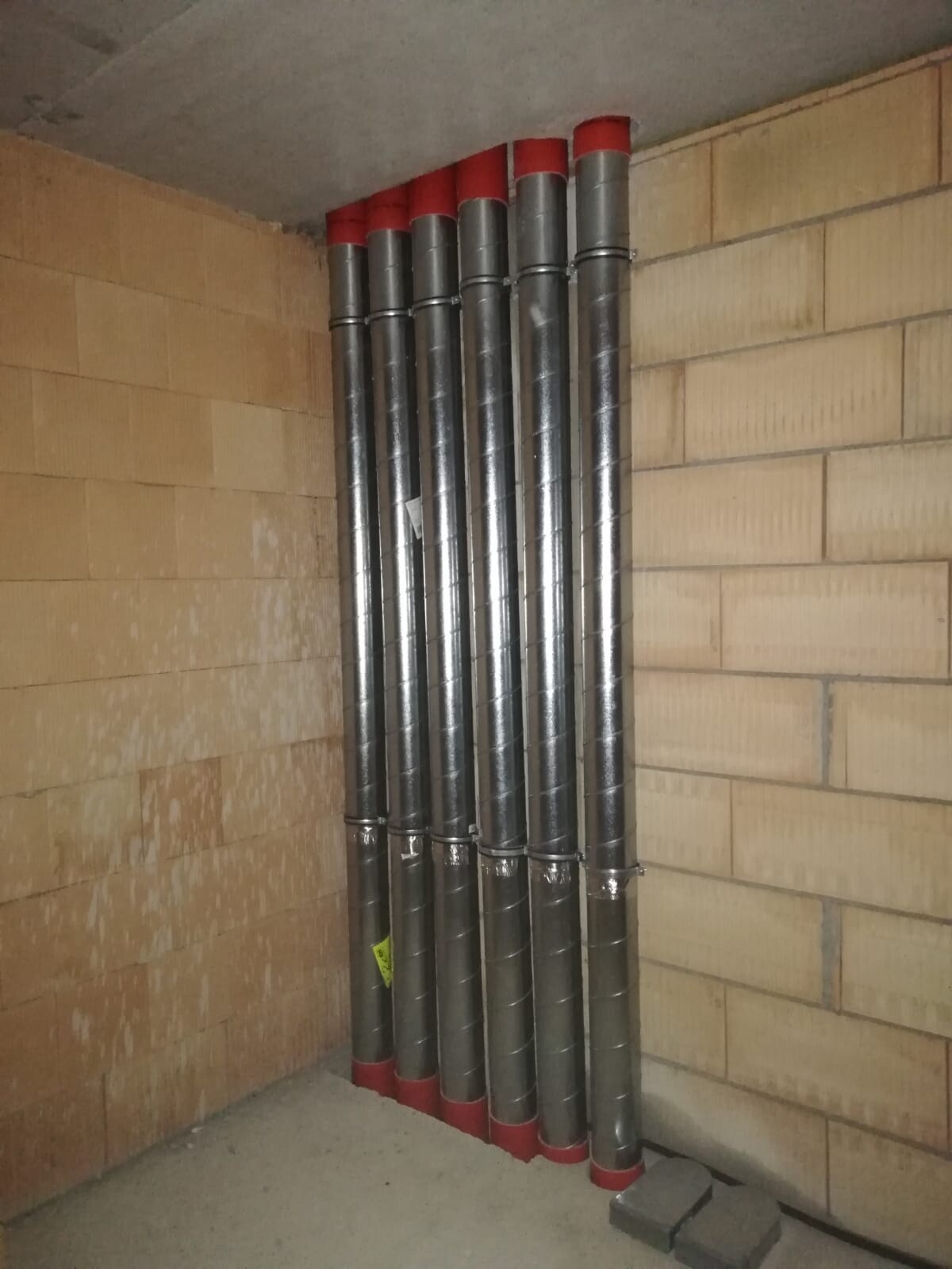
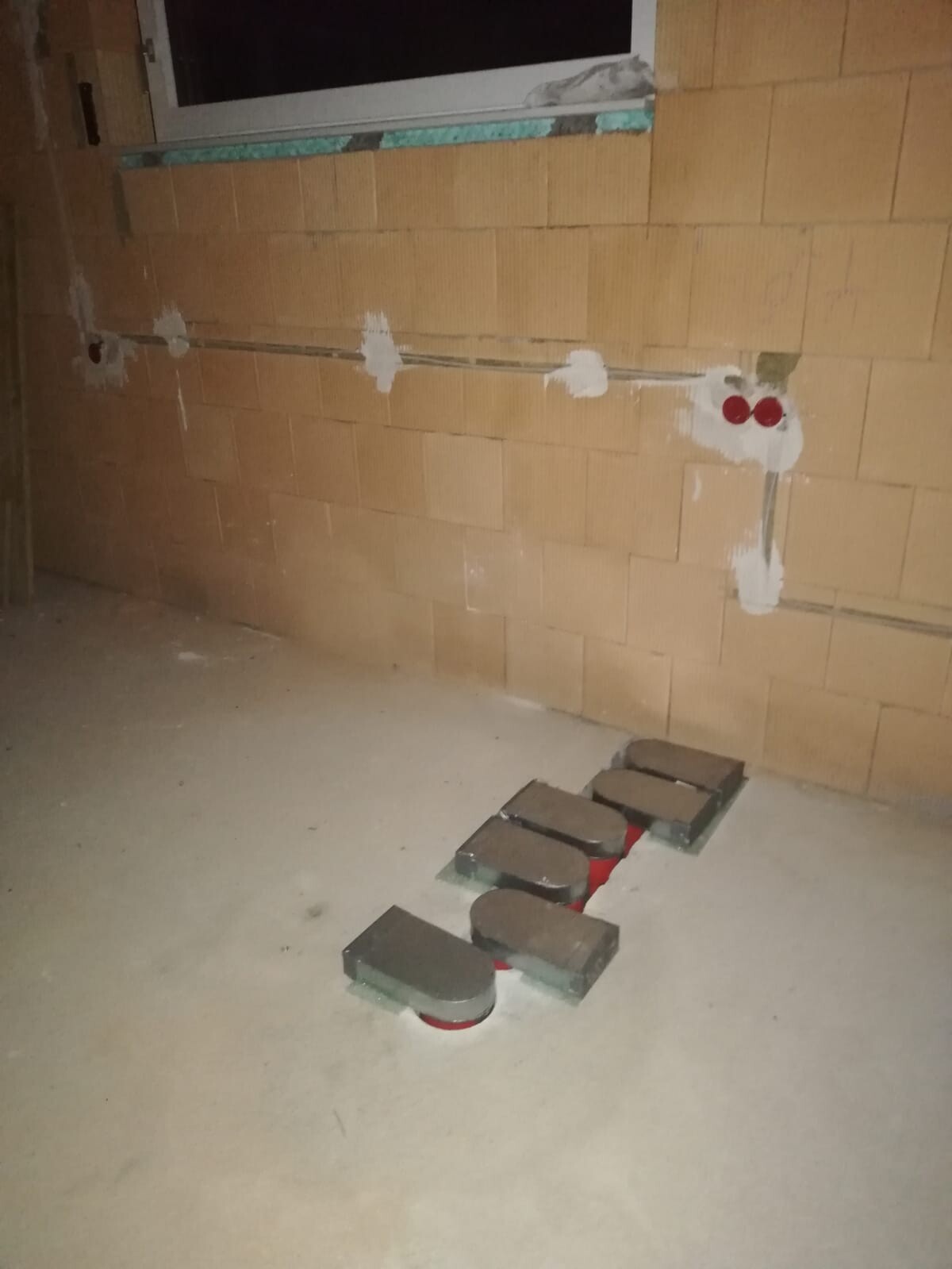
we have decided on a central controlled residential ventilation system for our new build.
The rough installation is now complete.
We did not interfere beforehand and trusted our installer.
However, we now have a few questions to better understand the setup and would also appreciate a brief confirmation on whether the installation was carried out correctly, if it can be done this way, or if there are alternative options.
--> The system is located in the laundry room because the technical room, due to the kitchen above, was not suitable for it (according to the installer).
So, we chose to separate the ventilation system and the air-to-water heat pump.
1. Is this feasible? Can the devices still communicate with each other (important for BAFA funding)? So far, I have not seen any wired connection between the two rooms (the rough installation has been completed since yesterday evening).
Unfortunately, I don’t have a picture of the laundry room at the moment, but logically the pipes come out of the ceiling in the basement in the same arrangement.
2. How should the piping be installed? Are additional pipes laid on the floor from the respective pipe outlets, possibly together with the underfloor heating pipes? These would then connect to the respective connection points (we have ventilation outlets either at the ceiling or high up on the wall).
3. Is it necessary or usual to install 6 such pipes—and is it “no problem” if all of them run directly underneath my bed? This can be seen in the second picture, where our bed is located.
I would appreciate some brief feedback and, if possible, pictures of your controlled residential ventilation installations.
We have not dealt with the rough installation at all and would like to gather some information from other sources before discussing again with our installer.
Thanks in advance!
Deliverer schrieb:
The devices operate completely independently. Any communication between them can only reduce efficiency.Hmm. Until now, I assumed that some form of communication would at least be necessary for efficient heat recovery?
My installer just wrote:
"I forwarded it to Mr. xxxxxx from Tecalor.
However, he also believes that this is not the case with the split system (TTL 9.5 and separate ventilation TVZ 180).
Only with the compact unit THZ 5.5 Eco, where the waste heat from the ventilation system is used to heat the heat pump.
He will have the technical team at the factory check it again."
Well... that doesn’t really help me either 😀 In the end, there MUST be communication here, otherwise we’ll lose 5,000!
"I forwarded it to Mr. xxxxxx from Tecalor.
However, he also believes that this is not the case with the split system (TTL 9.5 and separate ventilation TVZ 180).
Only with the compact unit THZ 5.5 Eco, where the waste heat from the ventilation system is used to heat the heat pump.
He will have the technical team at the factory check it again."
Well... that doesn’t really help me either 😀 In the end, there MUST be communication here, otherwise we’ll lose 5,000!
Prager91 schrieb:
Well... That doesn’t really help me either 😀 in the end, there HAS to be communication here, otherwise we’ll lose 5k!Exactly. You should pay attention to that, especially if you have submitted an application to BaFa and received approval for it!? 🙂

Mycraft schrieb:
You need to clarify this with the system installer. Communication between the two devices can be established using various methods. Since this is a requirement for your setup, it must be fulfilled.
Why only the 180 ventilation system? Is it a small house? 78m² (840 sq ft) on each floor (basement/main floor/attic) – is the system too small?
By the way, the basement is only a utility cellar, not a living area.
Here is what I found online:
"The TVZ 180 is suitable as a central ventilation system to efficiently supply fresh air to apartments, single-family homes, or smaller commercial buildings of up to 250 m² (2,700 sq ft) living space."
Well, the 180 model can circulate up to a maximum of 250m³/h (147 cfm), which is, in my opinion, really pushing the limit. What was the minimum ventilation rate calculated for your house? If I were in your position, I would at least go for the 280 model, which delivers up to 350m³/h (206 cfm). That would be a bit more comfortable and should operate more quietly under normal conditions.
However, with Tecalor, it seems to be the same device, probably just a software adjustment... So, many questions remain.
However, with Tecalor, it seems to be the same device, probably just a software adjustment... So, many questions remain.
Similar topics