
ᐅ Window sill height 130 cm in the bedroom / home office?
Created on: 23 Nov 2021 17:37
A
audiophilone
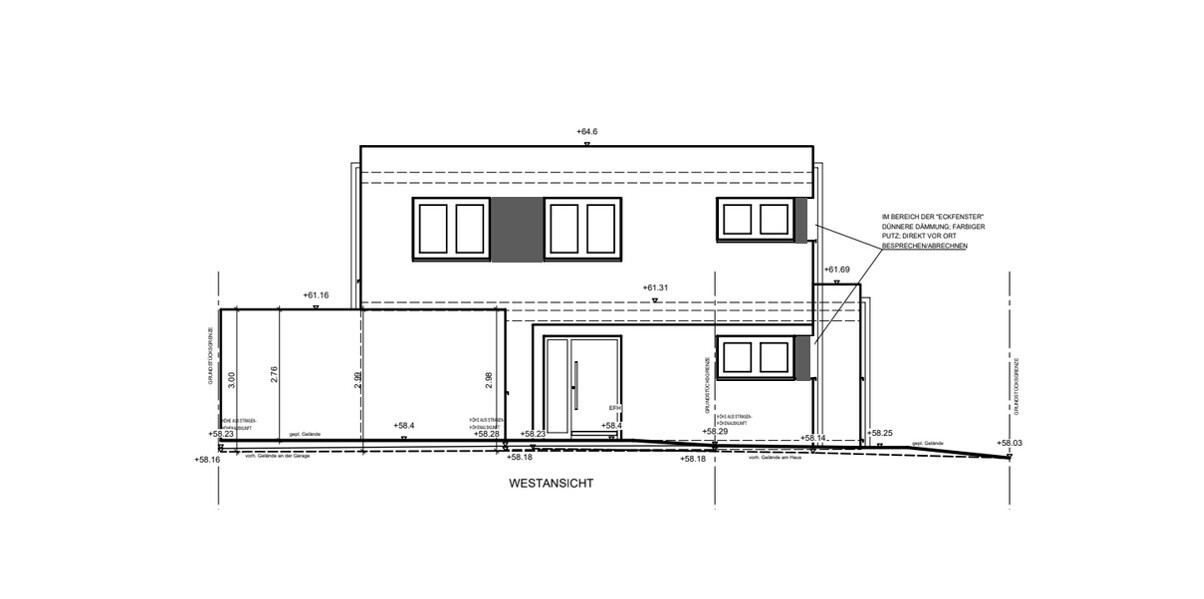
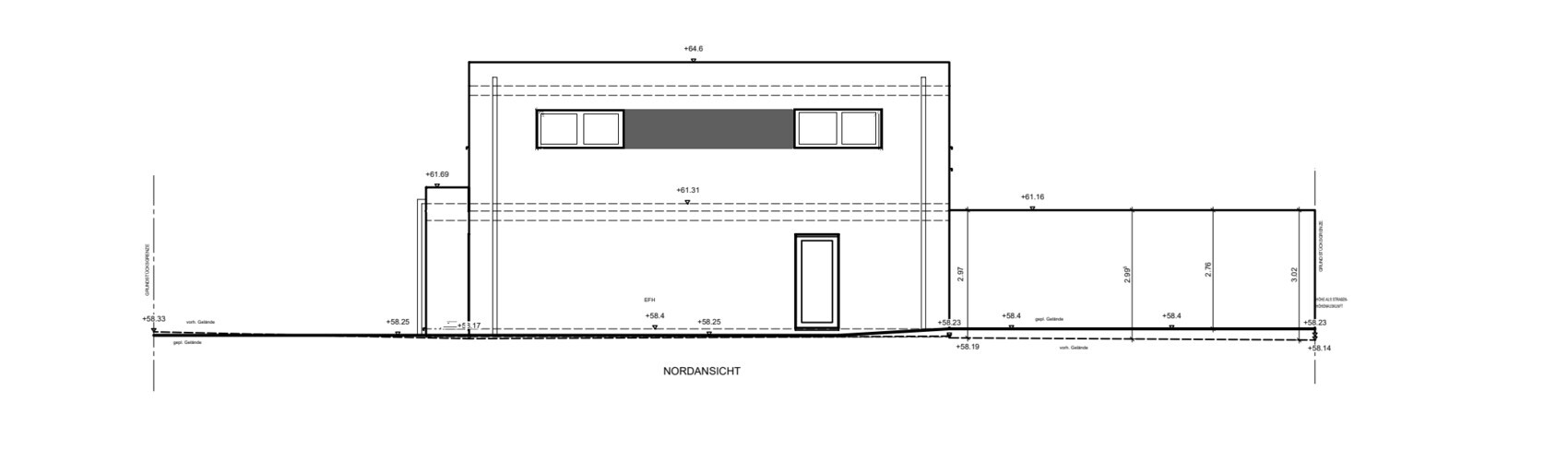
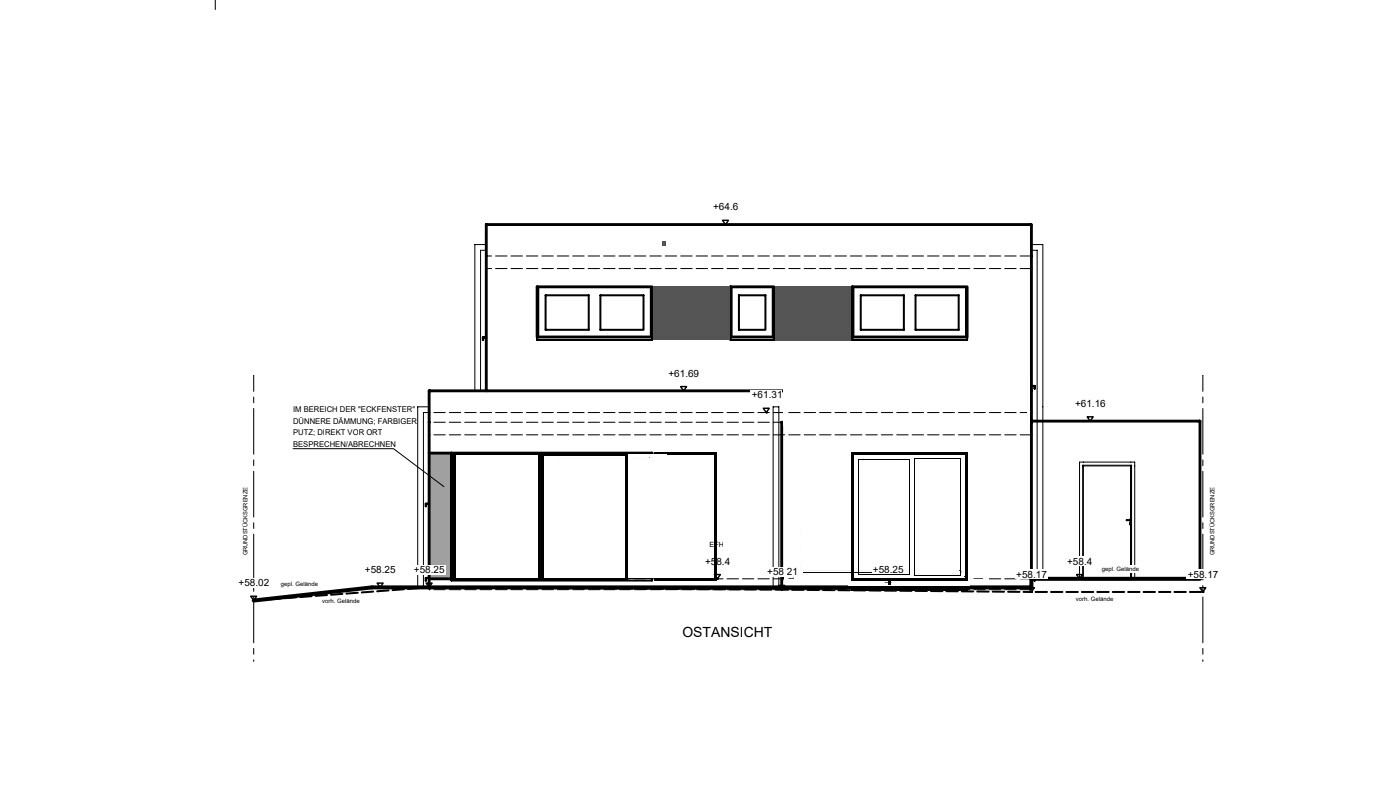
Hello... we have the following issue. Since we don’t want too many different window heights in the house and also don’t find the transition from a 130cm (51 inches) sill height to a low window in the same room or at the junctions particularly attractive, we are facing the above-mentioned problem. Actually, I’m not even sure if it’s really a problem.

P
pagoni202024 Nov 2021 08:20Maybe you could place your before-and-after options side by side so everyone here can share their opinion (if you want to).
I think if you completely separate yourself from the exterior for a moment and draft the windows exactly as they would be perfect for you from the inside, you probably wouldn’t end up with a less attractive house. Go through the rooms one by one and decide what you want to see, from where and how… We tried this endlessly, moving chairs, loungers, etc., always guided by the principle that we prefer windows as large as possible. That’s what we have now, and we’re very happy with it.
The issue of people looking in can be addressed from the inside, for example with frosted film or similar. But if looking out is impossible because the windows are too small or the sill height is too high, no film will help. And... a little doubt will always remain, which is why people usually build several houses in their lifetime 😀
I think if you completely separate yourself from the exterior for a moment and draft the windows exactly as they would be perfect for you from the inside, you probably wouldn’t end up with a less attractive house. Go through the rooms one by one and decide what you want to see, from where and how… We tried this endlessly, moving chairs, loungers, etc., always guided by the principle that we prefer windows as large as possible. That’s what we have now, and we’re very happy with it.
The issue of people looking in can be addressed from the inside, for example with frosted film or similar. But if looking out is impossible because the windows are too small or the sill height is too high, no film will help. And... a little doubt will always remain, which is why people usually build several houses in their lifetime 😀
H
hampshire24 Nov 2021 10:04There are always priorities when building a house. From what I can see with you, @audiophilone, the exterior seems particularly important. At the same time, you have identified a possible disadvantage for two rooms due to the height of the parapet.
I find the appearance of the first design quite successful. As @11ant already points out, there are several costly details. That’s not a problem if the budget allows; there is no rule that building must be cost-efficient. Whether the house achieves the desired impact depends, much like the design of the facades, on the plot and surroundings. On a 1000m² (10,764 sq ft) plot, creating that impact can be a challenge, and such a “clean” design requires appropriate landscaping. Again, no problem if space, neighborhood, and budget are sufficient.
What separates a beautiful house from a beautiful and good house is how the house brings long-term deep joy to its residents. Of course, both can happen at the same time. Whether you will succeed in this, I cannot say.
Your name, @audiophilone, suggests an affinity for high-quality music reproduction. So, I’ll try a comparison from that area: You seem to be going the “Bang & Olufsen” route—premium price, stylish design, and sound that is decent but doesn’t compare to truly great systems, which are available at similar price levels. High-end and design certainly exist in many variations—it just requires a different environment and costs a bit more—whether in the style of Burmester, Gryphon, Wilson Benesch, McIntosh, Naim, Linn, Meridian, or Jadis. I would probably think along the lines of Brinkmann, which few people know; it’s elegant, simple, sounds breathtakingly good in the right setting, and is not overpriced. That could fit well.
I find the appearance of the first design quite successful. As @11ant already points out, there are several costly details. That’s not a problem if the budget allows; there is no rule that building must be cost-efficient. Whether the house achieves the desired impact depends, much like the design of the facades, on the plot and surroundings. On a 1000m² (10,764 sq ft) plot, creating that impact can be a challenge, and such a “clean” design requires appropriate landscaping. Again, no problem if space, neighborhood, and budget are sufficient.
What separates a beautiful house from a beautiful and good house is how the house brings long-term deep joy to its residents. Of course, both can happen at the same time. Whether you will succeed in this, I cannot say.
Your name, @audiophilone, suggests an affinity for high-quality music reproduction. So, I’ll try a comparison from that area: You seem to be going the “Bang & Olufsen” route—premium price, stylish design, and sound that is decent but doesn’t compare to truly great systems, which are available at similar price levels. High-end and design certainly exist in many variations—it just requires a different environment and costs a bit more—whether in the style of Burmester, Gryphon, Wilson Benesch, McIntosh, Naim, Linn, Meridian, or Jadis. I would probably think along the lines of Brinkmann, which few people know; it’s elegant, simple, sounds breathtakingly good in the right setting, and is not overpriced. That could fit well.
A
audiophilone24 Nov 2021 14:24@hampshire So, theoretically, I do understand what you mean with the comparison... but nevertheless, there still seems to be some difficulties in the implementation.

I would only install windows with a high sill height where there is a clear, justifiable reason. For example, we have several windows at 1.25m (4 ft) high: one behind a kitchen countertop because we use the windowsill as extra shelf space, one on the hillside side (we live on a slope) to deliberately direct the view upwards toward the summit cross, and one in the entrance hall because the staircase runs along that wall and I didn’t want the sill too close to the steps.
Otherwise, as a standard window, this is absolutely not advisable: you are always forced to look upwards, which in earlier times was used by rulers to intimidate their subjects. Your view loses connection with the ground, your sense of orientation. It is also dark because in addition to the sill height, you have another 10cm (4 inches) of frame – logically on all four sides. You can try calculating the actual glass surface and compare it to the room size — it’s not much. Personally, I would have an immediate urge to escape such a room.
By the way, I find even a sill height of 90cm (35 inches) plus 10cm (4 inches) frame too high. Right now, from my office window with a sill height of 45cm (18 inches), I can see what’s happening outside: children coming home from school, someone raking leaves, an occasional squirrel, etc. Based on the fall protection, I can tell what I would see (as a tall person) with a sill height of 90cm (35 inches): none of that.
I can only emphasize the advice already given here multiple times: plan the windows from the INSIDE. Imagine the rooms, where and how you will spend time, where you will look, where are nice views (or the opposite), how sunlight moves, and so on. Completely disregard the exterior view at first, and just imagine from inside where you want which windows. Sill height, width, corner glazing, etc. are completely flexible in this phase. Once you are confident (and if in doubt, choose more rather than less window area), then draw your desired windows into the exterior views. It can look quite wild:
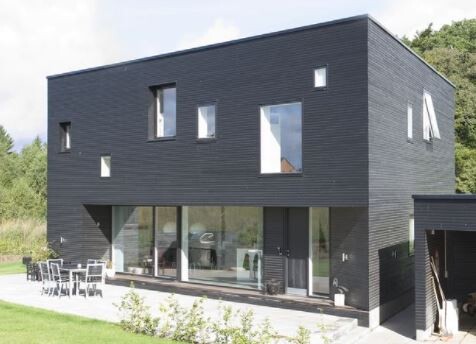
If you like it that way, you can keep it. Or you can tame the overall look by, for example, repeating proportions or formats (which can alternate vertically and horizontally), aligning between ground floor and upper floor, etc. The important thing is to think completely freely from the inside during planning. Whether and how much you later standardize for the exterior design is a step that follows.
Regarding the design itself: on the floor plan, the sill height in the north rooms (office and child’s room) on the upper floor is marked as 45cm (18 inches). However, I don’t see this reflected in the elevations. Is that an error, or am I missing something?
I find the bathrooms problematic: on the ground floor, the layout conflicts with the entrance door and hallway, and upstairs it is (too) large yet the bathtub is still positioned in the corner in an old-fashioned way. How about moving the staircase to the other side of the hallway (i.e., toward the top of the plan), and then on the upper floor partitioning off the right part of the bathroom (where the bathtub currently is) for a separate toilet room? That room could then be accessed directly from the hallway, saving a door from the bedroom.
Otherwise, as a standard window, this is absolutely not advisable: you are always forced to look upwards, which in earlier times was used by rulers to intimidate their subjects. Your view loses connection with the ground, your sense of orientation. It is also dark because in addition to the sill height, you have another 10cm (4 inches) of frame – logically on all four sides. You can try calculating the actual glass surface and compare it to the room size — it’s not much. Personally, I would have an immediate urge to escape such a room.
By the way, I find even a sill height of 90cm (35 inches) plus 10cm (4 inches) frame too high. Right now, from my office window with a sill height of 45cm (18 inches), I can see what’s happening outside: children coming home from school, someone raking leaves, an occasional squirrel, etc. Based on the fall protection, I can tell what I would see (as a tall person) with a sill height of 90cm (35 inches): none of that.
I can only emphasize the advice already given here multiple times: plan the windows from the INSIDE. Imagine the rooms, where and how you will spend time, where you will look, where are nice views (or the opposite), how sunlight moves, and so on. Completely disregard the exterior view at first, and just imagine from inside where you want which windows. Sill height, width, corner glazing, etc. are completely flexible in this phase. Once you are confident (and if in doubt, choose more rather than less window area), then draw your desired windows into the exterior views. It can look quite wild:
If you like it that way, you can keep it. Or you can tame the overall look by, for example, repeating proportions or formats (which can alternate vertically and horizontally), aligning between ground floor and upper floor, etc. The important thing is to think completely freely from the inside during planning. Whether and how much you later standardize for the exterior design is a step that follows.
Regarding the design itself: on the floor plan, the sill height in the north rooms (office and child’s room) on the upper floor is marked as 45cm (18 inches). However, I don’t see this reflected in the elevations. Is that an error, or am I missing something?
I find the bathrooms problematic: on the ground floor, the layout conflicts with the entrance door and hallway, and upstairs it is (too) large yet the bathtub is still positioned in the corner in an old-fashioned way. How about moving the staircase to the other side of the hallway (i.e., toward the top of the plan), and then on the upper floor partitioning off the right part of the bathroom (where the bathtub currently is) for a separate toilet room? That room could then be accessed directly from the hallway, saving a door from the bedroom.
A
audiophilone24 Nov 2021 14:52@Hangman I think the example picture is completely off... it just doesn’t fit with our ideas for the exterior at all... which doesn’t make things any easier. Personally, we’re not really fans of floor-to-ceiling windows on the upper floor; I could never imagine having something like that in the bathroom. I didn’t want to change anything about the floor plan either... the front door will be moved to the other side anyway... but that’s not really my point. Of course, it’s important for me to have enough natural light and occasionally a view from above when I want it, but not the other way around—where everyone can look into the house (where it’s not wanted). We just don’t want the house to look like a puzzle of windows.

audiophilone schrieb:
Of course, it’s important to me to have enough light and occasionally a view from above when I want it. Yes, exactly! In my opinion, you don’t have enough of that right now.
audiophilone schrieb:
Not the other way around, where everyone can look into my house (where it’s not wanted). I wouldn’t control that through window placement and size but rather with privacy screens inside and especially outside.
audiophilone schrieb:
We don’t really want a puzzle of windows all over the house. Why not? My wife didn’t want that either, but it just happened to work well with our other requirements, which is why our windows are quite symmetrical.
But I never really understood that, and I wouldn’t have cared at all. Eventually, for the sake of peace in the house, my wife didn’t want me to push the issue any further. But with you, I dare to ask! Why is having symmetrical or even identical window arrangements on the outside so important when you’re sitting inside?
Similar topics