
ᐅ Design of a Single-Family House Floor Plan (Convertible to a Two-Family Home for Later Use) on a Sloped Site
Created on: 1 Apr 2021 21:58
S
Seppl's Häusle
Development Plan / Restrictions
Plot size: 440 m² (4,736 ft²)
Slope: steep slope of 30° - 40° in the rear area, 7-10 m (23-33 ft) towel-shaped plateau along the street
Floor area ratio: not applicable, suitable
Gross floor area ratio: not applicable, suitable
Building envelope, building line, and boundary: no zoning plan, building permit for another project already approved
Edge development: single-family house, 2 full stories, mostly gable roof, but also flat and hipped roofs
Number of parking spaces: 2 required (no trapped parking space)
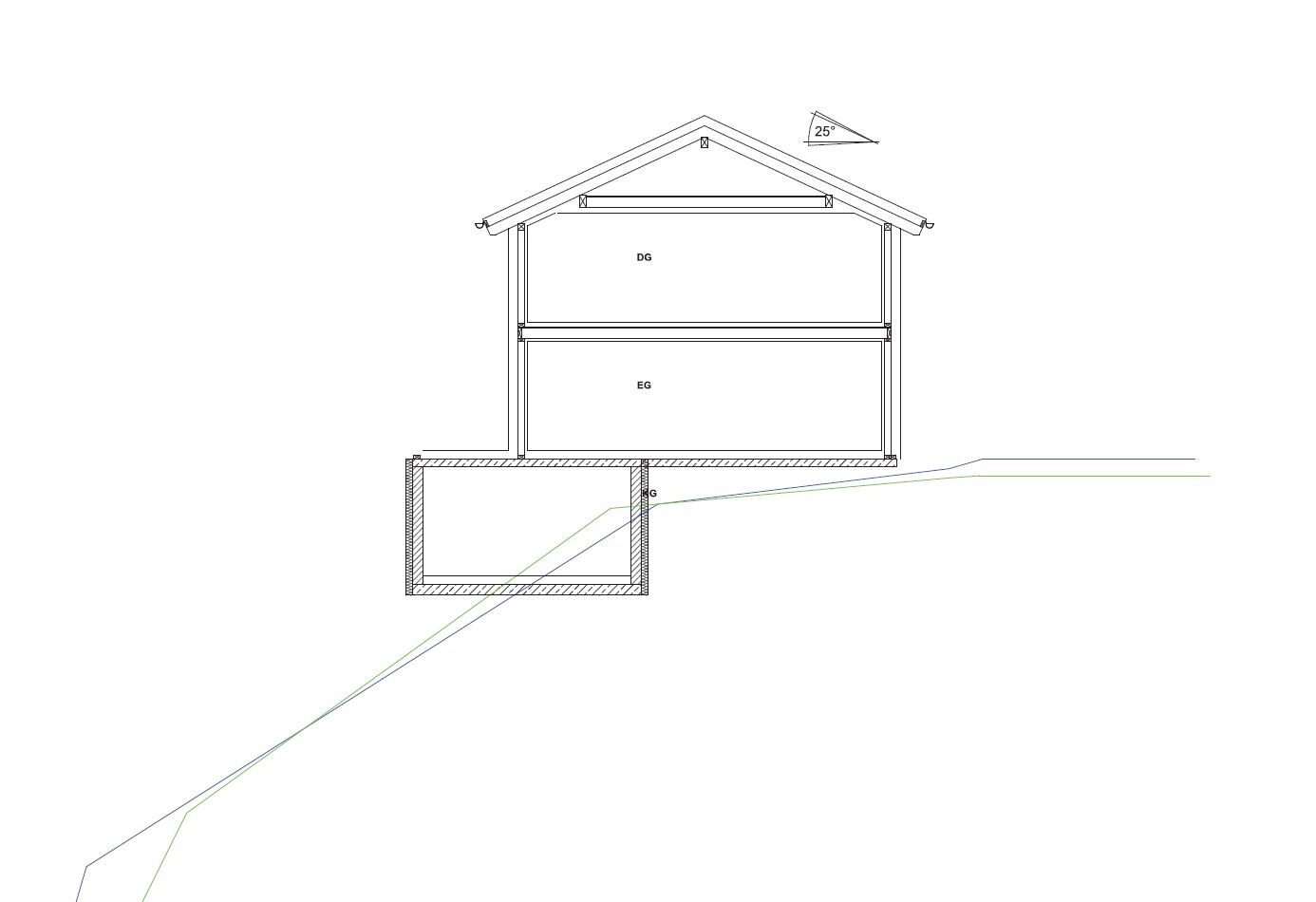
Number of stories: 2 full stories plus partial basement on the south-facing slope
Roof type: gable roof
Design style: open to planning
Orientation: hillside facing southwest
Maximum heights / limits: unknown
Other requirements: no zoning plan
Owners’ Requirements
Style, roof type, building type: gable roof, timeless both inside and out
Basement, stories: partial basement (on the slope) + 2 full stories (see cross-section)
Number of people, ages: 2 adults + 2 children
Space needed on ground and upper floor: approx. 85 m² (915 ft²) per floor
Office: initially none, if needed in guest room or basement
Overnight guests per year: hopefully many 🙂
Open or closed architecture: compromise, as the two apartments should remain separable in old age on ground and upper floor
Conservative or modern construction: as above
Open kitchen, kitchen island: yes
Number of dining seats: minimum 4
Fireplace: yes, in the conservatory
Balcony, roof terrace: yes, on the basement level, 2.5 m (8 ft) facing south
Garage, carport: yes, on the east side by the main entrance
Utility garden, greenhouse: terraced garden planned with usable areas
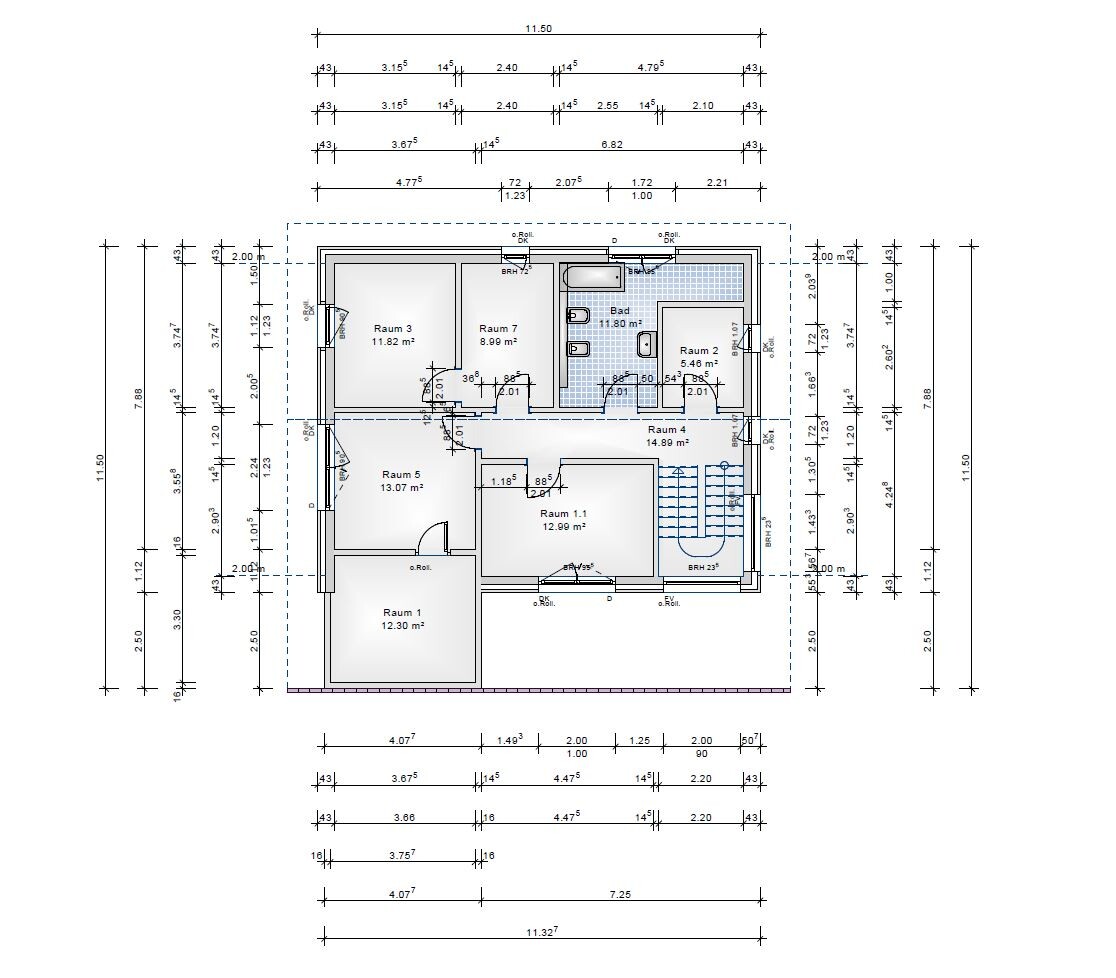
Other wishes / special features: no water connection in the basement to avoid a lifting system. Therefore, laundry room in the upper floor instead of basement. It is located by the stairwell so it can still be used in old age when the upper-floor apartment is separated by a door.
House Design
Who designed it:
Planner from a construction company together with us
What is especially liked? Why?
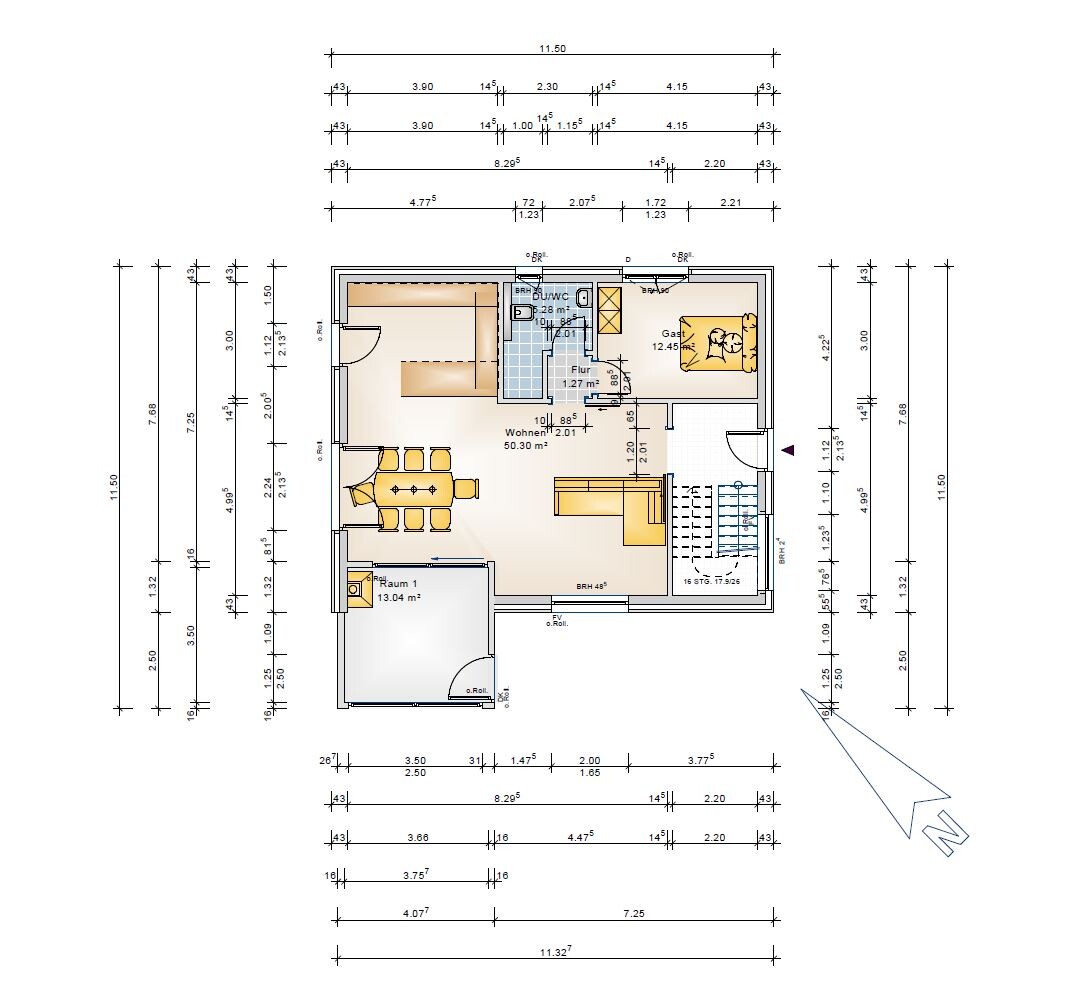
Open floor plan on the ground floor combined with private retreat areas on each floor. Bay window facing south (downhill side), conservatory, and terrace there as well
What is disliked? Why?
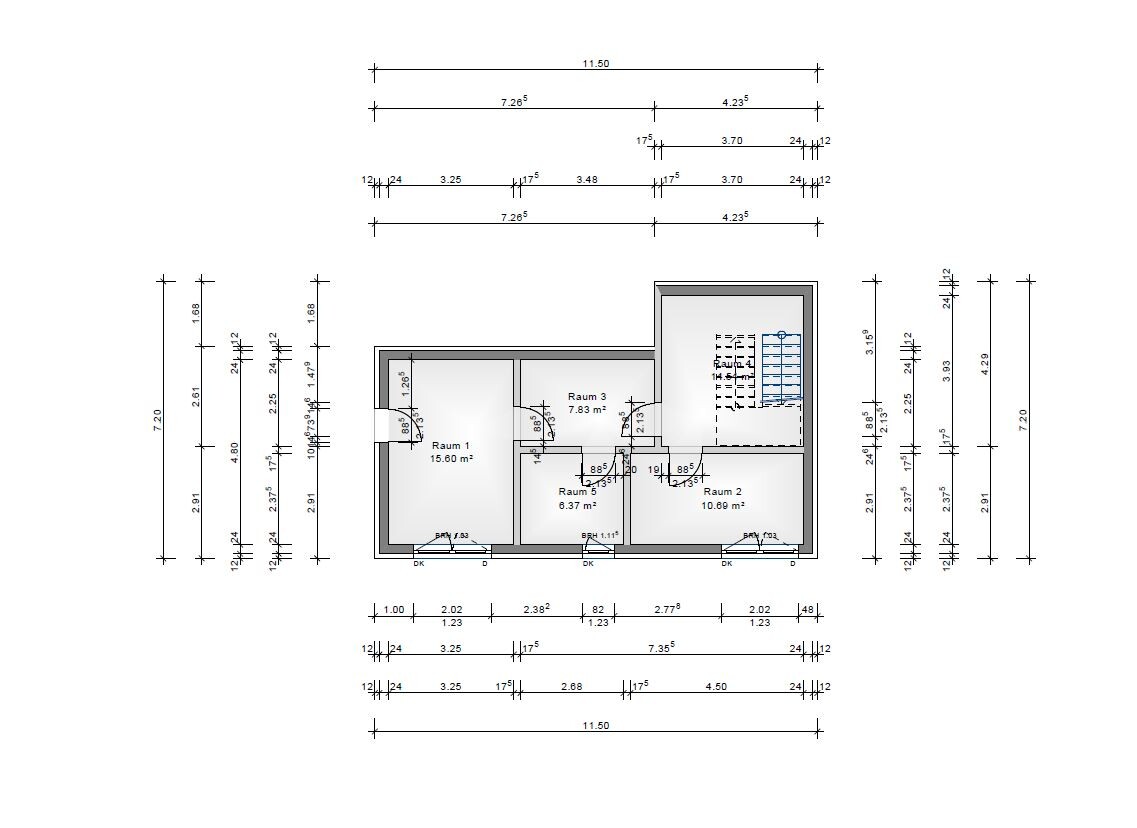
Basement and shape of the basement are not entirely satisfactory but likely cannot be changed due to staircase position in the stairwell.
WC and room on the ground floor feel cramped; have not found a better solution as access should not be through the main hallway
Cost estimate: none yet
Personal price limit including fittings: as long as we stay under 5 million, everything is fine 😀
Preferred heating system: solar combined with pellet heating
What you could live without
-could live without:
Upper floor bathroom is still very large; could be smaller
-cannot live without:
Ability to separate living units for old age, bay window in the living room
Why is the design like this?
The plot has a towel-shaped plateau measuring 22 m (72 ft) wide and 7-10 m (23-33 ft) long. The house’s mass will be placed there. A seating area/garden is planned to the west with access from the kitchen via a few meters of wooden terrace. The slope on the south side drops steeply. The garage and a parking space at the driveway will be located on the east side.
Windows are positioned symmetrically from the outside perspective, which is why their arrangement on the ground and upper floor appears a little unusual.
What is the most important/fundamental question about the floor plan in 130 characters?
We want to use the plot as it is, not fight against it. The unobstructed south view should be emphasized. The sightline from the entrance through the hallway, glass door over the dining table to the garden in the west should make the house feel spacious. Three old trees on the plot will be integrated into the garden. Inside, we aim for minimalism and a timeless living feel.
We welcome all suggestions and ideas but also have clear concepts that can hopefully already be seen in the floor plan.
Is there anything you think we should consider or improve?
Thank you very much for your support 🙂
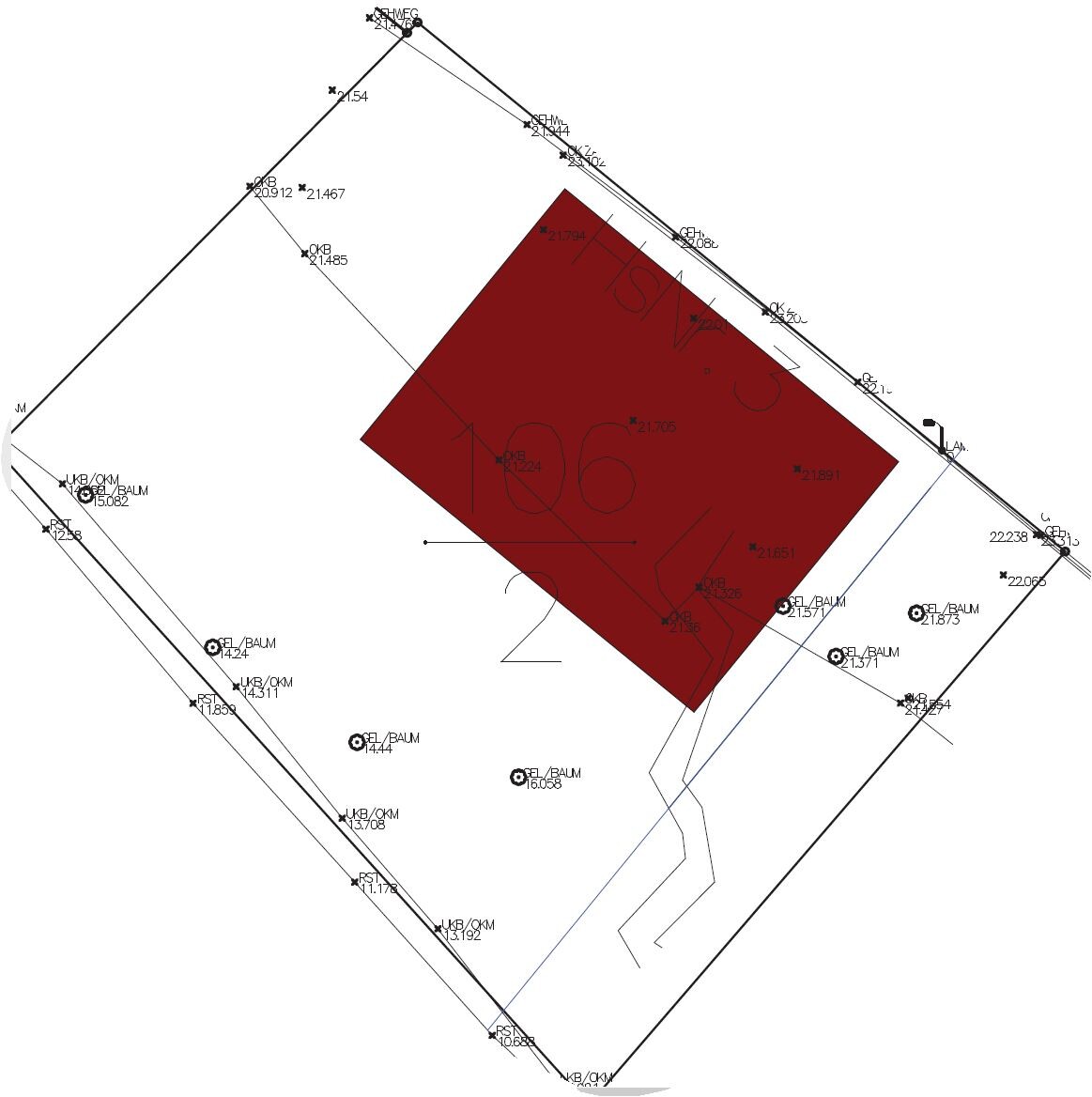
Plot size: 440 m² (4,736 ft²)
Slope: steep slope of 30° - 40° in the rear area, 7-10 m (23-33 ft) towel-shaped plateau along the street
Floor area ratio: not applicable, suitable
Gross floor area ratio: not applicable, suitable
Building envelope, building line, and boundary: no zoning plan, building permit for another project already approved
Edge development: single-family house, 2 full stories, mostly gable roof, but also flat and hipped roofs
Number of parking spaces: 2 required (no trapped parking space)
Number of stories: 2 full stories plus partial basement on the south-facing slope
Roof type: gable roof
Design style: open to planning
Orientation: hillside facing southwest
Maximum heights / limits: unknown
Other requirements: no zoning plan
Owners’ Requirements
Style, roof type, building type: gable roof, timeless both inside and out
Basement, stories: partial basement (on the slope) + 2 full stories (see cross-section)
Number of people, ages: 2 adults + 2 children
Space needed on ground and upper floor: approx. 85 m² (915 ft²) per floor
Office: initially none, if needed in guest room or basement
Overnight guests per year: hopefully many 🙂
Open or closed architecture: compromise, as the two apartments should remain separable in old age on ground and upper floor
Conservative or modern construction: as above
Open kitchen, kitchen island: yes
Number of dining seats: minimum 4
Fireplace: yes, in the conservatory
Balcony, roof terrace: yes, on the basement level, 2.5 m (8 ft) facing south
Garage, carport: yes, on the east side by the main entrance
Utility garden, greenhouse: terraced garden planned with usable areas
Other wishes / special features: no water connection in the basement to avoid a lifting system. Therefore, laundry room in the upper floor instead of basement. It is located by the stairwell so it can still be used in old age when the upper-floor apartment is separated by a door.
House Design
Who designed it:
Planner from a construction company together with us
What is especially liked? Why?
Open floor plan on the ground floor combined with private retreat areas on each floor. Bay window facing south (downhill side), conservatory, and terrace there as well
What is disliked? Why?
Basement and shape of the basement are not entirely satisfactory but likely cannot be changed due to staircase position in the stairwell.
WC and room on the ground floor feel cramped; have not found a better solution as access should not be through the main hallway
Cost estimate: none yet
Personal price limit including fittings: as long as we stay under 5 million, everything is fine 😀
Preferred heating system: solar combined with pellet heating
What you could live without
-could live without:
Upper floor bathroom is still very large; could be smaller
-cannot live without:
Ability to separate living units for old age, bay window in the living room
Why is the design like this?
The plot has a towel-shaped plateau measuring 22 m (72 ft) wide and 7-10 m (23-33 ft) long. The house’s mass will be placed there. A seating area/garden is planned to the west with access from the kitchen via a few meters of wooden terrace. The slope on the south side drops steeply. The garage and a parking space at the driveway will be located on the east side.
Windows are positioned symmetrically from the outside perspective, which is why their arrangement on the ground and upper floor appears a little unusual.
What is the most important/fundamental question about the floor plan in 130 characters?
We want to use the plot as it is, not fight against it. The unobstructed south view should be emphasized. The sightline from the entrance through the hallway, glass door over the dining table to the garden in the west should make the house feel spacious. Three old trees on the plot will be integrated into the garden. Inside, we aim for minimalism and a timeless living feel.
We welcome all suggestions and ideas but also have clear concepts that can hopefully already be seen in the floor plan.
Is there anything you think we should consider or improve?
Thank you very much for your support 🙂
I have said everything I wanted to say about the floor plan.
But since I just wrote this elsewhere, I’ll quote myself regarding granny flats or secondary apartments in general:
Compromises are okay. But subordinating the entire house to a lifestyle that is neither obvious nor practical only leads to dissatisfaction.
But since I just wrote this elsewhere, I’ll quote myself regarding granny flats or secondary apartments in general:
ypg schrieb:
Many people don’t have guests or hobbies until the kids have left home. But I think that’s something you have to decide for yourself.
While the argument of a granny flat or secondary apartment for possible family members (children) is often used, in my opinion, you should first consider the most obvious scenario before reducing half of the house by separating what is usually the upper floor and then living in about 80m (860ft²) with a small bathroom. Namely, that the children move to another city, want to live in their own house with their family, and then one or two rooms—the old children’s bedrooms—can be used for visits from grandchildren and new hobbies, for which there is then time and interest.
Many people here no longer think along these obvious lines. They only consider the extreme worst cases: comfort and luxury/size come first, and when the children grow up, then the granny flat or secondary apartment is for them, and they reduce their own living space from 200m (2150ft²) to 30-40%.
In the few cases I’ve seen, people rarely choose this as an option “in old age”…
Compromises are okay. But subordinating the entire house to a lifestyle that is neither obvious nor practical only leads to dissatisfaction.
S
Seppl's Häusle21 Oct 2021 13:55haydee schrieb:
The two entrances and the staircase take up a lot of space that you miss in the open-plan area. The wardrobe actually accounts for 1.5 m² (16 sq ft) of hallway, even if it is not officially designated as such. In our previous design, we only had one main entrance; the only thing that benefited from that was the downstairs WC, which I have to say is perfectly sized for me.
So yes, we considered that option because it initially seemed obvious to us, but the position of the staircase in the center of the house provided the best access to the upper and lower floors in this layout, so we decided on this version.
haydee schrieb:
Make sure to properly draw all the furniture to scale and include the necessary circulation space. I’ll do that later. We did it in an earlier draft, but not yet for this version—I'll get to it. I can say that we have already seen the floor plans furnished at full scale and made some small changes based on what bothered us, although we also realized that this arrangement offers significant flexibility on the upper and lower floors. Only the ground floor is fixed and can’t be changed much. That’s mostly due to the way the rooms are oriented relative to the cardinal directions and the slope of the site.
ypg schrieb:
But designing the entire house around a lifestyle that is neither obvious nor flexible only leads to dissatisfaction. For us, the compromise is not that big. Sure, you could add about 5 m² (54 sq ft) on the ground floor, but that space tends to get filled with things you don’t really need and that don’t improve your quality of life.
Maybe this thread can be concluded with the understanding that this house design won’t suit everyone’s taste, but for our budget, lifestyle, and preferences, it certainly isn’t a complete misdesign.
On the ground floor, you spend the most time.
You have assigned 42 sqm (about 452 sq ft) to living areas. Part of that is the unfurnished kitchen, and part is the cloakroom-hallway area. There is a 17 sqm (about 183 sq ft) hallway that is unfurnished. The reading area — a quiet zone — is located between the kitchen, dining, and hallway, meaning it is right in the busiest part of the house.
Putting aside the slope and the two-family house design for now, ground floors are often planned with the following considerations:
The kitchen should be as close to the terrace as possible.
A 4 m (13 ft) width for the living area is reasonable given the current TV sizes.
The staircase should not be next to the main entrance door. How often do you pass by the front door in less-than-ideal lighting? And sometimes it even has glass panels.
The cloakroom should be next to the entrance. With two doors and two storage areas, shoes and jackets always end up by the wrong door.
In the basement, you also have a lot of unused space. A large hallway, a dressing room with few wardrobes but a lot of circulation space, and a conservatory that will significantly heat up the sleeping area.
I would recommend reconsidering the room layout and not taking the two-family house concept into account for the staircase placement. That does not mean the staircase should be open to the living space.
You have assigned 42 sqm (about 452 sq ft) to living areas. Part of that is the unfurnished kitchen, and part is the cloakroom-hallway area. There is a 17 sqm (about 183 sq ft) hallway that is unfurnished. The reading area — a quiet zone — is located between the kitchen, dining, and hallway, meaning it is right in the busiest part of the house.
Putting aside the slope and the two-family house design for now, ground floors are often planned with the following considerations:
The kitchen should be as close to the terrace as possible.
A 4 m (13 ft) width for the living area is reasonable given the current TV sizes.
The staircase should not be next to the main entrance door. How often do you pass by the front door in less-than-ideal lighting? And sometimes it even has glass panels.
The cloakroom should be next to the entrance. With two doors and two storage areas, shoes and jackets always end up by the wrong door.
In the basement, you also have a lot of unused space. A large hallway, a dressing room with few wardrobes but a lot of circulation space, and a conservatory that will significantly heat up the sleeping area.
I would recommend reconsidering the room layout and not taking the two-family house concept into account for the staircase placement. That does not mean the staircase should be open to the living space.

Seppl's Häusle schrieb:
I am optimistic, and a good planner can even be better than a poor architect. Nice saying, but in reality, your plot is unfortunately even more challenging than that of @sichtbeton82: https://www.hausbau-forum.de/threads/grundrissplanung-fuer-zfh-im-hang.24435/
https://www.instagram.com/11antgmxde/
https://www.linkedin.com/company/bauen-jetzt/
S
Seppl's Häusle21 Oct 2021 16:3411ant schrieb:
but in reality your plot of land is even more demanding thanYou mean more interesting or exciting 😉I know we didn’t choose an easy plot, but if you want an affordable plot in a reasonably good location in this area, you have to be willing to face such challenges or build somewhere else.
We decided to embrace the challenges 🙂
Similar topics