
ᐅ Floor Plan Optimization, Single-Family Home, Urban Villa 12x12 m
Created on: 15 Oct 2021 00:59
L
Lia_Home
Hello everyone,
We visited several model homes, spoke with different construction companies, and reviewed a number of floor plans. Unfortunately, many of the designs didn’t meet our expectations. As a result, we drew the floor plan ourselves using a 3D home design program.
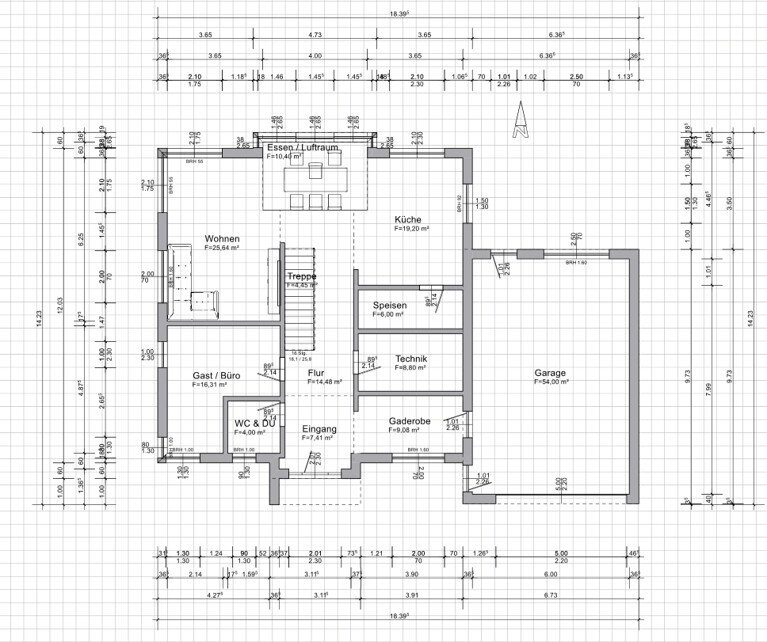
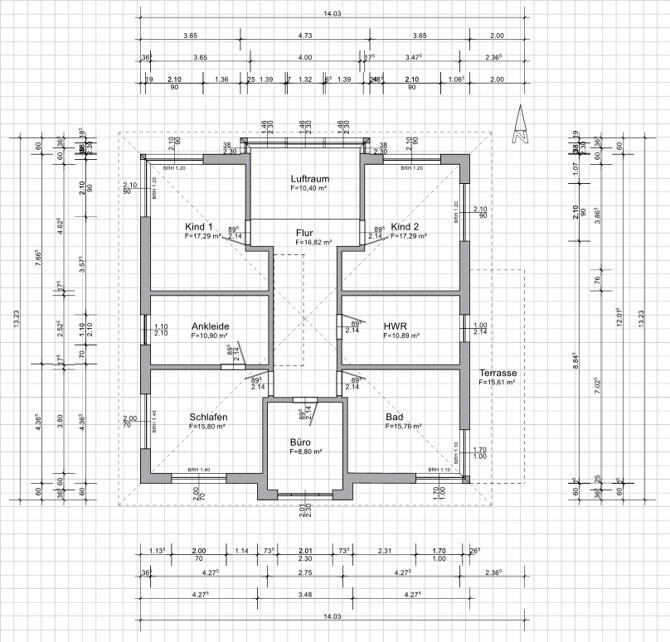
We are quite satisfied with the upper floor. However, we see room for improvement on the ground floor. For example, is the hallway too large or too narrow? Also, the layout of the guest room and the guest bathroom needs reconsideration. Would it be possible to convert this room (with shower toilet) into a small separate apartment?
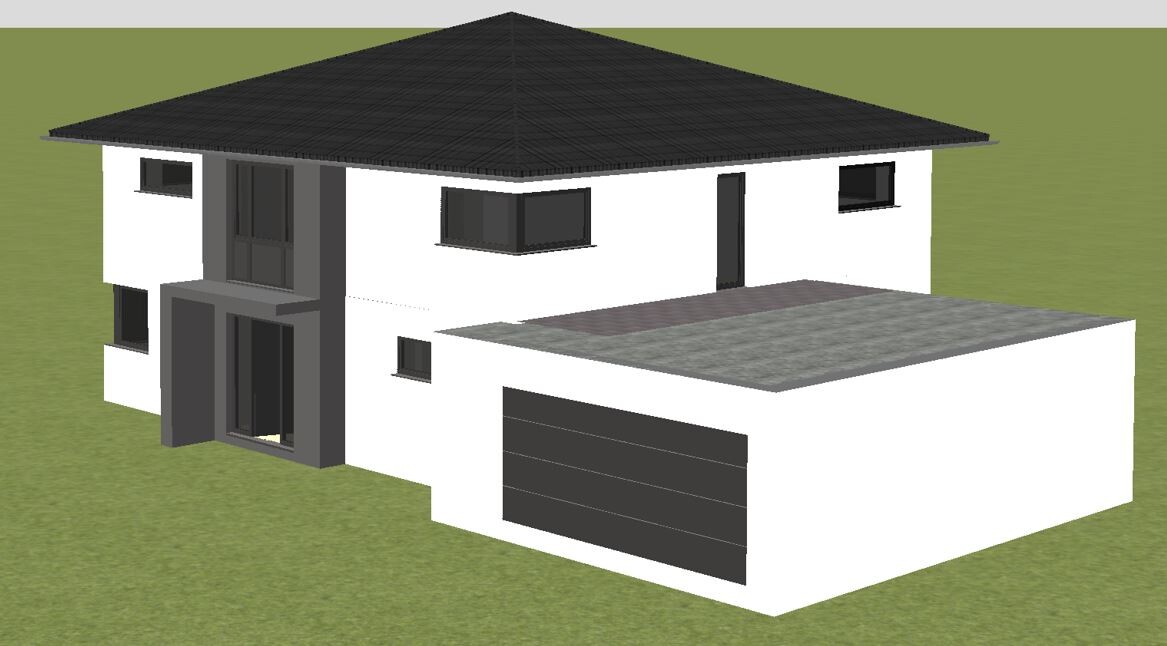
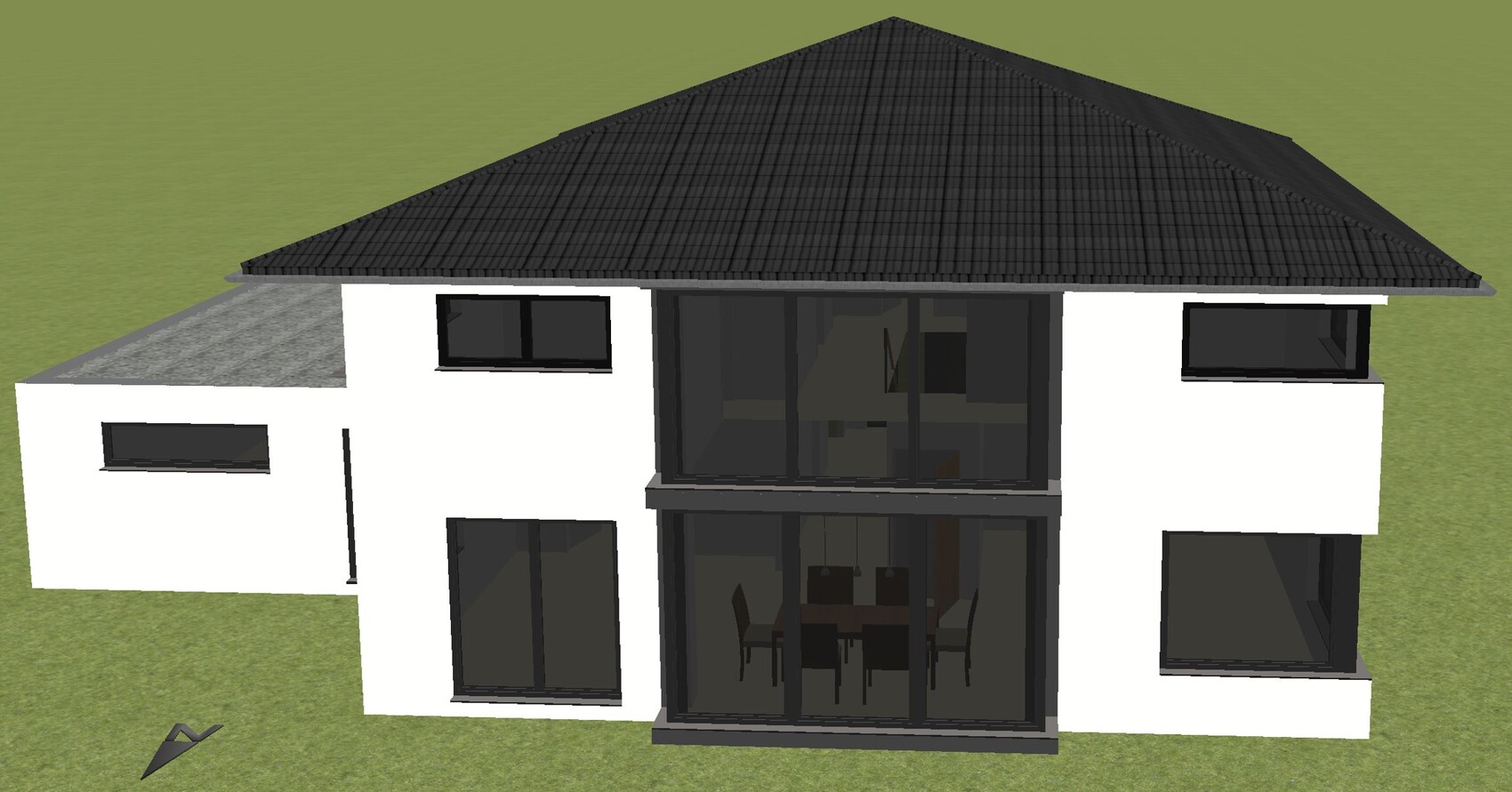
Attached are both floor plans as well as two perspective images.
We look forward to your feedback.
Thank you very much! Lia
Building regulations/restrictions
Plot size: 821 m2 (approx. 21 m (69 feet) wide and 35 m (115 feet) deep, not quite rectangular)
Slope: none
Site coverage ratio: 0.4
Building setback: 5 meters (16 feet) from the street, 4 meters (13 feet) from neighbors
Number of stories: max. 2
Roof type: hipped roof
Architectural style: modern
Maximum height restrictions: eaves height 6 m (20 feet), ridge height 8.5 m (28 feet)
Client requirements
Style, roof form, building type: modern, hipped roof
Basement, number of floors: 2 full floors
Household size and ages: 2 adults in their mid-30s, 1 child, 2 years old
Space requirements on ground floor: cloakroom, guest room, guest shower WC, utility/technical room, kitchen, pantry, living-dining room
Space requirements on upper floor: 2 children’s rooms, master bedroom, dressing room, laundry room, bathroom, office
Office: home office
Number of overnight guests per year: several times a year
Open or closed layout: open
Traditional or modern construction: modern
Open kitchen, kitchen island: open kitchen with work island
Seats at dining table: usually 4-6, at celebrations at least 15
Fireplace: yes
Balcony, roof terrace: roof terrace above garage
Garage or carport: garage
Kitchen garden, greenhouse: no
Additional wishes/particulars/daily routine, reasons for including or excluding certain features:
- open space/void
- large west-facing windows due to no neighbors
- cloakroom
- covered entrance
House design
Who designed the plan:
- ourselves
What do you like most?
- spacious, open living and dining area
What do you dislike? Why?
Estimated cost according to builder: approx. 550,000
Hallway (takes up too much space?), guest room on the ground floor (too awkwardly shaped)
If you had to give up some details or extensions
- hallway space
Why was the design made this way? For example:
We arranged the rooms so they made sense to us and took room sizes into account.
What is your main question about the floor plan in 130 characters?
Are there any possible optimizations for the floor plan?
We visited several model homes, spoke with different construction companies, and reviewed a number of floor plans. Unfortunately, many of the designs didn’t meet our expectations. As a result, we drew the floor plan ourselves using a 3D home design program.
We are quite satisfied with the upper floor. However, we see room for improvement on the ground floor. For example, is the hallway too large or too narrow? Also, the layout of the guest room and the guest bathroom needs reconsideration. Would it be possible to convert this room (with shower toilet) into a small separate apartment?
Attached are both floor plans as well as two perspective images.
We look forward to your feedback.
Thank you very much! Lia
Building regulations/restrictions
Plot size: 821 m2 (approx. 21 m (69 feet) wide and 35 m (115 feet) deep, not quite rectangular)
Slope: none
Site coverage ratio: 0.4
Building setback: 5 meters (16 feet) from the street, 4 meters (13 feet) from neighbors
Number of stories: max. 2
Roof type: hipped roof
Architectural style: modern
Maximum height restrictions: eaves height 6 m (20 feet), ridge height 8.5 m (28 feet)
Client requirements
Style, roof form, building type: modern, hipped roof
Basement, number of floors: 2 full floors
Household size and ages: 2 adults in their mid-30s, 1 child, 2 years old
Space requirements on ground floor: cloakroom, guest room, guest shower WC, utility/technical room, kitchen, pantry, living-dining room
Space requirements on upper floor: 2 children’s rooms, master bedroom, dressing room, laundry room, bathroom, office
Office: home office
Number of overnight guests per year: several times a year
Open or closed layout: open
Traditional or modern construction: modern
Open kitchen, kitchen island: open kitchen with work island
Seats at dining table: usually 4-6, at celebrations at least 15
Fireplace: yes
Balcony, roof terrace: roof terrace above garage
Garage or carport: garage
Kitchen garden, greenhouse: no
Additional wishes/particulars/daily routine, reasons for including or excluding certain features:
- open space/void
- large west-facing windows due to no neighbors
- cloakroom
- covered entrance
House design
Who designed the plan:
- ourselves
What do you like most?
- spacious, open living and dining area
What do you dislike? Why?
Estimated cost according to builder: approx. 550,000
Hallway (takes up too much space?), guest room on the ground floor (too awkwardly shaped)
If you had to give up some details or extensions
- hallway space
Why was the design made this way? For example:
We arranged the rooms so they made sense to us and took room sizes into account.
What is your main question about the floor plan in 130 characters?
Are there any possible optimizations for the floor plan?
D
Durran123421 Oct 2021 07:53There is nothing better than a cozy kitchen. The kitchen is usually the most frequently used room by all family members. Therefore, enough space should be planned here. I am not a fan of open-plan kitchens. I want to cook, and the corresponding steam and smells then spread throughout the house. Admittedly, people tend to cook less nowadays.
A double-flue chimney should be installed in both the kitchen and the living room, allowing for a fireplace or wood-burning stove. When young, it’s natural to prefer spacious and bright designs. As you get older, however, you tend to prefer a cozier and warmer atmosphere—perhaps warmer in winter than the 22°C (72°F) provided by the heat pump.
From today’s perspective, many people who built homes 20 or 25 years ago now find themselves with houses that are far too large. The children have moved out, and the open houses where everything from the ground floor to the visible roof structure is open feel uncomfortable and cold. There are drafts everywhere. I believe very few people have been happy with this.
I would place the technical equipment (HVAC systems, boiler, etc.) in the garage. What purpose does it serve being in the middle of the house? When maintenance or repairs are needed, the contractors are inside the house. Plus, you gain additional space.
I would also design the guest room with bathroom on the ground floor differently. There are too many corners.
A double-flue chimney should be installed in both the kitchen and the living room, allowing for a fireplace or wood-burning stove. When young, it’s natural to prefer spacious and bright designs. As you get older, however, you tend to prefer a cozier and warmer atmosphere—perhaps warmer in winter than the 22°C (72°F) provided by the heat pump.
From today’s perspective, many people who built homes 20 or 25 years ago now find themselves with houses that are far too large. The children have moved out, and the open houses where everything from the ground floor to the visible roof structure is open feel uncomfortable and cold. There are drafts everywhere. I believe very few people have been happy with this.
I would place the technical equipment (HVAC systems, boiler, etc.) in the garage. What purpose does it serve being in the middle of the house? When maintenance or repairs are needed, the contractors are inside the house. Plus, you gain additional space.
I would also design the guest room with bathroom on the ground floor differently. There are too many corners.
Y
Ypsi aus NI21 Oct 2021 09:03I can never understand how anyone can claim that a house remains suitable for an entire lifetime. Especially with children and family, this simply isn’t the case.
Today, I need more rooms, space, and storage because of the children. Possibly I also have two offices for working from home. What am I supposed to do with all that in retirement, once the children have moved out?
Then you have to downsize.
The argument that two children’s rooms can later be converted into a guest room and a hobby room is nice, but it means that while living in the house as a family, I don’t have that space—and for me, that makes it too cramped!
There’s a lot of complaining that older widowed women don’t give up their large houses for younger families, indirectly forcing them to build new homes themselves. Why should we be the same way in old age?
@11ant has mentioned this often enough. The trend is moving towards building a new, smaller, single-story home close to retirement. Even though we prepare by creating a separate apartment within part of the house, I don’t see selling and building new later as unrealistic!
Today, I need more rooms, space, and storage because of the children. Possibly I also have two offices for working from home. What am I supposed to do with all that in retirement, once the children have moved out?
Then you have to downsize.
The argument that two children’s rooms can later be converted into a guest room and a hobby room is nice, but it means that while living in the house as a family, I don’t have that space—and for me, that makes it too cramped!
There’s a lot of complaining that older widowed women don’t give up their large houses for younger families, indirectly forcing them to build new homes themselves. Why should we be the same way in old age?
@11ant has mentioned this often enough. The trend is moving towards building a new, smaller, single-story home close to retirement. Even though we prepare by creating a separate apartment within part of the house, I don’t see selling and building new later as unrealistic!
Ypsi aus NI schrieb:
I can never understand how anyone can expect a house to remain suitable for their entire life. Especially with children and a family, that just isn’t the case.
Today, I need more rooms, space, and storage for the kids. Maybe I also have two home offices. What am I supposed to do with that when I retire and the children have moved out?
Then you just have to downsize.
The argument that two children’s rooms can later be converted into a guest room and hobby room is nice. But it means: as long as I live in the house as a family, I don’t have the space, and for me, that would feel too cramped!
There are plenty of complaints that elderly widowed ladies don’t give up their large houses in favor of younger families and indirectly force them to build new homes themselves. Why should we be the same when we’re older?
@11ant has often mentioned it. The trend is moving toward building anew close to retirement age—smaller, single-story. Although we are planning to create a separate apartment in part of the house, I don’t see selling and building new later as unrealistic! I find this line of reasoning difficult... Of course, a lot of emotion is connected to a house. Also, in my opinion, it will become even harder in the future to find a suitable building plot in the desired location. People only want to move away reluctantly… So it’s quite understandable to plan a house for life—why not?
I don’t know if it’s so bad to live in a “too large” house in old age. From what I see in my own family, people stubbornly refuse to leave the house under any circumstances 😀
Otherwise, I agree with most here:
The house will be significantly more expensive. The open space is indeed very “tricky.” I would also try to accommodate the technical room in the garage.
At some point, the stairs from the basement to the bedroom become too much. That’s when the work becomes overwhelming and the house feels more like a burden.
I see this with parents and parents-in-law. The list of small tasks to be done keeps getting longer, as does the list of service providers.
My parents and parents-in-law are considering selling their houses and moving into a residential complex. Small accessible bungalows, caretaker service, transportation service, meal delivery, cleaning service, nursing care, doctor.
Unfortunately, these bungalows are sold at an outrageous price. They have Munich prices in what should be a rural village.
I see this with parents and parents-in-law. The list of small tasks to be done keeps getting longer, as does the list of service providers.
My parents and parents-in-law are considering selling their houses and moving into a residential complex. Small accessible bungalows, caretaker service, transportation service, meal delivery, cleaning service, nursing care, doctor.
Unfortunately, these bungalows are sold at an outrageous price. They have Munich prices in what should be a rural village.
M
Myrna_Loy21 Oct 2021 09:33Our parents live in houses that are much too large (each about 240 m² (2,583 sq ft) of living space plus plenty of additional functional areas), and this is a problem. Not so much at age 60, but starting at 70. By then, you often feel too old for something new. It begins with the usual renovation costs—which have to be covered by pensions—and doesn’t end with age-appropriate modifications or the cleaning effort. Managing as a couple is still possible, but many of our parents’ friends are now widowed, and then a 200 m² (2,153 sq ft) house feels very big and very, very quiet. And if you’re not wealthy enough to afford window cleaners, domestic help, gardeners, etc., it really becomes difficult.
It also depends on the type of person.
Well, true enough – 240 m² (2,600 sq ft) is definitely a lot of space. But for a “standard” single-family home in the 140–170 m² (1,500–1,830 sq ft) range, I do see the need to live there well into old age.
Myrna_Loy schrieb:
Our parents live in houses that are way too large (each about 240 m² (2,600 sq ft) of living space plus a lot of utility space), and that becomes a problem. Not at 60, but from 70 onwards. Then you start feeling too old for something new. It begins with the usual renovation costs – which have to be paid from pensions – and doesn’t end with the age-appropriate modifications or the cleaning effort. It’s still manageable for two people, but many of the parents’ friends are now widowed, and then a 200 m² (2,150 sq ft) house feels very large and very, very quiet. And if you’re not wealthy enough to afford window cleaners, household help, gardeners, etc., it really gets tricky.
Well, true enough – 240 m² (2,600 sq ft) is definitely a lot of space. But for a “standard” single-family home in the 140–170 m² (1,500–1,830 sq ft) range, I do see the need to live there well into old age.
Similar topics