
ᐅ Evaluation of Floor Plan for Approximately 160 sqm Single-Family House, Ground Floor/Upper Floor, on a Plot of About 800 sqm
Created on: 17 Oct 2021 12:12
H
hausverliebt
Hello dear house building community,
we are approaching the final planning phase with our architect and would appreciate any suggestions and tips regarding our floor plan.
Thank you in advance!
Development Plan / Restrictions
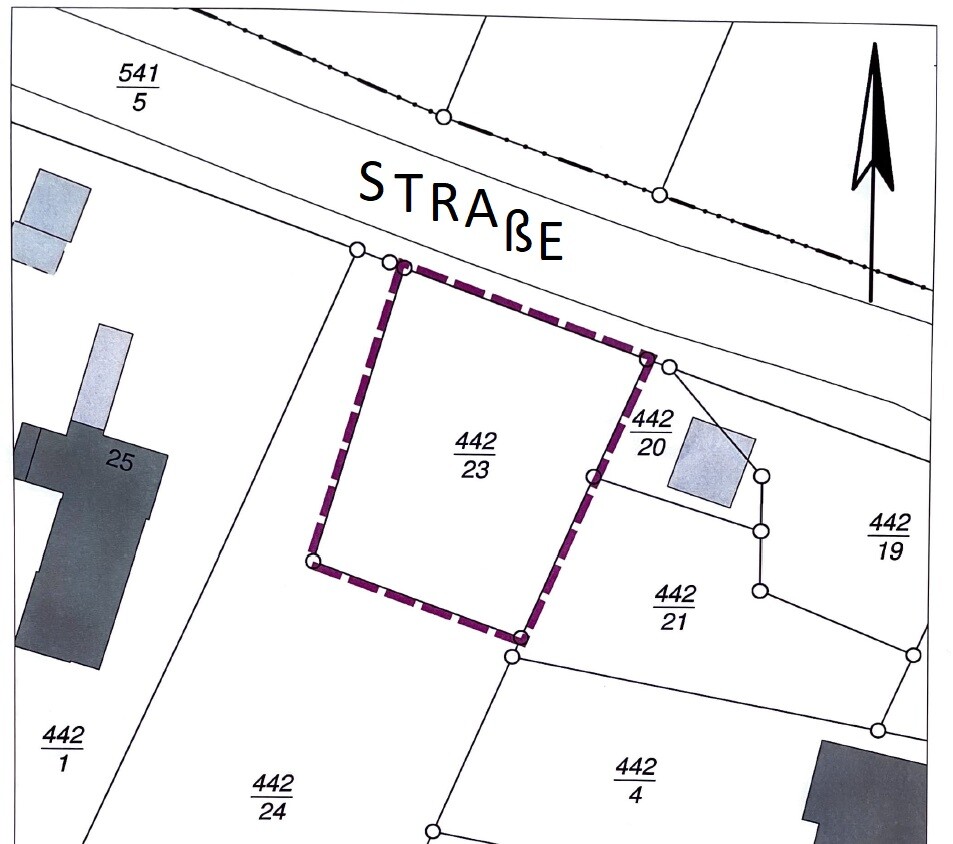
Plot size: approx. 800 sqm (8,611 sq ft)
Slope: The house is on level ground; the garden begins with a slope that will be designed in terraces
Site coverage ratio: 0.25
Floor area ratio: 0.25
Building window, building line, and boundary: Requirements from the building authority: minimum 8 m (26 ft) distance from the street
Edge development: No
Number of parking spaces: 2 (carport)
Number of stories: 1.5
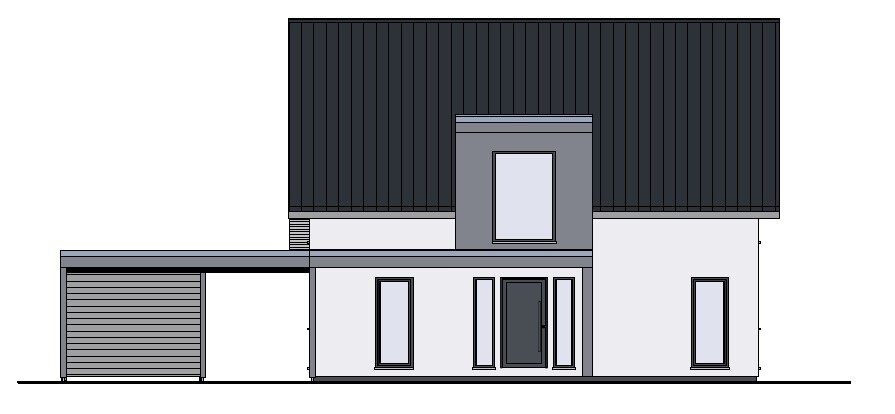
Roof type: Gable roof
Style: Single-family house with timber frame construction
Orientation: Entrance facing the street to the north, terrace and garden to the south
Maximum height/limits: Residential-only area, 1 full floor
Homeowners’ Requirements
Style, roof type, building type: see above, timber frame construction, KfW40 standard
Basement, floors: no basement; 1.5 floors with 1.30 m (4 ft 3 in) knee wall
Number of residents, age: currently 2 adults (27, 34)
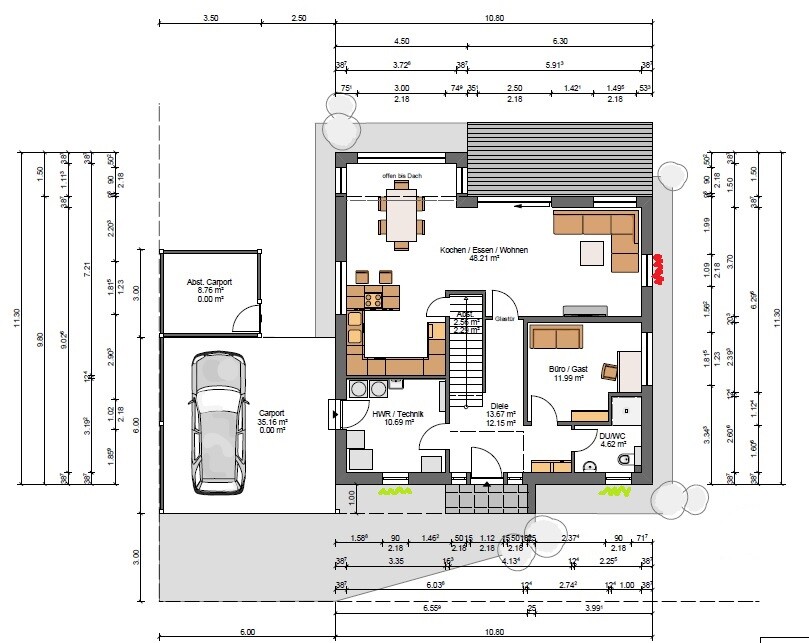
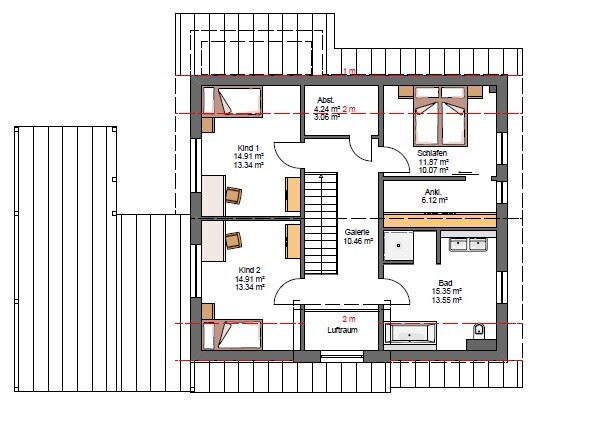
Space requirements on ground floor and upper floor: open living-dining area with kitchen around the corner, closed staircase with storage room, office, utility/technical room, shower bathroom, bathroom, master bedroom, walk-in closet, 2 children’s rooms, storage room
Office: family use or home office?: possibly home office
Overnight guests per year: few
Open or closed architecture: living-dining room open, open space in entrance area
Conservative or modern construction: rather conservative
Open kitchen, kitchen island: yes
Number of dining seats: 6-8
Fireplace: no
Music/stereo wall: no
Balcony, roof terrace: no
Garage, carport: yes, double carport with storage room
Kitchen garden, greenhouse: no
House Design
Planner: own plans + planner from a construction company / architect
What do you like most? Why?: as efficient use of space as possible without wasted square meters, ground floor access from hallway to every room, living-dining area with kitchen around the corner (no direct view from sofa to kitchen), access from kitchen to storage room, dining table in the "conservatory"
What don’t you like? Why?: We are considering changing the two floor-to-ceiling windows on the ground floor (utility/technical room and shower bathroom [GREEN marked]) to "normal" sized windows. Although we prefer floor-to-ceiling windows visually, normal-sized windows might be more practical for these rooms.
The window in the living area near the sofa [RED marked] will probably be removed from the plan as we find it unnecessary.
Furthermore, we are wondering if the walk-in closet should be a bit larger and the upper floor bathroom slightly smaller. The walk-in closet should fit a large wardrobe wall and dressers opposite. Additionally, we have doubts about whether the utility/technical room is large enough.
Preferred heating system: air-to-water heat pump combined with photovoltaic system, underfloor heating
At the start of planning, based on our requirements concerning preferences and room numbers, we received a draft from the planner. After several adjustments, this floor plan has emerged. We are generally very satisfied with the result—there is nothing essential that bothers us at first glance. However, we are open to further suggestions or advice regarding our floor plan.
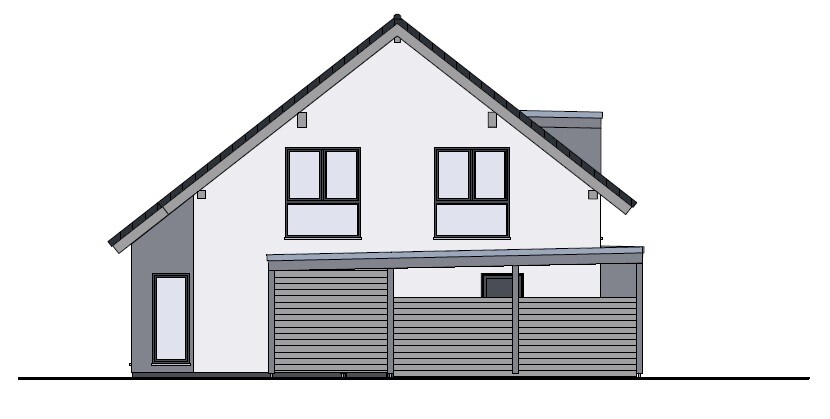
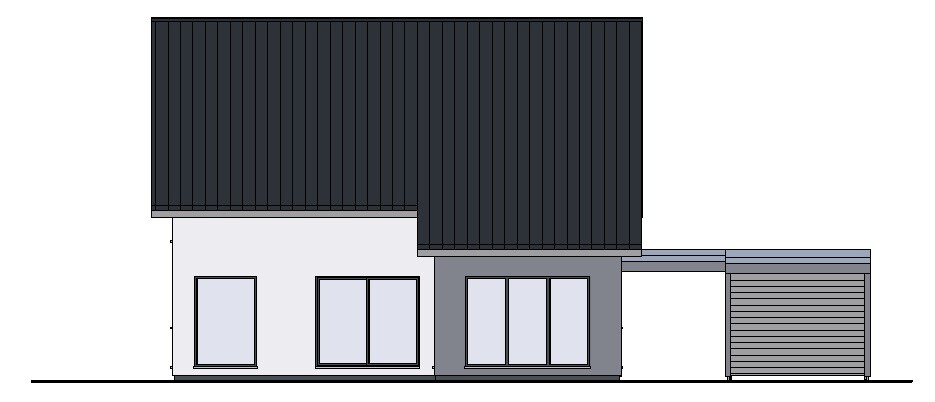
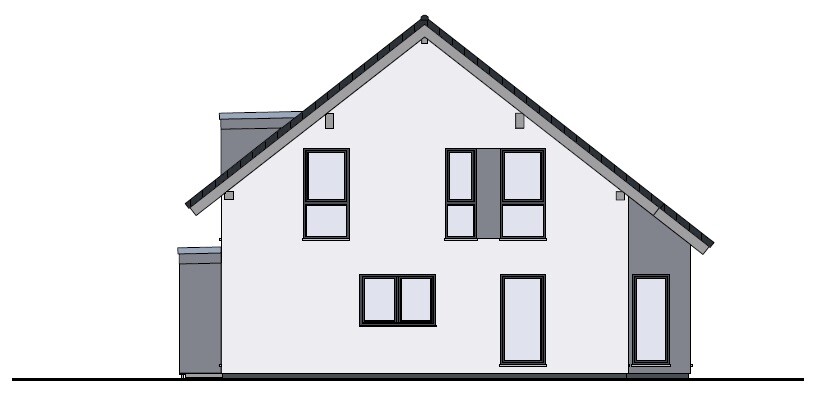
we are approaching the final planning phase with our architect and would appreciate any suggestions and tips regarding our floor plan.
Thank you in advance!
Development Plan / Restrictions
Plot size: approx. 800 sqm (8,611 sq ft)
Slope: The house is on level ground; the garden begins with a slope that will be designed in terraces
Site coverage ratio: 0.25
Floor area ratio: 0.25
Building window, building line, and boundary: Requirements from the building authority: minimum 8 m (26 ft) distance from the street
Edge development: No
Number of parking spaces: 2 (carport)
Number of stories: 1.5
Roof type: Gable roof
Style: Single-family house with timber frame construction
Orientation: Entrance facing the street to the north, terrace and garden to the south
Maximum height/limits: Residential-only area, 1 full floor
Homeowners’ Requirements
Style, roof type, building type: see above, timber frame construction, KfW40 standard
Basement, floors: no basement; 1.5 floors with 1.30 m (4 ft 3 in) knee wall
Number of residents, age: currently 2 adults (27, 34)
Space requirements on ground floor and upper floor: open living-dining area with kitchen around the corner, closed staircase with storage room, office, utility/technical room, shower bathroom, bathroom, master bedroom, walk-in closet, 2 children’s rooms, storage room
Office: family use or home office?: possibly home office
Overnight guests per year: few
Open or closed architecture: living-dining room open, open space in entrance area
Conservative or modern construction: rather conservative
Open kitchen, kitchen island: yes
Number of dining seats: 6-8
Fireplace: no
Music/stereo wall: no
Balcony, roof terrace: no
Garage, carport: yes, double carport with storage room
Kitchen garden, greenhouse: no
House Design
Planner: own plans + planner from a construction company / architect
What do you like most? Why?: as efficient use of space as possible without wasted square meters, ground floor access from hallway to every room, living-dining area with kitchen around the corner (no direct view from sofa to kitchen), access from kitchen to storage room, dining table in the "conservatory"
What don’t you like? Why?: We are considering changing the two floor-to-ceiling windows on the ground floor (utility/technical room and shower bathroom [GREEN marked]) to "normal" sized windows. Although we prefer floor-to-ceiling windows visually, normal-sized windows might be more practical for these rooms.
The window in the living area near the sofa [RED marked] will probably be removed from the plan as we find it unnecessary.
Furthermore, we are wondering if the walk-in closet should be a bit larger and the upper floor bathroom slightly smaller. The walk-in closet should fit a large wardrobe wall and dressers opposite. Additionally, we have doubts about whether the utility/technical room is large enough.
Preferred heating system: air-to-water heat pump combined with photovoltaic system, underfloor heating
At the start of planning, based on our requirements concerning preferences and room numbers, we received a draft from the planner. After several adjustments, this floor plan has emerged. We are generally very satisfied with the result—there is nothing essential that bothers us at first glance. However, we are open to further suggestions or advice regarding our floor plan.
G
GeradeSchräg17 Oct 2021 19:14hausverliebt schrieb:
What do you particularly like? Why?: as efficient use of space as possible without wasted square metersBut then a straight staircase and an open space above, both of which tend to waste space as efficiently as possible.
If you want to maximize the amount of usable space, you should carefully consider both, because besides looking good, they don’t offer much else.
H
hausverliebt17 Oct 2021 19:27ypg schrieb:
… It would be better to remove the only window on the south side to make space for the garden furniture there. Rotate the sofa so you can look outside. Place the TV on the south wall then.
I also agree with the opinion about the kitchen and the walk-in closet: Both can be omitted.Thanks for the suggestion regarding the sofa; we will definitely add it to the list of changes.H
hausverliebt17 Oct 2021 19:35driver55 schrieb:
I find the "T"-shaped living/dining/kitchen area to be very poorly laid out.
Also, I wonder where the 48 sqm (516 sq ft) come from. A living corridor of 3.7 m x 10 m (12 ft x 33 ft) is 37 sqm (398 sq ft), plus about 4 sqm (43 sq ft) dining extension, plus the kitchen area.
The living area is too narrow, the dining space with about 10 sqm (108 sq ft) is too tight, and the kitchen layout is somehow inconvenient. Thanks for the critical view. Do you have a suggestion on how the layout could be improved? We definitely want to change the arrangement as soon as possible. So no way the kitchen, dining, and living should be in a single line.
H
hausverliebt17 Oct 2021 19:42ypg schrieb:
Yes, if the staircase were placed on the right side of the hallway, the corridor tube would be eliminated, this area could be added to the kitchen space, and the living room would have a dedicated quiet zone. As it is now, the staircase is a disruptive element in the open-plan area and has to be constantly navigated around. I don’t quite understand that. You would still have the hallway and wouldn’t be able to simply allocate that space to the kitchen, right?!
H
hausverliebt17 Oct 2021 19:5111ant schrieb:
Adding a pitched roof floor to a single-family villa’s ground floor is almost brilliantly original. However, the attic floor itself is not the best solution; that’s where I see the most potential for improvement. Child 2 will definitely be woken up by every evening visitor’s farewell due to the open void space. Dividing a useless hallway area into a small storage room called a pantry might work on the plan, but it doesn’t convince in practice. Regarding the typical claim of equal-sized children’s rooms by parents who haven’t had children yet, I have already expressed elsewhere some serious doubts about this "concept."
I think this setup was designed that way specifically to give the actually inconvenient straight, single-flight staircase an “excuse” by making its under-stairs space cleverly useful as a pantry. Thank you for the feedback. The straight staircase with the storage area is indeed our idea. We saw it in a friend’s house and thought it was a good solution. We want to make the children’s rooms as large as possible, which is why we placed them side by side and equal in size. The open void is intended to provide more natural light and a better sense of space. We do not share the concern that visitors might wake sleeping children; after all, there is also an exit via the utility room if necessary.
11ant schrieb:
Converting a useless hallway area into a small storage room and calling it a storage space might work on paper, but it’s not convincing in practice. Could you please briefly explain why you think this wouldn’t work?
Similar topics