
Hello everyone
I am new to the forum and hope this is the right section.
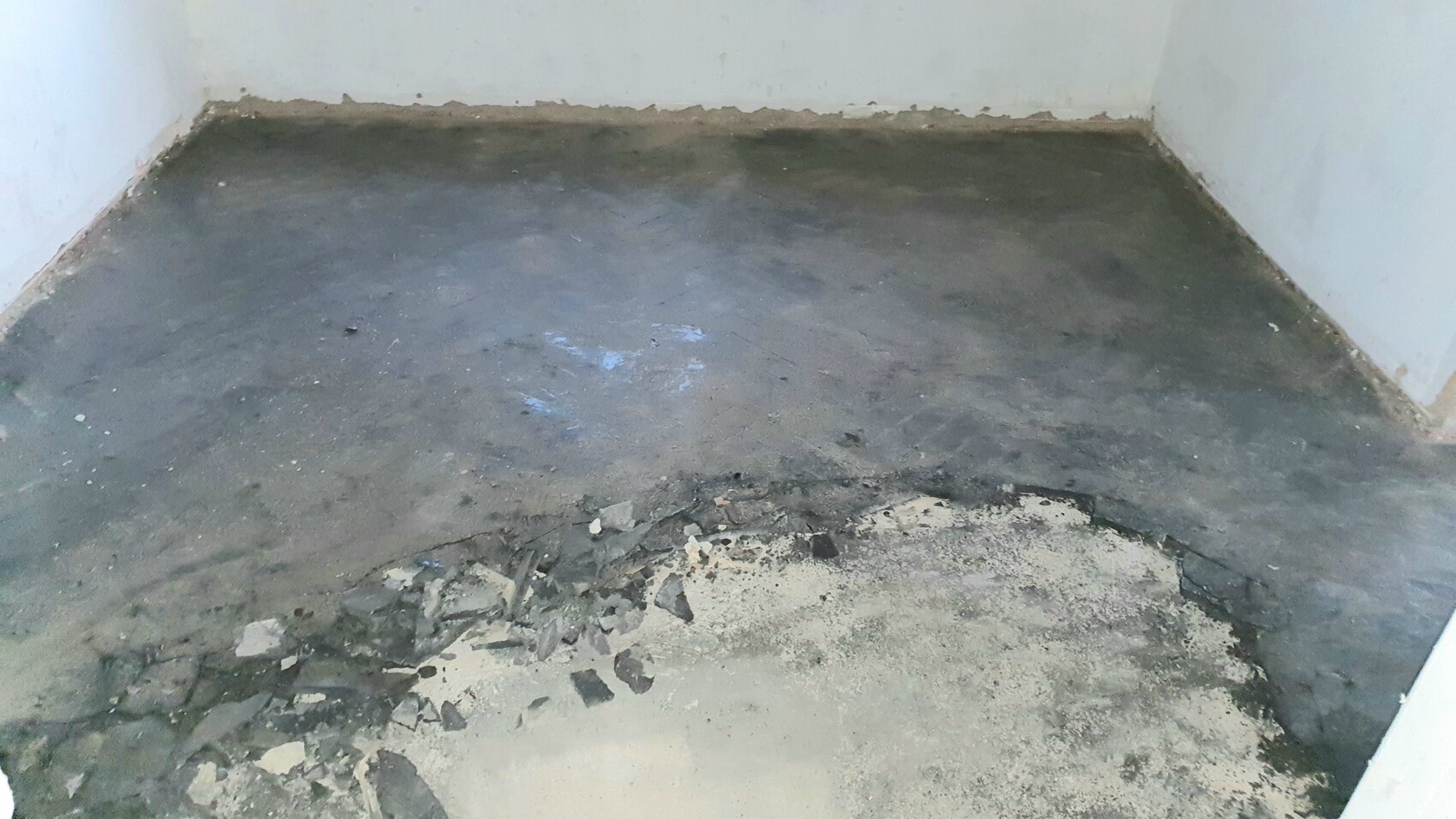
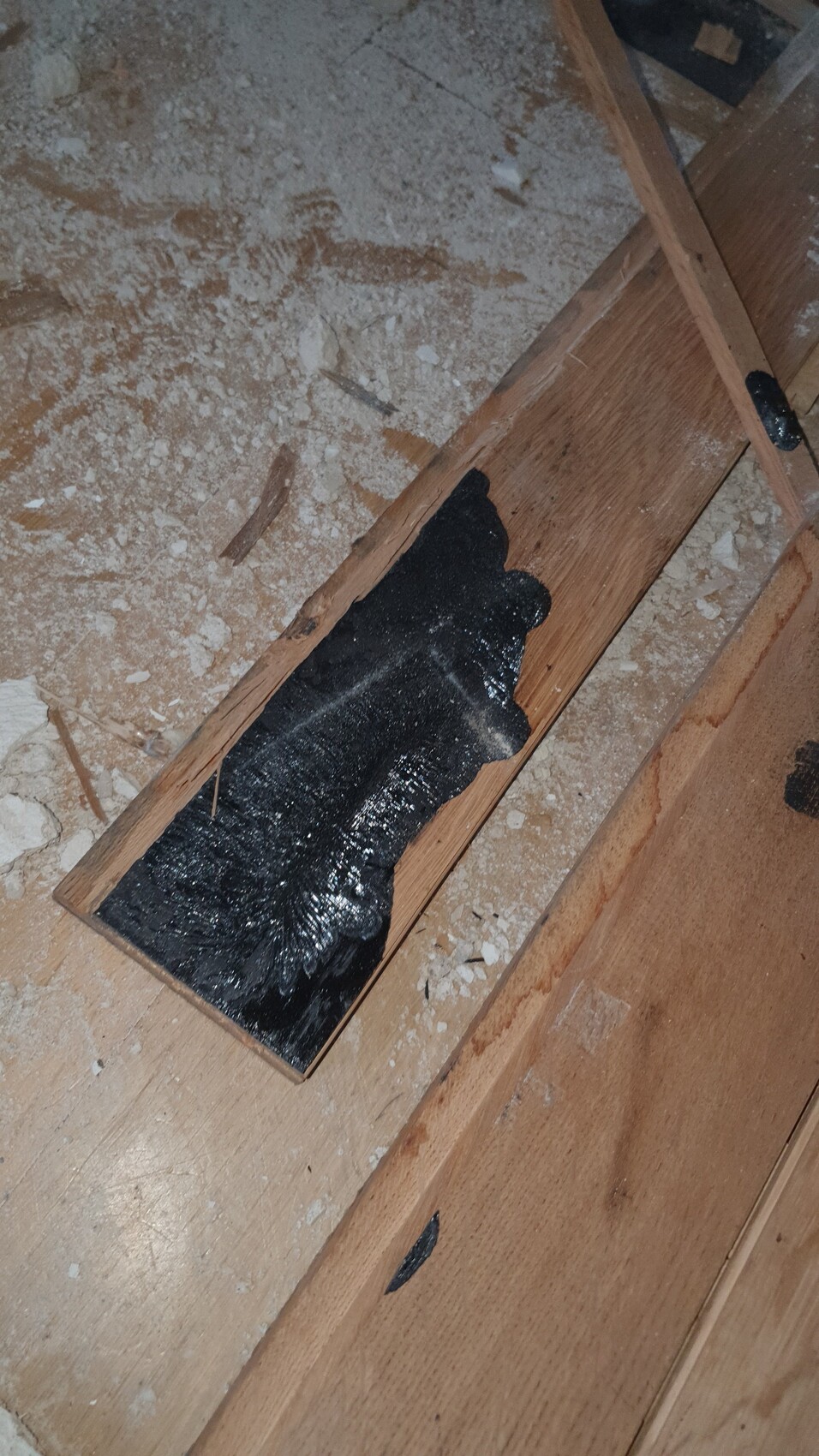
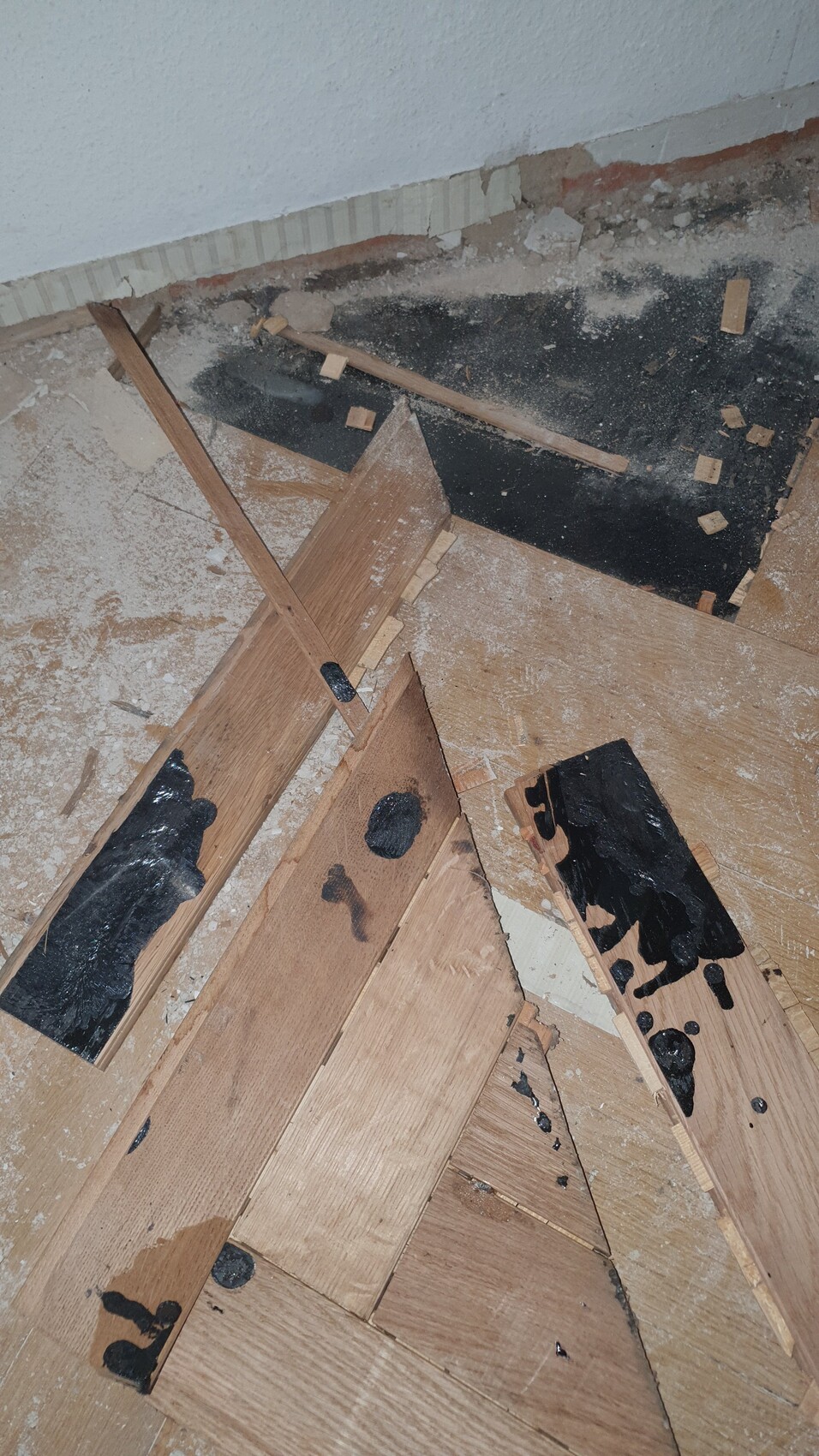
We are renovating a house built in 1955 and, like many others, we found a black layer beneath the parquet flooring. An initial lab analysis showed that it is a tar-containing layer with PAHs (polycyclic aromatic hydrocarbons).
However, this is not just a thin adhesive layer. The floor structure is as follows:
1) Concrete slab
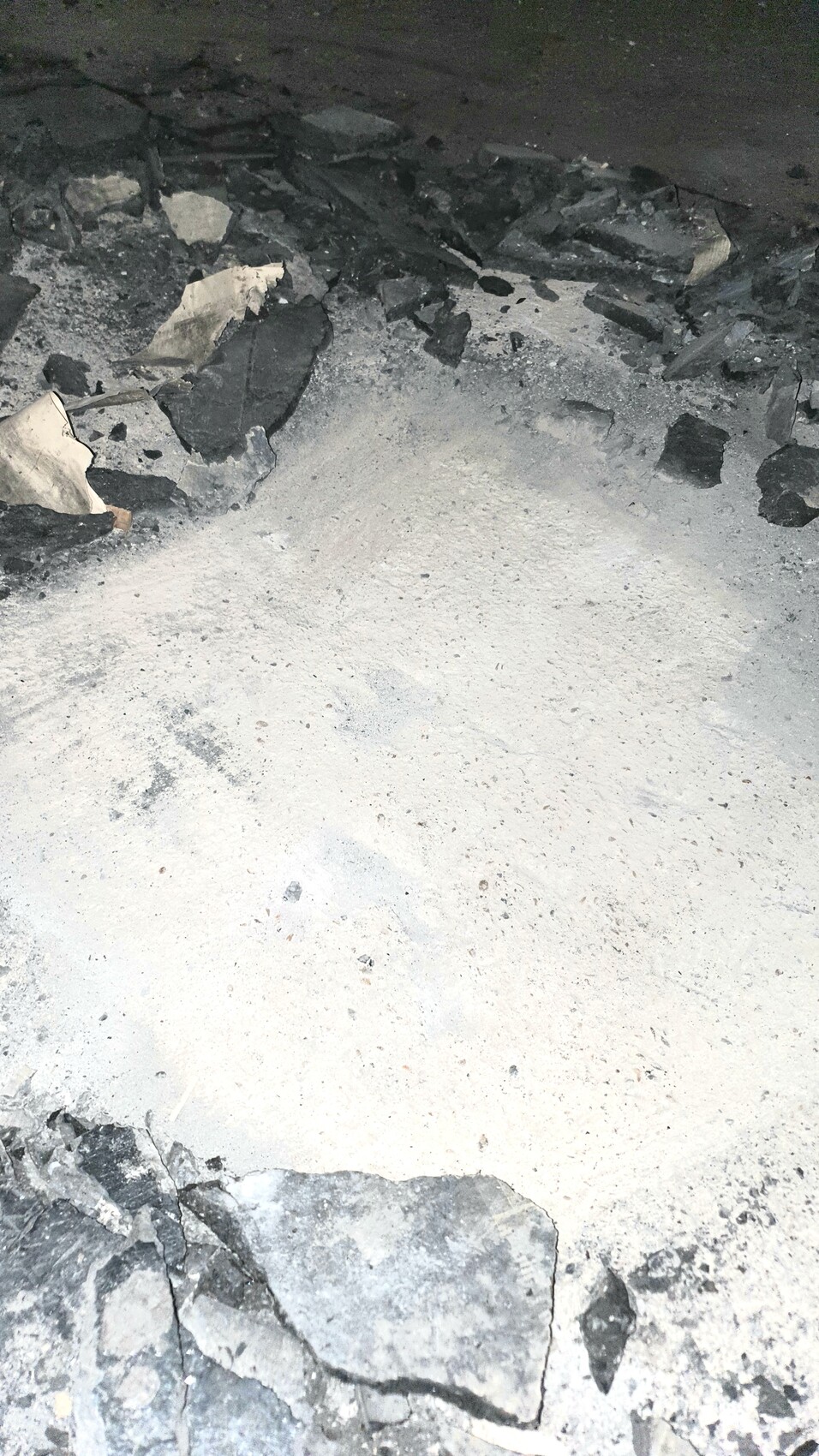
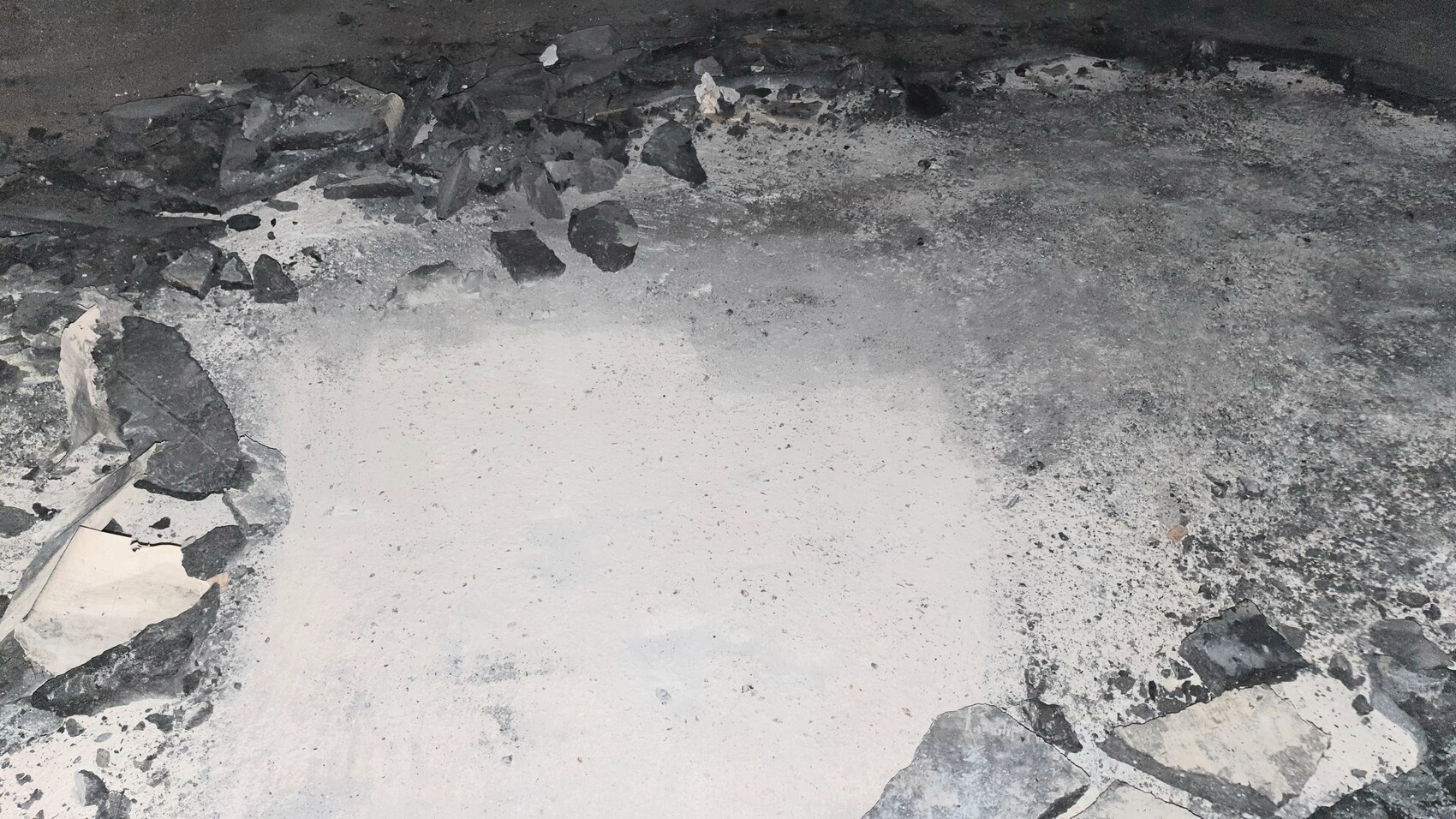
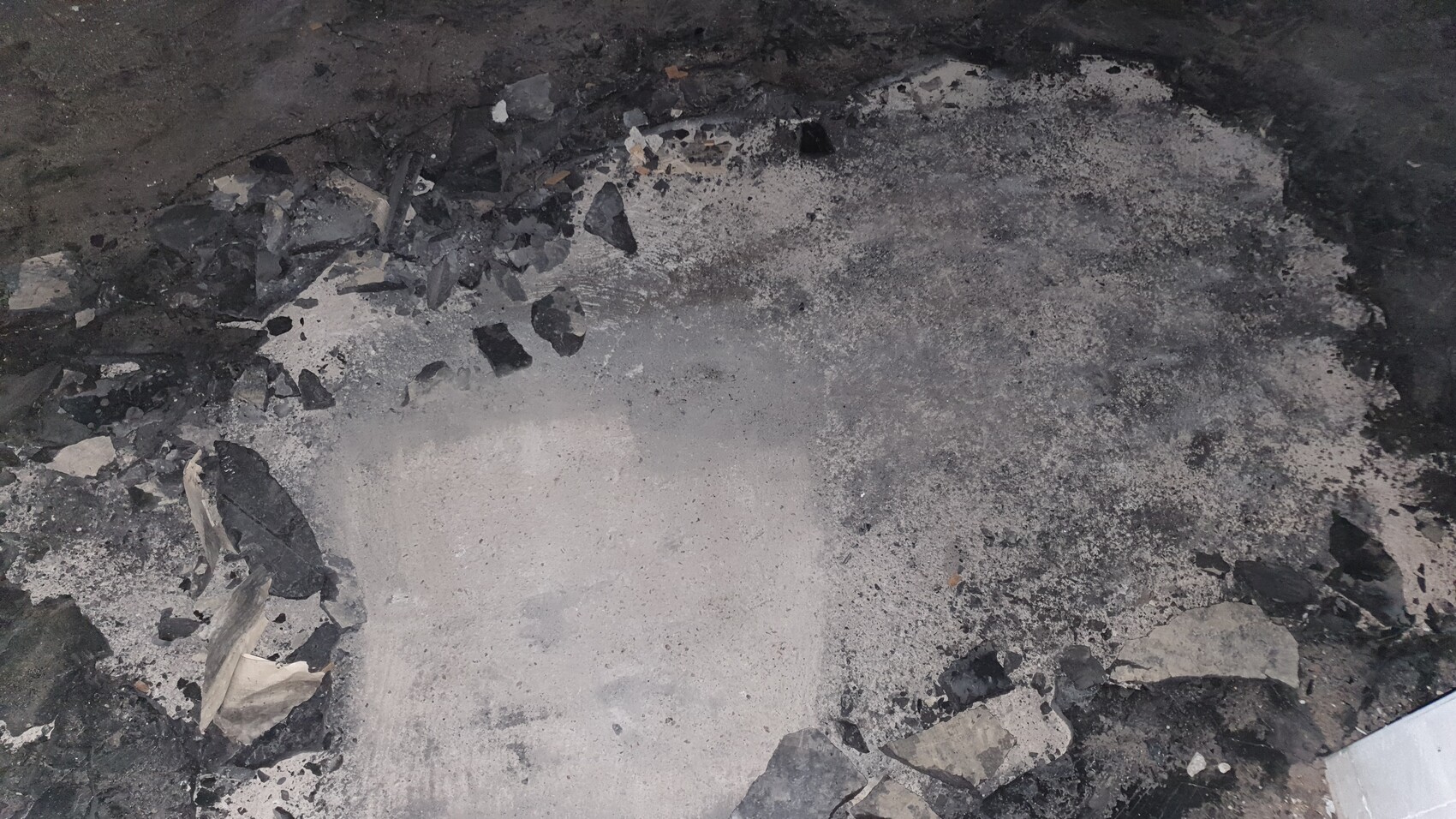
2) Single layer of newspaper, loosely placed as a separation between the black material and the concrete
3) Black material (about 2cm (0.8 inches) thick, not sticky but glassy hard, similar to stone)
4) Parquet laid directly on top
The black material weighs roughly as much as stone and rests floating on the concrete. It can be completely levered up and removed without affecting the concrete below or needing to grind it. I suspect this black material was used as a substitute for screed.
Has anyone encountered something like this before?
I have three questions:
1) Can you tell me what this material might be and if it could have any positive properties regarding insulation or impact sound reduction?
2) If that is the case, could the material be left in place and covered with a vapor barrier, underfloor heating, screed, and vinyl flooring, effectively sealing it and making use of it rather than disposing of it?
3) Or would there be significant disadvantages concerning health risks or outdated properties?
Attached are some pictures. The clean light surface is the concrete slab.
I am new to the forum and hope this is the right section.
We are renovating a house built in 1955 and, like many others, we found a black layer beneath the parquet flooring. An initial lab analysis showed that it is a tar-containing layer with PAHs (polycyclic aromatic hydrocarbons).
However, this is not just a thin adhesive layer. The floor structure is as follows:
1) Concrete slab
2) Single layer of newspaper, loosely placed as a separation between the black material and the concrete
3) Black material (about 2cm (0.8 inches) thick, not sticky but glassy hard, similar to stone)
4) Parquet laid directly on top
The black material weighs roughly as much as stone and rests floating on the concrete. It can be completely levered up and removed without affecting the concrete below or needing to grind it. I suspect this black material was used as a substitute for screed.
Has anyone encountered something like this before?
I have three questions:
1) Can you tell me what this material might be and if it could have any positive properties regarding insulation or impact sound reduction?
2) If that is the case, could the material be left in place and covered with a vapor barrier, underfloor heating, screed, and vinyl flooring, effectively sealing it and making use of it rather than disposing of it?
3) Or would there be significant disadvantages concerning health risks or outdated properties?
Attached are some pictures. The clean light surface is the concrete slab.
rick2018 schrieb:
Here start the posts about the installation in my case.Many thanks. I will read through it today.Hello everyone,
If it were poured asphalt that is safe for health, I would leave it in. However, since I want to remove that material from the house and, above all, am concerned about the weight, I will take it out. I think in the end I will hardly notice the benefits of the poured asphalt anyway, since there will be a complete installation of the underfloor heating system above it (except maybe the impact sound insulation, which I might have been able to leave out).
Thanks for the advice!
If it were poured asphalt that is safe for health, I would leave it in. However, since I want to remove that material from the house and, above all, am concerned about the weight, I will take it out. I think in the end I will hardly notice the benefits of the poured asphalt anyway, since there will be a complete installation of the underfloor heating system above it (except maybe the impact sound insulation, which I might have been able to leave out).
Thanks for the advice!

Att1985 schrieb:
and above all, the weight is concerning??? at least five words and thirty characters are required here, so I ask in several words: what do you estimate the weight of other screed alternatives to be?https://www.instagram.com/11antgmxde/
https://www.linkedin.com/company/bauen-jetzt/
11ant schrieb:
??? at least five words and thirty characters are required here, so I am asking with several words: what do you estimate the weight of other screed alternatives to be?In case you missed it:
The poured asphalt would only remain as impact sound insulation and thermal insulation. Since the underfloor heating will be installed above anyway, including the screed.
That means I am now replacing heavy poured asphalt with extremely light Styrofoam or similar.
Understood? 😉

I would not jump to conclusions about the topic of "mastic asphalt screed" as an existing load distribution layer!
What was found beneath the parquet flooring was definitely NOT mastic asphalt.
While parquet can be glued onto mastic asphalt, the evidence presented in the photos does not correspond with what should have actually been there given the installation process of the parquet at that time.
The old parquet was originally laid onto a thick hot asphalt layer, which also served as a moisture barrier against rising damp from below.
PAHs (polycyclic aromatic hydrocarbons) were commonly present in the auxiliary materials used back then. However, if PAHs were detected in significant amounts within the (black) adhesive layer, it must be removed. This removal has to be carried out by a specialized company with the appropriate certification!
Please move away from using mastic asphalt as the basis for this discussion.
Mastic asphalt was applied and smoothed at around 210°C (410°F) even at that time. At that temperature, it is impossible to install parquet flooring—no matter what type of adhesive is used.
Furthermore, mastic asphalt was then, as it is now, installed “floating” over a heat-resistant separating layer in residential and commercial buildings.
If this step is skipped, the asphalt immediately develops blisters. These form because the moisture contained in the concrete escapes rapidly through the mastic asphalt, which becomes plastic at approximately 180°C (356°F). Direct application onto concrete therefore is not possible.
---------------
Best regards to all: KlaRa
What was found beneath the parquet flooring was definitely NOT mastic asphalt.
While parquet can be glued onto mastic asphalt, the evidence presented in the photos does not correspond with what should have actually been there given the installation process of the parquet at that time.
The old parquet was originally laid onto a thick hot asphalt layer, which also served as a moisture barrier against rising damp from below.
PAHs (polycyclic aromatic hydrocarbons) were commonly present in the auxiliary materials used back then. However, if PAHs were detected in significant amounts within the (black) adhesive layer, it must be removed. This removal has to be carried out by a specialized company with the appropriate certification!
Please move away from using mastic asphalt as the basis for this discussion.
Mastic asphalt was applied and smoothed at around 210°C (410°F) even at that time. At that temperature, it is impossible to install parquet flooring—no matter what type of adhesive is used.
Furthermore, mastic asphalt was then, as it is now, installed “floating” over a heat-resistant separating layer in residential and commercial buildings.
If this step is skipped, the asphalt immediately develops blisters. These form because the moisture contained in the concrete escapes rapidly through the mastic asphalt, which becomes plastic at approximately 180°C (356°F). Direct application onto concrete therefore is not possible.
---------------
Best regards to all: KlaRa
Similar topics