
Hello everyone
I am new to the forum and hope this is the right section.
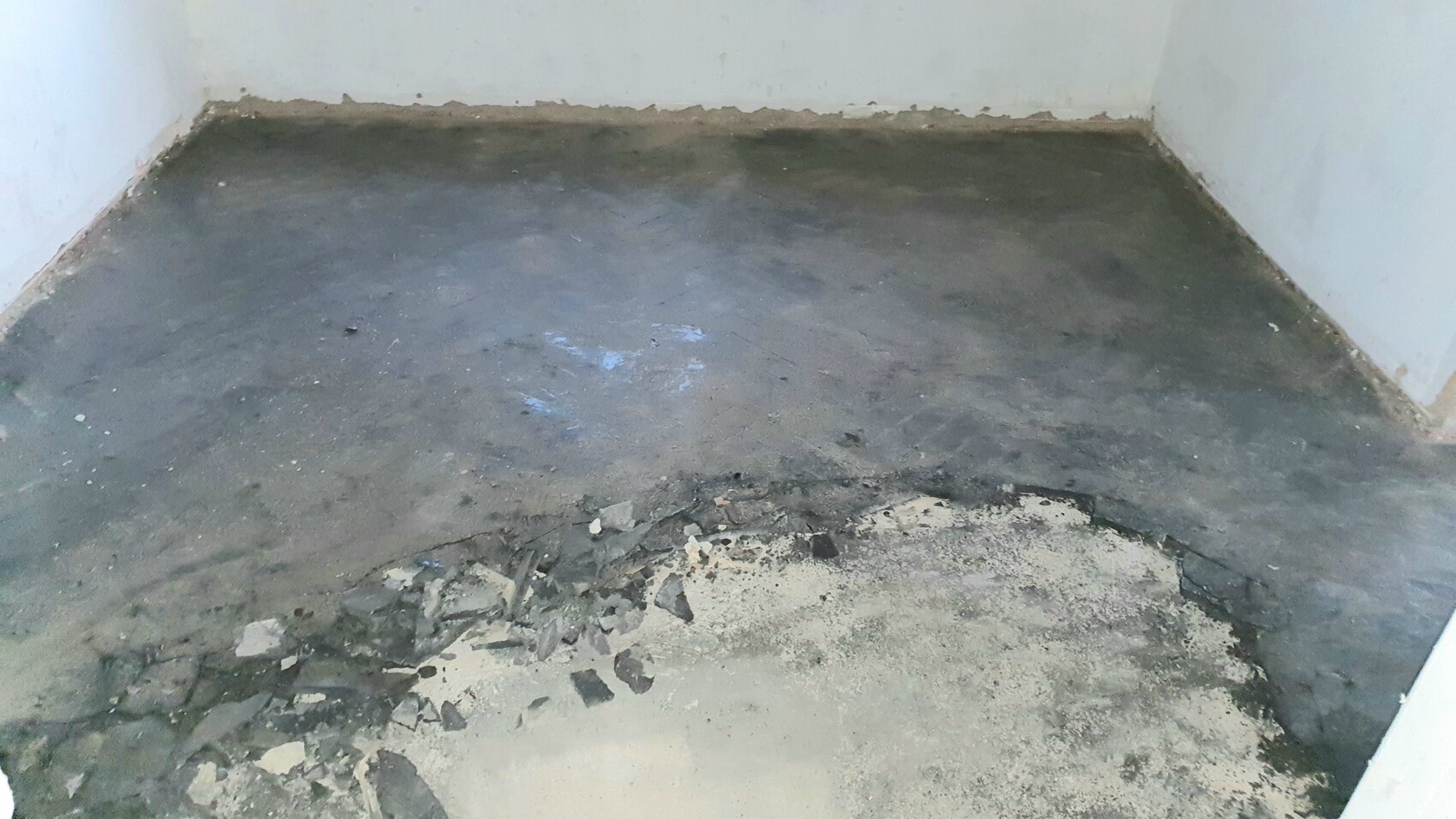
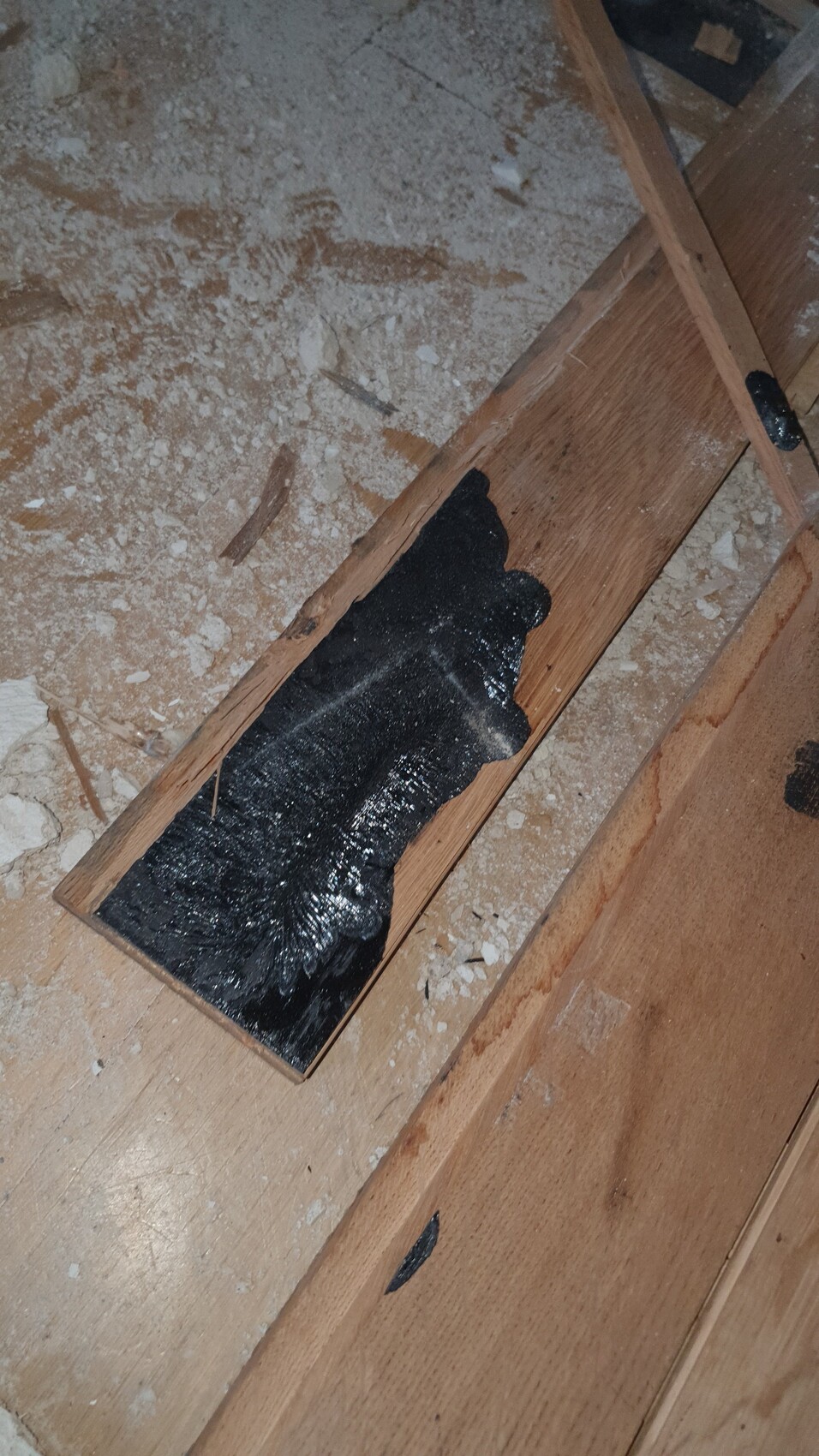
We are renovating a house built in 1955 and, like many others, we found a black layer beneath the parquet flooring. An initial lab analysis showed that it is a tar-containing layer with PAHs (polycyclic aromatic hydrocarbons).
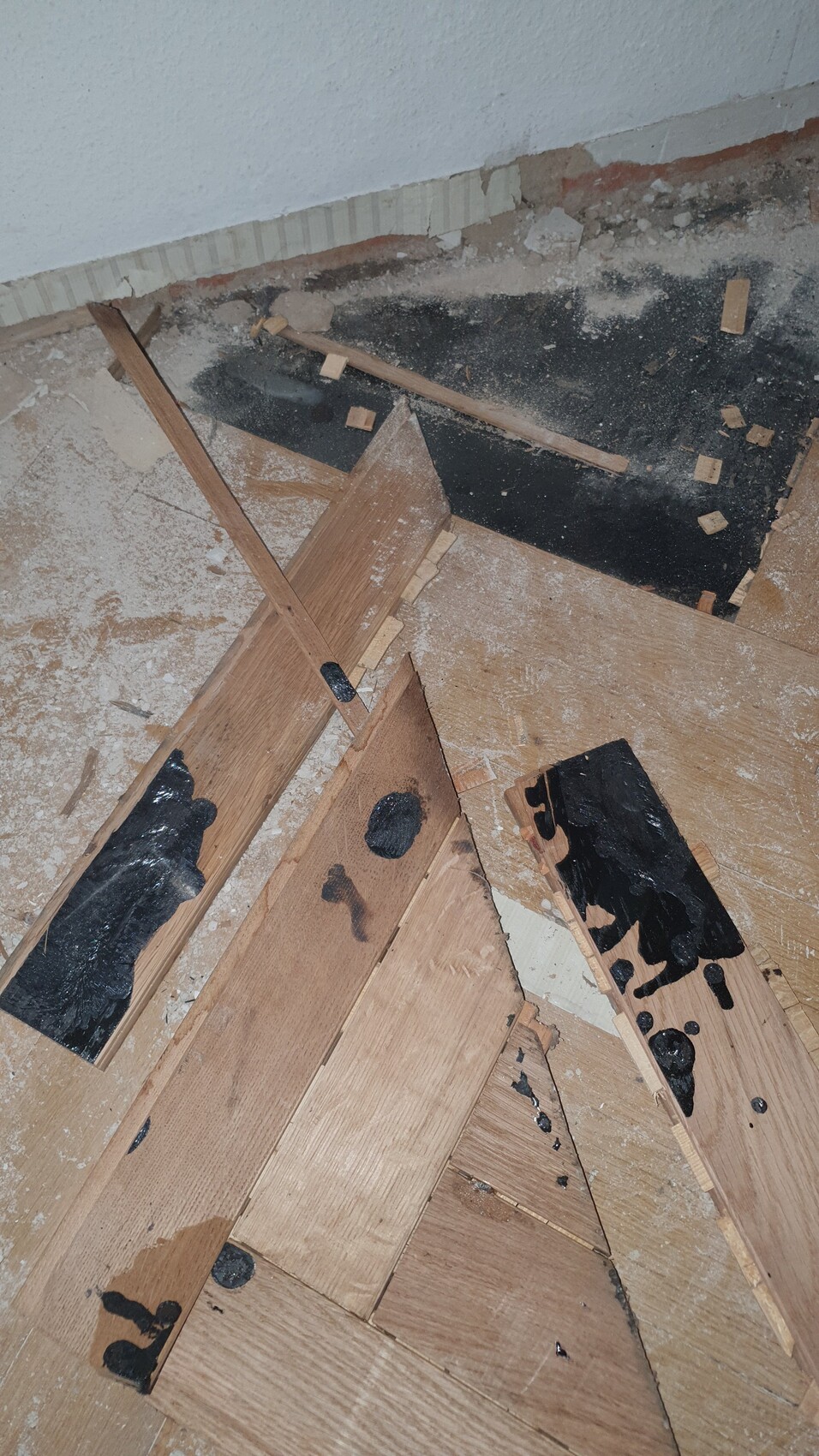
However, this is not just a thin adhesive layer. The floor structure is as follows:
1) Concrete slab
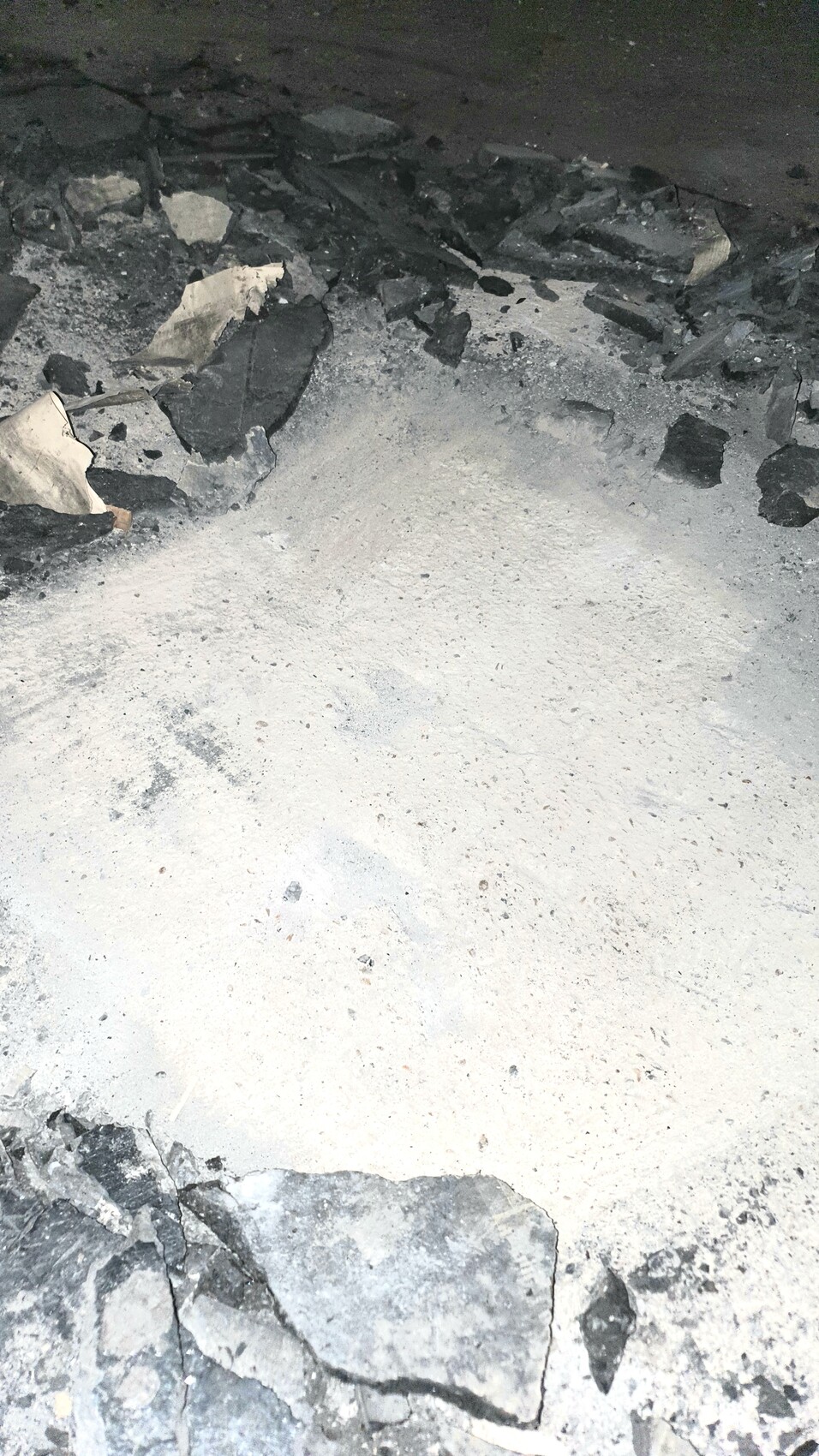
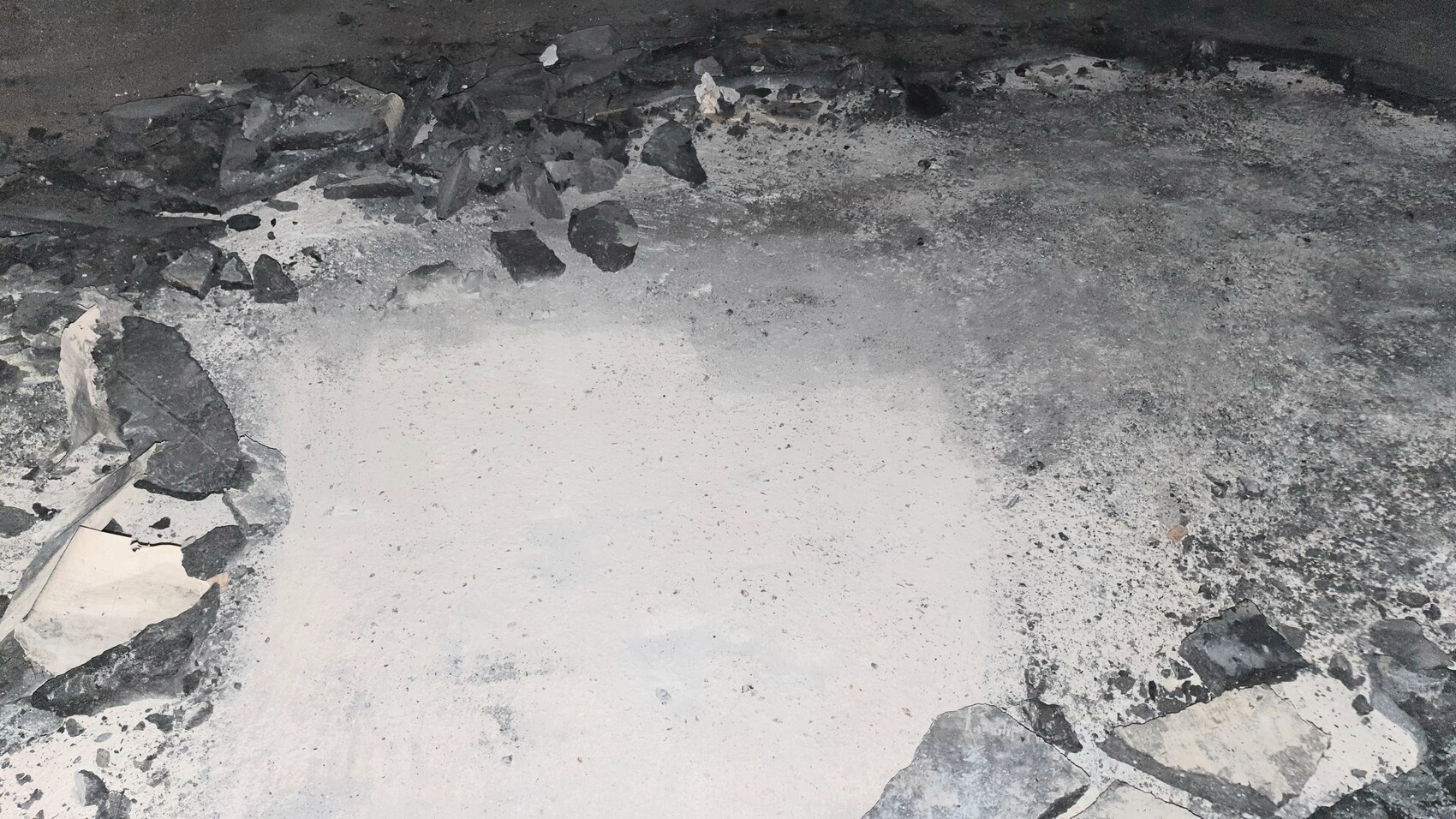
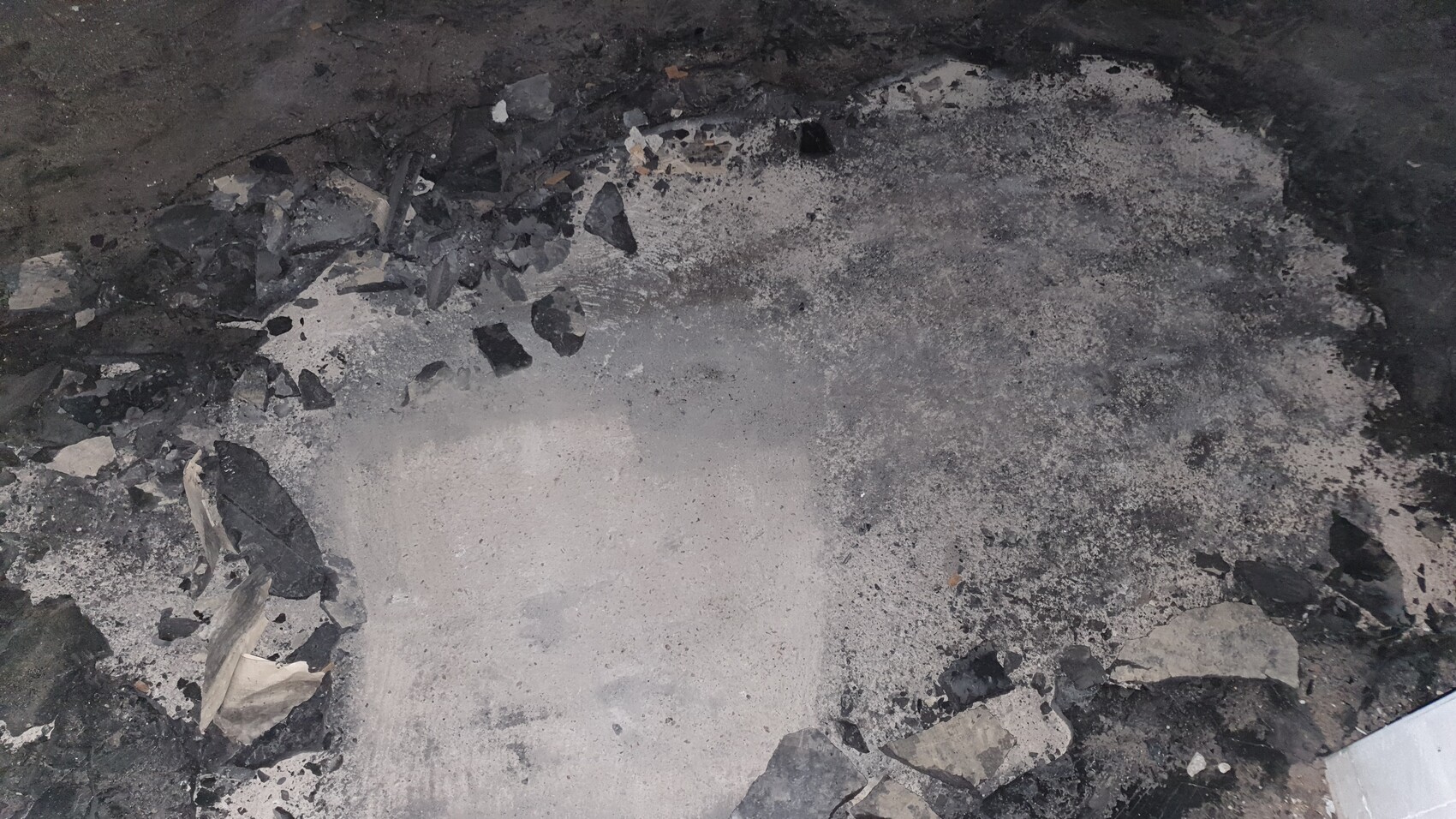
2) Single layer of newspaper, loosely placed as a separation between the black material and the concrete
3) Black material (about 2cm (0.8 inches) thick, not sticky but glassy hard, similar to stone)
4) Parquet laid directly on top
The black material weighs roughly as much as stone and rests floating on the concrete. It can be completely levered up and removed without affecting the concrete below or needing to grind it. I suspect this black material was used as a substitute for screed.
Has anyone encountered something like this before?
I have three questions:
1) Can you tell me what this material might be and if it could have any positive properties regarding insulation or impact sound reduction?
2) If that is the case, could the material be left in place and covered with a vapor barrier, underfloor heating, screed, and vinyl flooring, effectively sealing it and making use of it rather than disposing of it?
3) Or would there be significant disadvantages concerning health risks or outdated properties?
Attached are some pictures. The clean light surface is the concrete slab.
I am new to the forum and hope this is the right section.
We are renovating a house built in 1955 and, like many others, we found a black layer beneath the parquet flooring. An initial lab analysis showed that it is a tar-containing layer with PAHs (polycyclic aromatic hydrocarbons).
However, this is not just a thin adhesive layer. The floor structure is as follows:
1) Concrete slab
2) Single layer of newspaper, loosely placed as a separation between the black material and the concrete
3) Black material (about 2cm (0.8 inches) thick, not sticky but glassy hard, similar to stone)
4) Parquet laid directly on top
The black material weighs roughly as much as stone and rests floating on the concrete. It can be completely levered up and removed without affecting the concrete below or needing to grind it. I suspect this black material was used as a substitute for screed.
Has anyone encountered something like this before?
I have three questions:
1) Can you tell me what this material might be and if it could have any positive properties regarding insulation or impact sound reduction?
2) If that is the case, could the material be left in place and covered with a vapor barrier, underfloor heating, screed, and vinyl flooring, effectively sealing it and making use of it rather than disposing of it?
3) Or would there be significant disadvantages concerning health risks or outdated properties?
Attached are some pictures. The clean light surface is the concrete slab.

Cast asphalt is perfect for underfloor heating. We poured it in directly. However, copper or stainless steel is needed for that. You can also use plastic.
The construction method you mentioned makes sense. Regarding the maximum load, you might need to consult a structural engineer in the worst case.
The construction method you mentioned makes sense. Regarding the maximum load, you might need to consult a structural engineer in the worst case.
Att1985 schrieb:
Thanks, Rick, for the detailed answer.
One follow-up question:
We want to install underfloor heating. Is cast asphalt suitable for this?
The floor layers would be:
Cast asphalt (instead of another impact sound insulation layer)
Separation layer/dimple membrane system
Underfloor heating/pipes
Screed (maybe somewhat thinner than usual?)
Vinyl flooring
Does this make sense?
I’m also somewhat concerned about the weight(!) and the overall structure. I assume the cast asphalt layer would be about as thick as a typical impact sound insulation layer. I don’t quite understand. You have an expensive cast asphalt layer and then vinyl on top…
I have cast asphalt as the final flooring. We just recently finished building.
The original poster [USER=55553]@Att1985 has an old existing house with cast asphalt covered by parquet flooring.
@Rumbi441 You can see the exact process in my building thread.
One layer is applied to “glue” the pipes and conduits, then another layer with additives and an aggregate spread on top. After one day it is cold. Then it has to be sanded. Everything that comes into contact with the asphalt must be heat-resistant, as it is applied at about 230 degrees Celsius (450°F). It does not need to dry because it contains (almost) no water.
In daily use, it’s great. Warm underfoot, flexible, waterproof, etc. Also very low maintenance. It is not without reason that it is also used in industrial areas.
For just one room, however, the effort is too great. We have the flooring everywhere, including in the shower.
The original poster [USER=55553]@Att1985 has an old existing house with cast asphalt covered by parquet flooring.
@Rumbi441 You can see the exact process in my building thread.
One layer is applied to “glue” the pipes and conduits, then another layer with additives and an aggregate spread on top. After one day it is cold. Then it has to be sanded. Everything that comes into contact with the asphalt must be heat-resistant, as it is applied at about 230 degrees Celsius (450°F). It does not need to dry because it contains (almost) no water.
In daily use, it’s great. Warm underfoot, flexible, waterproof, etc. Also very low maintenance. It is not without reason that it is also used in industrial areas.
For just one room, however, the effort is too great. We have the flooring everywhere, including in the shower.

Att1985 schrieb:
Screed (maybe a bit thinner than usual?)You can forget that—the underfloor heating pipes require a minimum coverage of 45mm (1.8 inches) plus 5mm (0.2 inches) tolerance. So with 17mm (0.7 inches) pipes, you already need at least 67mm (2.6 inches), preferably 70mm (2.8 inches), which isn’t really any thinner...
This applies to cement screed; I’m not sure if other types of screed allow for less coverage.
Ah, just checked—calcium sulfate screed can apparently be 5mm (0.2 inches) thinner, but that doesn’t help much...
Similar topics