
ᐅ Floor Plan Design for Urban Villa – Catalog Floor Plan Inspiration
Created on: 22 Sep 2021 10:45
M
miriam85
Hello dear members,
After a long time of quietly following the forum and officially reserving our preferred plot, we are now venturing into planning our urban villa. We have drawn inspiration from many catalog floor plans and sketched extensively on paper. The result is a design we are reasonably satisfied with. We would now like to have it reviewed by you to understand what works (or doesn’t).
First, the questionnaire:
Development plan / restrictions
Plot size 600 sqm (20x30 m) (6460 sq ft, 66x98 ft)
Slope no
Building area, building line and boundary 3 m (10 ft) setback
Number of parking spaces 2
Number of floors max. 2
Roof style any
Architectural style modern
Orientation garden facing southwest
Client requirements
Architectural style, roof type, building type urban villa with hipped roof
Basement, floors 2 floors without basement
Number of occupants, ages 3 (36, 35, 2)
Room area on ground and upper floors approx. 85 sqm (915 sq ft) each
Office: family use or home office? home office
Overnight guests per year 4
Open or closed architecture open
Open kitchen, kitchen island yes
Number of dining seats 6, extendable to 10
Balcony, roof terrace no
Garage, carport double garage
House design
Who designed it? do-it-yourself
What do you like most? Why? Our space requirements are met. Front entrance centered.
What do you dislike? Why? We are unsure if the upper floor works as planned. To make the fitness room functional in size, we had to move walls and reduce the upstairs hallway. Could this result in too little natural light on the upper floor? Also, we are uncertain if the utility room is adequately sized.
Preferred heating system: air-to-water heat pump + controlled mechanical ventilation
If you had to give up, which details/ additions would you omit
-could you give up: pantry, door from utility room to garage, straight staircase (even though we like it for being easy to use and providing storage underneath)
-could you not give up: fitness room, two children's bedrooms, office
Why is the design the way it is? For example,
What do you consider particularly good or bad about it? See above. We have included all the required rooms but are not sure the upper floor layout works. We also have concerns about storage space.
Regarding orientation, the plan is to position the house as close as possible to the street (northeast) to maximize garden space in the southwest.
Enough said: we look forward to feedback from the lions’ den. ;-)
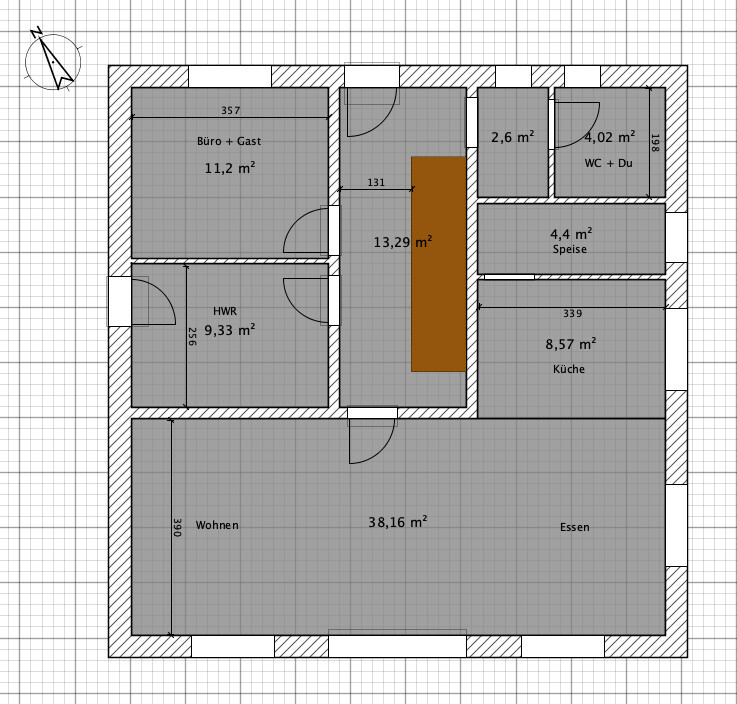
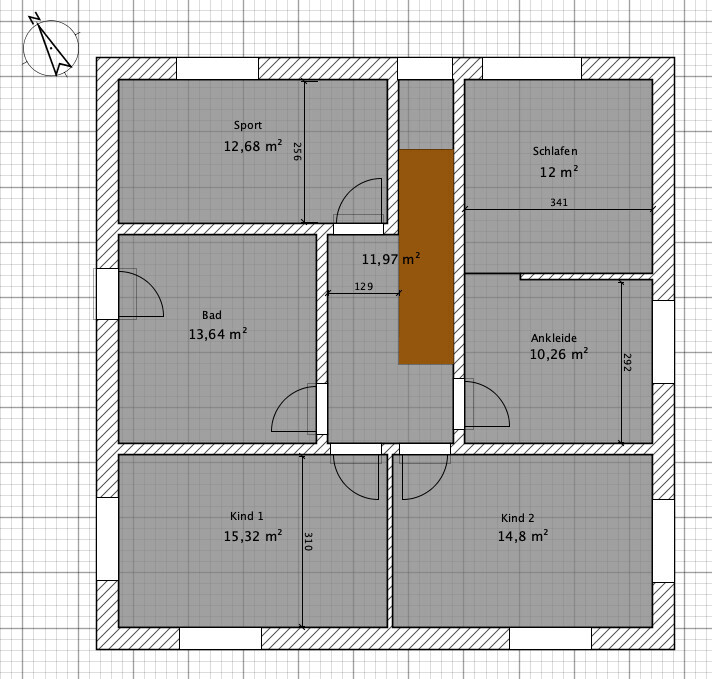
After a long time of quietly following the forum and officially reserving our preferred plot, we are now venturing into planning our urban villa. We have drawn inspiration from many catalog floor plans and sketched extensively on paper. The result is a design we are reasonably satisfied with. We would now like to have it reviewed by you to understand what works (or doesn’t).
First, the questionnaire:
Development plan / restrictions
Plot size 600 sqm (20x30 m) (6460 sq ft, 66x98 ft)
Slope no
Building area, building line and boundary 3 m (10 ft) setback
Number of parking spaces 2
Number of floors max. 2
Roof style any
Architectural style modern
Orientation garden facing southwest
Client requirements
Architectural style, roof type, building type urban villa with hipped roof
Basement, floors 2 floors without basement
Number of occupants, ages 3 (36, 35, 2)
Room area on ground and upper floors approx. 85 sqm (915 sq ft) each
Office: family use or home office? home office
Overnight guests per year 4
Open or closed architecture open
Open kitchen, kitchen island yes
Number of dining seats 6, extendable to 10
Balcony, roof terrace no
Garage, carport double garage
House design
Who designed it? do-it-yourself
What do you like most? Why? Our space requirements are met. Front entrance centered.
What do you dislike? Why? We are unsure if the upper floor works as planned. To make the fitness room functional in size, we had to move walls and reduce the upstairs hallway. Could this result in too little natural light on the upper floor? Also, we are uncertain if the utility room is adequately sized.
Preferred heating system: air-to-water heat pump + controlled mechanical ventilation
If you had to give up, which details/ additions would you omit
-could you give up: pantry, door from utility room to garage, straight staircase (even though we like it for being easy to use and providing storage underneath)
-could you not give up: fitness room, two children's bedrooms, office
Why is the design the way it is? For example,
What do you consider particularly good or bad about it? See above. We have included all the required rooms but are not sure the upper floor layout works. We also have concerns about storage space.
Regarding orientation, the plan is to position the house as close as possible to the street (northeast) to maximize garden space in the southwest.
Enough said: we look forward to feedback from the lions’ den. ;-)

Alessandro schrieb:
The floor plans of prefabricated house manufacturers have exactly three problems:
- a utility room that is much too small
- almost no cloakroom
- often no cabinets in the dressing room I cannot agree with that. Why would house providers shoot themselves in the foot by creating impractical floor plans? After all, they aim to develop standard base models that appeal to a wide range of customers, with most only making changes at the selection stage and only a few making constructive adjustments, usually minor ones like shifting walls by one grid increment.
In my opinion, this view probably stems from the fact that they build for the majority taste, and more forward-thinking homeowners see planning shortcomings. Most customers understand a utility room as a laundry room that can also accommodate a washing machine and dryer, where the ironing board is just stored. If someone wants to do sewing there as well, of course, it will be too small. Real home offices were rare before COVID-19; instead, the company car driver who took advantage of salary sacrifice would simply call his briefcase storage room flamboyantly an "office" to impress visitors and for tax purposes. The actual piles of clothes end up there, while the official "cloakroom" is just a tidy backdrop for three guest coats and a bowl for car keys. The same applies to the "dressing room": most customers simply mean a floor-to-ceiling visual divider between the bed and the wardrobe. One can only count on educated elites in the luxury segment; regular providers need volume.
https://www.instagram.com/11antgmxde/
https://www.linkedin.com/company/bauen-jetzt/
Andre77 schrieb:
Take a look at the Calvus 260 by Heinz von Heiden.I generally think it’s quite good. And that’s just about 150 sqm (1,615 sq ft). It’s worth keeping in mind for narrow plots here 🙂miriam85 schrieb:
Thanks for all the comments, tips, and suggestions for improvement.
We are now taking a step back and planning everything from scratch again. I will get back to you as soon as we have something presentable.
Thanks! Before painting, it would be helpful to note down what exactly will be painted:
What needs to be included in the floor plan and what should be taken into account.
Feel free to share that here…
And please include measurements and furniture layout right away.
A
Alessandro24 Sep 2021 08:3111ant schrieb:
I can't let that stand. Why would home builders shoot themselves in the foot by creating impractical floor plans? On the contrary, they aim to develop standardized base models in large quantities, where most customers only make changes at the sampling stage, and only a few make constructive adjustments, usually just minor ones like moving walls by one grid unit.
In my opinion, this view likely comes from builders designing for the majority taste, and the more forward-thinking homeowner then sees planning shortcomings. Most customers understand a utility room as a small room for laundry hookups, able to house a washing machine and dryer, and somewhere to just set down the ironing board. If you want to sew there as well, of course it’s too small. Real home offices hardly existed before the pandemic; instead, the "company car" worker only called his briefcase storage area a "study" to impress guests and for tax purposes. The real piles of clothes end up in there, while the official "cloakroom" is just a tidy setting for three guest jackets and a bowl for car keys. The same goes for the "walk-in closet": most customers simply mean a full-height screen between the bed and the wardrobe. The educated elite can only be relied upon in the luxury segment; typical builders need volume. I never said that home builders offer impractical floor plans. For people who don’t mind hanging laundry and ironing in the living room, and storing seasonal clothes in the attic, the floor plans are certainly suitable. But there are certainly also homeowners who don’t want this, and who get lost in the layout of the kitchen, living room, bathrooms, etc., and don’t think about the five pairs of shoes that the average resident owns.
I will now defend the general contractors a bit. On one hand, most homeowners hardly plan any wardrobe or storage space themselves. On the other hand, there are so-called future homeowners, like I once was, who complain about useless dead space. Model homes are often furnished quite sparsely, and a wardrobe with a large built-in closet can seem very oversized.
What kind of feedback does the planning department receive? Do the draftsmen dictate that four hooks plus a washer and dryer stacked are sufficient, or is the feedback coming from the advisors or even the customers?
What kind of feedback does the planning department receive? Do the draftsmen dictate that four hooks plus a washer and dryer stacked are sufficient, or is the feedback coming from the advisors or even the customers?
G
Georgian201924 Sep 2021 09:32haydee schrieb:
I’d like to defend the general contractors a bit. For one, most homeowners hardly plan any cloakroom or storage space themselves. On the other hand, you get aspiring homeowners—like I once was—complaining about useless dead space. Show homes are often sparsely furnished, and a cloakroom with a large built-in wardrobe can seem oversized.
What kind of feedback does the planning department receive? Do the draftsmen dictate that four hooks and a washer and dryer stacked are enough, or does the feedback come from the consultants or even the customers? For example, we consciously decided against a cloakroom in the hallway. There is a small antique chest of drawers/half cabinet under the stairs for a few shoes and gloves/scarves, and a few daily shoes for our little daughter are also stored there (hidden). All daily coats hang in the utility room, and shoes are also stored in two cabinets in the utility room when coming home. Only when guests are here are a few shoes kept in the entrance area. Guests’ coats are also hung in the utility room.
I hate it when coats hang in the hallway and shoes are left around. The hallway or entrance area is the first impression of a house or apartment and should therefore be tidy and stylistically fitting.
Similar topics