
Hello
we are planning a new semi-detached house.
We want to install a photovoltaic system later on.
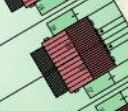
We will get the right half shown in the photo. Orientation is southwest.
The photovoltaic system will of course be installed on the southwest side facing the garden.
The black area is the 3x5 m (10x16 ft) terrace, which will later be covered with a fixed terrace roof measuring 4 m (13 ft) deep and 5.5 m (18 ft) wide.
My question is whether it will still be possible to install a photovoltaic system on the roof once the fixed terrace roof is there?
If the terrace roof is on the southwest side in the garden, it will no longer be possible to set up scaffolding.
For maintenance or in case of problems, access to the photovoltaic system will be necessary later on (is access without scaffolding not possible?)
Or can the photovoltaic system be installed without scaffolding?
The house will have a gable roof and 2.5 full stories.
we are planning a new semi-detached house.
We want to install a photovoltaic system later on.
We will get the right half shown in the photo. Orientation is southwest.
The photovoltaic system will of course be installed on the southwest side facing the garden.
The black area is the 3x5 m (10x16 ft) terrace, which will later be covered with a fixed terrace roof measuring 4 m (13 ft) deep and 5.5 m (18 ft) wide.
My question is whether it will still be possible to install a photovoltaic system on the roof once the fixed terrace roof is there?
If the terrace roof is on the southwest side in the garden, it will no longer be possible to set up scaffolding.
For maintenance or in case of problems, access to the photovoltaic system will be necessary later on (is access without scaffolding not possible?)
Or can the photovoltaic system be installed without scaffolding?
The house will have a gable roof and 2.5 full stories.
H
hampshire14 Sep 2021 14:35Deliverer schrieb:
You should always utilize all available space. The larger the system, the more cost-effective it becomes since fixed costs (electrician, inverter, scaffolding) do not change significantly. If PVGIS values are below 650, it might be optional to omit it. But that only occurs with roofs facing almost directly north, steeper than 25° (25 degrees). So, not very often. Completely agree. Additionally: Optimizing for maximum yield made sense at a time when feed-in tariffs were the main economic factor and self-consumption was at most a "nice to have." Today, the situation is different because the tariff per kWh is well below the purchase price. So, if you can cover your self-consumption during the morning hours with the northeast-facing modules, it’s very likely that this extension is worthwhile.
Deliverer schrieb:
Battery storage is currently neither ecologically nor economically sensible. (Not for a long time yet) I see it differently – it depends on the consumption pattern and purchase price, ultimately on the annual cycles – and, of course, on the local incentive program. It can be calculated.
hampshire schrieb:
Fully agree. Additionally: At the time when feed-in tariffs were the main factor for profitability, maximizing yield was the priority and self-consumption was at most a "nice to have." Today, this has changed since the payment for one kWh is far below the retail price. So if you can cover your self-consumption during the morning hours using the northeast-facing modules, it is very possible that this expansion will be quite worthwhile.
I see it differently – it’s a matter of the consumption curve and the purchase price, ultimately the annual cycles – and, of course, the local incentive program. It can be calculated.You have to calculate carefully when it comes to storage. Especially because the incentive programs that make storage economically viable often come with a limitation on feed-in, typically restricted to 50% of the installed capacity (otherwise it’s usually 70%). But this is exactly where the northeast roof helps again, because it increases the installed capacity and flattens the feed-in power over the day, so the system rarely reaches the feed-in limit.
So calculate, calculate, calculate! At least if money matters and the original poster does not just want to do it for peace of mind and as a hobby.
H
hampshire14 Sep 2021 14:53miho schrieb:
So, calculating, calculating, calculating! At least if money matters and the OP doesn’t just want to do it for peace of mind regarding the environment or as a hobby. Very well put—there are certainly more reasons than just money to focus on self-consumption.
In our area, I can pay an eco-friendly electricity provider, but still receive a coal-based mix because the power plants are conveniently close. That’s how the balancing group system works.
On April 1st, I read news that in Munich you could now receive water from Gelsenwasser, because the water market has been liberalized. In this case, balancing group means you still get the same water as before but pay Gelsenwasser. It’s obvious that no different water can come from the tap. With electricity, it’s not much different.
I want to have a photovoltaic system primarily to save money and as a secondary goal to contribute to combating climate change.
I will definitely calculate the costs and also run the numbers for the photovoltaic add-on on the patio roof to see if it is economically viable.
It would be great if the photovoltaic system and patio roof could pay for themselves 😀
I will definitely calculate the costs and also run the numbers for the photovoltaic add-on on the patio roof to see if it is economically viable.
It would be great if the photovoltaic system and patio roof could pay for themselves 😀
Pacc666 schrieb:
I want to have a photovoltaic system mainly to save moneyTo me, that still seems contradictory at the moment.R
RotorMotor14 Sep 2021 18:34driver55 schrieb:
This still seems contradictory to me.Why is that? A photovoltaic system should always be cost-effective.
Similar topics