
Hello
we are planning a new semi-detached house.
We want to install a photovoltaic system later on.
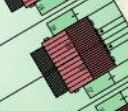
We will get the right half shown in the photo. Orientation is southwest.
The photovoltaic system will of course be installed on the southwest side facing the garden.
The black area is the 3x5 m (10x16 ft) terrace, which will later be covered with a fixed terrace roof measuring 4 m (13 ft) deep and 5.5 m (18 ft) wide.
My question is whether it will still be possible to install a photovoltaic system on the roof once the fixed terrace roof is there?
If the terrace roof is on the southwest side in the garden, it will no longer be possible to set up scaffolding.
For maintenance or in case of problems, access to the photovoltaic system will be necessary later on (is access without scaffolding not possible?)
Or can the photovoltaic system be installed without scaffolding?
The house will have a gable roof and 2.5 full stories.
we are planning a new semi-detached house.
We want to install a photovoltaic system later on.
We will get the right half shown in the photo. Orientation is southwest.
The photovoltaic system will of course be installed on the southwest side facing the garden.
The black area is the 3x5 m (10x16 ft) terrace, which will later be covered with a fixed terrace roof measuring 4 m (13 ft) deep and 5.5 m (18 ft) wide.
My question is whether it will still be possible to install a photovoltaic system on the roof once the fixed terrace roof is there?
If the terrace roof is on the southwest side in the garden, it will no longer be possible to set up scaffolding.
For maintenance or in case of problems, access to the photovoltaic system will be necessary later on (is access without scaffolding not possible?)
Or can the photovoltaic system be installed without scaffolding?
The house will have a gable roof and 2.5 full stories.
Tolentino schrieb:
It depends on the roof pitch. I have read that up to 25° it can still make sense on the north side. However, the efficiency drops significantly.
For my location, I ran the numbers with PVGIS and while my southeast and southwest surfaces at 25° roof pitch get 1000 sun hours, the two north-facing surfaces only get around 7xx sun hours. So approximately a 25-30% loss. The thread starter should definitely run this exact calculation with PVGIS for their specific conditions. The yield on the northeast side will be lower. But one must also keep in mind that additional modules installed on the northeast will cost significantly less per kWp, since installation costs are spread across more modules. Therefore, total yield and costs for southwest alone versus southwest plus northeast need to be compared. Especially now, as feed-in tariffs approach production costs, self-consumption offers good savings. With diffuse light from clouds, the increased module area also helps to better cover self-consumption.
I would definitely run the numbers and proceed if it proves at least approximately worthwhile.
Pacc666 schrieb:
I don’t know the exact roof pitch 😀 but it will probably be around 30-35 degrees (30-35°), so it’s probably not very relevant again.
I will ask about the exact roof pitch next time I have the chance.
What do you think about a photovoltaic patio roof? For the orientation, the pitch on the northeast side can actually be quite good. Don’t just guess, calculate it precisely!
Photovoltaic patio roofs look nice. However, as far as I know, they require glass-glass modules. These are significantly more expensive than the glass-film modules typically used on roofs. Still, as a hobby and with a good orientation, it’s definitely worth considering.
Deliverer schrieb:
From an economic standpoint, storage systems become viable starting at about 250€ per kW.Definitely not with these specifications!Pacc666 schrieb:
How can I calculate the photovoltaic system myself to see what makes sense?Roughly like this:
First, you can calculate the yield of both roof sides using PVGIS in kWh/year. Depending on your expected energy consumption (heat pump, server farm, swimming pool?), you can cover a good part of your electricity demand with photovoltaic power. For this, you don’t receive feed-in tariffs, but you save the costs of purchasing electricity from your energy supplier. In our household, without large individual consumers, we can cover about 50% of our own consumption by running the dishwasher and washing machine during sunny periods. An electric car that is sometimes at home during the day and charging increases self-consumption even more.
For the rest, you receive feed-in tariffs of currently around 0.07€/kWh. This applies for the year of commissioning plus another 20 years.
This gives you your annual income.
Next, determine the costs. The main cost is depreciation, calculated at 5% of the system price per year over 20 years. In addition, there are ongoing costs for insurance (typically up to 100€ per year), possible maintenance and cleaning (usually close to zero), and replacement of an inverter (around 1500€) after approximately 10 years.
With income and expenses, you can calculate your profit or loss. You will notice that a major factor for profitability is purchasing the system at a good price.
Solar installers usually provide such calculations as part of their offers. However, they typically assume high annual increases in electricity prices. This can make the costs of a battery storage system appear more favorable. The battery increases your self-consumption somewhat, but you will never be able to cover 100% of your own demand. Therefore, in most cases, a battery is still too expensive and not cost-effective.
 KingJulien14 Sep 2021 14:24
With the calculator from Stiftung Warentest, you can also experiment a bit with the parameters; I find it quite good for that purpose. Just be careful with the point where self-consumption is asked about. This does not refer to the percentage of your electricity usage covered by photovoltaic, but rather how much of your total photovoltaic electricity production you consume yourself.
Similar topics