
Hello everyone,
I am new to the forum and would like to briefly introduce myself. I am 36 years old, from southern Germany, and currently renovating our house, built in 1969.
At the moment, I am working on renovating the basement. We excavated all the old concrete, paving, and natural ground. A new concrete slab was then poured (10-15cm thick) and connected to the foundation with steel bars. On top of that, a polyethylene vapor barrier was installed, followed by a concrete screed (industrial quality). The individual rooms and walls were separated from the screed by perimeter insulation strips.
Now I want to create a cove fillet on the wall with epoxy resin and then coat the entire floor with epoxy resin.
I have heard that the cove fillet should be applied onto the edge insulation strip. However, I have the problem that the edge insulation strip and the tile covering are already flush, and I do not want the cove fillet to protrude. In addition, the edge insulation strip is damaged in some places due to grinding the concrete.
Can I cut off the edge insulation strip and install a new strip with lower thickness to separate the cove fillet, floor, and walls, so that the cove fillet is flush with the tiles? What material should this strip be made of so that the epoxy mortar bonds well?
Can the strip be glued to the wall? If yes, what adhesive should I use?
Or do you have any other suggestions? I would be very grateful for your tips!
Best regards
Bulli
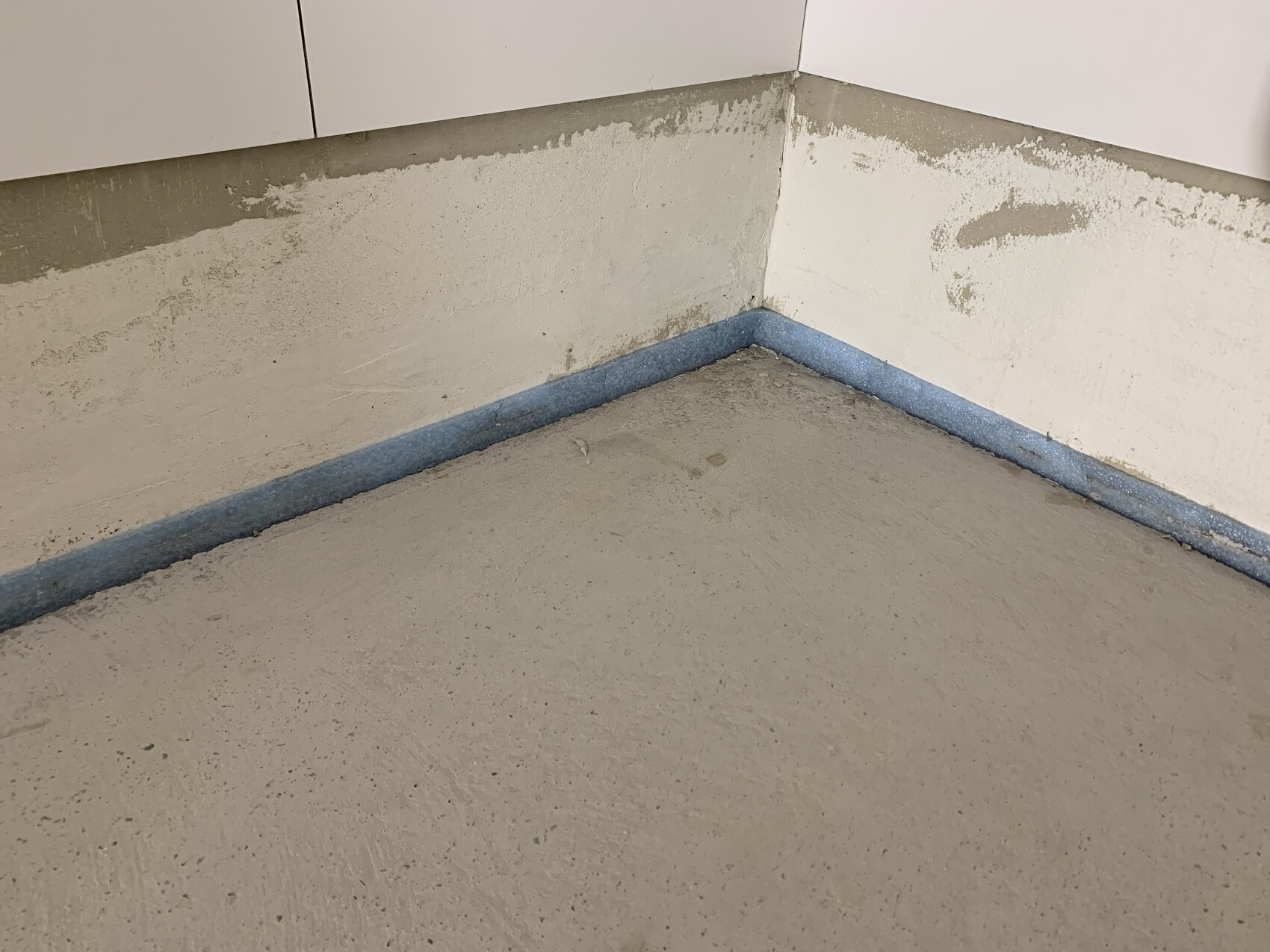
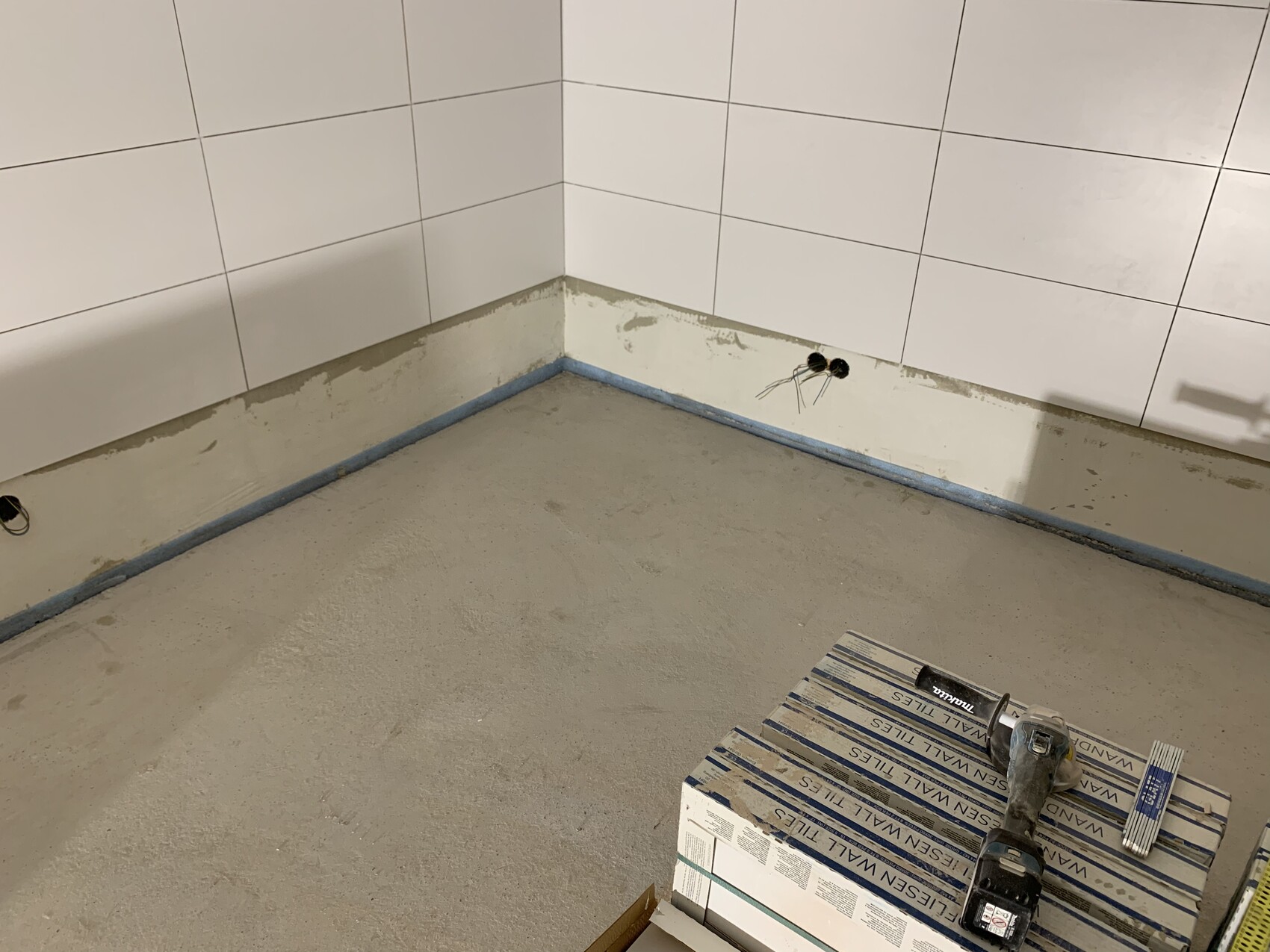
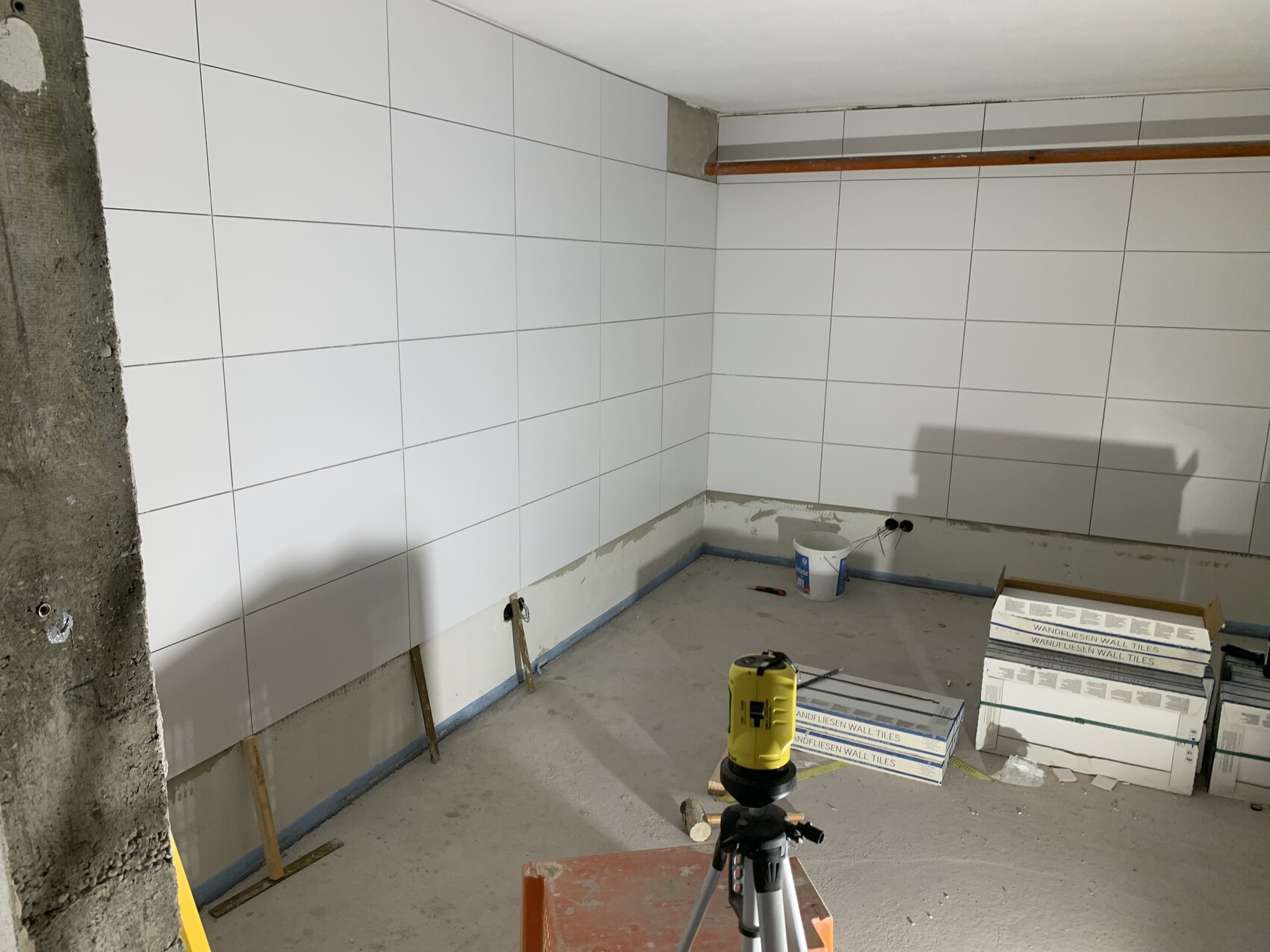
I am new to the forum and would like to briefly introduce myself. I am 36 years old, from southern Germany, and currently renovating our house, built in 1969.
At the moment, I am working on renovating the basement. We excavated all the old concrete, paving, and natural ground. A new concrete slab was then poured (10-15cm thick) and connected to the foundation with steel bars. On top of that, a polyethylene vapor barrier was installed, followed by a concrete screed (industrial quality). The individual rooms and walls were separated from the screed by perimeter insulation strips.
Now I want to create a cove fillet on the wall with epoxy resin and then coat the entire floor with epoxy resin.
I have heard that the cove fillet should be applied onto the edge insulation strip. However, I have the problem that the edge insulation strip and the tile covering are already flush, and I do not want the cove fillet to protrude. In addition, the edge insulation strip is damaged in some places due to grinding the concrete.
Can I cut off the edge insulation strip and install a new strip with lower thickness to separate the cove fillet, floor, and walls, so that the cove fillet is flush with the tiles? What material should this strip be made of so that the epoxy mortar bonds well?
Can the strip be glued to the wall? If yes, what adhesive should I use?
Or do you have any other suggestions? I would be very grateful for your tips!
Best regards
Bulli

@KlaRa
After much consideration, I have one more question about the swelling paste:
A small bathroom is getting a floating screed, which, as usual, is sealed in the corners and joints with a membrane.
The idea of filling the expansion joint (under the membrane) between the wall and the screed with this kind of swelling paste makes sense to me.
If the membrane is not fully waterproof, the paste will still work. 😉
Do you think it is worthwhile for a “layperson” to look into this idea, or is it—as you say—something only professionals should handle?
Alternatively, would it make sense to apply a rubber (silicone?) sealant between the screed and the wall instead of the swelling paste? (That just occurred to me.) That would provide a second layer of protection...
After much consideration, I have one more question about the swelling paste:
A small bathroom is getting a floating screed, which, as usual, is sealed in the corners and joints with a membrane.
The idea of filling the expansion joint (under the membrane) between the wall and the screed with this kind of swelling paste makes sense to me.
If the membrane is not fully waterproof, the paste will still work. 😉
Do you think it is worthwhile for a “layperson” to look into this idea, or is it—as you say—something only professionals should handle?
Alternatively, would it make sense to apply a rubber (silicone?) sealant between the screed and the wall instead of the swelling paste? (That just occurred to me.) That would provide a second layer of protection...

manohara schrieb:
Do you think it makes sense for a "layperson" to deal with this idea, or is it— as you say— only something for professionals?Well, you can apply swelling paste even without technical expertise in waterproofing! Swelling paste is actually just—in a figurative sense—the "suspenders" to make sure the pants don’t slip down in an emergency.
It is only used in the truly critical areas where we expect a high level of water exposure and sealing tapes alone might not be sufficient.
What does it mean when screed is "sealed with a membrane"?
KlaRa schrieb:
What does it mean that the screed is "sealed with a membrane"?uh
Unfortunately, I often don’t have the technical terms at hand.
What I mean is that the waterproofing is done as it usually is in bathrooms.
A waterproof membrane is glued to the surfaces and in the corners where moisture is expected.
Yes, the swelling material would provide double protection. I am always cautious with water because it has spilled multiple times on me.
In bathrooms, depending on the water exposure, a screed is applied with an alternative waterproofing (liquid waterproofing).
This is done in two layers, with the first layer having a different color than the second. This way, it is visually clear where the coverage was not applied properly. While the first layer is still wet, the sealing tape (to the wall) is integrated and then covered by the second layer.
For floating screeds, the sealing tape must be looped into the perimeter joint to prevent tension or even tearing due to movements of the screed slab.
However, a membrane as waterproofing ON screeds is not something I am aware of. Under screeds, yes!
Perhaps it was just an unfortunate choice of wording on your part.
This is done in two layers, with the first layer having a different color than the second. This way, it is visually clear where the coverage was not applied properly. While the first layer is still wet, the sealing tape (to the wall) is integrated and then covered by the second layer.
For floating screeds, the sealing tape must be looped into the perimeter joint to prevent tension or even tearing due to movements of the screed slab.
However, a membrane as waterproofing ON screeds is not something I am aware of. Under screeds, yes!
Perhaps it was just an unfortunate choice of wording on your part.
I talked about it with my wife. She remembers it completely differently than I do.
I believe a waterproof "layer" was applied on the screed, under the tiles. The drain trap was integrated "inside" this "membrane." The corners near the walls ... ... I don’t really remember - and I thought that stuff was glued there - but it could have been different...
Thank you for your well-meaning attempt to teach me something 😉
For our bathroom, "some" craftsman will be involved. With them, I will (hopefully) find a method that works.
In any case, "swelling paste" is now part of my knowledge base, with which I can annoy the professionals...
I believe a waterproof "layer" was applied on the screed, under the tiles. The drain trap was integrated "inside" this "membrane." The corners near the walls ... ... I don’t really remember - and I thought that stuff was glued there - but it could have been different...
Thank you for your well-meaning attempt to teach me something 😉
For our bathroom, "some" craftsman will be involved. With them, I will (hopefully) find a method that works.
In any case, "swelling paste" is now part of my knowledge base, with which I can annoy the professionals...
Similar topics