
ᐅ Architect-designed house floor plan with a recessed upper level
Created on: 26 Aug 2021 20:36
S
stfn_86
Development Plan / Restrictions
Plot size: 485 sqm (5220 sq ft)
Slope: No slope on the property, but the site will be raised about 1 m (3 ft) above street level due to terrain adjustment
Floor Area Ratio: 0.4
Building Coverage Ratio: Not specified
Building envelope, building line, and boundary: See plan
Peripheral building: Within standard guidelines
Number of parking spaces: TBD
Number of floors: 2
Roof type: Flat roof as specified by the development plan
Architectural style: Modern
Orientation: Garden facing west
Maximum heights/limits: Max building height: 10.50 m (34 ft)
Additional requirements: According to the development plan, no fences or hedges are allowed in the front yard. However, our plot is on the edge of the development area along an existing street. On the opposite side of the street (outside the development area), most houses have fences, so exemption from this regulation might be possible.
Homeowners’ Requirements
Style, roof shape, building type: Modern, cubic
Basement, floors: Partial basement, ground floor, upper floor, penthouse floor
Number of people, ages: M 35, F 34, planning for 1-2 children
Office: M 100% home office, F 40-60% home office, two separate offices needed
Overnight guests per year: few
Open or closed layout: open
Traditional or modern construction: modern
Open kitchen, kitchen island: open, kitchen island
Number of dining seats: TBD
Fireplace: no
Music/sound wall: no
Balcony, roof terrace: roof terrace
Garage, carport: somewhat larger single garage, no double garage needed
Vegetable garden, greenhouse: no
Other wishes/special features/daily routine, including reasons for preferences:
House Design
Planner: Architect
What do you particularly like? Why?
Overall, the layout meets our expectations well, for example modern exterior, lots of natural light, large kitchen.
What do you dislike? Why?
Price estimate by architect: €725,000 (construction + incidental building costs)
Personal budget limit for house including fittings: TBD
Preferred heating system: District heating (mandated)
If you have to give up on something, which details/extensions
-can you forego: lounge, gallery, sauna, possibly one child’s room
-can’t you forego: two offices (one in the penthouse floor, one on the upper floor)
Why is the design the way it is now?
This is the architect’s first draft, which we see as a basis for further revisions.
What is the key/basic question about the floor plan in 130 characters?
What general feedback do you have for us to bring into the next discussion with the architect (besides points under “dislikes”)? I will post the next revision of the floor plan here.
Apologies for the rough dimensions. I added them myself and they are not exact to the last decimal.
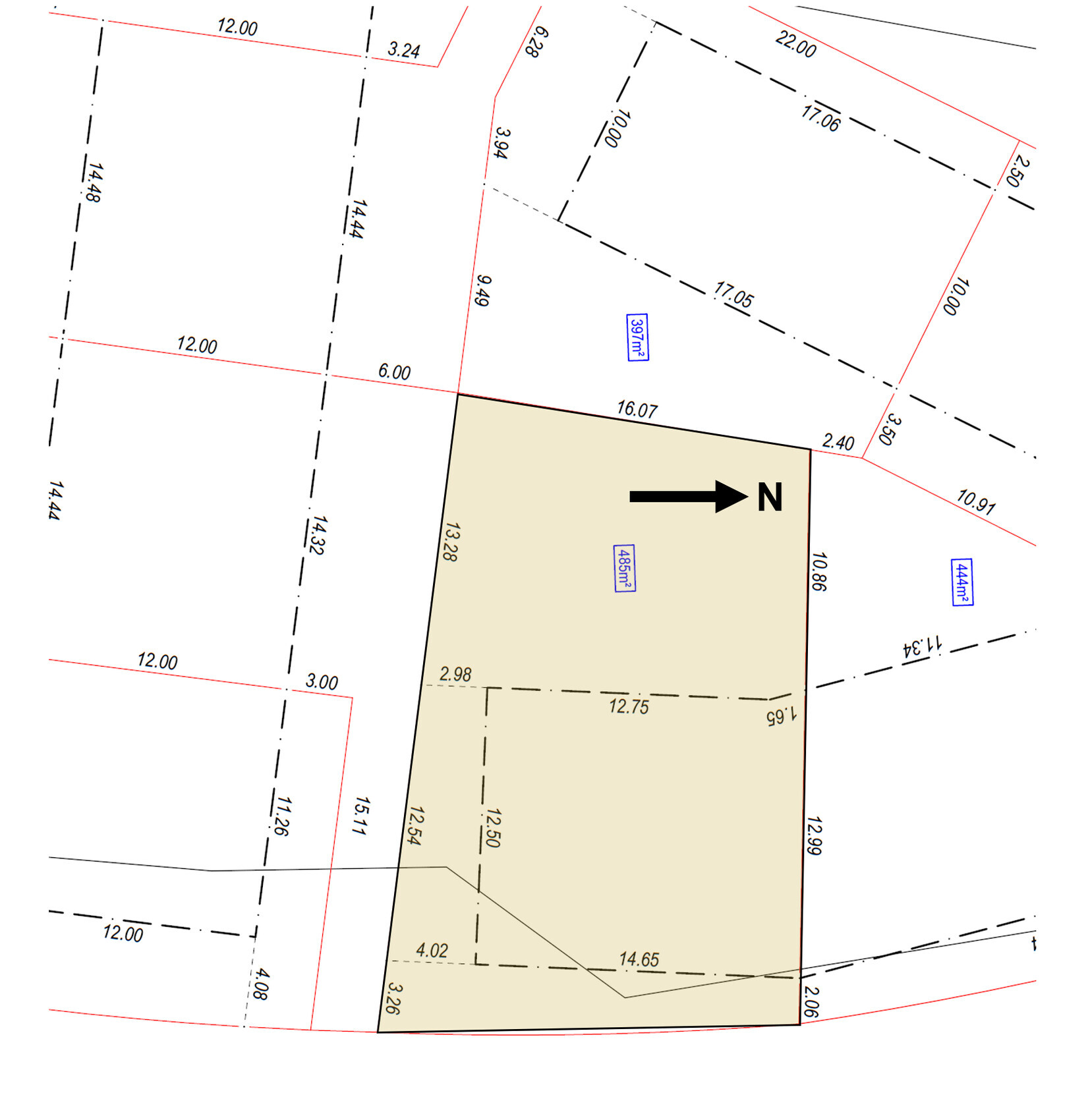
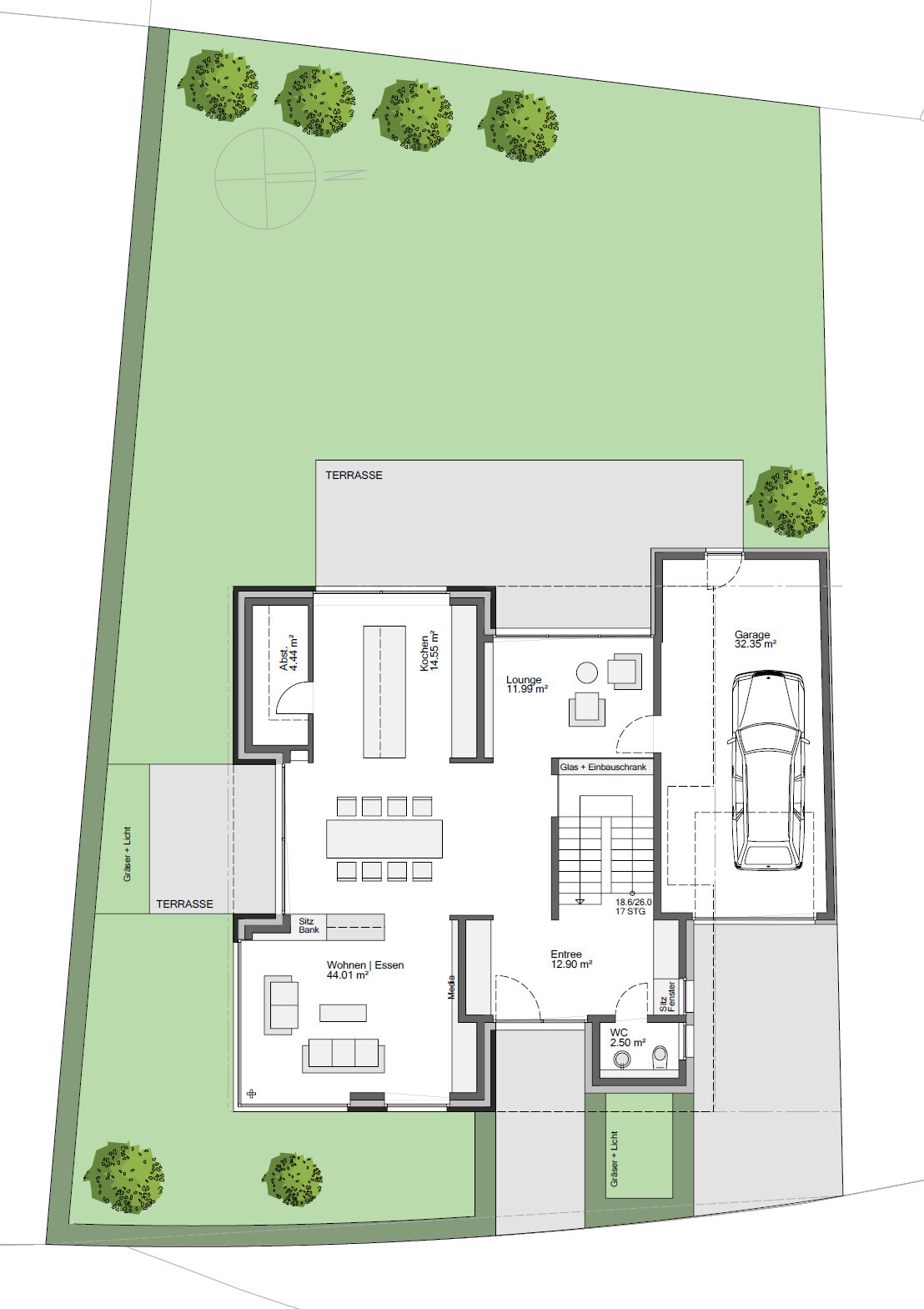
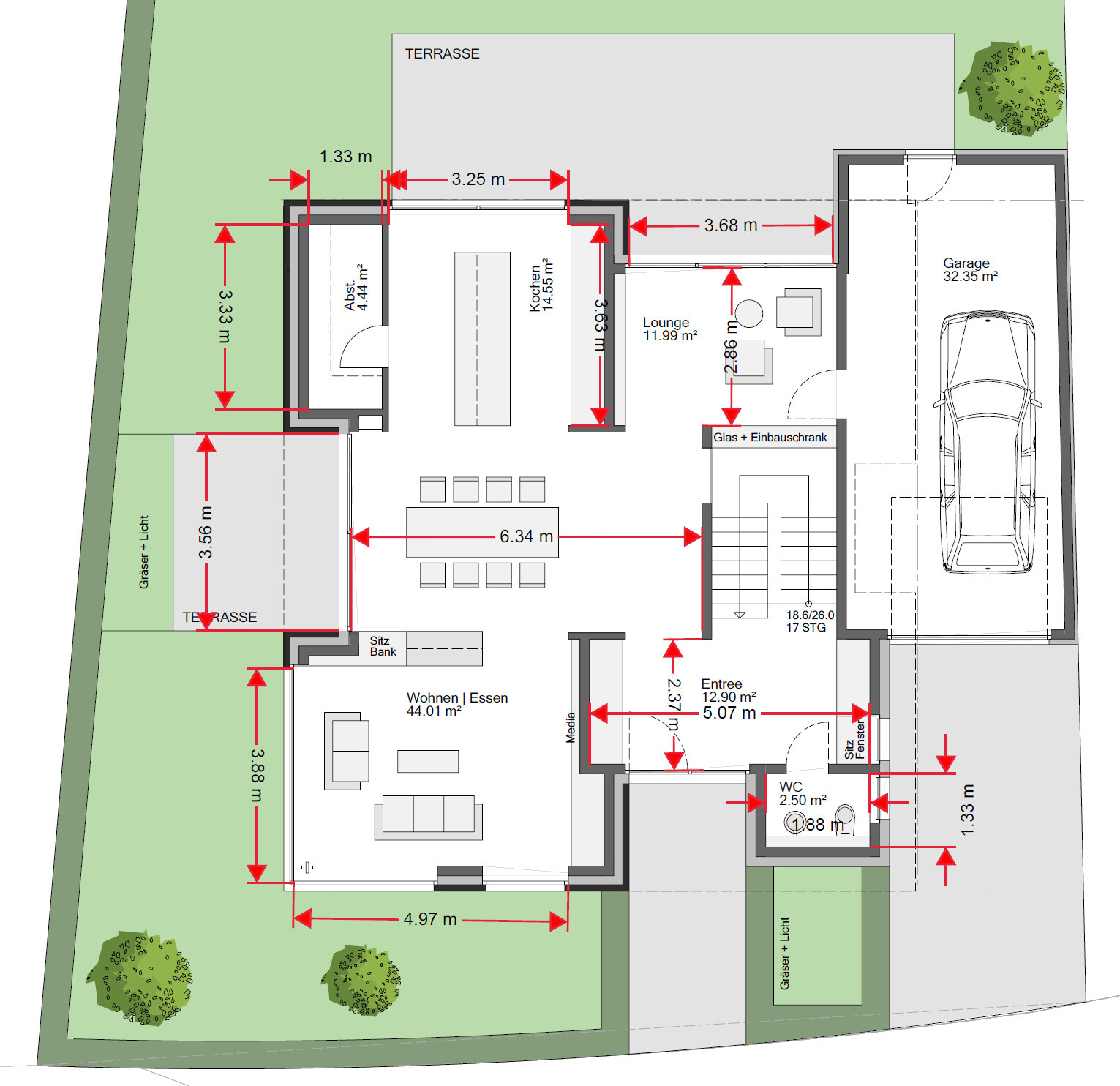
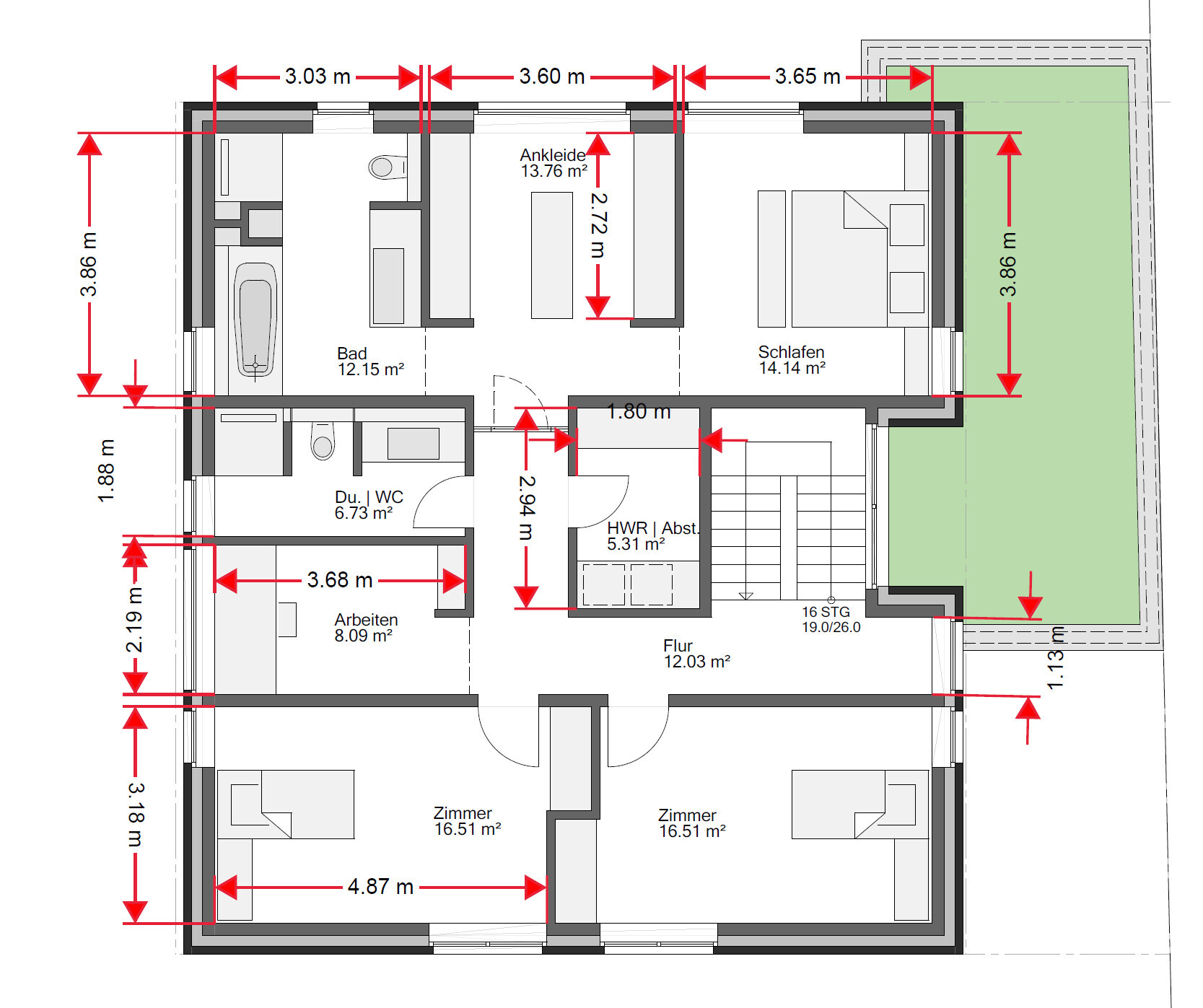
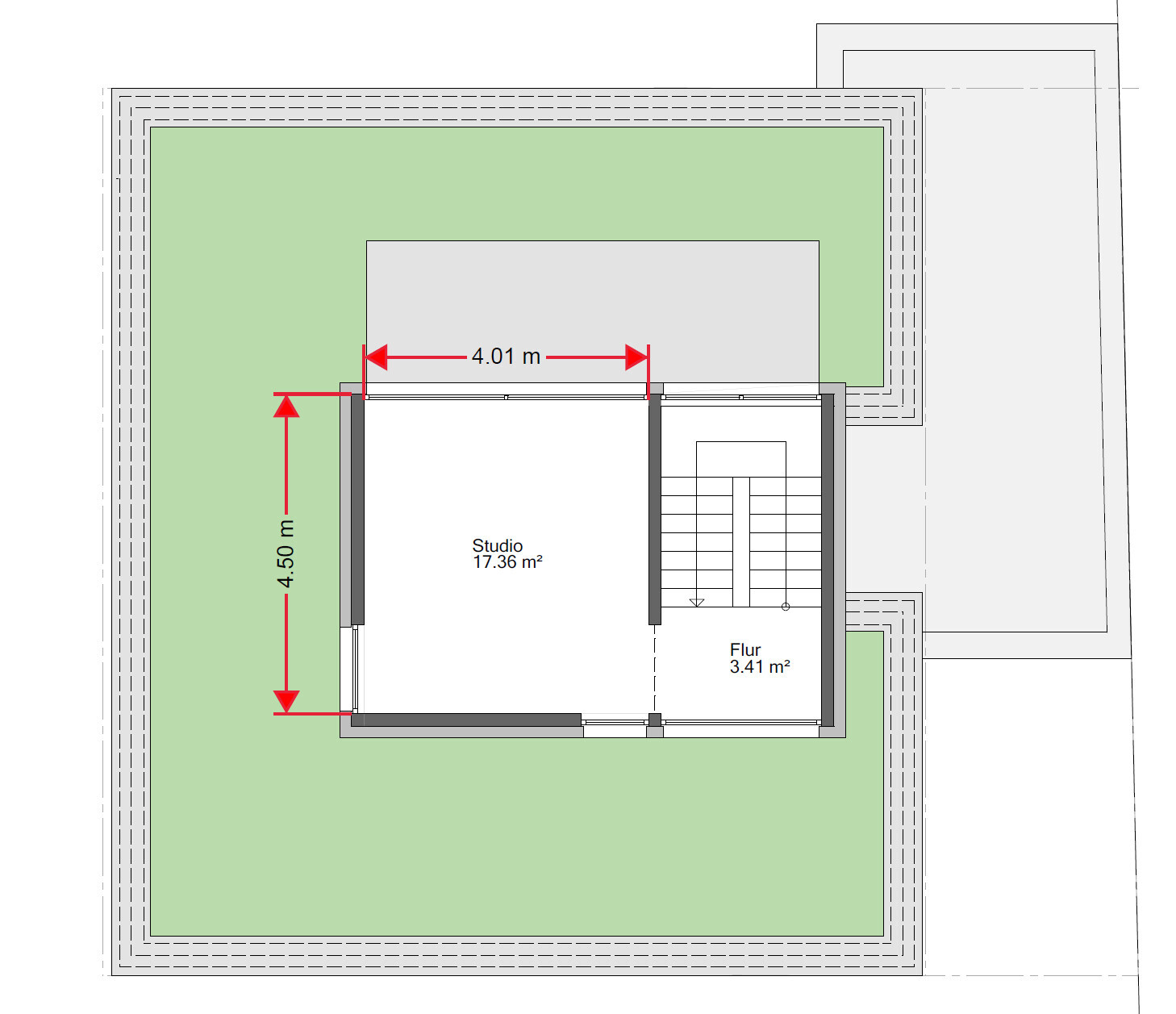
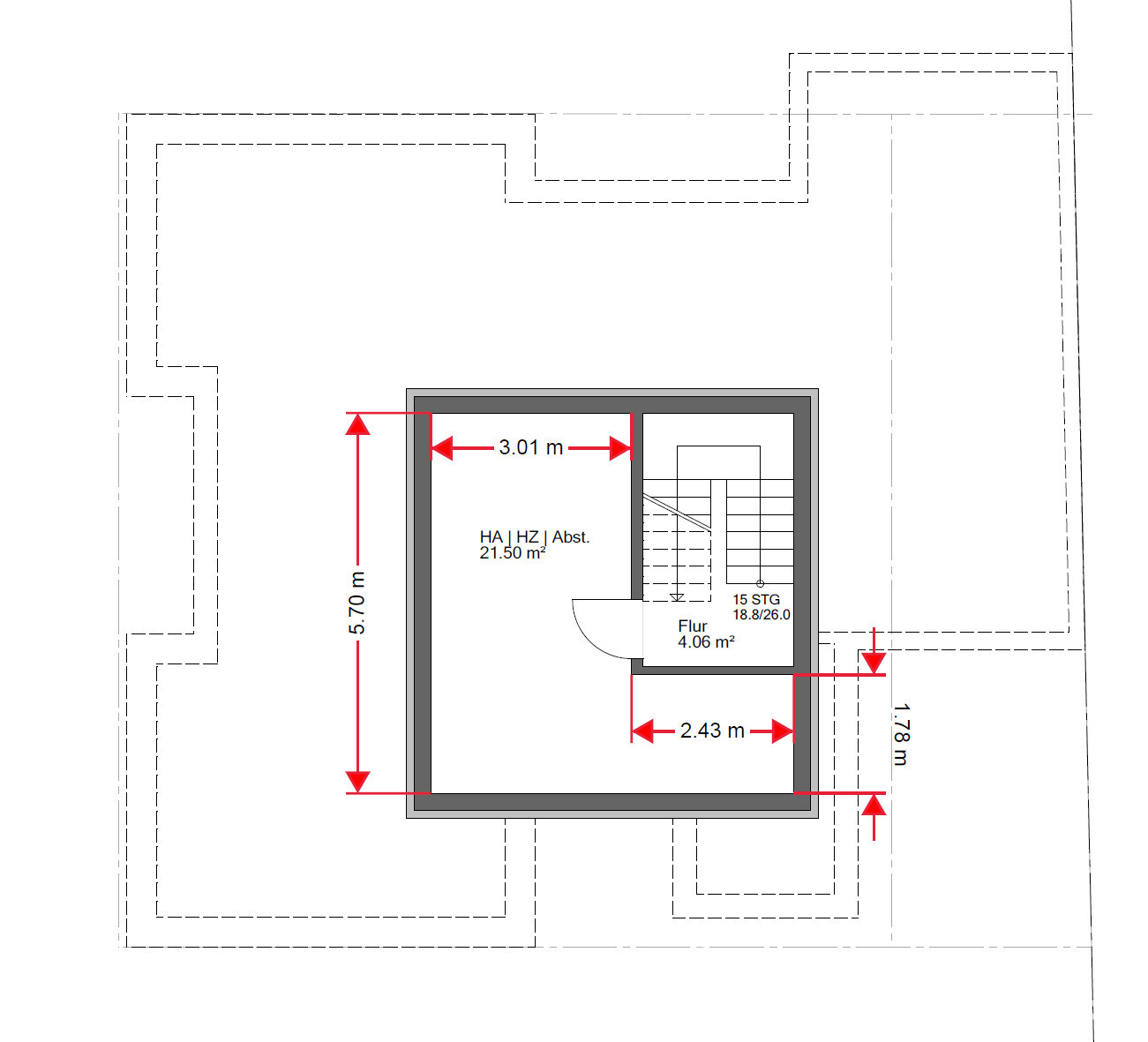
Plot size: 485 sqm (5220 sq ft)
Slope: No slope on the property, but the site will be raised about 1 m (3 ft) above street level due to terrain adjustment
Floor Area Ratio: 0.4
Building Coverage Ratio: Not specified
Building envelope, building line, and boundary: See plan
Peripheral building: Within standard guidelines
Number of parking spaces: TBD
Number of floors: 2
Roof type: Flat roof as specified by the development plan
Architectural style: Modern
Orientation: Garden facing west
Maximum heights/limits: Max building height: 10.50 m (34 ft)
Additional requirements: According to the development plan, no fences or hedges are allowed in the front yard. However, our plot is on the edge of the development area along an existing street. On the opposite side of the street (outside the development area), most houses have fences, so exemption from this regulation might be possible.
Homeowners’ Requirements
Style, roof shape, building type: Modern, cubic
Basement, floors: Partial basement, ground floor, upper floor, penthouse floor
Number of people, ages: M 35, F 34, planning for 1-2 children
Office: M 100% home office, F 40-60% home office, two separate offices needed
Overnight guests per year: few
Open or closed layout: open
Traditional or modern construction: modern
Open kitchen, kitchen island: open, kitchen island
Number of dining seats: TBD
Fireplace: no
Music/sound wall: no
Balcony, roof terrace: roof terrace
Garage, carport: somewhat larger single garage, no double garage needed
Vegetable garden, greenhouse: no
Other wishes/special features/daily routine, including reasons for preferences:
- Possibly a sauna in the penthouse floor. If so, a bathroom should be relocated there and the penthouse floor slightly enlarged. Otherwise, the penthouse floor will serve as a study/guest room.
- Originally no basement was planned, only a utility room on the upper floor. Due to terrain raising, a partial basement now seems reasonable. Currently considering replacing the utility room with a gallery/open space.
House Design
Planner: Architect
What do you particularly like? Why?
Overall, the layout meets our expectations well, for example modern exterior, lots of natural light, large kitchen.
What do you dislike? Why?
- The living room is located at the front as per the architect’s recommendation, placing the kitchen towards the garden. The idea was to protect the living area from street views with a hedge or similar. However, fences or hedges in the front yard are prohibited (see above), so adequate privacy seems difficult. On the other hand, the house is raised relative to the street (finished floor level 30.60 m (100.4 ft), street: 29.50 m (96.8 ft)), which may provide some privacy. I’m unsure if the architect fully considered the fence restriction. Currently, we are thinking about swapping the kitchen and living room.
- The lounge area was not explicitly requested by us and seems like an afterthought to use extra space.
- The dressing room is somewhat oversized.
- The entrance from the garage into the house feels too “American” and might be removed. This would mean a longer path from the garage to the kitchen for unloading groceries.
Price estimate by architect: €725,000 (construction + incidental building costs)
Personal budget limit for house including fittings: TBD
Preferred heating system: District heating (mandated)
If you have to give up on something, which details/extensions
-can you forego: lounge, gallery, sauna, possibly one child’s room
-can’t you forego: two offices (one in the penthouse floor, one on the upper floor)
Why is the design the way it is now?
This is the architect’s first draft, which we see as a basis for further revisions.
What is the key/basic question about the floor plan in 130 characters?
What general feedback do you have for us to bring into the next discussion with the architect (besides points under “dislikes”)? I will post the next revision of the floor plan here.
Apologies for the rough dimensions. I added them myself and they are not exact to the last decimal.
H
hampshire27 Aug 2021 10:08I will not address construction costs here, as price elasticity was implied. Therefore, I will not discuss the economic efficiency of individual solutions but rather focus on their benefits.
The design works wonderfully for family life, is very spacious, and (hopefully) has a ceiling height of over 3m (10 feet) at least on the ground floor to create an impressive effect.
Your concerns about the living room and lounge:
I would keep the living room where it is planned. Even if you cannot create full privacy from the street, you can use external blinds (such as venetian blinds) if you want to be unobserved. A large window can still remain open for natural daylight. For this reason, the small lounge also makes sense because there you are very private and get evening sun. It’s a nice luxury to have several favorite spots to relax, and the studio could also become one, especially if a large roof terrace is added. For true privacy, the lot is too small and the neighbors are too close. Of course, your ideas and needs take priority — those should guide the architect’s work. It’s much better to tell the architect, “We want maximum privacy in the living room,” and allow them to find a solution than to directly propose swapping rooms.
Size of the walk-in closet:
At this scale, a walk-in closet is truly practical. Storage space, a mirror, and a central spot to sit and lay out clothing. I would avoid the many small “fashion prestige walk-in closets” you often see here. Either do it properly or not at all. Well done by the architect.
Passage to the garage:
I find “too American” amusing as a negative comment. The disadvantages of the passage could be heat loss and odors. The advantage is convenience. It fits your design — although, in practice, probably not all groceries will be unloaded in the garage.
Home office size:
I think it’s perfectly fine. If a laptop is sufficient, surely the terrace, the lounge, or other areas will also be used for work sometimes.
Utility room in the basement:
Smartly positioned — and there is also space for a cooler area for wine, potatoes, etc.
Storage room on the exterior wall:
In most houses, this would be a waste of a window space. The rooms overall have large windows that provide plenty of natural light, so it works here. There’s no need to be dogmatic about it.
Long hallway on the upper floor:
I don’t like hallways that serve no purpose. Here, the hallway provides a degree of separation for the master bedroom. Since the hallway also has some wall space, it offers room for artwork. There would certainly be more compact alternatives.
What I like less
is the ratio of house size to lot size. Such a spacious and individual house deserves more space to also have an impact on the outdoors (which was one of the client’s goals). I find it a bit unfortunate that so much of the lot is covered — on the other hand, I realize it’s not a solution if everyone grabs neighboring building plots to get a bigger garden and more space. I would be tempted to include adjacent plots if financial flexibility and availability were possible.
A beautiful project, which will certainly require a lot more detailed calculations. Good luck!
The design works wonderfully for family life, is very spacious, and (hopefully) has a ceiling height of over 3m (10 feet) at least on the ground floor to create an impressive effect.
Your concerns about the living room and lounge:
I would keep the living room where it is planned. Even if you cannot create full privacy from the street, you can use external blinds (such as venetian blinds) if you want to be unobserved. A large window can still remain open for natural daylight. For this reason, the small lounge also makes sense because there you are very private and get evening sun. It’s a nice luxury to have several favorite spots to relax, and the studio could also become one, especially if a large roof terrace is added. For true privacy, the lot is too small and the neighbors are too close. Of course, your ideas and needs take priority — those should guide the architect’s work. It’s much better to tell the architect, “We want maximum privacy in the living room,” and allow them to find a solution than to directly propose swapping rooms.
Size of the walk-in closet:
At this scale, a walk-in closet is truly practical. Storage space, a mirror, and a central spot to sit and lay out clothing. I would avoid the many small “fashion prestige walk-in closets” you often see here. Either do it properly or not at all. Well done by the architect.
Passage to the garage:
I find “too American” amusing as a negative comment. The disadvantages of the passage could be heat loss and odors. The advantage is convenience. It fits your design — although, in practice, probably not all groceries will be unloaded in the garage.
Home office size:
I think it’s perfectly fine. If a laptop is sufficient, surely the terrace, the lounge, or other areas will also be used for work sometimes.
Utility room in the basement:
Smartly positioned — and there is also space for a cooler area for wine, potatoes, etc.
Storage room on the exterior wall:
In most houses, this would be a waste of a window space. The rooms overall have large windows that provide plenty of natural light, so it works here. There’s no need to be dogmatic about it.
Long hallway on the upper floor:
I don’t like hallways that serve no purpose. Here, the hallway provides a degree of separation for the master bedroom. Since the hallway also has some wall space, it offers room for artwork. There would certainly be more compact alternatives.
What I like less
is the ratio of house size to lot size. Such a spacious and individual house deserves more space to also have an impact on the outdoors (which was one of the client’s goals). I find it a bit unfortunate that so much of the lot is covered — on the other hand, I realize it’s not a solution if everyone grabs neighboring building plots to get a bigger garden and more space. I would be tempted to include adjacent plots if financial flexibility and availability were possible.
A beautiful project, which will certainly require a lot more detailed calculations. Good luck!
B
BauFamily27 Aug 2021 11:04Would it be possible to simply swap the living room with the kitchen because of the plumbing from the bathroom above?
How wide would the garage be?
How wide would the garage be?
Definitely don’t swap them 😉
Also, I would mirror the kitchen, possibly placing the pantry with built-in tall cabinets on the right side of the plan, move the terrace exit slightly further to the left, and then you’d have a single row on the left side where you can nicely integrate a south-facing window.
I find the garage passage less than ideal.
In the living area, I wouldn’t recommend floor-to-ceiling windows on the street-facing side. I would probably avoid floor-to-ceiling windows there altogether. Given the suggested sofa arrangement, which I also find practical, windows with sills would be sufficient in my opinion, offering much more privacy and coziness.
Also, I would mirror the kitchen, possibly placing the pantry with built-in tall cabinets on the right side of the plan, move the terrace exit slightly further to the left, and then you’d have a single row on the left side where you can nicely integrate a south-facing window.
I find the garage passage less than ideal.
In the living area, I wouldn’t recommend floor-to-ceiling windows on the street-facing side. I would probably avoid floor-to-ceiling windows there altogether. Given the suggested sofa arrangement, which I also find practical, windows with sills would be sufficient in my opinion, offering much more privacy and coziness.

stfn_86 schrieb:
Office: M 100% home office, W home office 40-60%, two separate offices needed hampshire schrieb:
Home office layout:
I think it’s completely fine. If a laptop is enough, surely the terrace or the lounge can be used for working sometimes. I just can’t understand this. Someone is building a 250 m² (2,690 sq ft) house with a project budget of 1 million €, but then they’re supposed to spend at least 8 hours a day in this shoebox? The room doesn’t have to be as big as the children’s bedrooms, but it should be around 3 m x 3.5 m (10 ft x 11.5 ft) in size if I’m going to spend 44,000 hours in this room until retirement.
I’m assuming the original poster’s name is Stefan and that M is the one working 100% from home.

In my opinion, the draft (why doesn’t it have any elevation views, was that supposed to be image 02?) reads like a narcissism diagnosis of the architect; I also suspect they are a professor or private lecturer.
First of all, I notice that the house fits on the plot only at best theoretically. Even without a fence, it still appears quite bulky and would benefit from about ten meters (approximately 33 feet) more free space on all sides to fully realize its sculptural effect. Overall, I see a house intended for high-earning dual-income households (both full-time, barely below senior public prosecutor or chief physician level). At first glance, I see at least an "8" as the leading digit. Roughly assuming the basement is a full basement, and that the studio area is not counted as a recessed story, you will get closer to the likely true price.
Additionally – not yet factored into the above! – I see a worryingly large "factor X" for terrain modeling. One meter ten in what form, and especially how will it be adapted to the existing terrain (you mention there is already neighboring development on the opposite side of the street)? How will this affect the height dimensions, even though I don’t see any specifications for eaves or wall heights?
The basement is a joke. Partial basements are generally less cost-effective the smaller they are. Here, it even recedes on all sides; lighting options seem essentially limited to just under the entrance door (???), and the utility inlets are likely inevitably covered (after the entryway, lounge, etc., which are indicators I read as signs of a non-practicing or no longer practicing professional). Placing utility distributions in the basement when half a meter (approximately 20 inches) of flooding is expected raises another serious question mark for me.
Does the architect see it that way as well? That is, is this a “preliminary draft” (commonly at 1:200 scale, and definitely part of design phase 2)?
Finally, my reading recommendation for the thread this reminds me of: https://www.hausbau-forum.de/threads/einfamilienhaus-staffelgeschoss-sued-westlage-in-bonn.36685/
https://www.instagram.com/11antgmxde/
https://www.linkedin.com/company/bauen-jetzt/
First of all, I notice that the house fits on the plot only at best theoretically. Even without a fence, it still appears quite bulky and would benefit from about ten meters (approximately 33 feet) more free space on all sides to fully realize its sculptural effect. Overall, I see a house intended for high-earning dual-income households (both full-time, barely below senior public prosecutor or chief physician level). At first glance, I see at least an "8" as the leading digit. Roughly assuming the basement is a full basement, and that the studio area is not counted as a recessed story, you will get closer to the likely true price.
Additionally – not yet factored into the above! – I see a worryingly large "factor X" for terrain modeling. One meter ten in what form, and especially how will it be adapted to the existing terrain (you mention there is already neighboring development on the opposite side of the street)? How will this affect the height dimensions, even though I don’t see any specifications for eaves or wall heights?
The basement is a joke. Partial basements are generally less cost-effective the smaller they are. Here, it even recedes on all sides; lighting options seem essentially limited to just under the entrance door (???), and the utility inlets are likely inevitably covered (after the entryway, lounge, etc., which are indicators I read as signs of a non-practicing or no longer practicing professional). Placing utility distributions in the basement when half a meter (approximately 20 inches) of flooding is expected raises another serious question mark for me.
stfn_86 schrieb:
This is the architect’s first draft, i.e., I see it as a basis for further revisions.
Does the architect see it that way as well? That is, is this a “preliminary draft” (commonly at 1:200 scale, and definitely part of design phase 2)?
Finally, my reading recommendation for the thread this reminds me of: https://www.hausbau-forum.de/threads/einfamilienhaus-staffelgeschoss-sued-westlage-in-bonn.36685/
https://www.instagram.com/11antgmxde/
https://www.linkedin.com/company/bauen-jetzt/
Similar topics