
Hello dear forum community,
until now I have been a silent reader, but now I would like to actively ask for your help.
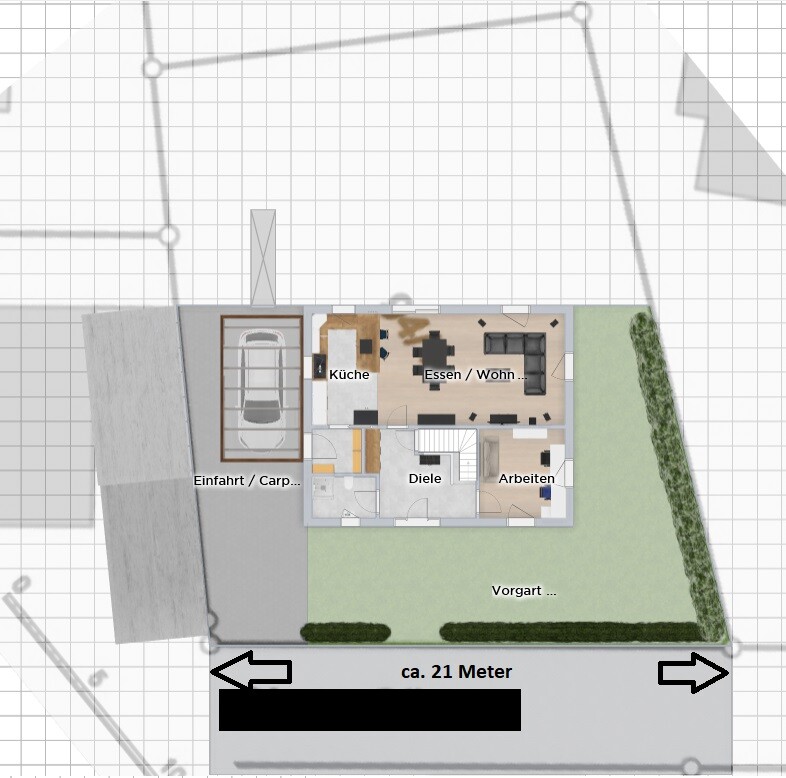
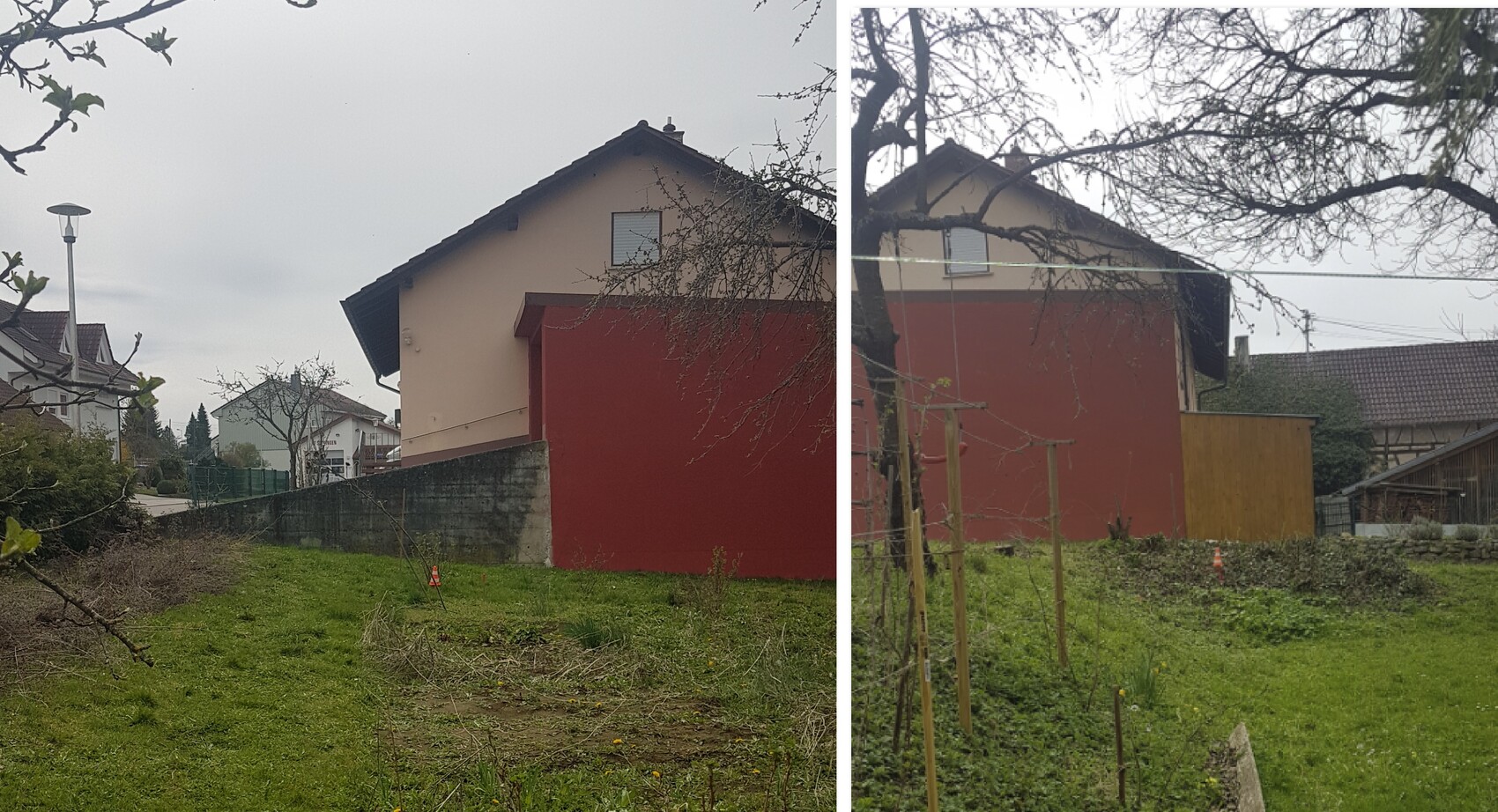
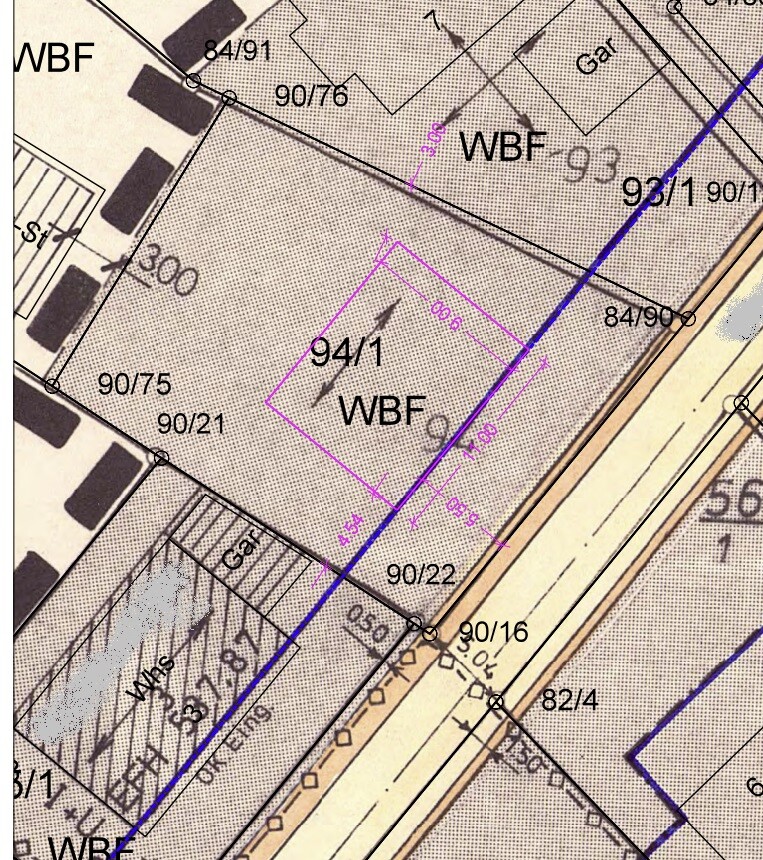
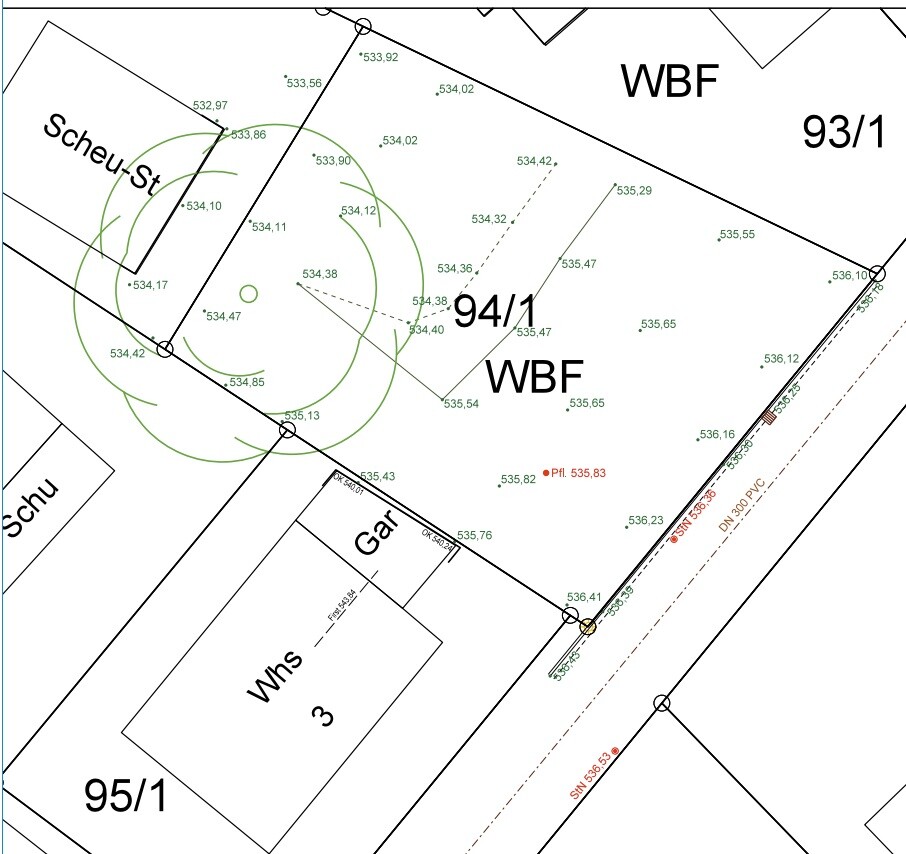
We own a plot of about 500 m² (5380 sq ft) in BW and are planning to build a house. The plot slopes down approximately 2.20 meters (7 ft) from the street view towards the northwest. We plan a prefabricated house (KFW55EE standard) with a basement, where the back of the basement faces the slope and looks out into the garden behind. The neighboring plots are already developed. The floor plan is also quite fixed. On the street side, to the left of the planned house, a parking space and later a carport for one vehicle are planned. Next to the house, which will be about 11 x 9 meters (36 x 30 ft) in size, there remains a trapezoidal area about 4.50 meters (15 ft) wide at the front (corner of the house) and 6 meters (20 ft) wide at the back, and 9 meters (30 ft) long, up to the property boundary with the southwest neighbor, designated for the carport. The plan was to build the carport at ground level next to our house. The neighbor has a garage at this location, which is accessed from the street via a steep ramp (see pictures).
The question now is how to hold back the parking area from the garden?
We have considered the following options:
- A dry stone wall would be nice; it can be a bit rustic. However, I have concerns because the vehicle standing on it increases earth pressure and a height of about 2 meters (7 ft) with a width of 6 meters (20 ft) would need to be retained. We actually did not want to create terraces there, as that would take up too much space and there is a roughly 15-meter (50 ft) tall walnut tree in the garden.
- Concrete wall: A concrete wall connected to the basement foundation. This would take up the least garden space but would also not be cheap and would require a strong foundation. Is it possible and advisable to simply attach this wall to the basement wall? Or at least connect the foundation with the slab under the basement?
- Concrete blocks: What I find very interesting are the Redi Rock from Mauthe. These are concrete blocks with a visible surface that looks like a stone wall. Since the parts interlock with studs (like Lego blocks) and are relatively large and heavy (500-1000 kg / 1100-2200 lb each), no concrete foundation is necessary; a gravel base is sufficient and the blocks are installed dry (theoretically reusable). I also like the look, but installation would require heavy machinery (excavator, wheel loader, crane, or similar) due to the weight of the blocks. I found few prices, but roughly about 200 per m² (square meter).
- Gabions on a foundation: I don’t find this very appealing and it’s not cheap either. I haven’t looked into it much.
What do you think about these alternatives? Or do you have other ideas?
until now I have been a silent reader, but now I would like to actively ask for your help.
We own a plot of about 500 m² (5380 sq ft) in BW and are planning to build a house. The plot slopes down approximately 2.20 meters (7 ft) from the street view towards the northwest. We plan a prefabricated house (KFW55EE standard) with a basement, where the back of the basement faces the slope and looks out into the garden behind. The neighboring plots are already developed. The floor plan is also quite fixed. On the street side, to the left of the planned house, a parking space and later a carport for one vehicle are planned. Next to the house, which will be about 11 x 9 meters (36 x 30 ft) in size, there remains a trapezoidal area about 4.50 meters (15 ft) wide at the front (corner of the house) and 6 meters (20 ft) wide at the back, and 9 meters (30 ft) long, up to the property boundary with the southwest neighbor, designated for the carport. The plan was to build the carport at ground level next to our house. The neighbor has a garage at this location, which is accessed from the street via a steep ramp (see pictures).
The question now is how to hold back the parking area from the garden?
We have considered the following options:
- A dry stone wall would be nice; it can be a bit rustic. However, I have concerns because the vehicle standing on it increases earth pressure and a height of about 2 meters (7 ft) with a width of 6 meters (20 ft) would need to be retained. We actually did not want to create terraces there, as that would take up too much space and there is a roughly 15-meter (50 ft) tall walnut tree in the garden.
- Concrete wall: A concrete wall connected to the basement foundation. This would take up the least garden space but would also not be cheap and would require a strong foundation. Is it possible and advisable to simply attach this wall to the basement wall? Or at least connect the foundation with the slab under the basement?
- Concrete blocks: What I find very interesting are the Redi Rock from Mauthe. These are concrete blocks with a visible surface that looks like a stone wall. Since the parts interlock with studs (like Lego blocks) and are relatively large and heavy (500-1000 kg / 1100-2200 lb each), no concrete foundation is necessary; a gravel base is sufficient and the blocks are installed dry (theoretically reusable). I also like the look, but installation would require heavy machinery (excavator, wheel loader, crane, or similar) due to the weight of the blocks. I found few prices, but roughly about 200 per m² (square meter).
- Gabions on a foundation: I don’t find this very appealing and it’s not cheap either. I haven’t looked into it much.
What do you think about these alternatives? Or do you have other ideas?
H
hanghaus200011 Jul 2021 09:43Is this a 34 zoning? Or is there a building permit / planning permission?

hanghaus2000 schrieb:
Who approved the neighbor’s garage right on the boundary? It’s easily 5 m (16 ft) high. I have no idea who approved it. The development plan does allow garage construction on the boundary, but aside from that, the ramp into his garage is so steep that he has to rev the engine really high and probably wears out the clutch every time he parks. Totally silly, if you ask me. It always takes him about 5 minutes to park….. The main thing is that the garage has access to his raised ground floor…
hanghaus2000 schrieb:
Are they leaving out the yellow shed at the boundary in the surveyor’s plan? The neighbor’s house definitely has a livable basement, right?
This isn’t just about the retaining wall. Or do you really want to build your ground floor completely level? The shed is missing from the surveyor’s plan, that’s true. I don’t see it as a huge problem though. The basement in the neighbor’s house looks from outside like it’s mainly utility rooms/cellar. Next to the yellow shed there’s a door that’s really small, maybe only about 180 cm (6 ft) high. I don’t think anyone wants to live down there.
Yes, the ground floor should be level with the street, so you can get from the street and carport into the house without any steps. So we’ll probably need a slight slope of the terrain from the street to the house. But steps must be avoided.
It’s not just about the retaining wall, also the surrounding area, for example how to connect to the neighbor’s garage and how to handle water cooling in that spot.
hanghaus2000 schrieb:
As the original poster plans it, the retaining wall will only be 1 m (3 ft) high, and the basement excavation will be used to fill in. Where is the terrace going to be? I think the wall will be more like 1.5 to 2 meters (5 to 6.5 ft). The ground behind the basement will also need to be lowered a bit so there’s good access to the basement that will later be converted into living space. I’ll attach a picture of the preliminary garden plan so it’s clearer.
So you can enter the basement from the garden level at the back, which should have a ceiling height of 2.4 m (8 ft) after the screed is installed. The height difference between the street and the lawn there is currently just over 2 meters (6.5 ft). We need to gain about 60 cm (2 ft) somewhere. This comes from a combination of slightly raising the single-family house and lowering the lawn/terrain behind the house. I hope the idea makes sense…. The terrace will be just behind the house in the garden and maybe a small terrace in the front garden to the southeast.
The wall stones are practical but not particularly affordable at 200 per square meter (200 per square yard). I have a quote from the landscaping contractor for retaining walls made of shell limestone at 200–220 per square meter (200–220 per square yard), fully installed.
Besides the planting, do they offer any other advantages (for me as the builder and not as the wall installer)?
Besides the planting, do they offer any other advantages (for me as the builder and not as the wall installer)?
H
hanghaus200011 Jul 2021 20:55Here is a thought. The wall is meant to support the terrace at ground floor level.
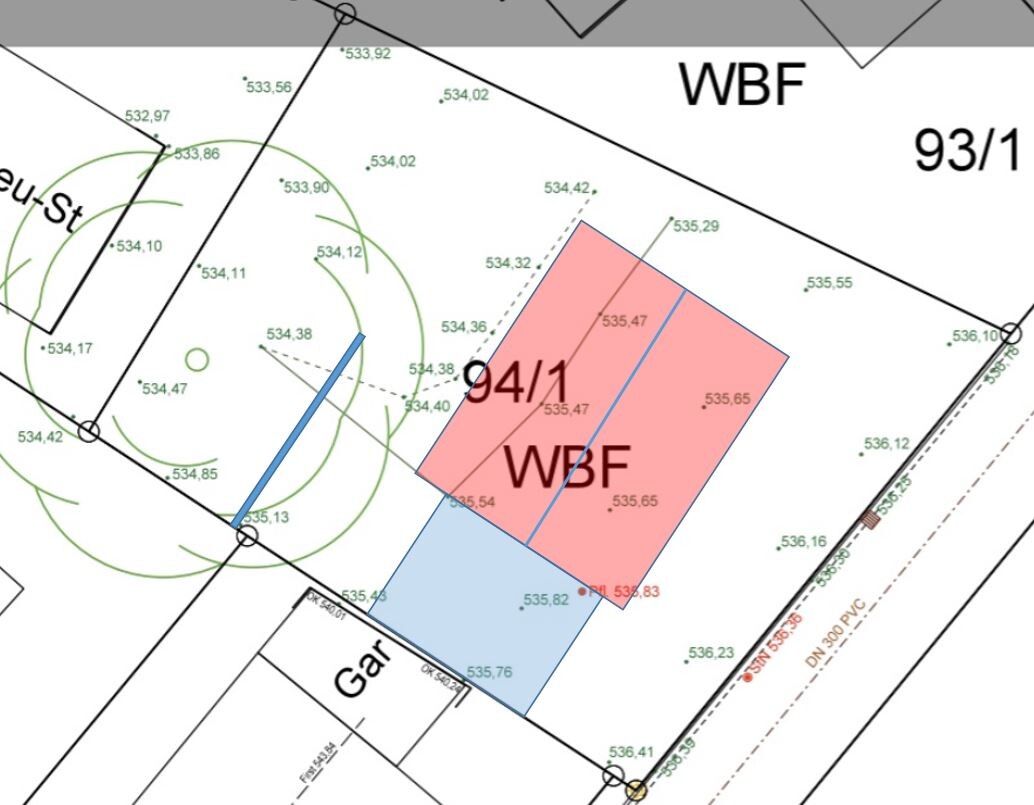
Or like this?
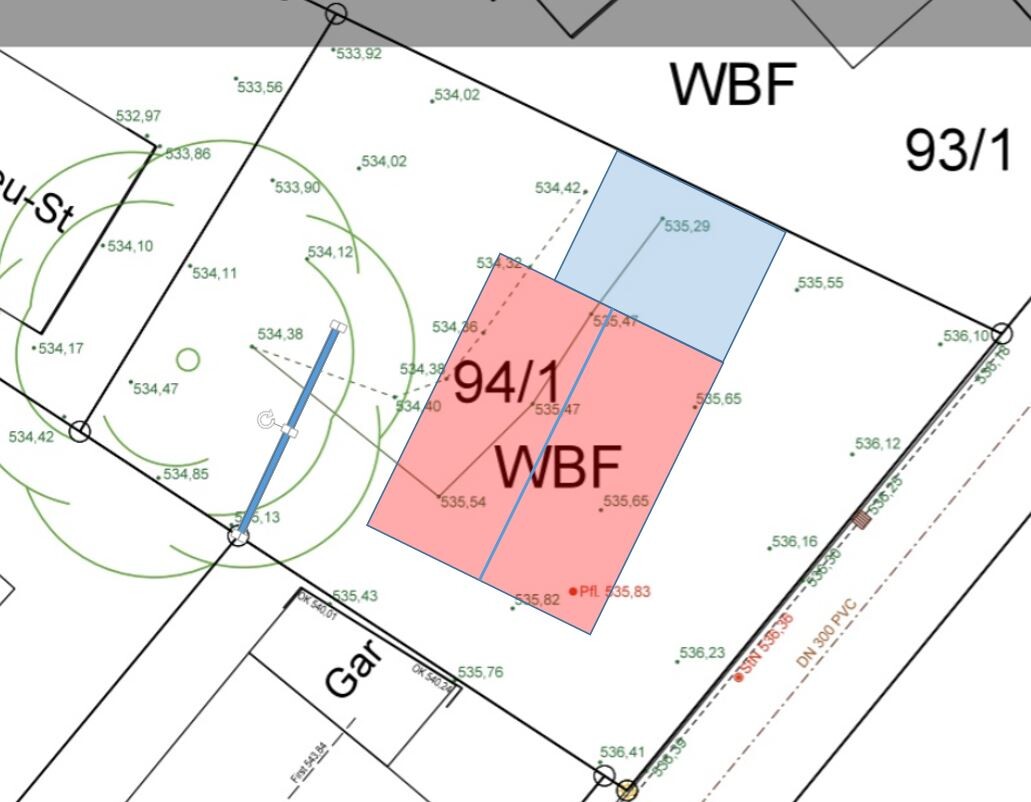
Or like this?
Ventreri schrieb:
The wall blocks are practical but not particularly cheap at 200 per m² (200 per 10.8 sq ft). I received a quote from the landscaping contractor for retaining walls made of shell limestone at 200-220 per m² (200-220 per 10.8 sq ft), fully installed.
Besides planting, do they have any other advantages (for me as the builder and not as the wall installer)?You can transfer a load of up to 5 kN per m² (466 pounds per sq ft) without a concrete foundation for walls up to 8 meters (26 feet) high. Also, the wall blocks are reusable like building bricks if you ever want to remodel.hanghaus2000 schrieb:
Here’s something to think about. The wall should stabilize the terrace at ground floor height.
Or like this?
The first idea could work, but you would also need to support the neighboring property and to the north, which means instead of one wall, you’d need three retaining walls or a full platform, which would be more expensive. Additionally, you would lose window area in the garden level and the remaining windows would get less natural light from the west.I had also considered the second option. However, the layout on the ground floor didn’t suit us. We have now spent about two years on the floor plan and don’t want to change it fundamentally. From the carport, you enter our storage room through a side door and from there into the kitchen. If we move that to the other side, all rooms would have to be rearranged. Even simply mirroring it doesn’t give the desired result.
What do you think about the costs? Is a concrete wall with an attached foundation, if done at the same time by the basement contractor, cheaper to implement than a stone wall with large stone blocks by a different company?
H
hanghaus200012 Jul 2021 10:36I haven’t seen any floor plans yet.
Can you tell me about your basement level? 534m² (5744 sq ft)? Is the terrace going to be on the lower level?
Are you allowed to build a carport facing the street?
Is there a zoning plan? Or is it a §34 building permit?
Can you tell me about your basement level? 534m² (5744 sq ft)? Is the terrace going to be on the lower level?
Are you allowed to build a carport facing the street?
Is there a zoning plan? Or is it a §34 building permit?
Similar topics