
Hello everyone.
We are currently planning our outdoor area and are doing as much as possible ourselves.
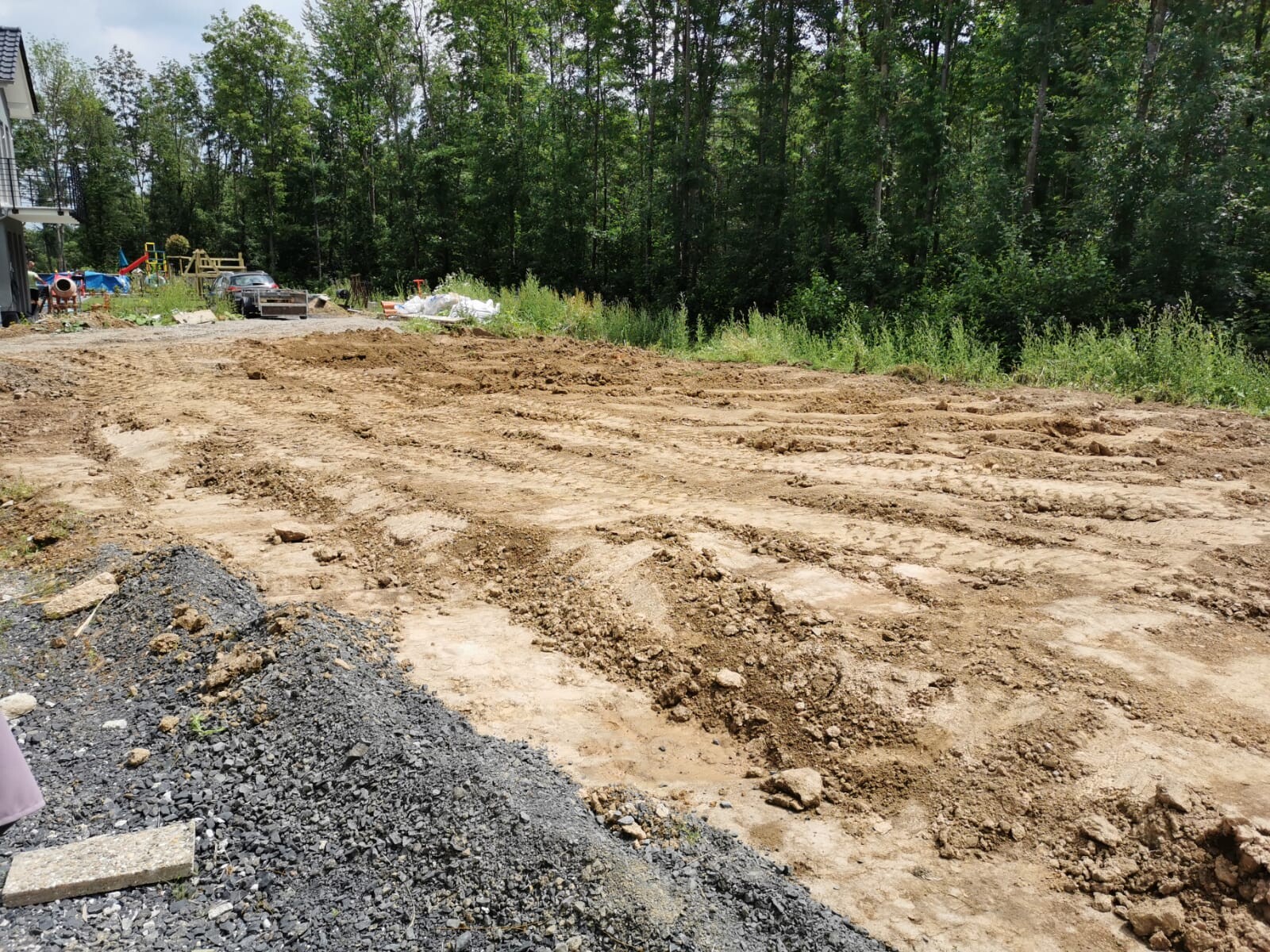
We have already had the future lawn area excavated, since large trucks cannot easily access the site after the terrace and other surfaces are installed. Early next year, we plan to fill the area with 20 to 30cm (8 to 12 inches) of topsoil once all the paving and other surfaces are completed.
Now we have a serious problem with weeds, especially thistles, and I have been considering covering the excavated area. The question is: Is this effective, and can it help control the weeds well? Would it be better to use an opaque landscaping fabric or a tarp for this purpose?
Thank you very much and best regards 🙂
We are currently planning our outdoor area and are doing as much as possible ourselves.
We have already had the future lawn area excavated, since large trucks cannot easily access the site after the terrace and other surfaces are installed. Early next year, we plan to fill the area with 20 to 30cm (8 to 12 inches) of topsoil once all the paving and other surfaces are completed.
Now we have a serious problem with weeds, especially thistles, and I have been considering covering the excavated area. The question is: Is this effective, and can it help control the weeds well? Would it be better to use an opaque landscaping fabric or a tarp for this purpose?
Thank you very much and best regards 🙂
H
HilfeHilfe6 Jul 2021 07:12That is nature; of course, some things will still get through. A garden always requires work.
F
fach1werk6 Jul 2021 07:58For lupins, it’s a bit too late. This year, the faster-growing weeds will take over.
Green manure is not expensive. For plowing it under, I would recommend offering a farmer some money at the time when you see them operating the suitable equipment anyway. It takes about half an hour, and you only need one set of tools. I would carefully consider whether spending half a day tilling is necessary.
Cruciferous plants are good, such as yellow mustard or something from the radish family. Green manure is often a mix; it’s not just monoculture.
I would buy from an agricultural supplier, where farmers also get their seeds. Alternatively, you can ask a local farmer.
If it were my property, I would sow the green manure immediately, a bit denser than necessary to ensure full coverage, and leave the crop standing until frost kills it. Then, in the following spring, plow it under. If the plants reach seed maturity and the site is still unused, they will regrow and cover the soil again. You can also reseed if needed.
Keep it simple: it must make sense economically in terms of effect, time, and money.
Annual wildflower meadow: In the early days of gardening, I had many poppies sprout that required some management. But in the first year, it’s a joy for all neighbors.
Kind regards,
Gabriele
Green manure is not expensive. For plowing it under, I would recommend offering a farmer some money at the time when you see them operating the suitable equipment anyway. It takes about half an hour, and you only need one set of tools. I would carefully consider whether spending half a day tilling is necessary.
Cruciferous plants are good, such as yellow mustard or something from the radish family. Green manure is often a mix; it’s not just monoculture.
I would buy from an agricultural supplier, where farmers also get their seeds. Alternatively, you can ask a local farmer.
If it were my property, I would sow the green manure immediately, a bit denser than necessary to ensure full coverage, and leave the crop standing until frost kills it. Then, in the following spring, plow it under. If the plants reach seed maturity and the site is still unused, they will regrow and cover the soil again. You can also reseed if needed.
Keep it simple: it must make sense economically in terms of effect, time, and money.
Annual wildflower meadow: In the early days of gardening, I had many poppies sprout that required some management. But in the first year, it’s a joy for all neighbors.
Kind regards,
Gabriele
H
hampshire6 Jul 2021 09:39My tip is to use comfrey as well. It is one of the most popular permaculture plants. It can also stay in certain spots in the garden. Transplanting it is very easy.
C
Colorblind6 Jul 2021 09:44fach1werk schrieb:
For lupines, it’s a bit late now. This year, the weeds that emerge faster will take over.
Green manure cover crops are not expensive. When it comes to plowing them under, I would offer a local farmer some money if you see them driving by with the right equipment anyway. They can do it in half an hour, and you only lose a set of tools. I would carefully consider whether spending half a day tilling is really necessary.
Brassicas are good, such as yellow mustard or something from the radish family. Green manure is often a mix, not just a monoculture.
I would buy seeds from an agricultural supplier where farmers source their seed, or alternatively, consult a local farmer.
If it were my land, I would sow the green manure immediately, sowing a bit denser than necessary to fully cover the area, and leave the plants standing until frost kills them. Next spring, plow them under. If the plants reach seed maturity and the construction site is still unused, they could regrow quickly and cover the soil again. You could also sow a second time if needed.
Just don’t make it too complicated: it has to be economical in terms of effect, time, and cost.
A one-year wildflower meadow: In the early years of my garden, many poppies grew that require some attention. But the first year is a delight for all neighbors.
Best regards, Gabriele Thanks so much for the tips 🙂 I already asked yesterday but in the wrong thread. Is green manure still practical on such a large area? I’ve mostly read about it for garden beds, but in our case, it would be the entire lawn area (over 200sq m (2150 sq ft)).

C
Colorblind6 Jul 2021 09:48rick2018 schrieb:
It’s not a large area anyway;)
You could still mow it by hand… but I wouldn’t.You wouldn’t mow by hand or sow green manure? 😀
Similar topics