
Hello everyone,
Over the weekend, the roofer completed the sealing of the floor-to-ceiling elements. This was done afterwards, as I was not informed about it at the time. I then hired a different roofer, who seemed competent to me. In my opinion, his work looks very neat, and I felt that he did his best. His steps were:
1) cleaned with a cleaning agent
2) sanded the window surfaces
3) applied liquid waterproofing membrane
4) embedded fleece
5) applied a second coat
6) he had to cut out the insulation foam on the sides of the windows, which he will close again in the coming days.
The attached photo shows the entrance door.
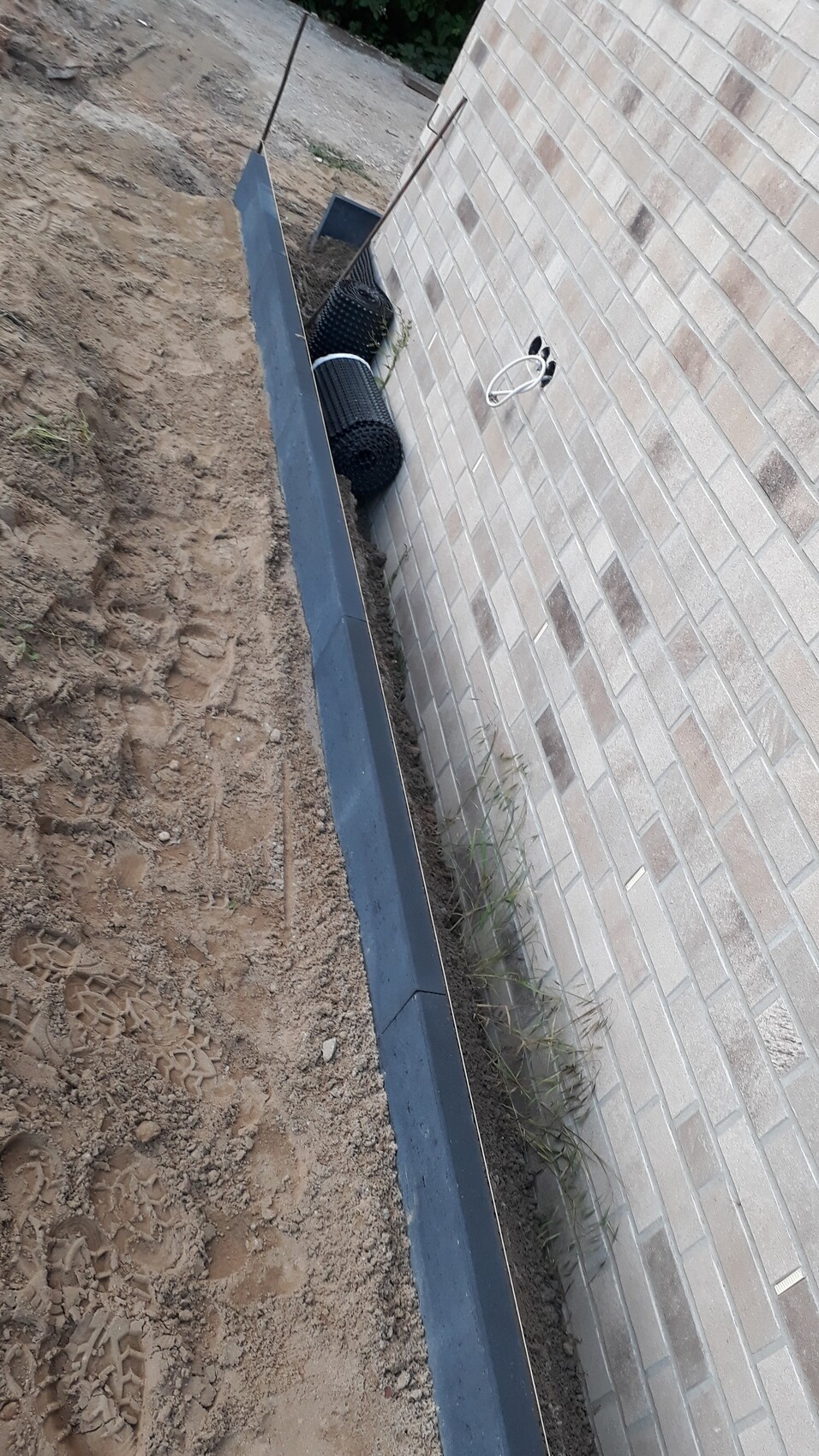
At the same time, the landscaping contractor also started his work. It was agreed that he would only set the edging stones initially, and he was also supposed to apply a thick coating. However, his assistant started and set the first edging stones without applying any thick coating. When I asked about the thick coating, he seemed confused because he said he was only told to set the edging stones.
I requested a meeting with the foreman, who told me by phone that the thick coating would be applied later, which I found illogical. His worker then said it was not a problem and that he would still be able to access the area later.
The foreman came later, and I brought it up again, insisting on the thick coating, otherwise, I would not be satisfied. He reassured me and said that as a former master mason, he knows how to handle it, and in the end, I could still report anything I was not happy with. I told him that such things should be discussed beforehand, questioning the point of doing the work otherwise. He then assured me that everything would be done as agreed. Upon further inquiry, he said the sequence was changed due to a lack of workers caused by holidays, so they would set the edging stones first. Only a few have been set so far.
What do you think? Is it still possible to apply the thick coating properly after the edging stones are set? And how should the sealing be done exactly? (What I understand so far is that the connection from the footing over the waterproofing membrane is important, then over the brickwork.)
He also told me that the finishing strip for the dimpled membrane is not necessary – only possibly for a rendered facade. Is that correct?
At the end, I looked a bit skeptical, and he told me: “don’t be so suspicious, everything will be fine.”
By now, I am considering applying the thick coating myself.
Thanks
P.S.: I have not paid a cent yet.
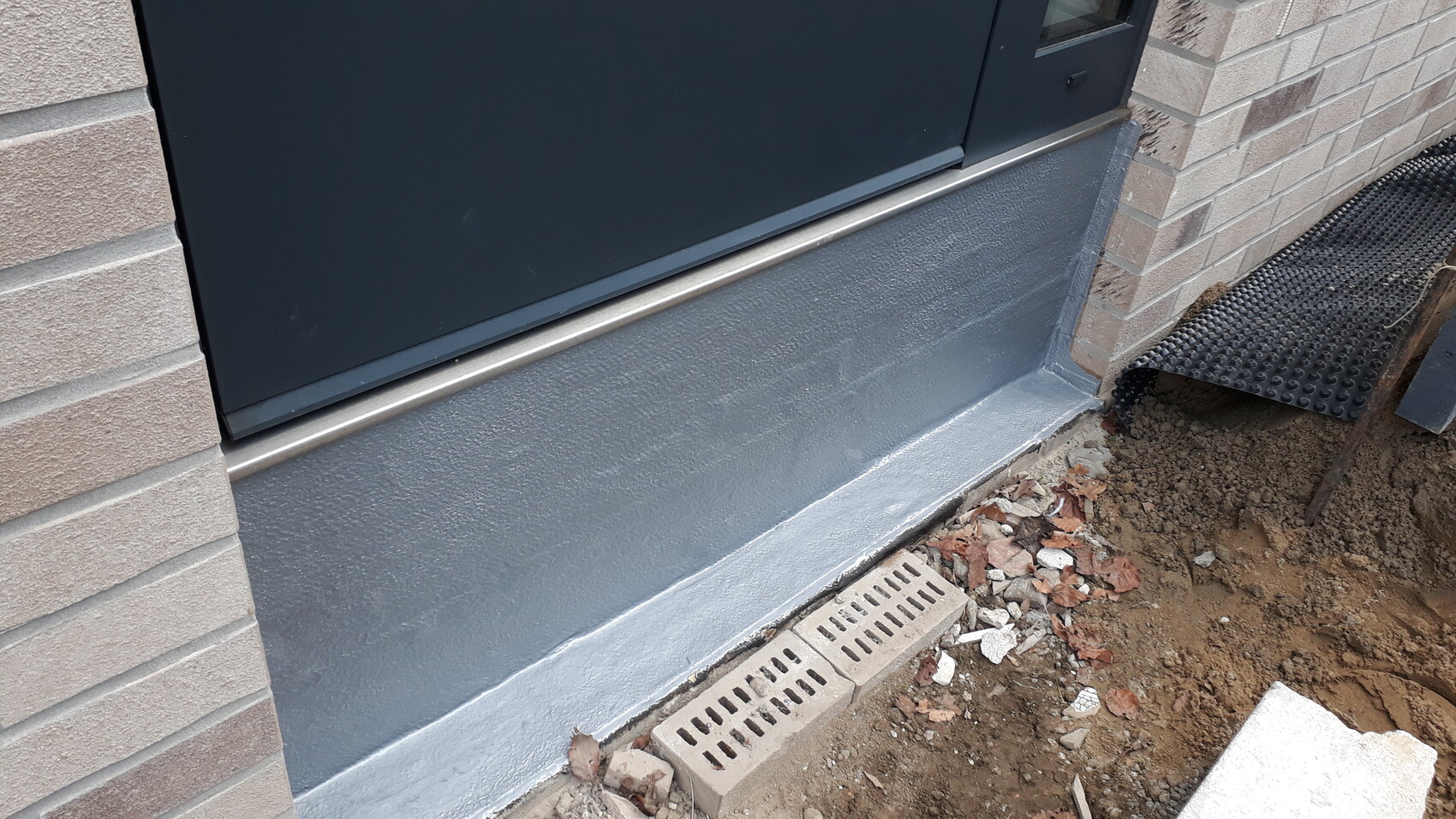

Over the weekend, the roofer completed the sealing of the floor-to-ceiling elements. This was done afterwards, as I was not informed about it at the time. I then hired a different roofer, who seemed competent to me. In my opinion, his work looks very neat, and I felt that he did his best. His steps were:
1) cleaned with a cleaning agent
2) sanded the window surfaces
3) applied liquid waterproofing membrane
4) embedded fleece
5) applied a second coat
6) he had to cut out the insulation foam on the sides of the windows, which he will close again in the coming days.
The attached photo shows the entrance door.
At the same time, the landscaping contractor also started his work. It was agreed that he would only set the edging stones initially, and he was also supposed to apply a thick coating. However, his assistant started and set the first edging stones without applying any thick coating. When I asked about the thick coating, he seemed confused because he said he was only told to set the edging stones.
I requested a meeting with the foreman, who told me by phone that the thick coating would be applied later, which I found illogical. His worker then said it was not a problem and that he would still be able to access the area later.
The foreman came later, and I brought it up again, insisting on the thick coating, otherwise, I would not be satisfied. He reassured me and said that as a former master mason, he knows how to handle it, and in the end, I could still report anything I was not happy with. I told him that such things should be discussed beforehand, questioning the point of doing the work otherwise. He then assured me that everything would be done as agreed. Upon further inquiry, he said the sequence was changed due to a lack of workers caused by holidays, so they would set the edging stones first. Only a few have been set so far.
What do you think? Is it still possible to apply the thick coating properly after the edging stones are set? And how should the sealing be done exactly? (What I understand so far is that the connection from the footing over the waterproofing membrane is important, then over the brickwork.)
He also told me that the finishing strip for the dimpled membrane is not necessary – only possibly for a rendered facade. Is that correct?
At the end, I looked a bit skeptical, and he told me: “don’t be so suspicious, everything will be fine.”
By now, I am considering applying the thick coating myself.
Thanks
P.S.: I have not paid a cent yet.
The waterproofing should have been extended up the side behind your roller shutter guide rail at the frame and the masonry (this would be technically correct). However, this is only possible if the brick veneer is not yet installed. I believe that in 95% of cases this is not done. I also do not think that water will penetrate there.
A dimpled membrane is not waterproofing. Its purpose is to protect the waterproofing from damage. If you apply a mineral waterproof slurry, preferably in two coats, the dimples will not damage the waterproofing (no matter how you position the membrane). Protecting the waterproofing is their function.
There are not many mineral waterproof slurries that are polymer-modified. We have had good experience with PCI Barraseal. As mentioned, it is best to apply it in two coats to achieve sufficient dry film thickness.
A dimpled membrane is not waterproofing. Its purpose is to protect the waterproofing from damage. If you apply a mineral waterproof slurry, preferably in two coats, the dimples will not damage the waterproofing (no matter how you position the membrane). Protecting the waterproofing is their function.
There are not many mineral waterproof slurries that are polymer-modified. We have had good experience with PCI Barraseal. As mentioned, it is best to apply it in two coats to achieve sufficient dry film thickness.
Thank you for your contribution!
My thought:
I was planning to replace the dimple membrane with Remmers DS Protect. Somehow, I don’t feel confident about the standard membrane. A technician from Remmers told me that no matter which way you install the standard dimple membrane, it’s considered incorrect because, according to the DIN standard, it shouldn’t be used or it can lead to damage quickly. Is that true?
Then apply two layers of the thick coating, and in the window areas, I would use the VS 250 tape (from Remmers) on the insulation foam.
Would that work?
What I don’t understand is when to use a thick coating and when to use a sealing slurry – what are the advantages and disadvantages?
Best regards
My thought:
I was planning to replace the dimple membrane with Remmers DS Protect. Somehow, I don’t feel confident about the standard membrane. A technician from Remmers told me that no matter which way you install the standard dimple membrane, it’s considered incorrect because, according to the DIN standard, it shouldn’t be used or it can lead to damage quickly. Is that true?
Then apply two layers of the thick coating, and in the window areas, I would use the VS 250 tape (from Remmers) on the insulation foam.
Would that work?
What I don’t understand is when to use a thick coating and when to use a sealing slurry – what are the advantages and disadvantages?
Best regards
guckuck2 schrieb:
The insulation visible in the last picture looks interesting as well. It insulates the brick facade from the house ;-)Hmm What exactly do you mean by that?
S
Stefan0012 Jul 2021 14:40I believe he means that, in the picture, it looks as if the thermal insulation is on the facing brick and the ventilation cavity is on the masonry, rather than the other way around.
Stefan001 schrieb:
I think he means that in the picture, it looks like the thermal insulation is on the facing brick and the ventilation cavity is on the masonry, instead of the other way around. Isn't it that the part that was cut out will be closed again?
Similar topics