
Hello everyone,
we would like to get a new awning. The problem is that the new venetian blind system takes up a bit of space. Previously, the awning was attached to the roof rafters, but now that might be tight.
We already had a company come by. They would prefer to pour concrete columns on the left and right sides of the venetian blinds, create a cross connection (square profile or something similar) and hang the awning there. The awning is supposed to be about 4.5–5.0 meters (15–16.5 feet) wide and have a projection of 3.5 meters (11.5 feet).
I don’t find this solution ideal and wonder if it might still be possible to fix the awning to the roof rafters. Normally, these mounts hang straight down. Would it perhaps be possible to have custom rafter brackets welded for this? The front cladding is only wood and could be partially removed. Where, for example, three nails are aligned vertically marks the end of the rafter.
I think the company will come back to take another look; so far, they haven’t properly checked the structure with the cladding yet. Does anyone have experience with something like this? I would like to know if my idea is completely unrealistic or if it might actually work with modified rafter brackets. Thanks.
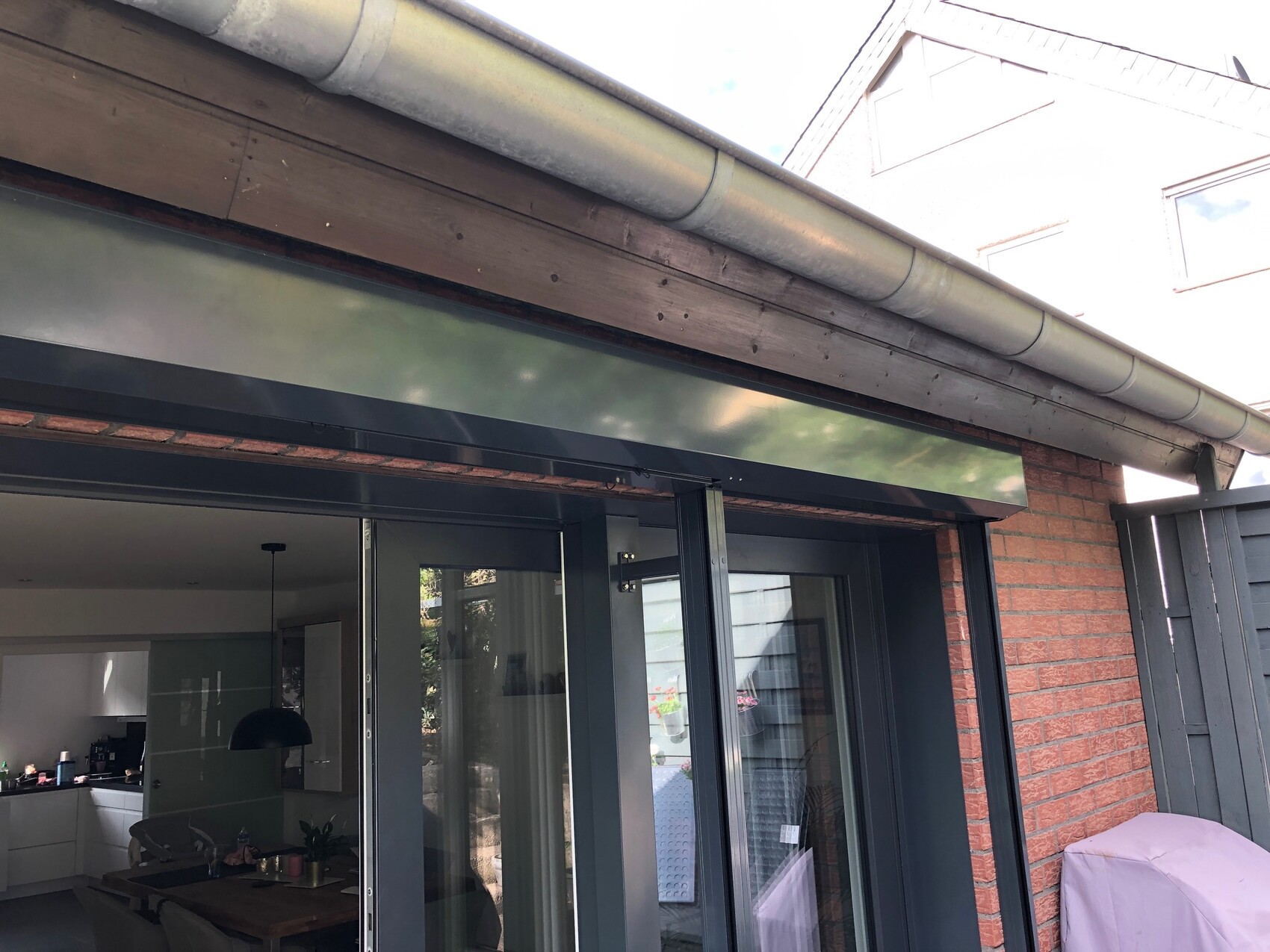
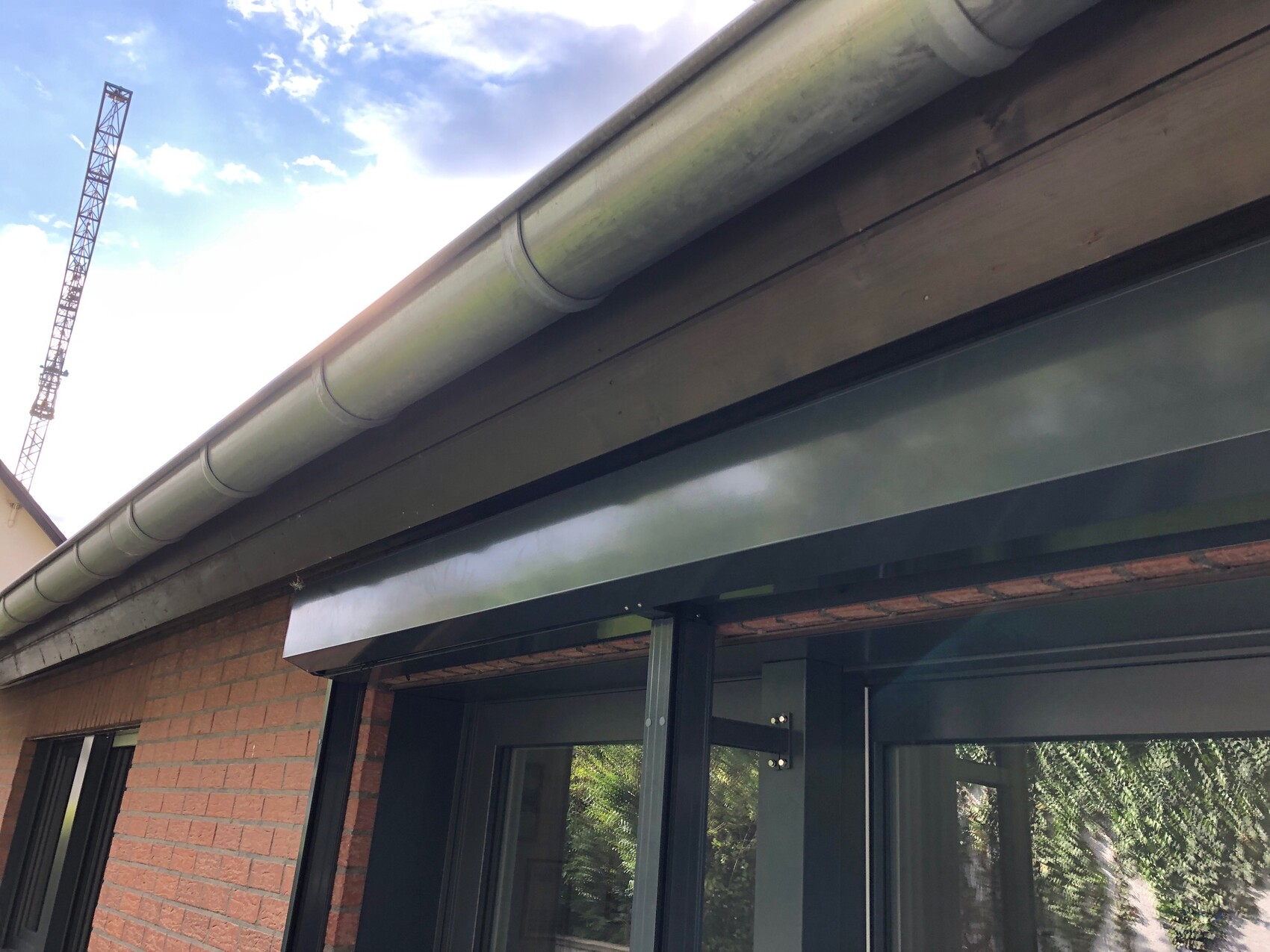
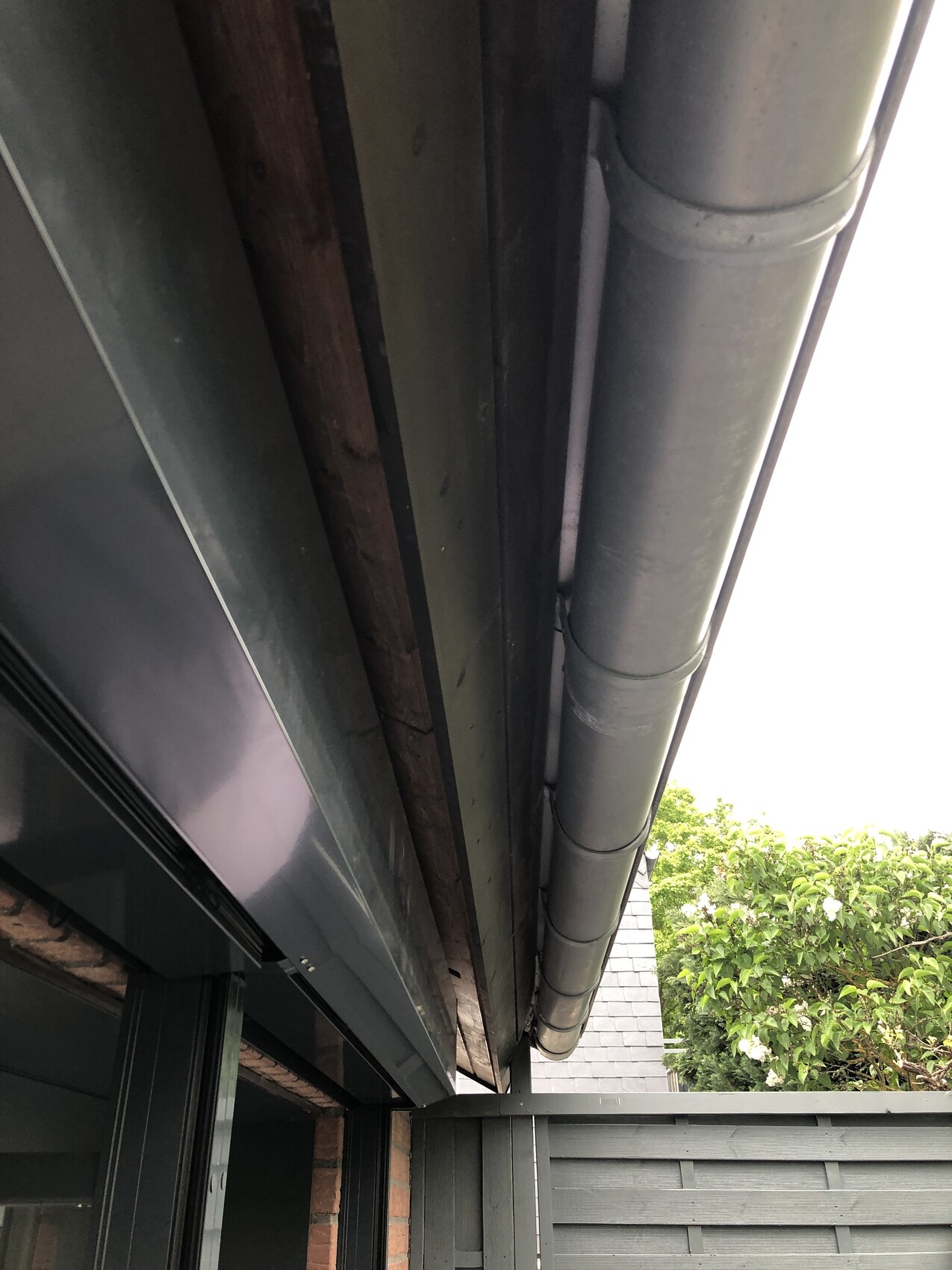
we would like to get a new awning. The problem is that the new venetian blind system takes up a bit of space. Previously, the awning was attached to the roof rafters, but now that might be tight.
We already had a company come by. They would prefer to pour concrete columns on the left and right sides of the venetian blinds, create a cross connection (square profile or something similar) and hang the awning there. The awning is supposed to be about 4.5–5.0 meters (15–16.5 feet) wide and have a projection of 3.5 meters (11.5 feet).
I don’t find this solution ideal and wonder if it might still be possible to fix the awning to the roof rafters. Normally, these mounts hang straight down. Would it perhaps be possible to have custom rafter brackets welded for this? The front cladding is only wood and could be partially removed. Where, for example, three nails are aligned vertically marks the end of the rafter.
I think the company will come back to take another look; so far, they haven’t properly checked the structure with the cladding yet. Does anyone have experience with something like this? I would like to know if my idea is completely unrealistic or if it might actually work with modified rafter brackets. Thanks.
P
pagoni202021 May 2021 11:59Awnings can also be installed ON the roof, which avoids the tight and fiddly space underneath. You can try searching online for pictures of this.
pagoni2020 schrieb:
You can also install awnings ON the roof, which avoids the tight space underneath. You can look up some pictures online to see how that looks.Hello Pagoni, I’ve looked into the idea of mounting the awning on the roof. It’s not a bad solution, but I think it won’t work for me. The sun angle in the afternoon (at least right now) causes the shadow to fall quite steeply. Even with a 5m (16 feet) awning, a lot of shade is lost this way. If the awning is placed on the roof, it would be about a meter (3 feet) higher, resulting in even less shade. I hope you understand what I mean. Of course, I could have the awning extended further out, but then it wouldn’t be hanging over the terrace, and around noon, when the sun is at its highest point, there wouldn’t be any shade there at all.
I’ve gathered some more information now. There is a system from the company Markilux called Syncra. It’s a frame to which the awning is attached. A good idea, but quite expensive. I got a quote of 3700€ for the frame, plus almost 3000€ for the awning itself, and about 1000€ for installation. That’s quite a lot.
I’m wondering if it might be possible to have a metalworker build such a frame instead. But would it really be much cheaper?!?
Next Tuesday, an expert from the awning company is coming again. Maybe there will be a way to attach it to the rafters after all. I think that would be the most cost-effective solution….
P
pagoni202016 Jun 2021 09:24@X_SH5_X From my side, this wasn’t meant as a perfect solution. I just came across it once and thought I’d share it with you as an idea.... 😀
I just took a look at the one from Markilux, but the pictures are quite limited. As far as I can see, it’s a freestanding awning, basically like a large parasol, weighed down heavily on both sides. I don’t think it really matters what these weights are made of since their only function is to keep the awning anchored to the ground. It could definitely be a concrete block, maybe clad with wood or otherwise decorated, but it could just as well be metal.
In your picture, I see that bench, which might be made of concrete. There are nice, prefabricated and smooth blocks available, to which you could then attach the base.
Of course, you need to look at it in detail so it looks neat... you can’t just set it in concrete without thinking. Unfortunately, the pictures don’t show much....
I just took a look at the one from Markilux, but the pictures are quite limited. As far as I can see, it’s a freestanding awning, basically like a large parasol, weighed down heavily on both sides. I don’t think it really matters what these weights are made of since their only function is to keep the awning anchored to the ground. It could definitely be a concrete block, maybe clad with wood or otherwise decorated, but it could just as well be metal.
In your picture, I see that bench, which might be made of concrete. There are nice, prefabricated and smooth blocks available, to which you could then attach the base.
Of course, you need to look at it in detail so it looks neat... you can’t just set it in concrete without thinking. Unfortunately, the pictures don’t show much....

Similar topics