
ᐅ Single-Family Home Design on a Sloping Site (2,700 sqm Plot) – Experiences / Discussion
Created on: 3 Jun 2021 09:00
B
Bamboochaa
Hello everyone. I would like to introduce our upcoming project below. It is meant to inspire discussion and serve as documentation.
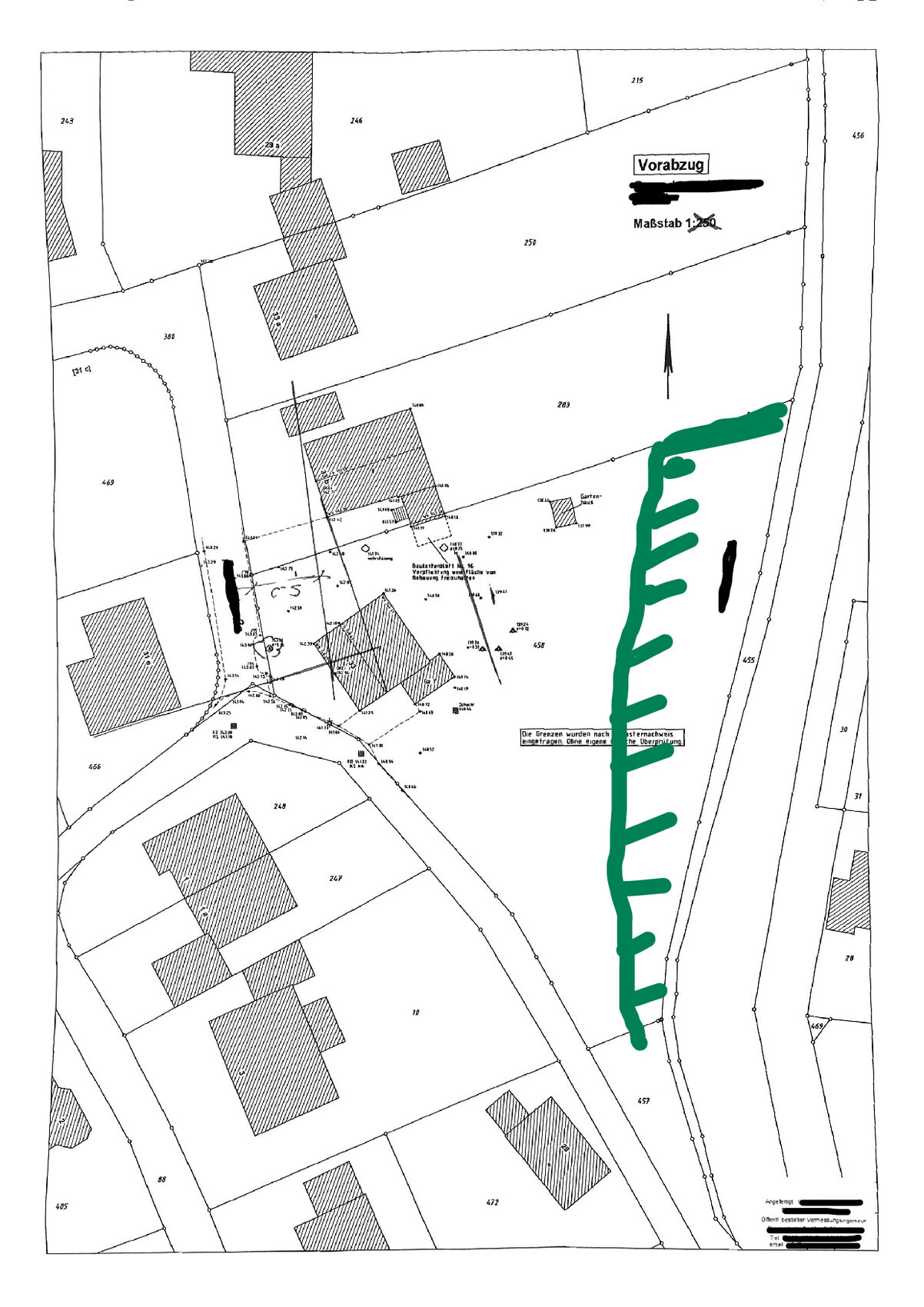
Plot size: approximately 2,700 sqm (29,000 sq ft), of which about 1,200 sqm (13,000 sq ft) is forested area (marked in green). Demolition of the current building: house number 33.
The plot is located at the end of a cul-de-sac (NRW). There is no zoning plan. The planned building area has about a 2 m (6.5 ft) height difference. The slope declines towards the east/south.
Maximum height/limits: Ridge height of neighboring property approx. 9 m (30 ft).
We have largely given the architect free rein (exclusions: flat roof, hip/pyramid roof, or city villa/Bauhaus style).
Two adults (31 + 27), no children yet. Planned maximum living area is 160-170 sqm (1,720–1,830 sq ft).
Ground floor: spacious living and dining area. Large kitchen. Small shower/WC on ground floor, small storage/utility room with mudroom function.
Upper floor: master bedroom, two children’s rooms, separate dressing room, one bathroom. Guest room either in basement or upper floor.
Basement: utility/technical room, fitness room, office/guest room, small WC (due to direct garden access).
Only a small office is needed, as no home office work is planned.
Balcony, roof terrace: unnecessary due to the garden.
Garage, carport: double garage plus 2 parking spaces.
Small outdoor sauna planned for the future.
House design (In the 3D plan, I removed two walls on the south side of the ground floor so you can see inside the house. Window planning is not yet included in the design.)
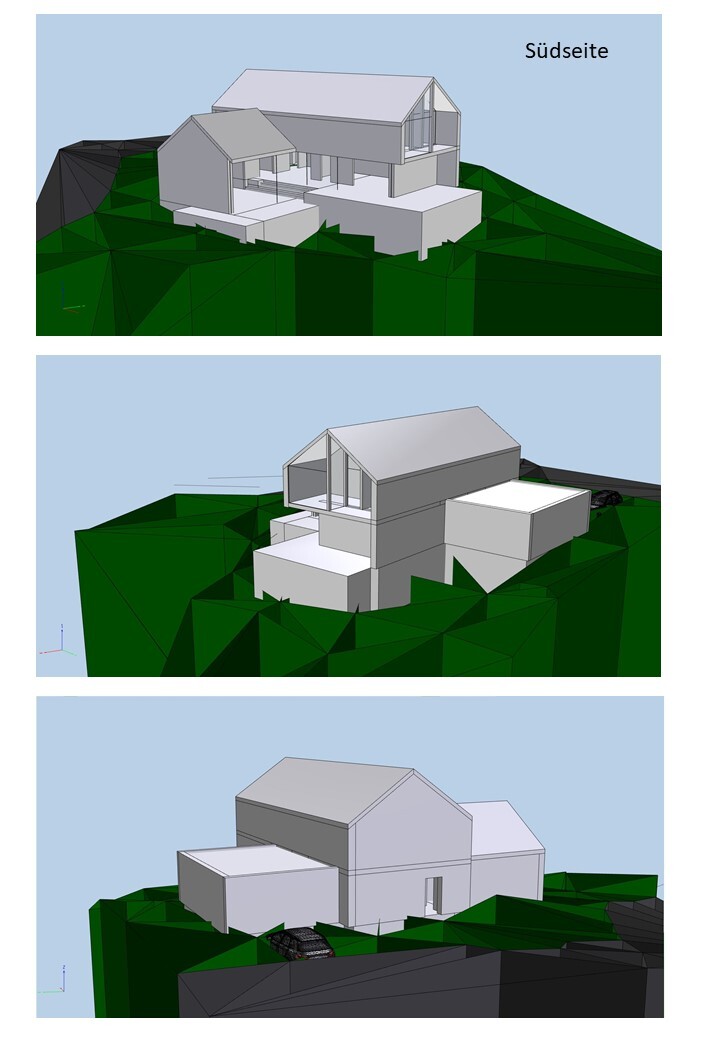
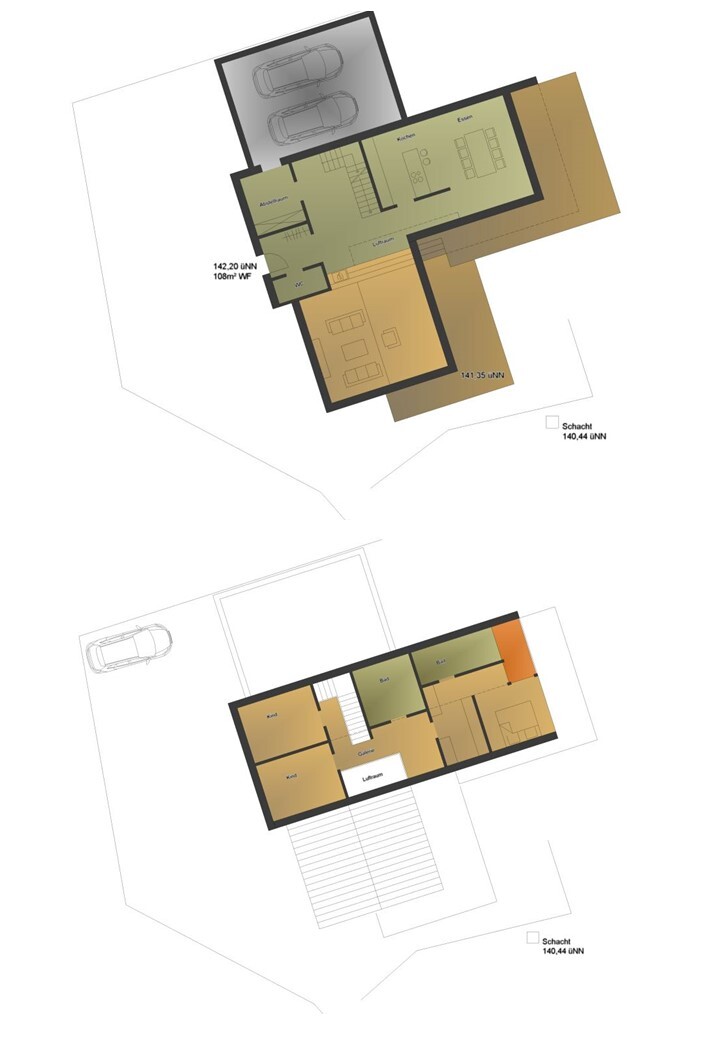
Ground floor: We personally like the layout 100%.
Upper floor: We find it almost perfect. The small open space is nice. The children’s rooms are next to each other. The parents’ room is somewhat separated. The upper floor also provides shading for the ground floor terrace area. (Balcony is unnecessary and will be removed.)
What do we not like? Why?
The floor plan is currently a bit too large. The plan was for 160-170 sqm (1,720–1,830 sq ft) of living space (we actually find this size almost too big, especially if we do not have children). The current floor plan shows about 190 sqm (2,045 sq ft) living space plus basement (approx. 6 m x 13 m (20 ft x 43 ft) + 6.5 m x 6.5 m (21 ft x 21 ft) living area).
It is questionable how much the floor plan can be reduced without significantly restricting the sense of space. The living area and possibly the staircase area could be made slightly smaller. Traffic area (hallways, circulation) is relatively high. The upper floor layout could be optimized, e.g., the master bedroom could face more towards the north. It is also questionable whether a second bathroom on the upper floor is necessary.
Placement of the building on the plot still needs to be discussed. (The garage is currently planned at the boundary with the neighbor.)
Price estimate according to the architect/planner: starting at approximately €2,700/m² (about $280/sq ft) (without interior finishes).
Personal price limit for house including landscaping, architect, additional costs, interior finishes is about €700,000 (about $730,000), with a buffer of about €100,000 (about $105,000) remaining. (Land already paid.)
Construction type planned was timber frame, but due to material cost and delivery time developments for wood, solid construction is also being reconsidered.
Preferred heating system: heat pump, with additional photovoltaic system for electricity (without storage).
If you had to give up anything, what details or features?
The living area and terrace could be smaller. The garage could be smaller. An L-shaped floor plan is not essential. The photovoltaic system could be installed later. Partial basement would be sufficient (due to the slope this makes less sense and probably would not lead to financial savings). The open space (atrium) is not absolutely necessary.
What you cannot give up: separation of kitchen/dining from living area, double garage, separate dressing room.
Why is the design like this now?
We gave the architect a broadly defined requirements profile. No specifications regarding floor plan or room sizes were given.
What is the most important/basic question about the floor plan, summarized in 130 characters?
Is the price limit and rough cost estimate from the architect realistic? How can the living area be reduced? How will acoustics distribute via the open space to the upper floor? Is the planned terrace problematic? (Basement ceiling as terrace floor a good idea?)
We are open to general criticism and suggestions for improvement 🙂 We will gladly report on further progress in the coming weeks.
Plot size: approximately 2,700 sqm (29,000 sq ft), of which about 1,200 sqm (13,000 sq ft) is forested area (marked in green). Demolition of the current building: house number 33.
The plot is located at the end of a cul-de-sac (NRW). There is no zoning plan. The planned building area has about a 2 m (6.5 ft) height difference. The slope declines towards the east/south.
Maximum height/limits: Ridge height of neighboring property approx. 9 m (30 ft).
We have largely given the architect free rein (exclusions: flat roof, hip/pyramid roof, or city villa/Bauhaus style).
Two adults (31 + 27), no children yet. Planned maximum living area is 160-170 sqm (1,720–1,830 sq ft).
Ground floor: spacious living and dining area. Large kitchen. Small shower/WC on ground floor, small storage/utility room with mudroom function.
Upper floor: master bedroom, two children’s rooms, separate dressing room, one bathroom. Guest room either in basement or upper floor.
Basement: utility/technical room, fitness room, office/guest room, small WC (due to direct garden access).
Only a small office is needed, as no home office work is planned.
Balcony, roof terrace: unnecessary due to the garden.
Garage, carport: double garage plus 2 parking spaces.
Small outdoor sauna planned for the future.
House design (In the 3D plan, I removed two walls on the south side of the ground floor so you can see inside the house. Window planning is not yet included in the design.)
Ground floor: We personally like the layout 100%.
Upper floor: We find it almost perfect. The small open space is nice. The children’s rooms are next to each other. The parents’ room is somewhat separated. The upper floor also provides shading for the ground floor terrace area. (Balcony is unnecessary and will be removed.)
What do we not like? Why?
The floor plan is currently a bit too large. The plan was for 160-170 sqm (1,720–1,830 sq ft) of living space (we actually find this size almost too big, especially if we do not have children). The current floor plan shows about 190 sqm (2,045 sq ft) living space plus basement (approx. 6 m x 13 m (20 ft x 43 ft) + 6.5 m x 6.5 m (21 ft x 21 ft) living area).
It is questionable how much the floor plan can be reduced without significantly restricting the sense of space. The living area and possibly the staircase area could be made slightly smaller. Traffic area (hallways, circulation) is relatively high. The upper floor layout could be optimized, e.g., the master bedroom could face more towards the north. It is also questionable whether a second bathroom on the upper floor is necessary.
Placement of the building on the plot still needs to be discussed. (The garage is currently planned at the boundary with the neighbor.)
Price estimate according to the architect/planner: starting at approximately €2,700/m² (about $280/sq ft) (without interior finishes).
Personal price limit for house including landscaping, architect, additional costs, interior finishes is about €700,000 (about $730,000), with a buffer of about €100,000 (about $105,000) remaining. (Land already paid.)
Construction type planned was timber frame, but due to material cost and delivery time developments for wood, solid construction is also being reconsidered.
Preferred heating system: heat pump, with additional photovoltaic system for electricity (without storage).
If you had to give up anything, what details or features?
The living area and terrace could be smaller. The garage could be smaller. An L-shaped floor plan is not essential. The photovoltaic system could be installed later. Partial basement would be sufficient (due to the slope this makes less sense and probably would not lead to financial savings). The open space (atrium) is not absolutely necessary.
What you cannot give up: separation of kitchen/dining from living area, double garage, separate dressing room.
Why is the design like this now?
We gave the architect a broadly defined requirements profile. No specifications regarding floor plan or room sizes were given.
What is the most important/basic question about the floor plan, summarized in 130 characters?
Is the price limit and rough cost estimate from the architect realistic? How can the living area be reduced? How will acoustics distribute via the open space to the upper floor? Is the planned terrace problematic? (Basement ceiling as terrace floor a good idea?)
We are open to general criticism and suggestions for improvement 🙂 We will gladly report on further progress in the coming weeks.
B
Bamboochaa5 Jun 2021 10:54hanghaus2000 schrieb:
Here is a clearer version.
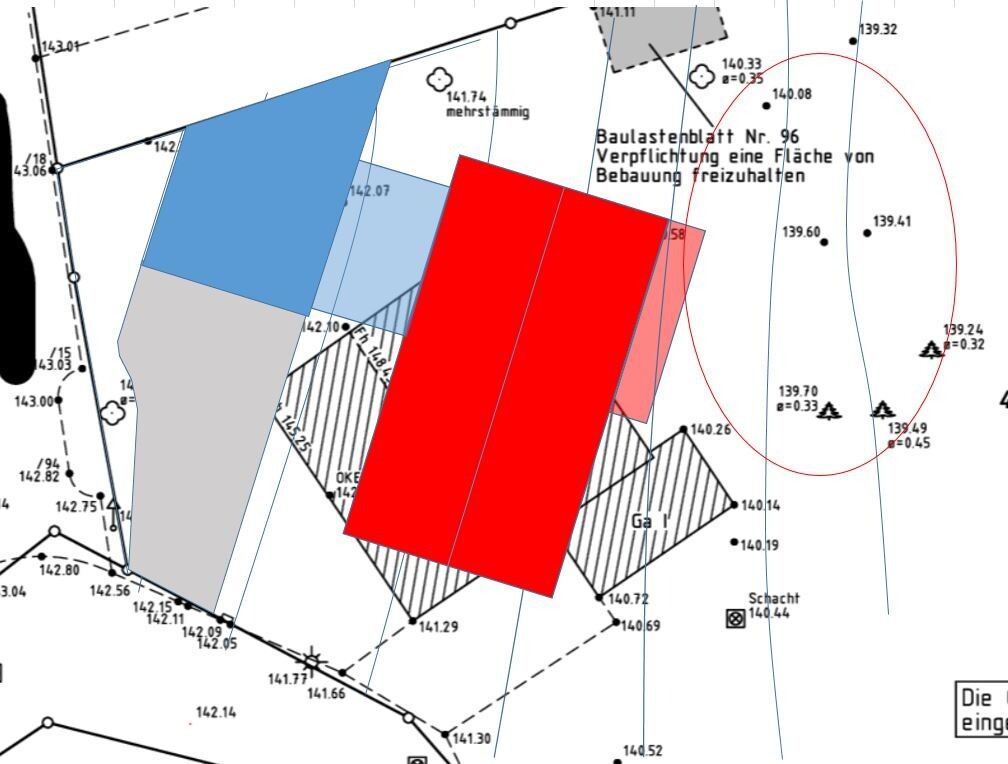
Level the ground floor to approximately 143 meters (470 feet) on the west side.
For the attic, either no knee wall or just a small one. Roof pitch about 45 degrees.
Level the basement to approximately 140 meters (459 feet) on the east side.
This way, the building fits the slope better.
There will be no need for retaining walls and minimal earthworks. Sounds interesting, but it is very unlikely that this will be approved by the building authority. There is no adequate setback from neighboring properties, which is usually a requirement.
H
hanghaus20005 Jun 2021 11:40Bamboochaa schrieb:
Sounds interesting, but it is very unlikely to be approved by the building authority. After all, there is no setback from the neighbors, which is more or less a requirement. The setback from the neighbors is mainly used to determine the building envelope. Your architect will tell you if it is feasible.
There are many arguments in favor of it. At least for you, it would be significantly more efficient.
There is still quite a bit of flexibility. The existing building did not have to follow any particular orientation.
B
Bamboochaa5 Jun 2021 12:06hanghaus2000 schrieb:
The alignment of neighboring properties is mainly used to determine the building envelope. Your architect can tell you whether that’s achievable.
There are many arguments in favor of it. At least for you, it is significantly more effective.
There is still considerable flexibility. Existing buildings have not had to follow any specific orientation. We will bring it up and then see how things develop 🙂 By the way, the existing building was the first one in the surrounding neighborhood. The exact construction date is unknown, as it apparently received approval only afterward. Before that, the area was used solely for agricultural purposes.
H
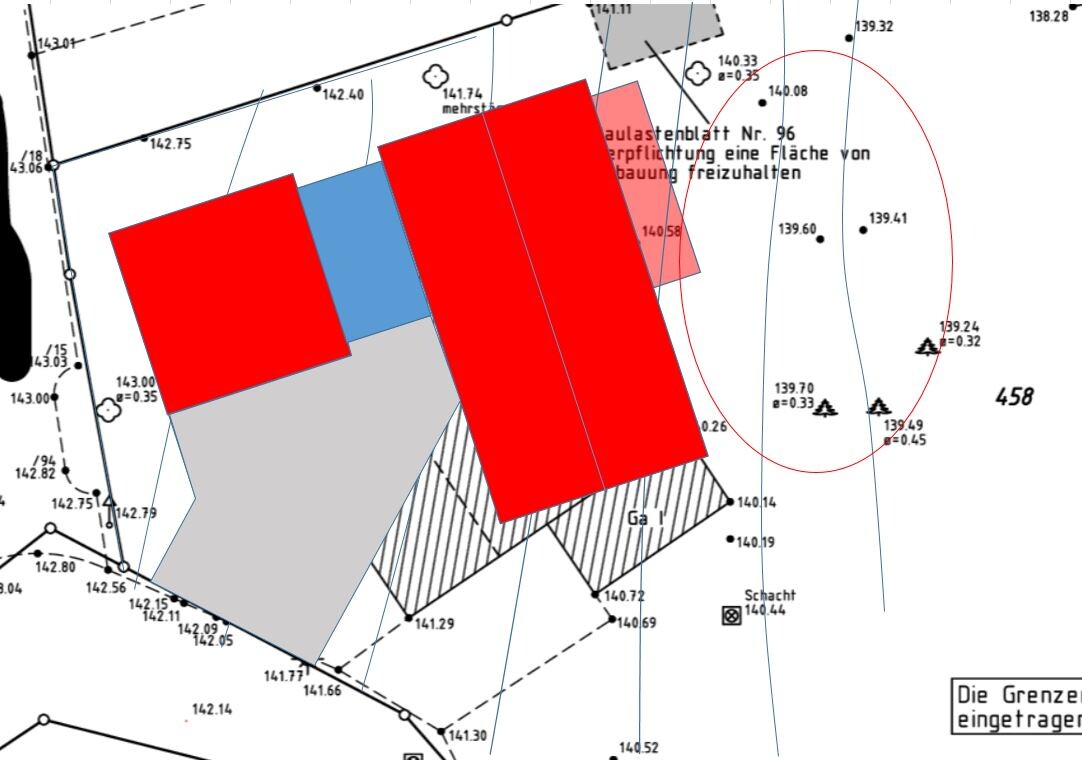
hanghaus20005 Jun 2021 12:21You can also orient it toward the GSG in the north.
H
hanghaus20005 Jun 2021 12:53Or something like this with a western atrium in the basement.
B
Bamboochaa8 Jun 2021 14:30hanghaus2000 schrieb:
Or like this with a western atrium in the basement level
[ATTACH alt="Grundstueck56.JPG"]62129[/ATTACH] In 1-2 weeks, we will receive new plans. One design will be on two levels, another based on the previously planned three levels but with a reduced footprint.
The house is very likely to shift slightly westward. The planned L-shape will be maintained. The garage will probably move closer to the street, featuring a side driveway and parking spaces.
I’ll update once we have something available.