
ᐅ Mechanical Ventilation with Heat Recovery – Planning the Locations for Supply and Exhaust Air
Created on: 5 May 2021 02:01
M
mwinkelm
Hello everyone,
The planning for our semi-detached house is becoming more concrete. Now we need to determine the positions of the outlets for the central mechanical ventilation system with heat recovery.
I have read quite a bit on the topic and tried to consider the usual best practices. However, it is quite overwhelming at first and leaves some uncertainty. That’s why I would appreciate it if you could take a look based on your experience.
In general, everything is initially planned as ceiling outlets. However, the concept of displacement ventilation also makes sense to me, so wall outlets near the floor for the supply air could also be considered. What are your thoughts on this?
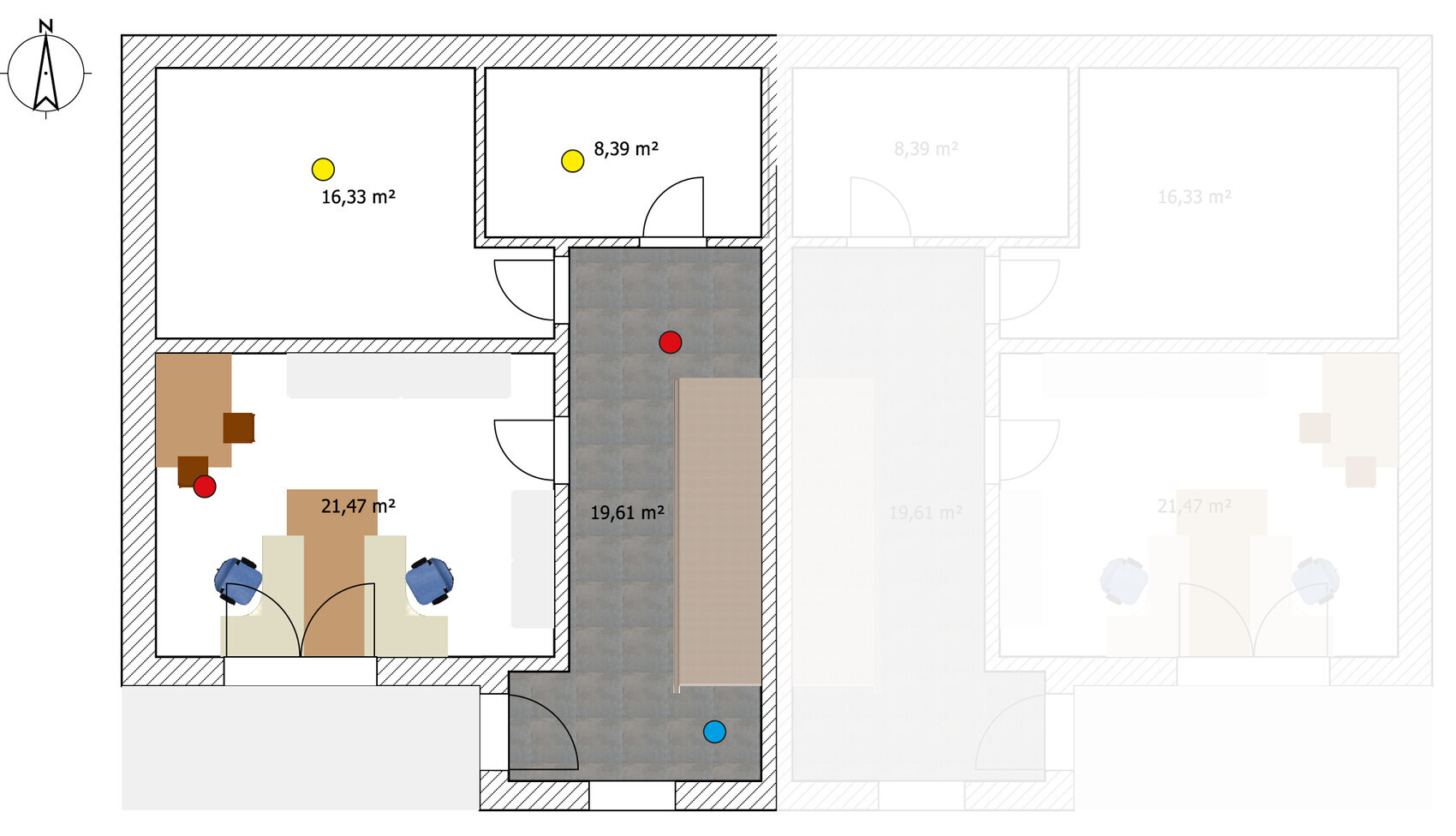
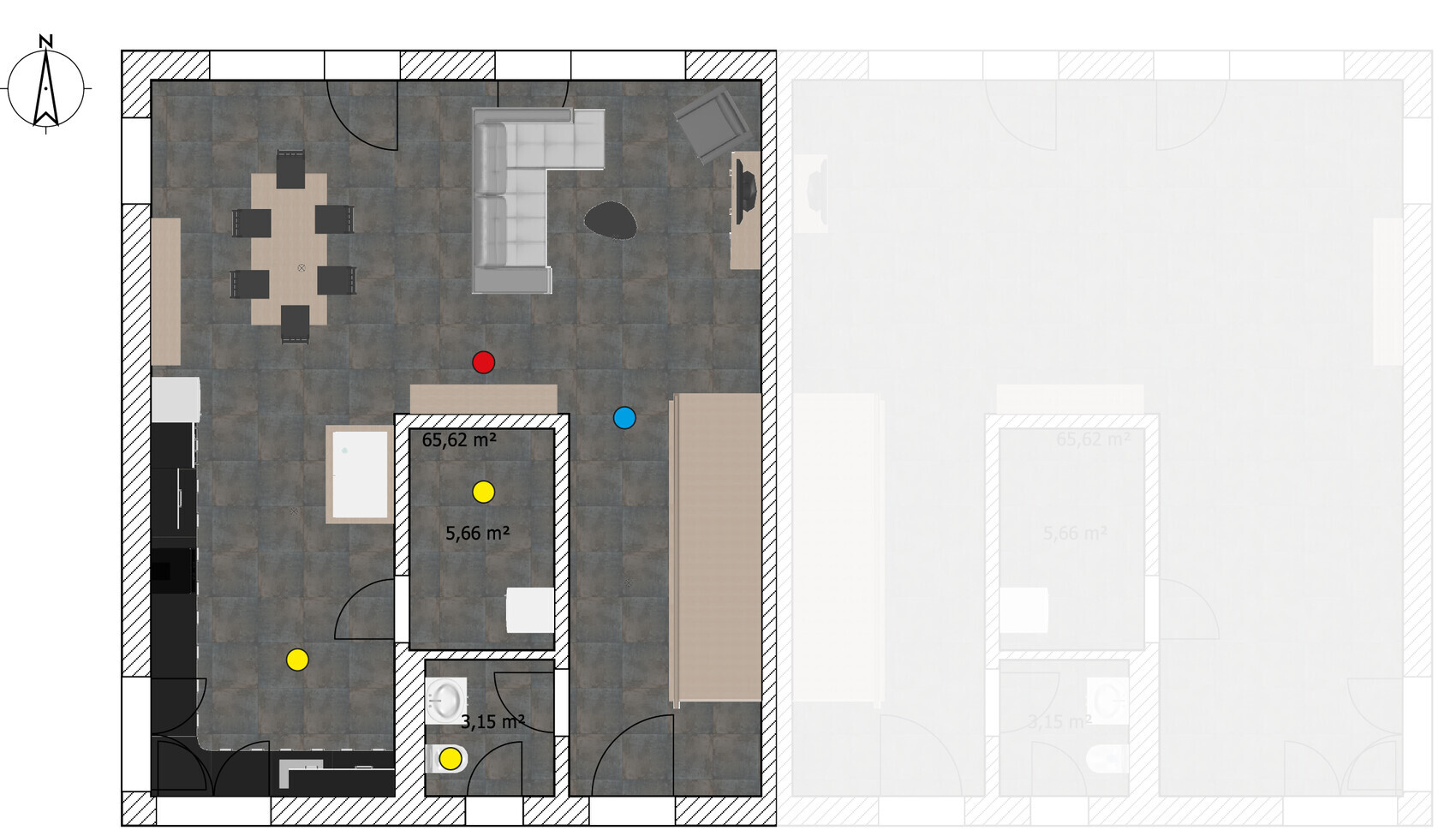
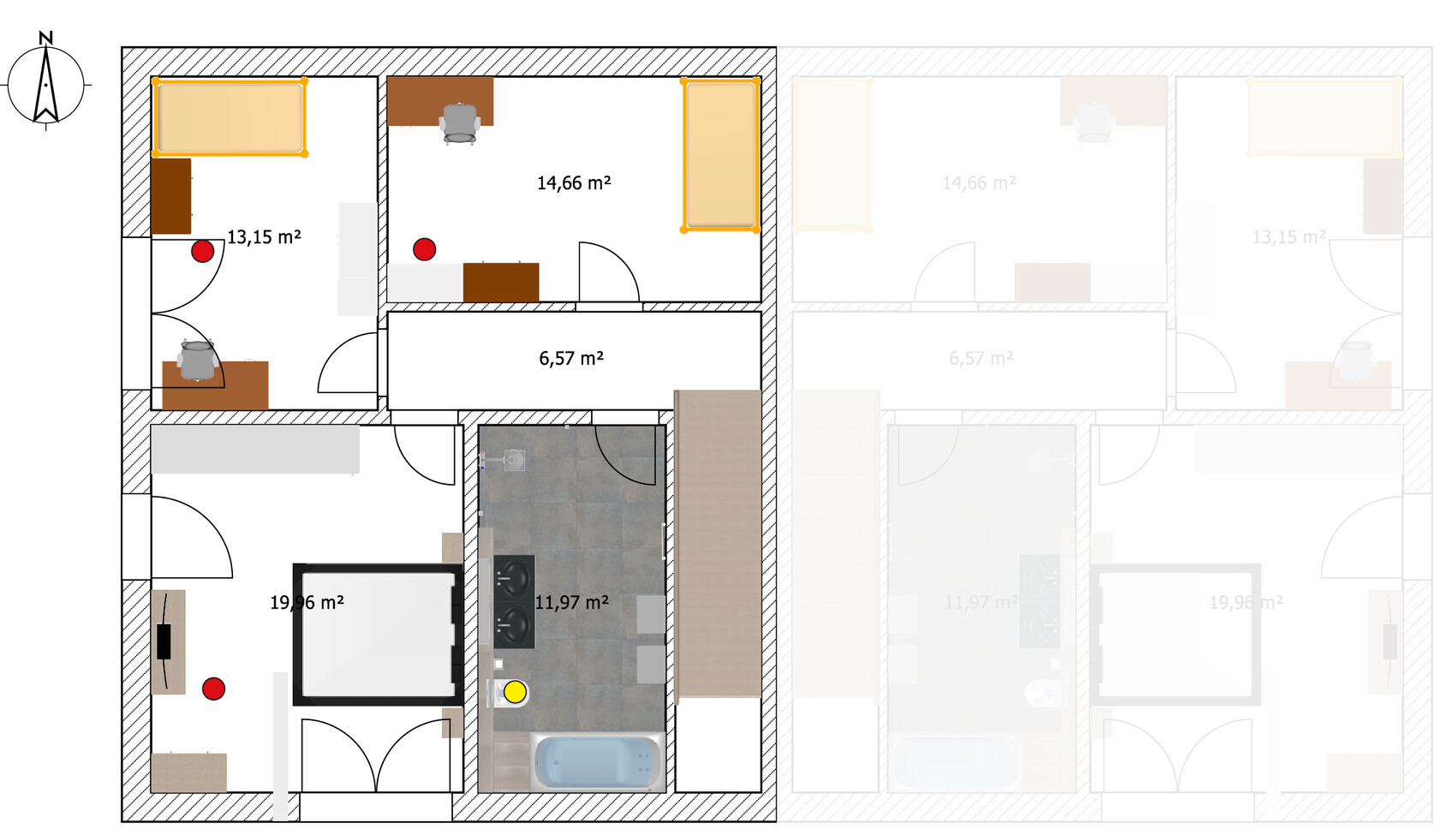
Yellow dots = Extract air
Red dots = Supply air
Blue dots = Alternative supply air (as a possible alternative position for the same room instead of the red dot)
Ground floor:
Upper floor:
Attic floor:
Thank you very much in advance!
Markus
The planning for our semi-detached house is becoming more concrete. Now we need to determine the positions of the outlets for the central mechanical ventilation system with heat recovery.
I have read quite a bit on the topic and tried to consider the usual best practices. However, it is quite overwhelming at first and leaves some uncertainty. That’s why I would appreciate it if you could take a look based on your experience.
In general, everything is initially planned as ceiling outlets. However, the concept of displacement ventilation also makes sense to me, so wall outlets near the floor for the supply air could also be considered. What are your thoughts on this?
Yellow dots = Extract air
Red dots = Supply air
Blue dots = Alternative supply air (as a possible alternative position for the same room instead of the red dot)
Ground floor:
- The additional table indicated in the office will ultimately not be placed there.
- I am unsure whether the supply air in the hallway should preferably be near the front door or not.
Upper floor:
- The alternative supply air position is meant to better cover the hallway area. Or is this not relevant, and is it more important that air is supplied directly into the dining/living area?
- Would it be better to have two outlets in the large living and dining area to minimize noise?
Attic floor:
- The children’s rooms are a bit of a headache because it is very difficult to predict exactly how the furniture will be arranged at this stage.
- In the slightly larger children’s room, I’m also not certain about the door position yet. It might be placed all the way to the left (opposite the bedroom door). In that case, the supply air would need to be located elsewhere.
Thank you very much in advance!
Markus


mwinkelm schrieb:
For simplicity, the planner wants to place the supply and exhaust air on the facade at the same location and then use a combined weather protection grille. Is this acceptable, or are there significant disadvantages, and should supply and exhaust air be completely separated instead?The manufacturer of our system has specified exact minimum distances to prevent feedback. Ideally, two different building sides were even recommended, as shown in the manufacturer’s diagram. That is how we proceeded.K1300S schrieb:
The point is that if soundproofing is important, any air gap is counterproductive. I think that’s a good point to help put this into the right perspective. We do not have any specific soundproofing requirements in this regard. In my parents’ house, there were only standard doors, and that was perfectly sufficient. Maybe this comparison is not entirely meaningful (since times and building materials change), but ultimately people tend to compare with what they know well and try to emulate it. It can definitely be said that to ensure the necessary air transfer, something has to be done that negatively affects sound transmission, but possibly not to an extent that is disturbing. We will only find that out later 😉
Mycraft schrieb:
You don’t have to overdo it. I suppose we will lean more toward the “larger door gap at the bottom” approach and accept the potentially negative effect on sound.
K1300S schrieb:
But, as mentioned, you should consider the wind direction and also maintain a certain distance. Which distance are you referring to here? With a combined vent system, there is no gap between the exhaust and fresh air inlets (despite the different directions they face).
I was referring to the fact that the outdoor air intake and exhaust air are located on the same facade (without a combined grille). However, this is generally considered a last resort that should be avoided whenever possible. The mentioned grille is unlikely to make much difference, as there is still wind that does not always direct the outgoing air masses in the desired direction.
So, for us the following alternative to the combined vent cover (red/yellow on the west side) should be possible without significant additional effort. The planner already mentioned that it would probably be doable when I brought it up. In that case, the exhaust air outlet would be about 3 meters (10 feet) above the terrace, and the fresh air intake would be on the west side (only red). This way, most of the wind would be mitigated, if I understand correctly. At the moment, I don’t really see other options, since any other solution would involve increased construction effort and higher costs.
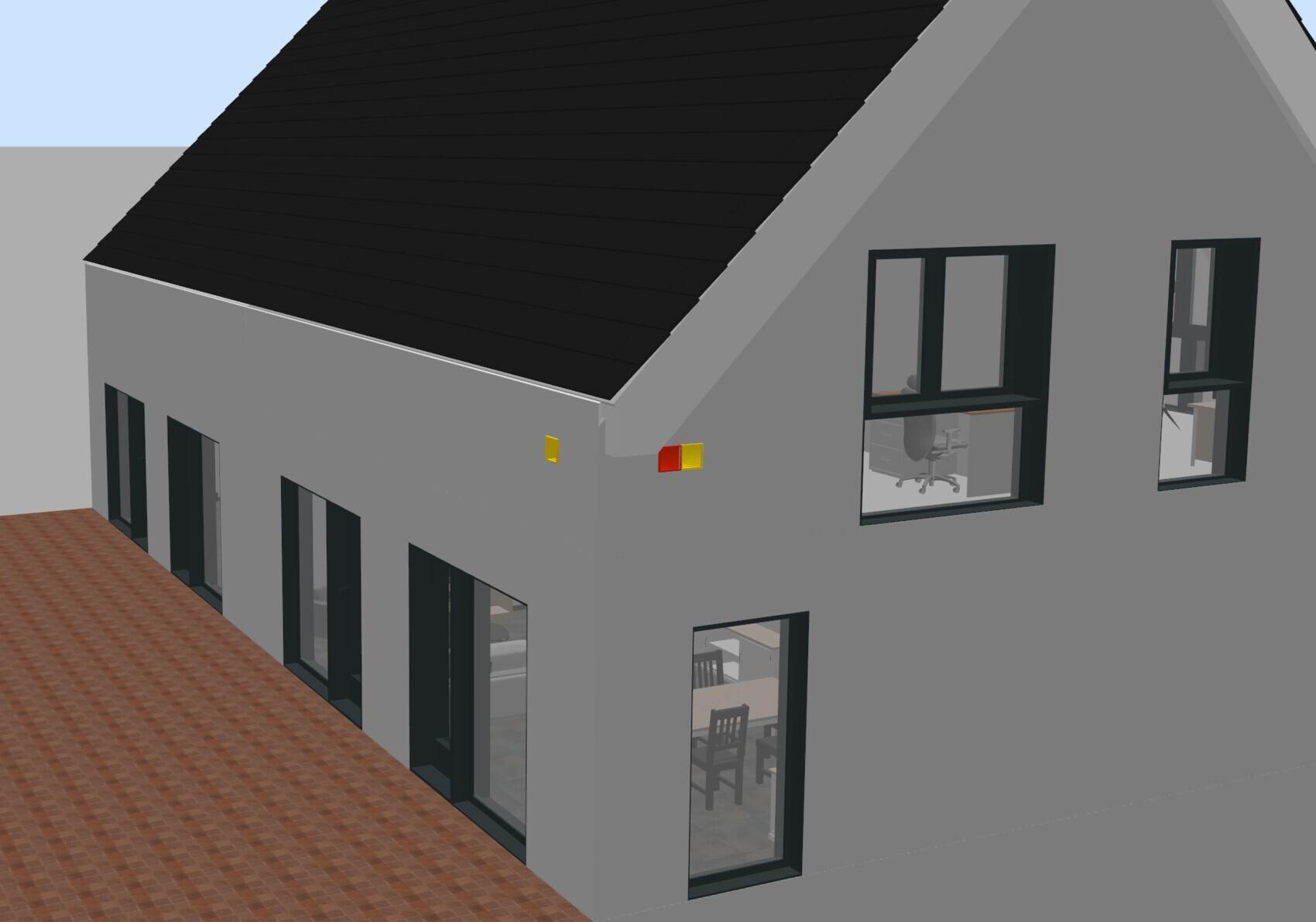
(Don’t pay attention to the light gray color of the roof element. My Sweet Home 3D skills are still limited)
(Don’t pay attention to the light gray color of the roof element. My Sweet Home 3D skills are still limited)